

Thengai Sadam (Tamil Brahmin Coconut Rice) Recipe
Malayalam തേങ്ങാ സാദംTamil தேங்காய் சாதம்Kannada ತೆಂಗಿನಕಾಯಿ ಅನ್ನTelugu కొబ్బరి అన్నం
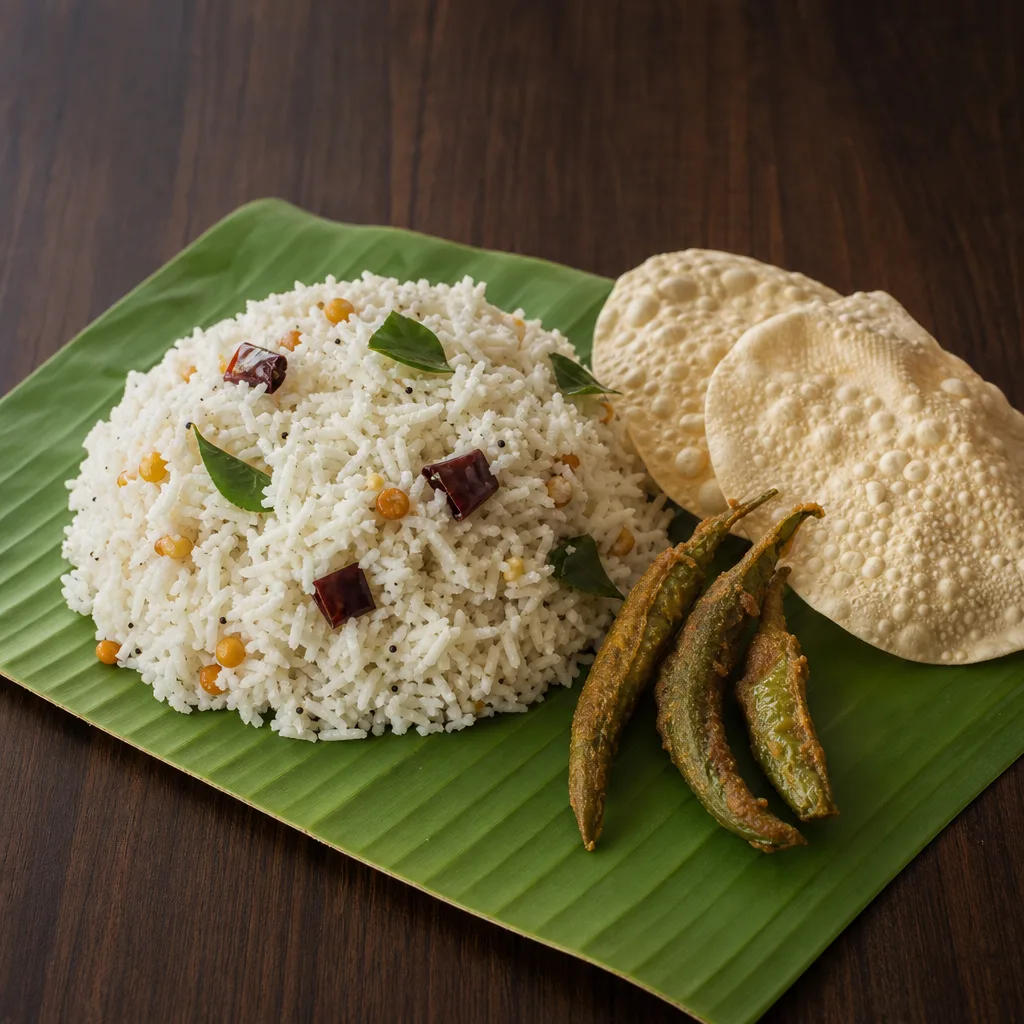
- Prep20 min
- Cook25 min
- Serves4
- DifficultyEasy
- DietVegan
Thengai sadam is a Tamil Brahmin staple made on festival mornings, for the school lunchbox, and whenever cooked rice is left over from the previous meal. It belongs to the category of variety rice called sadam or sadham, where plain cooked rice is mixed with a freshly prepared seasoning. No onion, no garlic — this is a sattvic kitchen.
The work is in the tempering. Mustard seeds, dried red chillies, curry leaves, chana dal, urad dal, and a small amount of raw groundnuts go into hot gingelly oil in a specific order so that each ingredient reaches the right colour without the others burning. Freshly grated coconut goes in last, off or on very low heat, because coconut scorches quickly and should stay pale and moist rather than fried.
Households differ mainly on the coconut: some prefer it barely warmed through, almost raw-tasting, while others cook it a little longer so it dries slightly and coats the rice more evenly. The rice itself must be cooked dry and grain-separate — mushy rice will not work. Leftover rice from the morning, cooled and loosened by hand, is often considered better than freshly cooked rice for this dish.
Ingredients (serves 4)
Rice
For the tempering and coconut mixture
Method
Prepare the rice
Cook the sona masoori rice with the correct water ratio so each grain is separate and fully cooked through. Spread it on a wide plate or tray and let it cool completely to room temperature. Break up any clumps gently with your fingers. The rice must be dry to the touch before you mix anything into it, or it will turn sticky.
Grate the coconut
Crack a fresh coconut, drain the water, and grate the white flesh on a fine grater. You want a soft, moist, fine grate — not chunks. Measure out 120 g and set aside. Do this just before you start cooking so the coconut does not dry out.
Heat the oil and add mustard
Pour the gingelly oil into a wide kadai or heavy pan and set it over medium heat. When the oil is hot, add the mustard seeds and keep the lid nearby. They will pop vigorously within 30 to 40 seconds. Wait until the popping slows almost completely before moving to the next ingredient; if you rush this step the mustard will be half-raw.
Add the dals and groundnuts
Add the chana dal first and stir constantly. After about 20 seconds, when it has taken on a little colour, add the urad dal and the raw groundnuts. Keep stirring over medium heat. The chana dal should turn a warm golden colour and the urad dal pale gold; the groundnuts will blister and smell nutty. This takes 2 to 3 minutes. Do not let the dals go dark brown — they will taste bitter.
Add the chillies and curry leaves
Add the broken dried red chillies and the green chillies. Stir for about 15 seconds, then add the curry leaves. Stand back — the curry leaves will splutter loudly in the oil. Stir once or twice until the leaves turn crisp and the chillies have darkened slightly, about 20 seconds.
Add asafoetida
Push everything to the side of the pan and add the asafoetida directly onto the hot oil for 5 seconds, then stir it through. It will bloom and lose its raw smell almost immediately.
Add the coconut
Reduce the heat to low. Add the grated coconut and stir it through the tempering. Cook on low heat for 2 to 3 minutes, stirring continuously, until the coconut is warmed through and coated in the oil and spices. It should stay pale and moist — if it starts to brown at the edges your heat is too high. Some households take it off the heat entirely at this point and let the residual heat warm the coconut; both approaches are traditional.
Season with salt
Add salt and mix well through the coconut mixture. Taste the mixture on its own before you add the rice — it should be slightly saltier than you want the finished dish to be, because the rice will absorb and dilute it.
Mix with the rice
Add the cooled rice to the pan in two or three additions, folding it gently through the coconut mixture with a wide spatula or your hand (if cool enough). Work quickly but gently — you want every grain coated without mashing any of the rice. Check salt once more after mixing.
Rest briefly and serve
Let the rice sit covered for 5 minutes off the heat. This short rest lets the oil and coconut settle into the grains. Serve warm or at room temperature.
How to serve
Appalam (papad), mor milagai (dried buttermilk chillies, fried), raw banana chips, or a simple mor kuzhambu. Often packed in a lunchbox with a small portion of pickle.
Served with: Appalam (papad), mor milagai (dried buttermilk chillies, fried), raw banana chips, or a simple mor kuzhambu. Often packed in a lunchbox with a small portion of pickle.
Cook's tips
Leftover rice works well
Rice cooked the previous morning and refrigerated overnight, brought back to room temperature and loosened by hand, often gives a better result than freshly cooked rice because it is drier and the grains separate more cleanly.
The coconut must be fresh
Desiccated coconut is too dry and sweet; it will not coat the rice the same way and the texture of the finished dish will be wrong. If a fresh coconut is unavailable, frozen grated coconut (thawed and drained) is a reasonable household compromise, though the flavour is slightly muted.
Groundnuts can be omitted
Some Iyer households leave out the groundnuts, particularly for festival cooking where nuts are sometimes avoided. The dish is still complete without them.
Do not overcook the coconut
If the coconut fries and browns, it will taste dry and slightly bitter in the rice. The moment you see any golden colour appearing, take the pan off the heat. The coconut should look pale and smell sweet, not toasted.
Gingelly oil is not optional
Cold-pressed gingelly oil is central to the flavour of Tamil variety rice. Coconut oil or refined sunflower oil will produce a noticeably different dish. The pale cold-pressed gingelly oil used in Tamil Nadu is not the same as the dark toasted sesame oil sold in East Asian grocery sections.
Regional variations
A Karnataka version uses freshly grated coconut with mustard and curry leaves in a slightly different tempering order; a Kerala home version sometimes adds a small amount of green chilli to the coconut mixture.
Glossary
- Thengai sadam தேங்காய் சாதம்
- Coconut rice; thengai means coconut, sadam means cooked rice in Tamil.
- Perungayam பெருங்காயம்
- Asafoetida; the dried resin used in Tamil Brahmin cooking as a substitute for onion and garlic.
- Gingelly oil நல்லெண்ணெய்
- Cold-pressed sesame oil; the standard cooking fat for Tamil Nadu pickles and variety rice.
- Mor milagai மோர் மிளகாய்
- Sun-dried chillies soaked in buttermilk and salt; a common accompaniment to variety rice.
- Chana dal கடலைப் பருப்பு
- Split Bengal gram; used in small quantities in tempering to add texture and a nutty flavour.
- Urad dal உளுத்தம் பருப்பு
- Split skinned black gram; used in tempering alongside chana dal for crunch and flavour.
Two things decide this dish: the rice must be dry and grain-separate before it is mixed, and the coconut must stay pale in the pan. Get those two right and everything else follows.
More Rice Dishes recipes
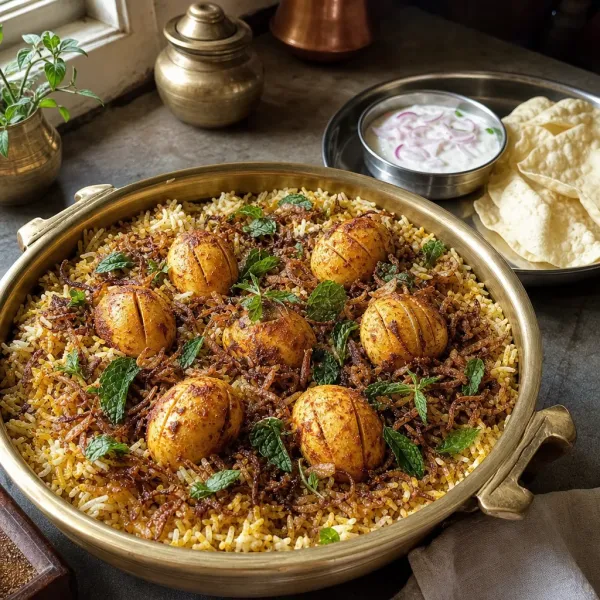
Malabar Egg Biryani
Traditional Mappila egg biryani from Malabar with kaima rice, fried shallots, and a slow dum finish. Step-by-step household recipe.
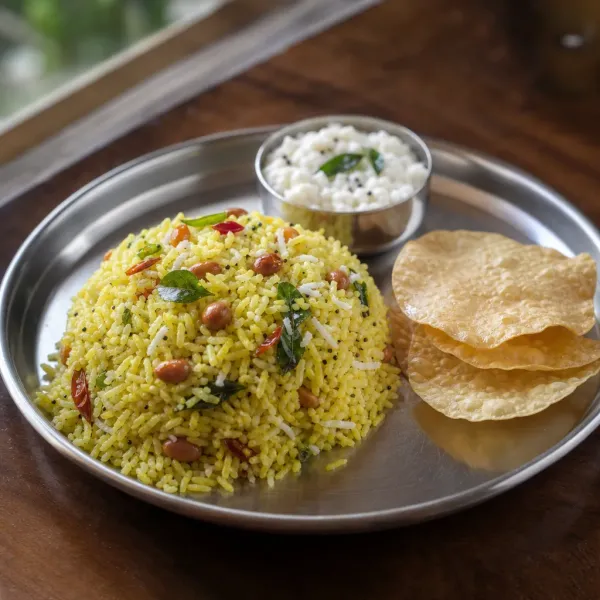
Chitranna
Authentic Karnataka Brahmin chitranna with groundnut oil tempering, fresh lemon juice, peanuts and coconut. Step-by-step traditional method.
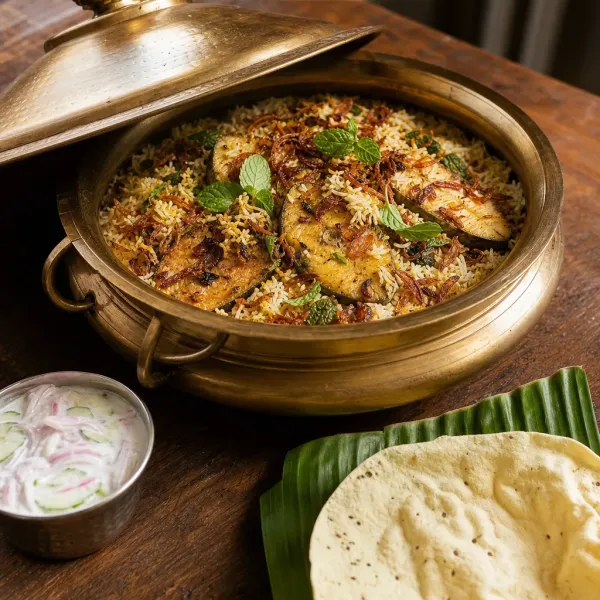
Malabar Meen Biryani
Traditional Mappila Malabar Meen Biryani with king fish, Kaima rice and coconut oil masala. Authentic Kerala fish biryani recipe with dum method.
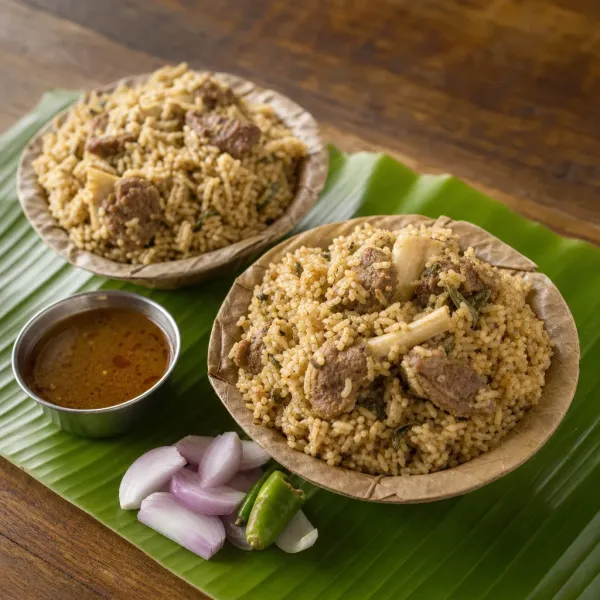
Donne Biryani
Authentic Bangalore donne biryani with mutton and seeraga samba rice, cooked in bone stock with ghee and whole spices, the military hotel way.
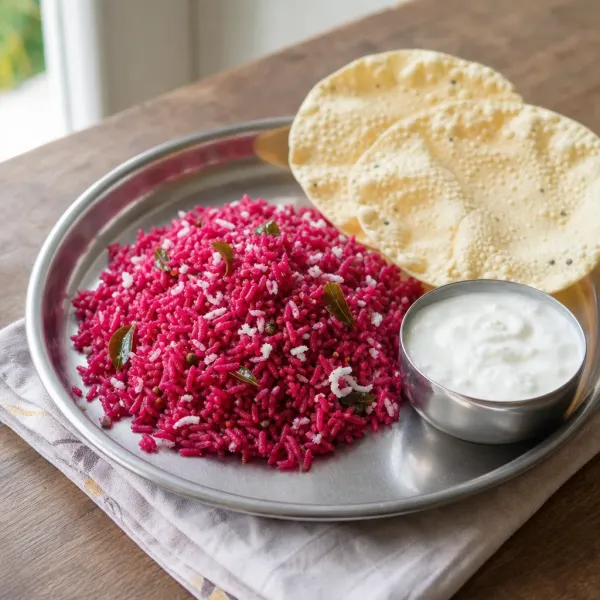
Beetroot Rice (Beetroot Sadam)
Traditional Tamil Brahmin beetroot sadam made with gingelly oil, mustard tempering and fresh coconut. A weekday lunch recipe with exact quantities an…
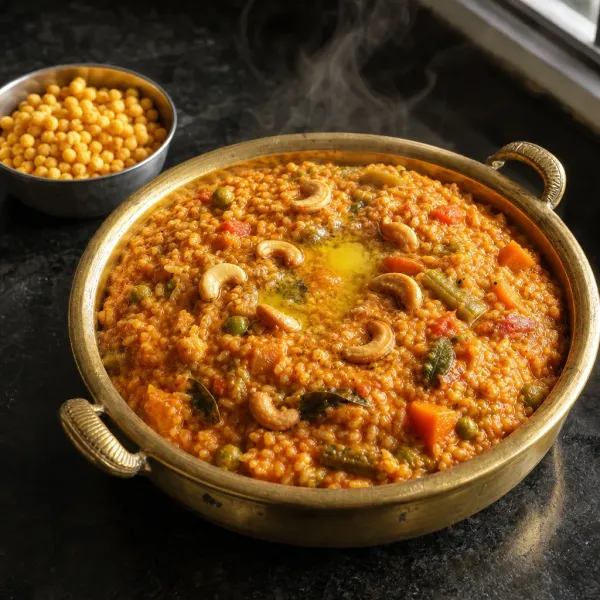
Bisi Bele Bath
Authentic Karnataka bisi bele bath with homemade spice powder, toor dal, seasonal vegetables, tamarind, and a hot ghee tempering. Traditional househo…