

Bisi Bele Bath Recipe
Malayalam ബിസി ബേಲೆ ಬಾತ್Tamil பிசி பேலே பாத்Kannada ಬಿಸಿ ಬೇಳೆ ಬಾತ್Telugu బిసి బేళే బాత్
- Prep25 min
- Cook1 hr
- Serves4
- DifficultyMedium
- DietVegetarian
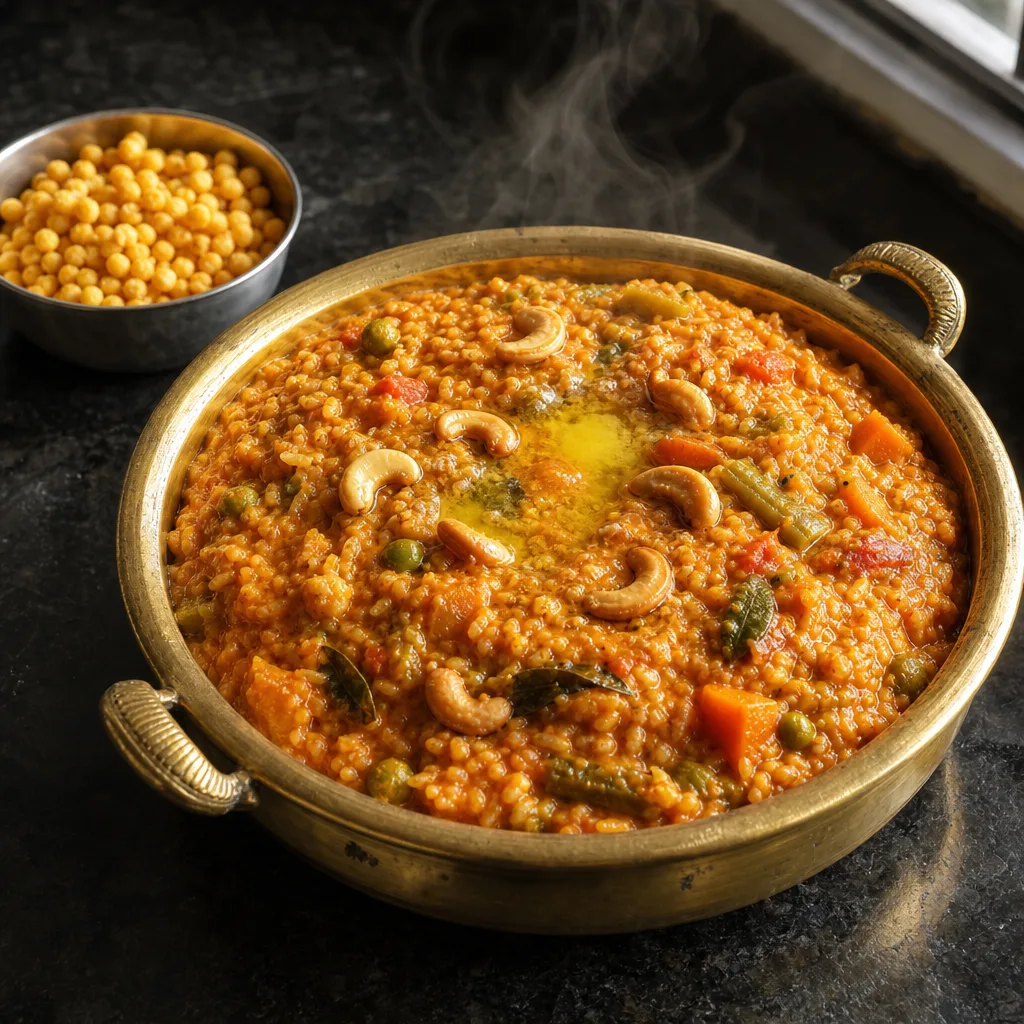
Bisi bele bath belongs to the Kannada-speaking household kitchen and, before that, to the royal kitchen of Mysore. The name means simply hot lentil rice, and the temperature is not a suggestion — it must arrive at the table steaming, loose enough to pour from the ladle, and eaten immediately. It is a complete meal in one pot: rice, toor dal and vegetables cooked together and finished with a freshly made spice powder and a hot ghee tempering.
The spice powder is what makes each household's version its own. Every family has a ratio they defend. The powder is dry-roasted and ground fresh for each batch; the version here is a mid-heat, aromatic one typical of Bangalore and Mysore homes, with chana dal, urad dal, coriander seeds, dried red chillies, cinnamon, cloves, marathi mokku (dried kapok buds), and stone flower (dagad phool) in the mix. Some cooks add a small piece of dry coconut; some do not. Both are genuine.
The tamarind here is ordinary tamarind, not kudampuli. The fat is ghee, used twice: once in the tempering and once poured over the finished dish at the table. Households differ on vegetables — raw banana, carrot, beans, peas, potato, small brinjal, and drumstick all appear in different kitchens. The version below uses a combination that is common across most of central Karnataka.
Ingredients (serves 4)
For the bisi bele bath spice powder
For the rice and dal
For the tamarind and vegetables
For the tempering
Seasoning
Method
Make the spice powder
Heat a dry heavy pan over low flame. Roast the chana dal and urad dal separately, stirring constantly, until each turns a pale gold and smells nutty — about 3 minutes each. Set aside. In the same pan, roast the coriander seeds, cumin, black pepper, dried red chillies, cinnamon, cloves, cardamom, marathi mokku, and stone flower together over low heat, stirring, until the coriander seeds darken two shades and the chillies puff slightly, about 4 minutes. Do not rush this over high heat; the spices will scorch on the outside and stay raw inside. Finally, roast the grated dry coconut until golden, then the curry leaves until completely crisp. Cool everything to room temperature, combine, and grind to a fine powder in a dry grinder. Store in an airtight jar; this quantity makes more than you need for one batch, and the powder keeps well for two weeks.
Pressure-cook the rice and dal together
Combine the rinsed rice and toor dal in a pressure cooker. Add 1.2 litres of water and the turmeric. Cook on medium heat for 5 to 6 whistles — you want the rice and dal to be very soft, almost merged, not separate grains. Open when the pressure drops naturally. Mash lightly with the back of a ladle; the mixture should be thick but pourable.
Extract the tamarind pulp
Soak the tamarind in 250 ml of warm water for 15 minutes while the rice and dal cook. Squeeze and strain to get a thick, dark pulp. Discard the fibres and seeds.
Cook the vegetables in tamarind water
In a wide, heavy pot — a thick-bottomed vessel that can hold the full dish — pour in the tamarind pulp and add another 200 ml of water. Bring to a boil over medium heat. Add the potato and carrot first, since they take longest; cook for 5 minutes. Then add the beans, brinjal, drumstick, and peas. Cook until all the vegetables are just tender, about 8 to 10 minutes more. The tamarind liquid will reduce and deepen in colour.
Add the cooked rice and dal
Tip the mashed rice-dal mixture into the pot with the cooked vegetables and tamarind. Stir well over medium heat. The mixture will thicken as it heats; add hot water, a little at a time, to keep it loose — it should flow slowly off a ladle, not sit in a stiff mound. This is not a dry dish.
Season and add the spice powder
Add salt, the grated jaggery, and 3 to 4 tablespoons of the freshly made bisi bele bath powder. Stir thoroughly and taste. The balance you are looking for is sour from the tamarind, a gentle sweetness from the jaggery, warmth from the spices, and the underlying richness of the dal — no single note should dominate. Adjust the spice powder, salt, or jaggery one small addition at a time. Let the whole pot simmer together on low heat for 8 to 10 minutes so the spice powder loses its raw edge.
Make the tempering
In a small pan, heat 3 tablespoons of ghee over medium heat until it shimmers. Add the mustard seeds and wait for them to pop fully. Add the broken dried red chillies, curry leaves — stand back, they will splutter — and the asafoetida. Stir for 20 seconds, then add the cashew nuts. Fry the cashews, stirring, until they are a warm golden brown, about 2 minutes. Pour the entire contents of the pan, hot ghee and all, directly into the pot of bisi bele bath.
Final check and serve immediately
Stir the tempering through the bath. Taste once more for salt and sourness. If it has thickened too much while you made the tempering, add a splash of hot water and stir. Ladle into bowls or onto a banana leaf, pour a little extra ghee over the top of each serving, and bring to the table at once. This dish does not wait well.
How to serve
Boondi (plain salted), or potato chips (the thin fried variety). Some households serve a small cup of cold curds alongside. Papad is also common.
Served with: Boondi (plain salted), or potato chips (the thin fried variety). Some households serve a small cup of cold curds alongside. Papad is also common.
Cook's tips
The spice powder is not optional
Ready-made bisi bele bath powder from Karnataka brands like MTR or Maiyas is widely available and is genuinely used in many homes. It is a reasonable shortcut. But the flavour of a freshly ground powder with marathi mokku and stone flower is noticeably different and worth the effort when you have the time.
Consistency is the most common mistake
The dish thickens as it sits. If you cook it to the right consistency and then keep it on low heat for even ten minutes without adding water, it will become stiff and lose the characteristic flowing texture. Keep a kettle of hot water nearby and add it freely.
Marathi mokku and stone flower
These two spices are what give the Karnataka version of this powder its particular depth. Marathi mokku is the dried flower bud of the silk cotton tree; stone flower (dagad phool or kalpasi) is a lichen. Both are available at shops selling Karnataka or Chettinad spices. If you cannot find them, the powder still works without them — it just tastes less specifically Kannadiga.
Vegetable choices
The vegetables listed here are a common combination, not a fixed rule. Raw banana, yam, and cluster beans all appear in different household versions. Avoid watery vegetables like tomato or cucumber, which break down and make the dish sour in a different, less pleasant way.
Reheating
Leftovers reheat well with a generous addition of water, stirred over low heat. The texture will not be identical to fresh but it is still good. Do not reheat in a microwave without adding water first; it will dry out and become stiff.
Regional variations
Temple-style versions from the Udupi tradition use no onion and a slightly different spice powder; some households in north Karnataka add more dried red chillies and a larger quantity of tamarind.
Glossary
- Bisi bele bath ಬಿಸಿ ಬೇಳೆ ಬಾತ್
- Literally 'hot lentil rice' in Kannada; a one-pot dish of rice, toor dal, vegetables, tamarind, and spices.
- Toor dal ತೊಗರಿ ಬೇಳೆ
- Split pigeon peas; the primary legume in this dish.
- Marathi mokku ಮರಾಠಿ ಮೊಕ್ಕು
- Dried flower buds of the silk cotton tree (Bombax ceiba); used in Karnataka and Chettinad spice powders for a distinctive woody, slightly floral note.
- Dagad phool / Kalpasi ದಗಡ್ ಫೂಲ್
- Stone flower, a lichen used as a spice in Karnataka and Chettinad cooking; adds an earthy, mossy depth to spice powders.
- Byadagi chilli ಬ್ಯಾಡಗಿ ಮೆಣಸಿನಕಾಯಿ
- A variety of dried red chilli from north Karnataka, prized for its deep red colour and moderate heat rather than fierce pungency.
- Jaggery ಬೆಲ್ಲ
- Unrefined cane sugar pressed into blocks; used in small amounts in bisi bele bath to balance the tamarind's sourness.
- Sona masuri ಸೋನಾ ಮಸೂರಿ
- A medium-grain, lightweight rice variety widely used in Karnataka and Andhra Pradesh for everyday cooking.
Two things decide whether this works: the spice powder and the consistency. The powder must be roasted patiently over low heat until every spice is properly cooked through — rushed roasting gives a raw, harsh flavour that no amount of simmering will fix. And the dish must stay loose enough to pour from the ladle right up to the moment it is served; keep hot water close and add it without hesitation.
More Rice Dishes recipes
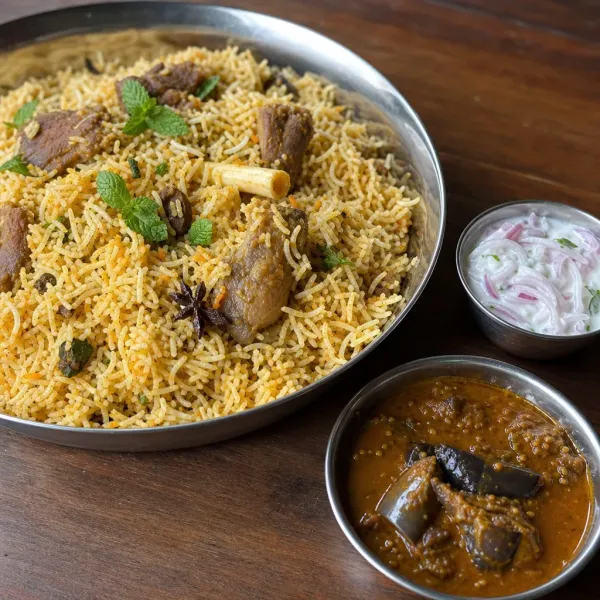
Ambur Biryani
Authentic Ambur biryani with seeraga samba rice and mutton, cooked the Arcot Nawayath way: gingelly oil, dried red chilli paste, and a sealed dum fin…
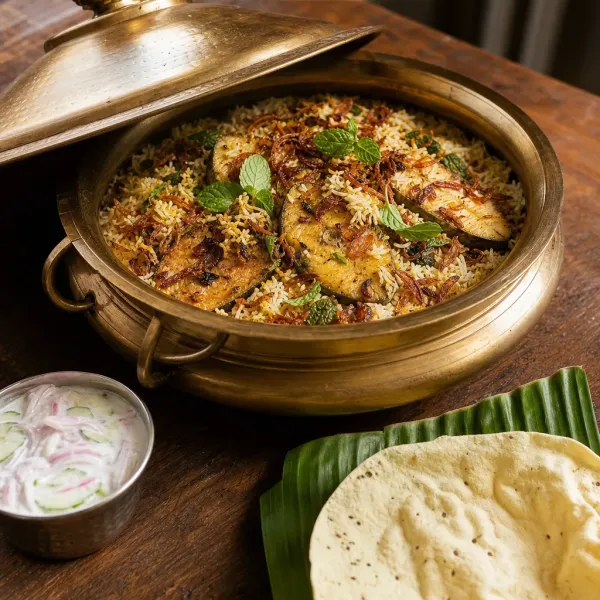
Malabar Meen Biryani
Traditional Mappila Malabar Meen Biryani with king fish, Kaima rice and coconut oil masala. Authentic Kerala fish biryani recipe with dum method.
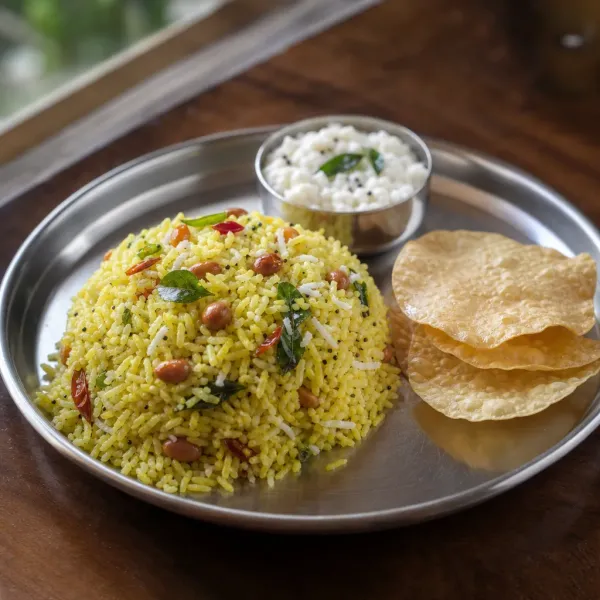
Chitranna
Authentic Karnataka Brahmin chitranna with groundnut oil tempering, fresh lemon juice, peanuts and coconut. Step-by-step traditional method.
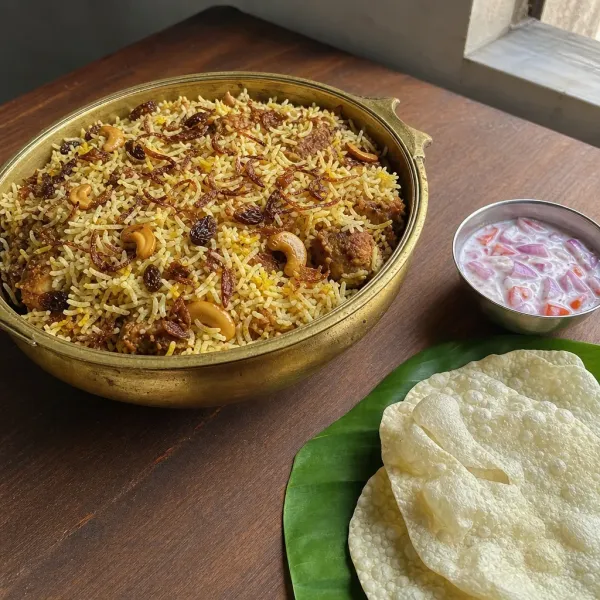
Thalassery Chicken Biryani
Authentic Thalassery chicken biryani with Kaima rice, Mappila masala, and dum method. Step-by-step traditional Kerala Malabar household recipe.
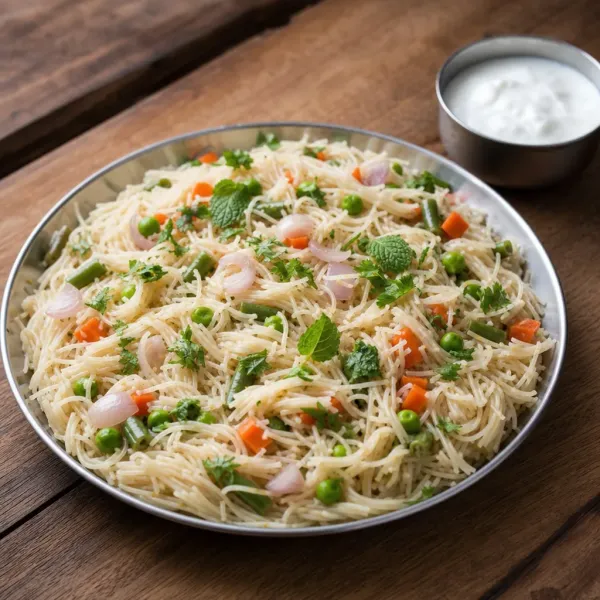
Semiya Biryani (Vermicelli Biryani)
Traditional Tamil Nadu semiya biryani made with roasted vermicelli, shallots, and gingelly oil. A quick, spiced weekday dish from Kongunad home kitch…
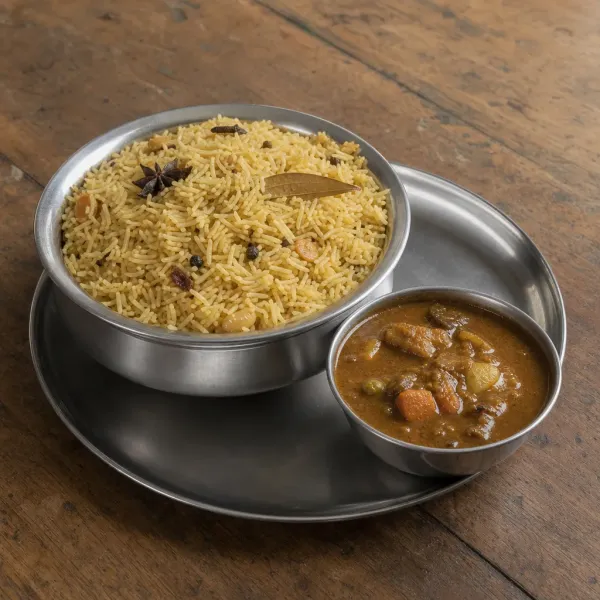
Kuska
Traditional Tamil Muslim kuska: fragrant seeraga samba rice cooked with whole spices and golden shallots. Stovetop method, no meat, no food colour.