

Malabar Meen Biryani Recipe
Malayalam മലബാർ മീൻ ബിരിയാണിTamil மலபார் மீன் பிரியாணிKannada ಮಲಬಾರ್ ಮೀನು ಬಿರಿಯಾನಿTelugu మలబార్ మీన్ బిర్యానీ
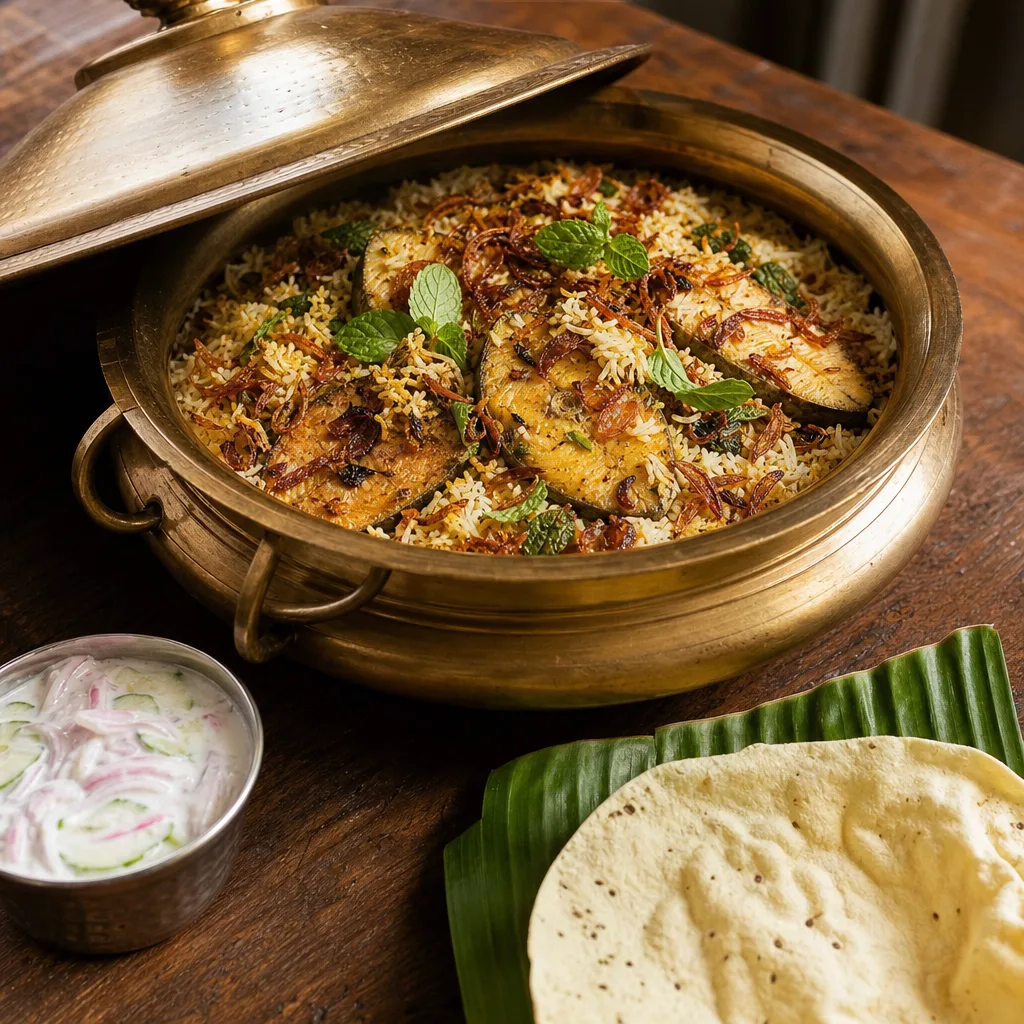
- Prep40 min
- Cook1 hr
- Serves4 to 5
- DifficultyHard
- DietNon-vegetarian
Mappila biryani from Malabar is its own tradition, quite separate from Hyderabadi or Lucknowi styles. The rice is Kaima, also called Jeerakasala, a short-grain fragrant variety grown in the Wayanad foothills. It cooks quickly and absorbs the masala without turning mushy, which is why Malabar cooks will not substitute Basmati. The fish is fried first until the outside firms up, then layered into the rice so it holds its shape through the dum.
The masala base here is built on shallots, tomato, and fresh ginger-garlic, cooked in coconut oil until the oil floats back to the surface. Whole spices go in early: fennel seeds, cinnamon, cloves, cardamom. The heat comes from black pepper and a measured hand with chilli powder, not from a generic spice blend. Mint and coriander leaves are added in two moments: into the masala while it cooks, and again as a fresh layer before the dum.
Households differ mainly on the fish. King fish (ayakoora) is the most common choice in Kozhikode and Malappuram because its firm flesh survives frying and the dum without breaking apart. Some families use seer fish steaks. The dum is traditionally done on a tawa over a low flame, with a sealed lid weighted down by a heavy vessel of water. This is not a quick weeknight dish; it takes patience, but the layering and the sealing are what make it.
Ingredients (serves 4 to 5)
For the rice
For the fish
For the masala
For the dum and layering
Method
Marinate the fish
Mix the red chilli powder, turmeric, black pepper, lemon juice and salt into a paste. Rub this over every surface of the fish steaks and leave them for 20 minutes at room temperature. Do not marinate longer or the lemon will begin to cook the flesh and it will break in the pan.
Fry the fish
Heat 4 tbsp coconut oil in a wide frying pan over medium-high heat until shimmering. Lay the fish steaks in without crowding; fry in batches if needed. Fry 3 minutes on the first side without moving them, then turn carefully and fry 2 minutes on the second side. The outside should be firm and lightly coloured but the fish need not be cooked through; it will finish in the dum. Lift out and set aside on a plate.
Fry the shallots for layering
In the same pan or a small kadai, heat 2 tbsp coconut oil over medium heat. Add the 80 g sliced shallots and fry slowly, stirring often, until deep golden and crisp, about 12 to 15 minutes. They darken quickly at the end, so watch them closely. Drain on a plate lined with paper and set aside.
Build the masala
In a heavy-bottomed pot or large kadai, heat 4 tbsp coconut oil over medium heat. Add the fennel seeds, cinnamon, cloves and cardamom and let them sputter for 30 seconds. Add the sliced shallots and a pinch of salt and cook, stirring regularly, until the shallots are soft and a pale gold, about 10 minutes. Add the ginger-garlic paste and the slit green chillies and fry until the raw smell disappears, about 4 minutes.
Add the spice powders and tomato
Lower the heat. Add the red chilli powder, coriander powder, turmeric and black pepper and stir for 1 minute so the powders do not burn. Add the chopped tomatoes and cook on medium heat, pressing them down as they soften, until the tomatoes are completely broken down and the oil begins to float at the edges of the masala, about 10 minutes. Add the mint and coriander leaves, stir once, taste for salt and remove from the heat.
Par-cook the rice
Bring 900 ml water to a rolling boil in a large pot. Add 1 tbsp coconut oil, the cinnamon, cloves, cardamom, bay leaves and salt. Drain the soaked Kaima rice and add it. Cook uncovered on high heat, stirring once after 2 minutes. The rice is ready to drain when each grain has just turned opaque and is cooked about 70 percent through, roughly 6 to 7 minutes from when you added it. It should still have a faint bite in the centre. Drain immediately through a colander.
Layer the biryani
Grease the base of a heavy-bottomed pot or a large biriyani pot lightly with coconut oil. Spread half the drained rice as the first layer. Spoon all the masala evenly over the rice. Lay the fried fish steaks over the masala in a single layer. Spread the remaining rice over the fish. Scatter the fried shallots, the fresh mint and coriander leaves over the top. Drizzle the saffron water and the 1 tbsp ghee over the surface.
Seal and give dum
Cover the pot with a tight-fitting lid. Seal the gap between the lid and the pot with a rope of dough made from a small amount of flour and water, or simply cover the pot with a sheet of aluminium foil pressed firmly around the rim before placing the lid on top. Place the pot on a tawa over the lowest possible flame. Put a heavy vessel of water on top of the lid to press it down. Cook on dum for 20 minutes. Do not lift the lid during this time.
Rest and open
Remove from the heat and leave the sealed pot undisturbed for 10 minutes. Open the lid at the table if you can; the steam and the fragrance are part of serving it. Use a wide, flat spoon or spatula to serve, going down through all the layers so each portion has rice, masala and a piece of fish.
How to serve
Raita made with yoghurt, cucumber and shallots; pickle (achar); pappadom; sliced onion salad with lemon and green chilli.
Served with: Raita made with yoghurt, cucumber and shallots; pickle (achar); pappadom; sliced onion salad with lemon and green chilli.
Cook's tips
Choosing the fish
King fish steaks hold together best. Avoid thin fillets or flaky fish like tilapia; they will crumble during the dum and disappear into the rice. The steaks should be at least 2 cm thick.
Kaima rice is not optional
Basmati absorbs water differently and takes longer to cook; the timing in step 6 will not work. If you cannot find Kaima or Jeerakasala rice, use another short-grain fragrant Kerala rice, but adjust the par-cooking time by tasting.
The oil-floating test
In step 5, the masala is ready only when the coconut oil separates and pools visibly at the edges. If you layer the rice before this point, the masala will be watery and the rice will go soggy.
Dum heat matters
Too high a flame during dum will scorch the bottom layer before the top is cooked through. The tawa under the pot acts as a diffuser. If your tawa is thin, stack two of them. A scorched bottom is the most common mistake.
Reheating
Leftover biryani reheats well in a covered pot with a tablespoon of water sprinkled over it, on the lowest flame for 10 minutes. Microwaving dries the rice and toughens the fish.
Regional variations
Kozhikodan households sometimes use seerfish (neymeen) in place of king fish; coastal Kannur families add a small piece of kachampuli alongside the tomato for extra sourness.
Glossary
- Kaima rice / Jeerakasala കൈമ അരി / ജീരകശാല
- A short-grain, intensely fragrant Kerala rice variety used exclusively in Malabar biriyani; named for its resemblance to cumin seeds.
- Ayakoora അയക്കൂര
- King fish in Malayalam; the firm-fleshed variety most commonly used in Malabar fish preparations.
- Chuvannulli ചുവന്നുള്ളി
- Kerala shallots; smaller and more pungent than the large onions used in North Indian cooking.
- Perumjeerakam പെരുംജീരകം
- Fennel seeds; a signature spice in Mappila cooking that distinguishes Malabar biryani from other South Indian rice dishes.
- Dum دم
- A sealed, slow-cooking technique in which the pot is closed airtight and the dish finishes cooking in its own steam over a very low flame.
- Kadai കടായി
- A deep, round-bottomed cooking vessel used for frying and making masala.
Two things decide this biryani: the rice must be drained at exactly 70 percent done, still with a faint bite, because it will finish cooking in the dum and overcooked rice cannot be rescued. And the masala must cook until the coconut oil floats free before the layers go in, or the whole pot turns heavy and wet. Get those two moments right and the rest follows.
More Rice Dishes recipes
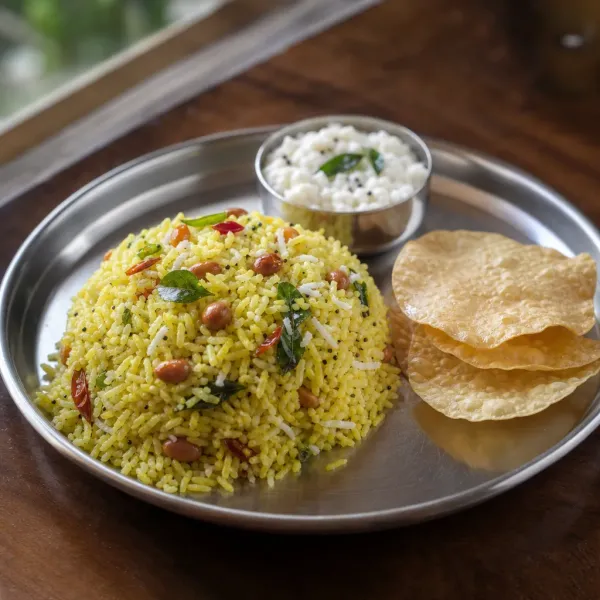
Chitranna
Authentic Karnataka Brahmin chitranna with groundnut oil tempering, fresh lemon juice, peanuts and coconut. Step-by-step traditional method.
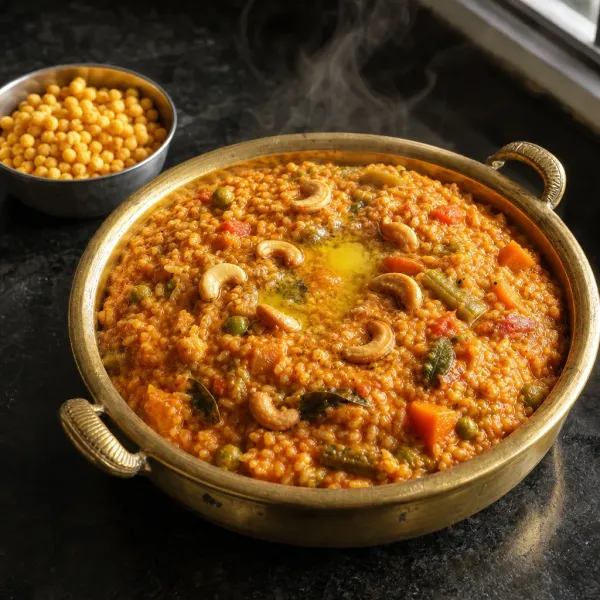
Bisi Bele Bath
Authentic Karnataka bisi bele bath with homemade spice powder, toor dal, seasonal vegetables, tamarind, and a hot ghee tempering. Traditional househo…
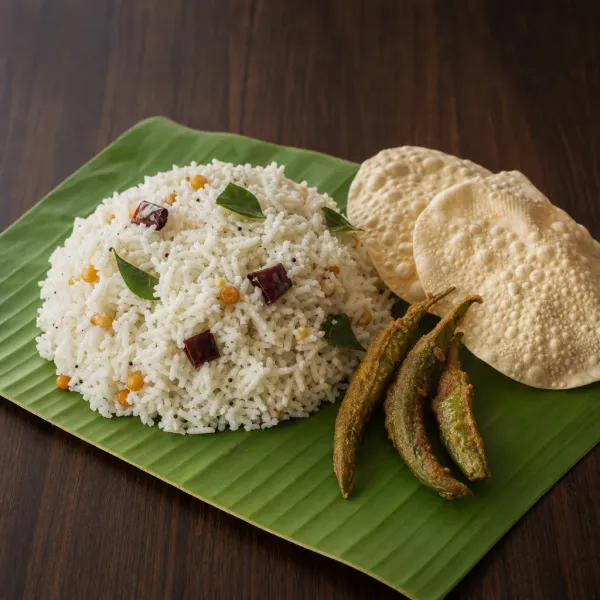
Thengai Sadam (Tamil Brahmin Coconut Rice)
Traditional Tamil Brahmin thengai sadam with fresh grated coconut, gingelly oil tempering, and dry-cooked sona masoori rice. Festival and lunchbox st…
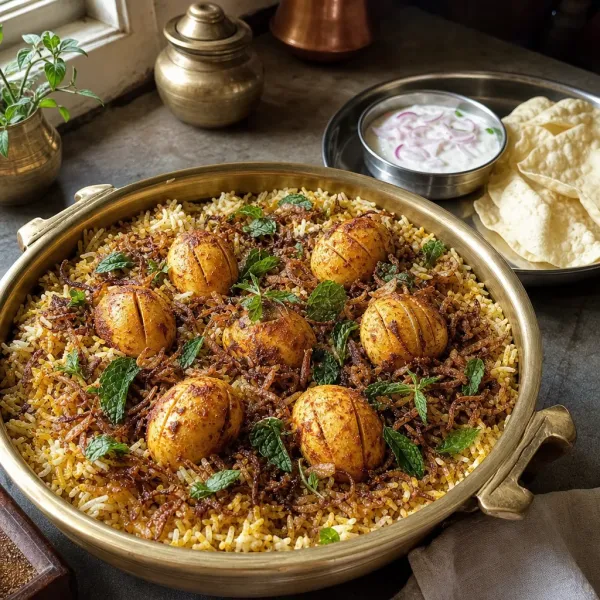
Malabar Egg Biryani
Traditional Mappila egg biryani from Malabar with kaima rice, fried shallots, and a slow dum finish. Step-by-step household recipe.
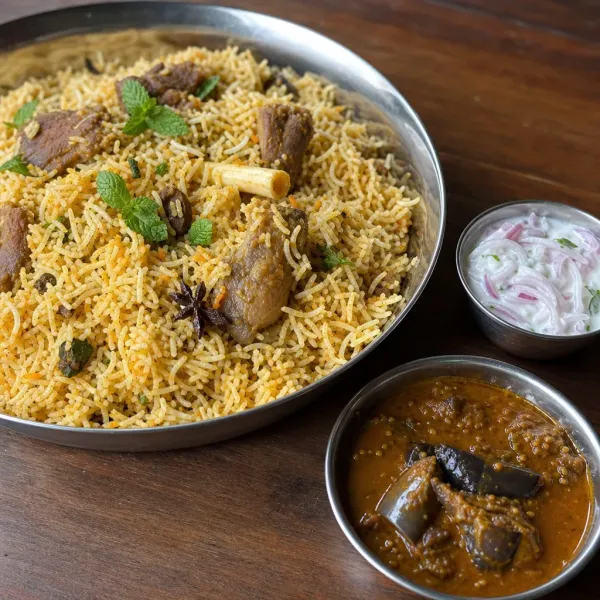
Ambur Biryani
Authentic Ambur biryani with seeraga samba rice and mutton, cooked the Arcot Nawayath way: gingelly oil, dried red chilli paste, and a sealed dum fin…
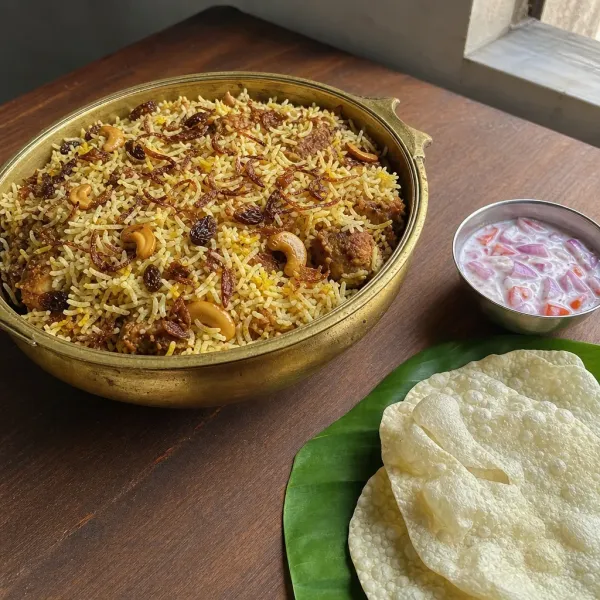
Thalassery Chicken Biryani
Authentic Thalassery chicken biryani with Kaima rice, Mappila masala, and dum method. Step-by-step traditional Kerala Malabar household recipe.