

Malabar Egg Biryani Recipe
Malayalam മുട്ട ബിരിയാണിTamil முட்டை பிரியாணிKannada ಮೊಟ್ಟೆ ಬಿರಿಯಾನಿTelugu గుడ్డు బిర్యానీ
- Prep30 min
- Cook1 hr
- Serves4
- DifficultyMedium
- DietEgg
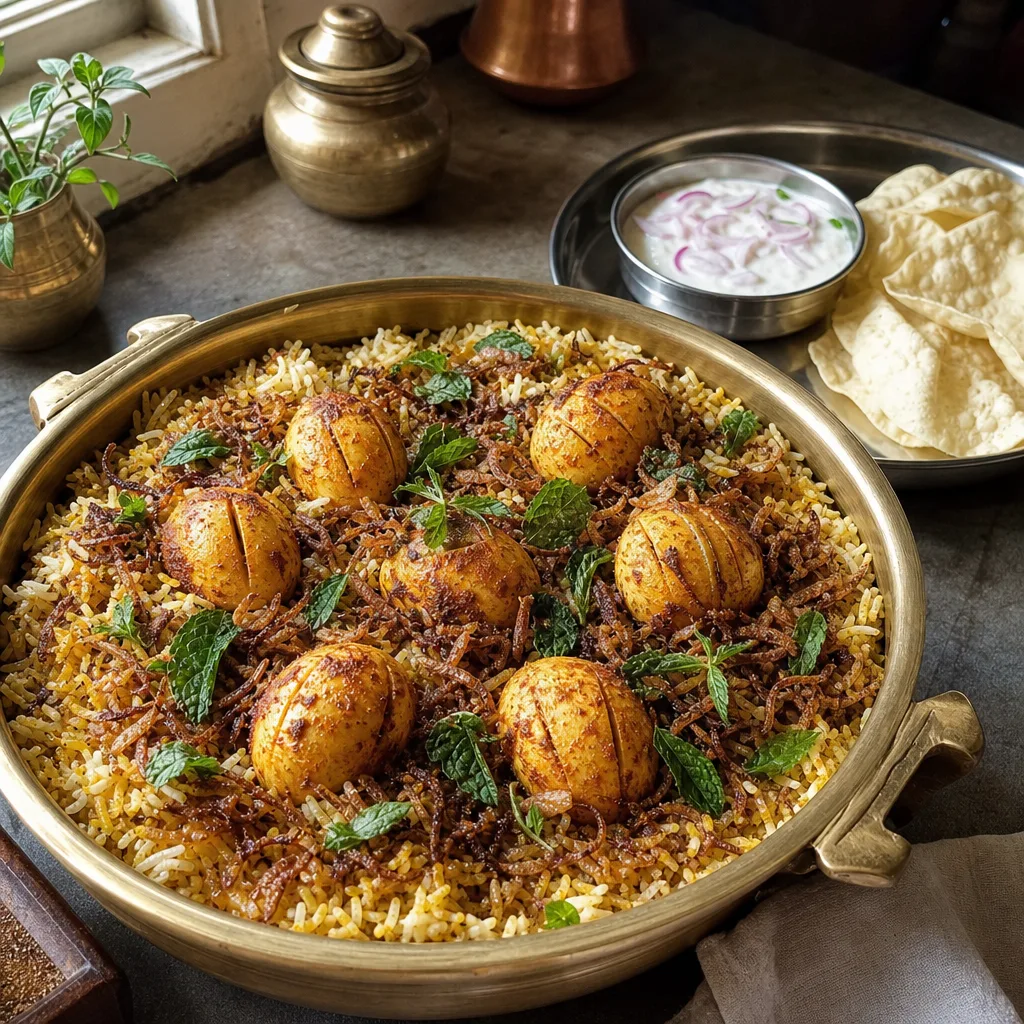
Egg biryani in a Mappila household in Malabar is not a shortcut chicken biryani with eggs swapped in. It is its own dish, built around hard-boiled eggs that are fried in coconut oil until the whites blister and colour, then layered with par-cooked kaima rice and a thick, deeply spiced masala. The rice is cooked in the style of the Malabar kitchen: with whole spices, a little ghee, and just enough water so each grain stays separate.
The masala here is built on shallots, not onions, fried slowly until they are brick-red and sweet. Tomato does not belong in the traditional Mappila version. The heat comes from black pepper and green chillies; the warmth from fennel, cardamom, and a short cinnamon stick. Ginger and garlic are ground fresh. Mint and coriander leaves go in at the end of the masala, not scattered on top as garnish.
Households differ mainly in how much coconut milk they add to the masala — some pour in a small cup to loosen it before layering, others keep it completely dry. Both are correct. The dum is done on a tawa over the lowest flame, the pot sealed with a tight lid or a ring of dough. Serve it with a sharp shallot pickle and raita made from curd.
Ingredients (serves 4)
For the rice
For the eggs
For the masala
For the dum and finishing
Method
Fry the shallots for birista
Heat enough coconut oil in a wide pan to shallow-fry. Add the 100 g of sliced shallots for the birista over medium heat. Stir often and fry for 15 to 20 minutes until they are deep golden-brown and crisp. The colour should be a rich amber, not pale yellow. Lift them out with a slotted spoon onto a plate lined with paper; they will crisp further as they cool. Save the flavoured oil left in the pan — use it for frying the eggs.
Score and fry the eggs
Make three or four shallow lengthwise cuts through the white of each hard-boiled egg without cutting into the yolk. Mix turmeric, red chilli powder, and a little salt and rub this over the eggs. In the same oil used for the birista, add a splash more coconut oil if needed and fry the eggs over medium-high heat, turning gently, until the whites are blistered and golden in patches — about 3 to 4 minutes. Set aside.
Par-cook the rice
Bring 700 ml of water to a rolling boil in a heavy pot. Add salt, ghee, and all the whole spices listed for the rice. Add the washed kaima rice and cook uncovered over high heat for 8 to 9 minutes. The rice should be about 70 percent cooked — each grain will have a small white core when you press one between your fingers. Drain immediately through a colander and spread the rice out loosely on a tray to stop the cooking. Do not rinse with cold water.
Build the masala
In a wide, heavy-bottomed pot (the same one you will use for dum), heat 4 tbsp coconut oil over medium heat. Add the whole spices — fennel seeds, cardamom, cloves, cinnamon, crushed black pepper — and let them sizzle for 30 seconds. Add the sliced shallots and green chillies and fry over medium heat, stirring regularly, for 18 to 22 minutes until the shallots are a deep brick-red. Do not rush this step; pale shallots will give you a raw, sharp masala.
Add the pastes and spice powders
Add the ginger and garlic pastes and fry for 4 to 5 minutes, stirring constantly, until the raw smell is completely gone and the mixture starts to leave the sides of the pan. Add turmeric, red chilli powder, and coriander powder. Stir well and fry for another 2 minutes over medium-low heat. If it sticks, add a splash of water, not oil.
Finish the masala with curd and herbs
Reduce the heat to low. Add the whisked curd one tablespoon at a time, stirring between each addition so it does not split. Cook for 3 minutes until the masala is thick and the oil begins to separate around the edges. Stir in the garam masala, mint leaves, and coriander leaves. Taste for salt. The masala should be thick enough to coat a spoon — not watery.
Nestle the eggs into the masala
Lay the fried eggs into the masala, turning them gently so each one is well coated. Spoon some masala over the top of each egg. This is the base layer of your biryani.
Layer the rice
Spread the par-cooked rice evenly over the eggs and masala in an even layer. Do not press it down. Drizzle the ghee over the surface of the rice. Spoon the saffron water in three or four places across the rice so you get patches of colour rather than uniform dyeing. Scatter the fried birista shallots over the top.
Seal and cook on dum
Place a flat tawa (griddle) on the stove over the lowest possible flame and set the biryani pot on top of it. Cover the pot with a tight-fitting lid. If your lid does not seal well, place a piece of foil under it or press a damp cloth around the rim. Cook on dum for 20 minutes. Do not lift the lid before 18 minutes or the steam will escape and the rice will not finish cooking.
Rest and serve
Take the pot off the heat and let it rest, still sealed, for 5 minutes. Open the lid and use a wide, flat spoon to gently lift and mix the rice from the sides and bottom, bringing the eggs up without breaking them. Serve straight from the pot or transfer carefully to a serving dish.
How to serve
Chilled curd raita made with sliced shallots and green chillies; a sharp shallot and green chilli pickle (challa); pappadam.
Served with: Chilled curd raita made with sliced shallots and green chillies; a sharp shallot and green chilli pickle (challa); pappadam.
Cook's tips
Kaima rice matters
Kaima (jeerakasala) rice is short, slender, and aromatic — it is the rice of Malabar biryani. Basmati will give you a different result in texture and fragrance. If you cannot find kaima, use a good-quality short-grain fragrant rice, but the character of the dish will shift.
The shallot colour is not optional
If you pull the shallots off the heat when they are still pale gold, the masala will taste sharp and raw even after dum. The deep brick-red colour means the sugars have caramelised and the sharpness has cooked out. Patience here is the difference between a flat masala and a rounded one.
Curd temperature
Cold curd added to a hot pan will split and look grainy. Let it come to room temperature and add it slowly over low heat, stirring as you go.
Making the Malabar garam masala
Dry-roast 6 cardamom pods, 5 cloves, a 3 cm piece of cinnamon, and 1 star anise in a small pan for 2 minutes, then grind fine. Make a small batch and use it within a week. This is not the same as the North Indian garam masala sold in packets.
The tawa under the pot
The tawa diffuses the direct heat so the bottom layer of rice does not scorch during dum. This is the standard Malabar household method. A cast-iron pan works just as well.
Regional variations
Thalassery-style with thin long-grain kaima rice and a sweeter spice profile; Hyderabadi egg dum biryani with a distinct layering and saffron milk; Tamil Nadu Muslim-style egg biryani with seeraga samba rice.
Glossary
- kaima rice / jeerakasala ജീരകശാല
- A short, slender, aromatic rice variety grown in Kerala, used specifically for Malabar biryani.
- birista ബിരിസ്ത
- Deeply fried crisp shallots used as a topping and flavouring in Mappila biryani.
- cheriya ulli ചെറിയ ഉള്ളി
- Small shallots, the standard allium of the Kerala kitchen, sharper and more pungent than large onions.
- perumjeerakam പെരുംജീരകം
- Fennel seeds; a key aromatic in Malabar spice blends, distinct from cumin.
- dum دم
- A slow-cooking technique where a sealed pot traps steam to finish cooking the rice from within, originating in Mughal-era cooking and central to biryani.
Two things settle this dish. The first is the shallots: fry them all the way to deep brick-red or the masala will never taste right. The second is the dum heat: too high and the bottom scorches, too short and the rice stays chalky at the centre. Get those two right and everything else follows.
More Rice Dishes recipes
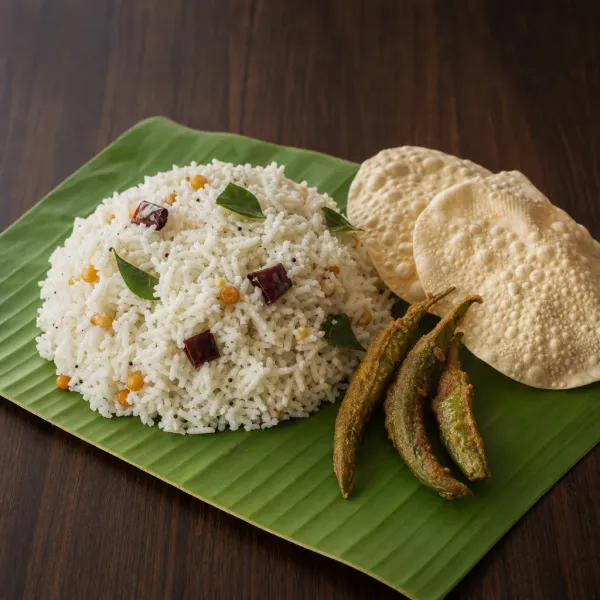
Thengai Sadam (Tamil Brahmin Coconut Rice)
Traditional Tamil Brahmin thengai sadam with fresh grated coconut, gingelly oil tempering, and dry-cooked sona masoori rice. Festival and lunchbox st…
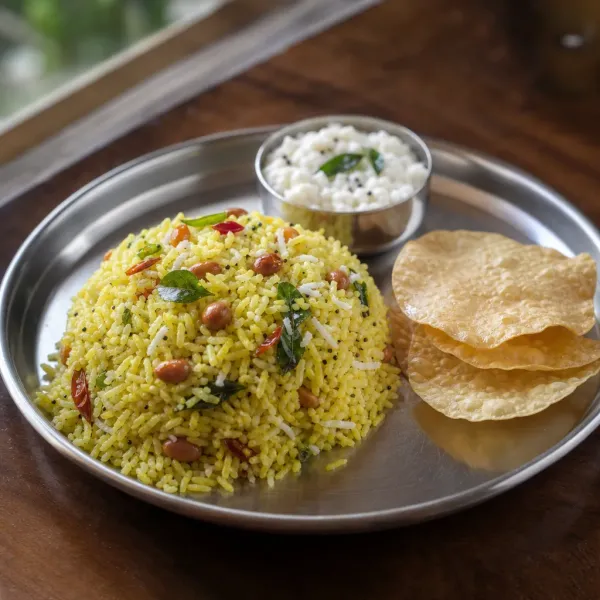
Chitranna
Authentic Karnataka Brahmin chitranna with groundnut oil tempering, fresh lemon juice, peanuts and coconut. Step-by-step traditional method.
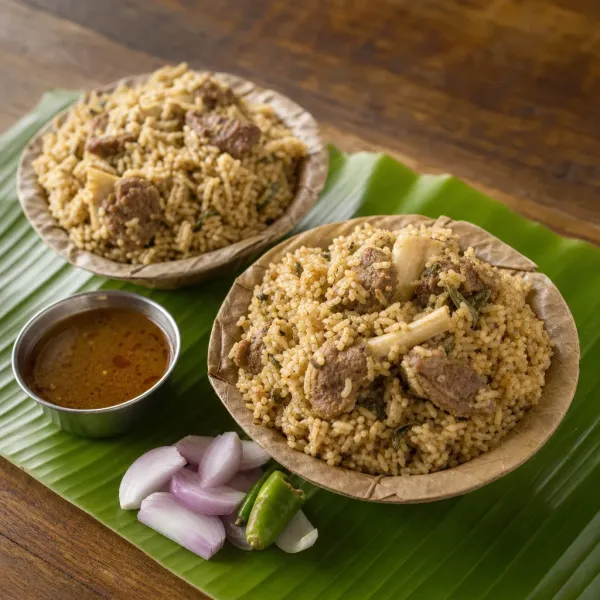
Donne Biryani
Authentic Bangalore donne biryani with mutton and seeraga samba rice, cooked in bone stock with ghee and whole spices, the military hotel way.
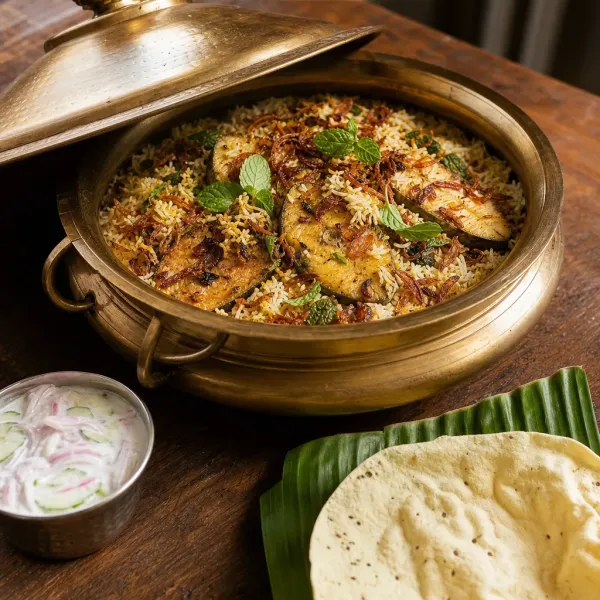
Malabar Meen Biryani
Traditional Mappila Malabar Meen Biryani with king fish, Kaima rice and coconut oil masala. Authentic Kerala fish biryani recipe with dum method.
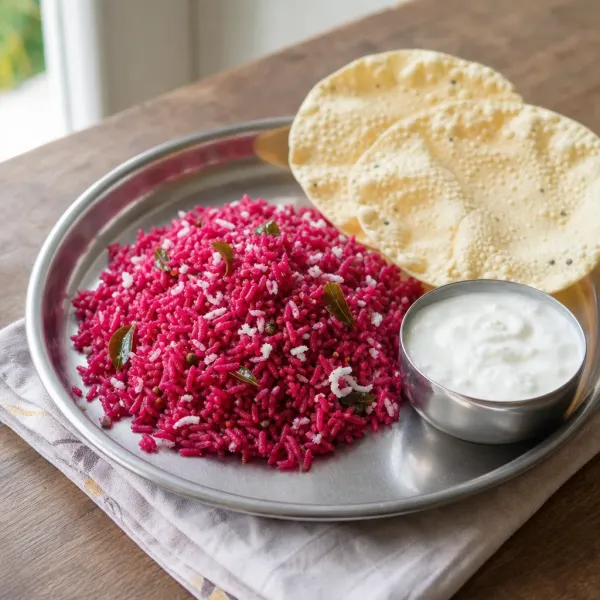
Beetroot Rice (Beetroot Sadam)
Traditional Tamil Brahmin beetroot sadam made with gingelly oil, mustard tempering and fresh coconut. A weekday lunch recipe with exact quantities an…
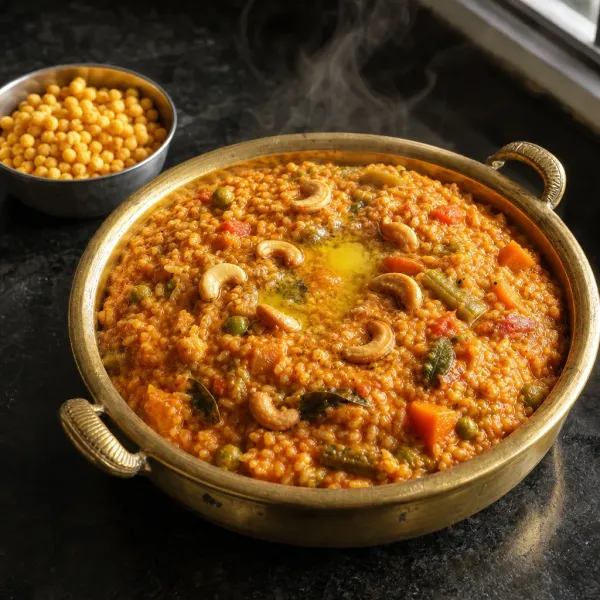
Bisi Bele Bath
Authentic Karnataka bisi bele bath with homemade spice powder, toor dal, seasonal vegetables, tamarind, and a hot ghee tempering. Traditional househo…