

Chitranna Recipe
Malayalam ചിത്രാന്നTamil எலுமிச்சை சாதம்Kannada ಚಿತ್ರಾನ್ನTelugu నిమ్మకాయ అన్నం
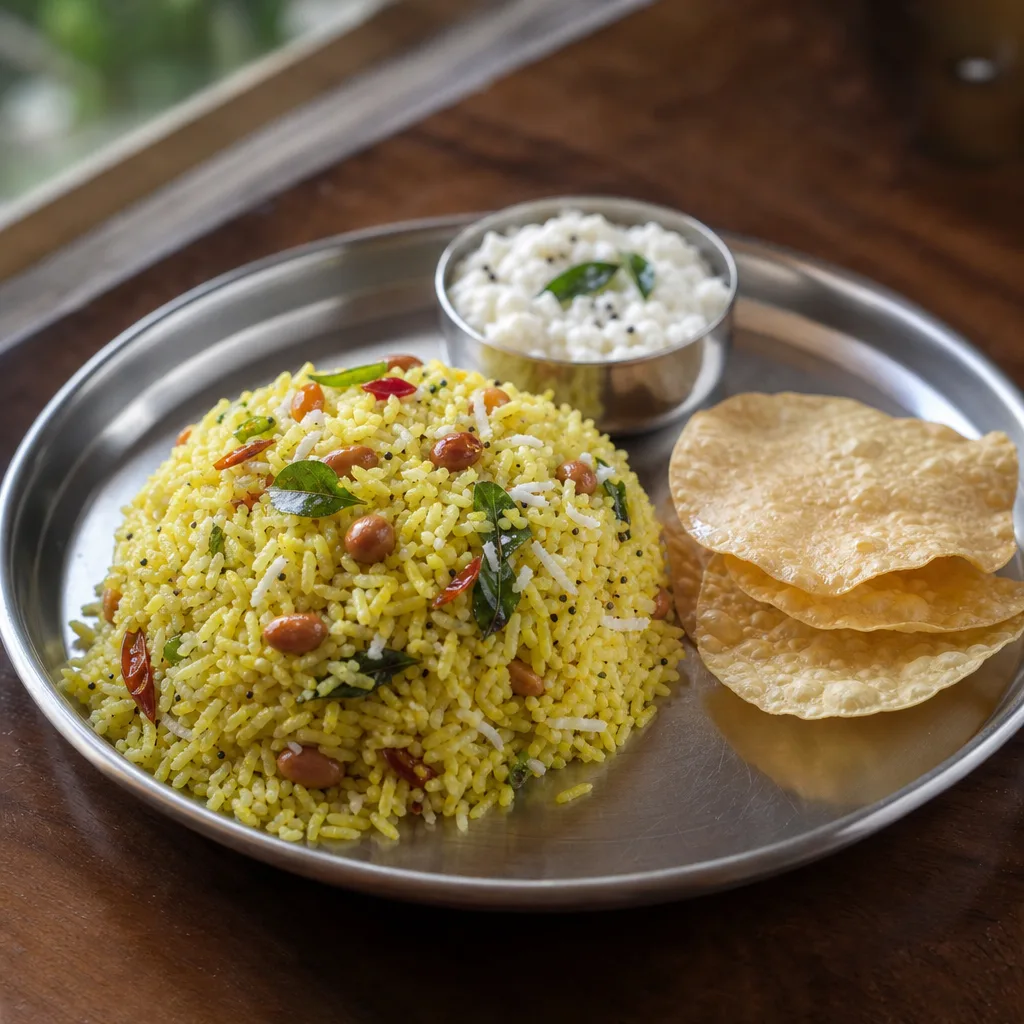
- Prep15 min
- Cook20 min
- Serves4
- DifficultyEasy
- DietVegan
Chitranna is Karnataka's everyday rice dish for journeys, festivals, and the tail end of a meal when something bright is needed. In Brahmin households it appears on Ugadi and Rama Navami thalis, often as one of several flavoured rices alongside puliyogare and mosaranna. It is also the rice packed into a steel dabba for school or a long train journey, because it keeps well through the day without refrigeration.
The word chitranna means decorated or variegated rice, and the name fits: the finished dish is yellow from turmeric, flecked with green curry leaf and chilli, and dotted with the white of peanuts and coconut. The sourness comes entirely from fresh lemon juice added off the heat, which keeps it sharp and clean rather than cooked-sour. This is important. Lemon juice that meets hot oil or a hot pan turns bitter; it must go in only after the rice has come off the flame.
Households differ on peanuts and coconut. Some families add both, some only peanuts, some neither. The version here includes roasted peanuts, which give texture, and fresh grated coconut stirred in at the end, which is the older Brahmin household habit. Gingelly oil is used in Tamil Nadu for this style of rice; in Karnataka the fat is usually refined groundnut oil or, in more traditional kitchens, cold-pressed groundnut oil. Coconut oil does not belong here.
Ingredients (serves 4)
Rice
Tempering
To finish
Method
Cook the rice
Wash the rice in three changes of water until the water runs mostly clear. Cook it in 540 ml water in a heavy pot: bring to a boil, stir once, cover tightly, reduce to the lowest flame, and cook for 12 minutes. Turn off the heat and leave covered for 8 minutes. Every grain should be separate and fully cooked through, not sticky. If you press a grain between your fingers it should feel soft all the way through with no hard centre.
Spread and cool the rice
Tip the cooked rice onto a wide plate or thali and spread it out with a fork or the back of a spoon. Let it cool to room temperature, about 20 minutes. Do not rush this step. Warm rice absorbs the tempering and lemon unevenly, and the lemon juice will turn dull and slightly bitter if it hits hot rice.
Fry the peanuts
Heat the groundnut oil in a wide kadai over medium flame. Add the raw peanuts and fry, stirring constantly, until the skins blister and the peanuts are golden brown inside, about 4–5 minutes. Lift them out with a slotted spoon and set aside, leaving the oil in the pan. Do not drain on paper; you want to keep them dry, not greasy.
Make the tempering
In the same oil over medium heat, add the mustard seeds. When they splutter and pop, add the chana dal and urad dal. Stir continuously until both dals turn a pale golden colour, about 90 seconds. The chana dal should look like tiny toasted chickpeas. If either dal goes dark brown, the heat is too high.
Add chillies and curry leaves
Add the broken dried red chillies and the slit green chillies. Fry for 30 seconds. Then add the curry leaves, standing back slightly as they will splutter hard in the oil. Fry for another 20 seconds until the leaves are crisp and fragrant.
Add turmeric
Lower the flame to its minimum. Add the turmeric powder and stir it through the oil for 10 seconds only. Turmeric burns quickly and turns bitter; it just needs to bloom in the fat, not fry.
Take the pan off the heat
Remove the kadai from the flame entirely. Let it sit for one minute so the oil is hot but no longer spitting. This is the moment the lemon juice goes in: pour it into the warm tempered oil and stir. You will hear a faint sizzle. The mixture will smell sharp and bright. If you add lemon to oil that is still on a live flame, the juice cooks and the sourness flattens.
Combine rice and tempering
Add the cooled rice to the kadai. Return the fried peanuts. Add salt. Using a wide spatula or clean hands, mix everything together with a lifting and folding motion rather than pressing down. You want every grain coated in the turmeric-lemon oil without mashing the rice. Work gently and take your time.
Add coconut and check seasoning
Scatter the grated fresh coconut over the rice and fold it in with two or three more gentle turns. Taste and adjust salt and lemon juice. The rice should taste distinctly sour, warmly spiced, and savoury. If it tastes flat, it usually needs more salt rather than more lemon.
Rest briefly before serving
Cover the kadai loosely and leave for 5 minutes before serving. The flavours settle and the coconut softens slightly into the rice. Serve at room temperature, not piping hot.
How to serve
Plain papad (sandige or happala), a small bowl of plain yoghurt or mosaranna (curd rice) on the side, and a few pieces of raw cucumber or carrot. On festival thalis it sits alongside puliyogare and kosambari.
Served with: Plain papad (sandige or happala), a small bowl of plain yoghurt or mosaranna (curd rice) on the side, and a few pieces of raw cucumber or carrot. On festival thalis it sits alongside puliyogare and kosambari.
Cook's tips
Rice variety matters
Sona Masoori is the right rice here: it cooks to separate grains without becoming gluey. Basmati is not traditional and its fragrance competes with the lemon. Leftover rice from the previous meal works very well if it has been stored loosely, not compressed in the pot.
Lemon quantity is a judgement
Indian lemons vary considerably in acidity. Start with 3 tablespoons, mix, taste, then add more if needed. The rice should taste clearly sour but not puckeringly so. Limes can substitute in the same quantity.
Keeping and packing
Chitranna keeps at room temperature for 6–7 hours, which is why it travels well. If you are making it to pack, leave out the fresh coconut or add it at the last moment before eating, as coconut turns sour faster than the rice.
The peanut question
Some households skip peanuts entirely, particularly when the rice is made for a festival where certain ingredients are avoided. Others use roasted cashews instead, which is a richer variation but not the everyday version.
Pressure cooker shortcut
Many households cook the rice in a pressure cooker: two whistles on medium flame, then natural release. This is genuinely common and produces good results. Spread the rice out immediately after opening the cooker so it does not steam further and clump.
Regional variations
Tamil Brahmin elumichai sadam uses a slightly different tadka with more dried red chillies and sometimes curry leaves fried in gingelly oil; Andhra nimmakaya pulihora adds a longer tempering and raw peanuts are standard rather than optional.
Glossary
- Chitranna ಚಿತ್ರಾನ್ನ
- Literally 'decorated rice' or 'variegated rice' in Kannada; refers to the category of flavoured rice dishes.
- Sona Masoori ಸೋನಾ ಮಸೂರಿ
- A medium-grain, lightweight rice variety grown in Karnataka and Andhra Pradesh; the everyday rice of most South Indian Brahmin households.
- Chana dal ಕಡಲೆ ಬೇಳೆ
- Split Bengal gram, used here as a textural and flavour element in the tempering, not as a protein.
- Urad dal ಉದ್ದಿನ ಬೇಳೆ
- Split and skinned black gram; fried in oil for tempering, it turns white and nutty.
- Kadai ಕಡಾಯಿ
- A deep, wide Indian wok with a rounded base, used for frying and for mixing rice dishes.
- Mosaranna ಮೊಸರನ್ನ
- Karnataka Brahmin term for curd rice; seasoned cooked rice mixed with yoghurt and a light tempering.
- Happala ಹಪ್ಪಳ
- The Kannada word for papad; thin dried lentil wafers fried or roasted and served as a crisp accompaniment.
Two things decide this dish: the rice must be fully cooled before the lemon and tempering go in, and the lemon juice must never touch a hot flame. Get those two right and the rest follows easily. The sourness stays clean, the grains stay separate, and the turmeric gives colour without bitterness.
More Rice Dishes recipes
Malabar Meen Biryani
Traditional Mappila Malabar Meen Biryani with king fish, Kaima rice and coconut oil masala. Authentic Kerala fish biryani recipe with dum method.
Thengai Sadam (Tamil Brahmin Coconut Rice)
Traditional Tamil Brahmin thengai sadam with fresh grated coconut, gingelly oil tempering, and dry-cooked sona masoori rice. Festival and lunchbox st…
Bisi Bele Bath
Authentic Karnataka bisi bele bath with homemade spice powder, toor dal, seasonal vegetables, tamarind, and a hot ghee tempering. Traditional househo…
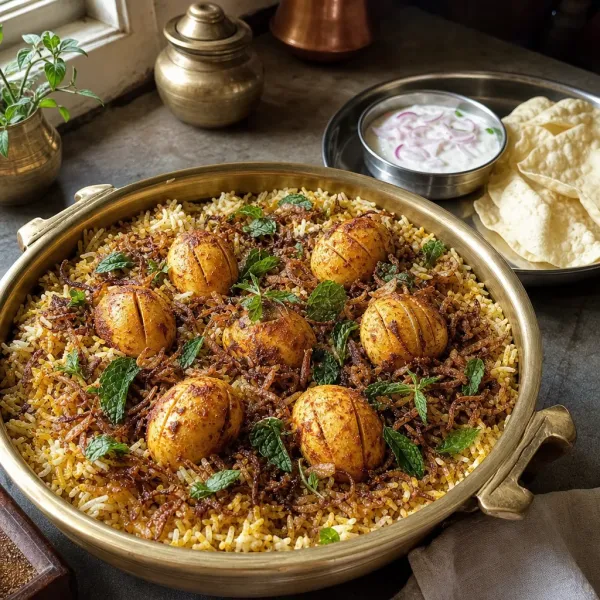
Malabar Egg Biryani
Traditional Mappila egg biryani from Malabar with kaima rice, fried shallots, and a slow dum finish. Step-by-step household recipe.
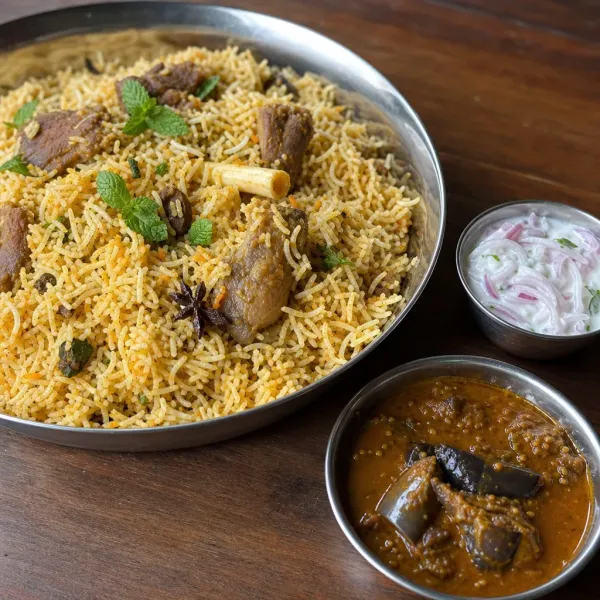
Ambur Biryani
Authentic Ambur biryani with seeraga samba rice and mutton, cooked the Arcot Nawayath way: gingelly oil, dried red chilli paste, and a sealed dum fin…
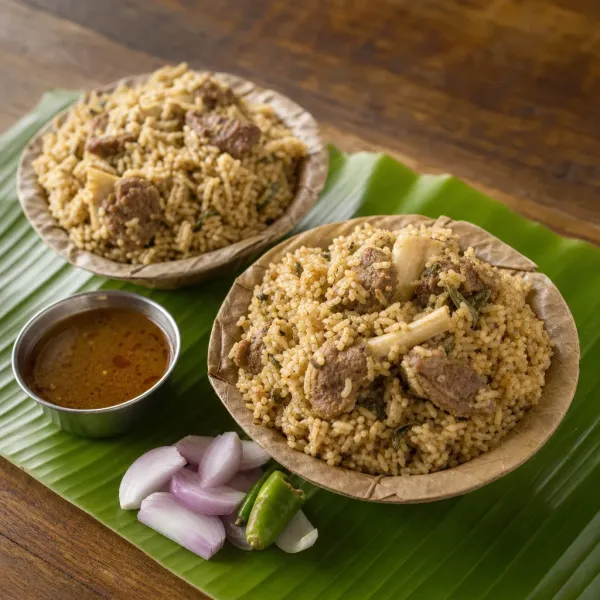
Donne Biryani
Authentic Bangalore donne biryani with mutton and seeraga samba rice, cooked in bone stock with ghee and whole spices, the military hotel way.