

Rice Sevai (Santhakai) Recipe
Malayalam അരി സേവTamil அரிசி சேவைKannada ಅಕ್ಕಿ ಶಾವಿಗೆTelugu అరిసె సేమియా
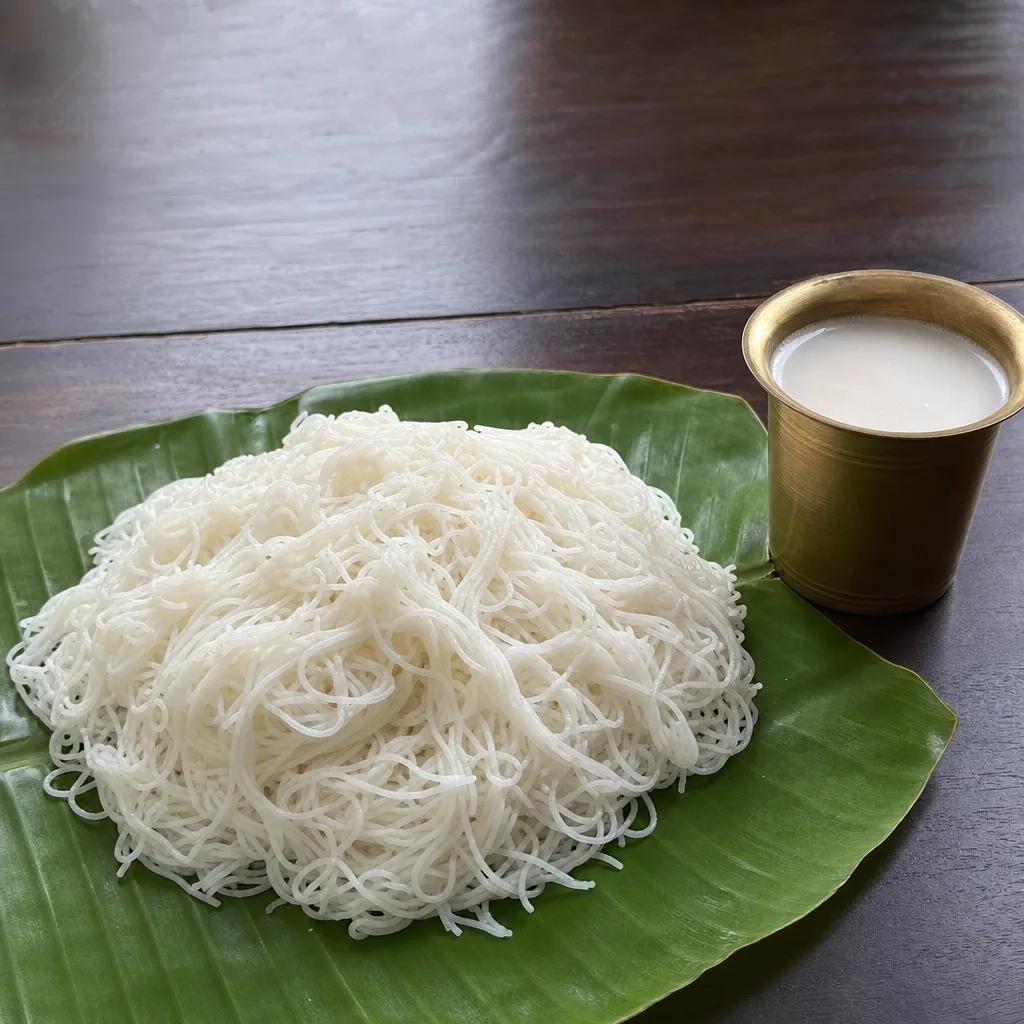
- Prep20 min
- Soak / ferment4 hr
- Cook40 min
- Serves4
- DifficultyMedium
- DietVegan
Santhakai, or rice sevai, is a morning tiffin that appears on the table in Kongunad homes on festival days and on ordinary Sundays when there is time to stand at the stove. It is made from raw rice soaked, ground wet, cooked into a stiff dough, and pressed hot through a sevai nazhi — the traditional wooden or metal press with a fine-holed disc — directly onto a greased idli plate or banana leaf. The noodles are steamed a second time, then gently separated with oiled fingers. The result is white, soft, and faintly chewy with no browning anywhere.
The dough stage is the one that decides everything. Cook it too short and the noodles break in the press; cook it too long and the dough seizes and will not press at all. Households that make this regularly know the dough by feel: it should come away cleanly from the pan and hold its shape when pinched, but still feel pliable, not rubbery.
At the table it is eaten with sweetened coconut milk, or with a thin tomato-onion kuzhambu, or simply with coconut chutney and a ripe banana. The sevai itself carries no seasoning; all flavour comes from what is eaten alongside it.
Ingredients (serves 4)
For the rice dough
Method
Soak the rice
Wash the raw rice in two changes of water. Cover with fresh cold water and soak for 4 hours at room temperature. The grains should snap cleanly when pressed between your fingers when ready. Drain thoroughly in a colander before grinding.
Grind to a smooth batter
Transfer the drained rice to a wet grinder or a powerful blender. Add water a little at a time — start with half a cup — and grind to a completely smooth, thick batter. It should be thicker than idli batter, closer to a pourable paste. Add salt now. The total water used is usually between 250 ml and 300 ml depending on the rice; go slowly. A gritty batter will give coarse, rough-surfaced noodles.
Cook the batter into a dough
Pour the batter into a heavy-bottomed kadai or wide pan. Set over medium heat and stir continuously with a wooden ladle or a flat spatula, scraping the bottom and sides. After about 8 to 10 minutes the batter will thicken, turn from white to a slightly translucent off-white, and begin to pull away from the sides of the pan as a single mass. This is the moment to take it off the heat. If you stop too early it will be sticky and unworkable; if you cook past this point it becomes dense and will crack in the press.
Rest and check the dough
Turn the dough onto a clean surface or into a wide vessel. Cover with a damp cloth and let it rest for 5 minutes — just enough to handle without burning your hands. Pinch a small piece: it should be smooth, non-sticky, and hold its shape. If it sticks to your fingers, return it to the pan for another minute of stirring over low heat.
Prepare the steamer and press
Bring water to a full boil in your idli steamer or a large pot with a tight lid. Lightly grease the idli plates or a flat perforated tray with coconut oil. Grease the inside of the sevai nazhi (the press) and the disc with a few drops of coconut oil so the dough slides through without tearing.
Press the noodles
While the dough is still warm and pliable, fill the sevai nazhi about two-thirds full. Hold the press over a greased idli plate or tray and press firmly in a slow, steady circular motion so the noodles fall in loose coils. Do not press in one spot or the noodles will pile up and stick together. Work quickly; as the dough cools it becomes harder to press. Refill and press in batches until all the dough is used.
Steam the pressed noodles
Place the loaded plates into the steamer, cover tightly, and steam over high heat for 5 to 7 minutes. The noodles are ready when they have firmed up and are no longer shiny or wet-looking on the surface. Do not over-steam or they will become dry and brittle.
Separate and serve
Remove the plates from the steamer. Rub a few drops of coconut oil onto your fingers and gently loosen the noodles while they are still warm. Separate any clumps with a light touch; pulling hard will break them. Pile loosely onto a plate or banana leaf and serve immediately.
How to serve
Sweetened thin coconut milk (thenga paal); coconut chutney; thin tomato-shallot kuzhambu; ripe banana and jaggery (common at breakfast in Kongunad homes).
Served with: Sweetened thin coconut milk (thenga paal); coconut chutney; thin tomato-shallot kuzhambu; ripe banana and jaggery (common at breakfast in Kongunad homes).
Cook's tips
Dough temperature matters
The dough must be pressed while it is still warm. Cold dough will not pass through the disc and will tear. If your dough cools before you finish pressing, cover the nazhi with a cloth and work faster next time, or make smaller batches.
Using store-bought rice flour
Some households use fine store-bought rice flour (idiyappam flour) mixed with boiling water to make the dough, skipping the soaking and grinding. The result is acceptable and much faster. The texture is slightly less chewy than the fresh-ground version. If using this shortcut, use 2 cups of flour to about 2 cups of boiling salted water, adjusting until the dough is smooth and pliable.
The disc hole size
Sevai nazhi discs come with different hole sizes. The medium disc (about 1 mm holes) gives the classic thin noodle. The idiyappam disc (very fine) gives a finer, more delicate strand that is better suited to coconut milk. Use whichever your household press has.
Storing leftovers
Rice sevai dries out and becomes brittle within a few hours. If you must store it, keep it in an airtight container at room temperature for up to 4 hours, or refrigerate and steam briefly to soften before eating. It does not freeze well.
Rice variety
Short-grain raw rice (kolam or sona masoori) gives a softer noodle. Long-grain or parboiled rice is not suitable here; the dough will be gummy and difficult to press.
Regional variations
Udupi (Karnataka) version uses a similar press but the dough is sometimes made with a mix of rice flour and a small amount of urad; Kerala Tamil households in Palakkad make a close variant eaten with coconut milk and jaggery; some Chettinad households add a brief fermentation.
Glossary
- Santhakai சந்தகை
- Tamil term for rice noodles made by pressing cooked rice dough through a press; used in Kongunad and neighbouring districts.
- Sevai nazhi சேவை நாழி
- The cylindrical press, traditionally made of wood or brass, used to extrude rice dough into noodle strands through a perforated disc.
- Pacharisi பச்சரிசி
- Raw (unparboiled) white rice; the correct rice for this dough.
- Thenga paal தேங்காய் பால்
- Coconut milk, typically thinned and sweetened with jaggery when served alongside sevai.
- Kadai கடாய்
- A wide, deep pan with sloping sides used for cooking the batter into dough over direct heat.
Two things decide whether this works: cooking the batter to exactly the right stage — pliable and pulling away from the pan, not a moment past — and pressing the noodles while the dough is still warm. Get those two right and the rest follows.
More Breads & Staples recipes
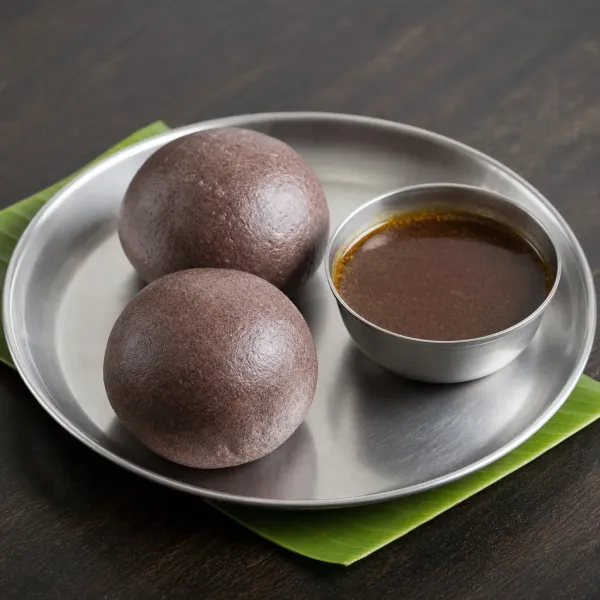
Ragi Mudde (Finger Millet Balls)
Traditional Karnataka ragi mudde recipe: finger millet balls cooked on the stovetop and shaped by hand, eaten with saaru or bassaru. Step-by-step met…
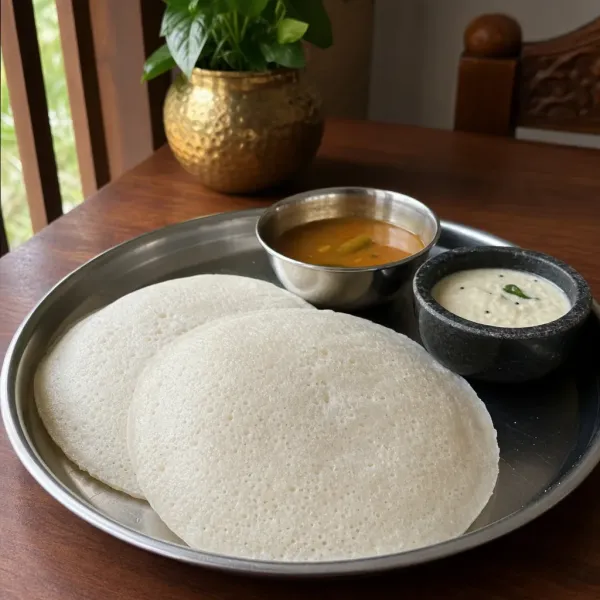
Kal Dosa (Thick Soft Stone-Tawa Dosa)
Traditional Tamil Nadu kal dosa recipe: thick, soft, pale dosa cooked covered on a heavy iron tawa. Fermented rice and urad batter with poha.
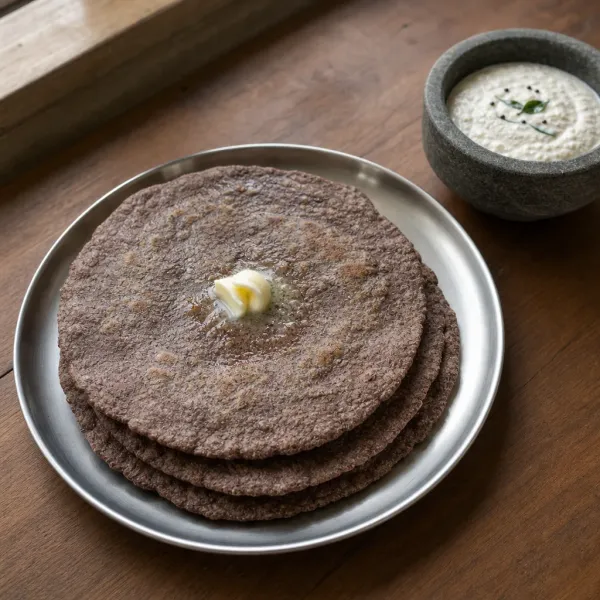
Ragi Roti
Traditional Karnataka ragi rotti with onion, green chilli and coriander. Step-by-step method for patting and cooking on an iron tawa. Vegan, no ferme…
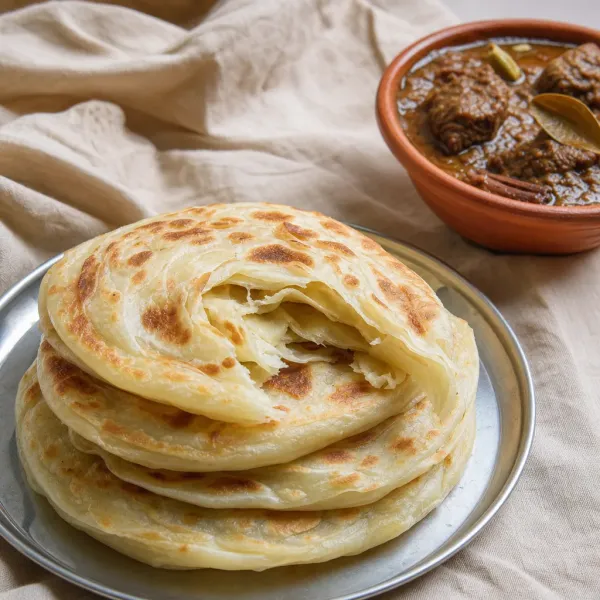
Malabar Parotta
Authentic Malabar parotta from a Mappila household kitchen: soft layered flatbread made by stretching, coiling and hand-slapping. Step-by-step tradit…
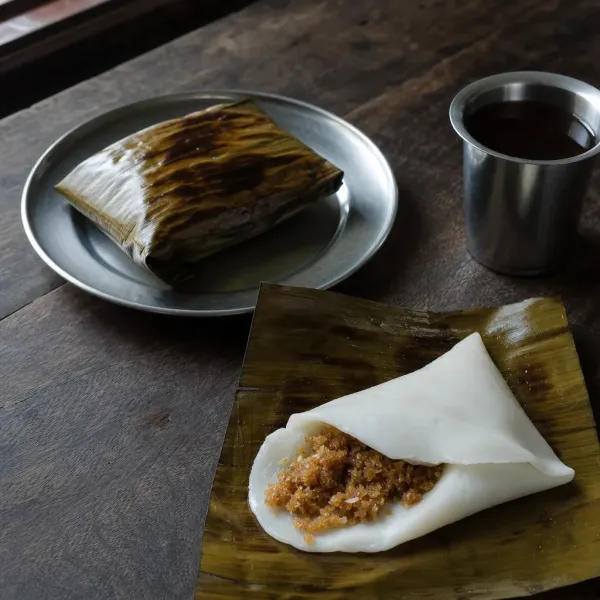
Ottada
Traditional Nasrani ottada recipe: soft rice flour flatbread filled with fresh coconut and jaggery, cooked on a banana leaf. Step-by-step Kerala meth…
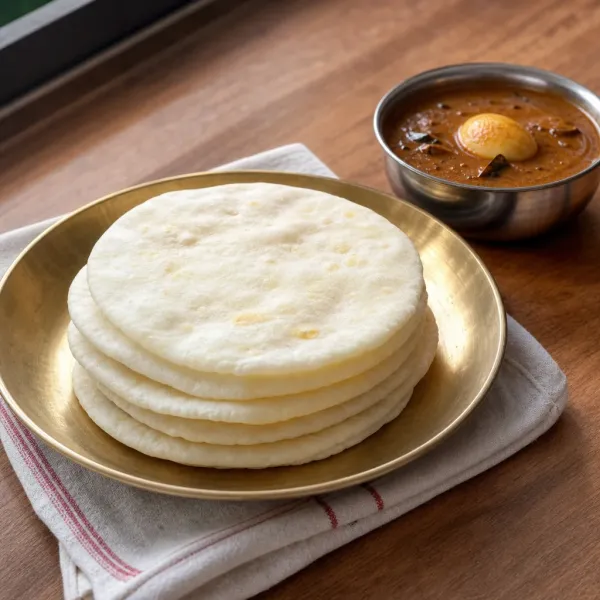
Neypathiri
Traditional Malabar Mappila neypathiri recipe: fine rice flour dough fried in pure ghee. Soft, white, and made for feast-day breakfasts.