

Ragi Roti Recipe
Malayalam റാഗി റൊട്ടിTamil ராகி ரொட்டிKannada ರಾಗಿ ರೊಟ್ಟಿTelugu రాగి రొట్టె
- Prep20 min
- Cook25 min
- Serves3
- DifficultyMedium
- DietVegan
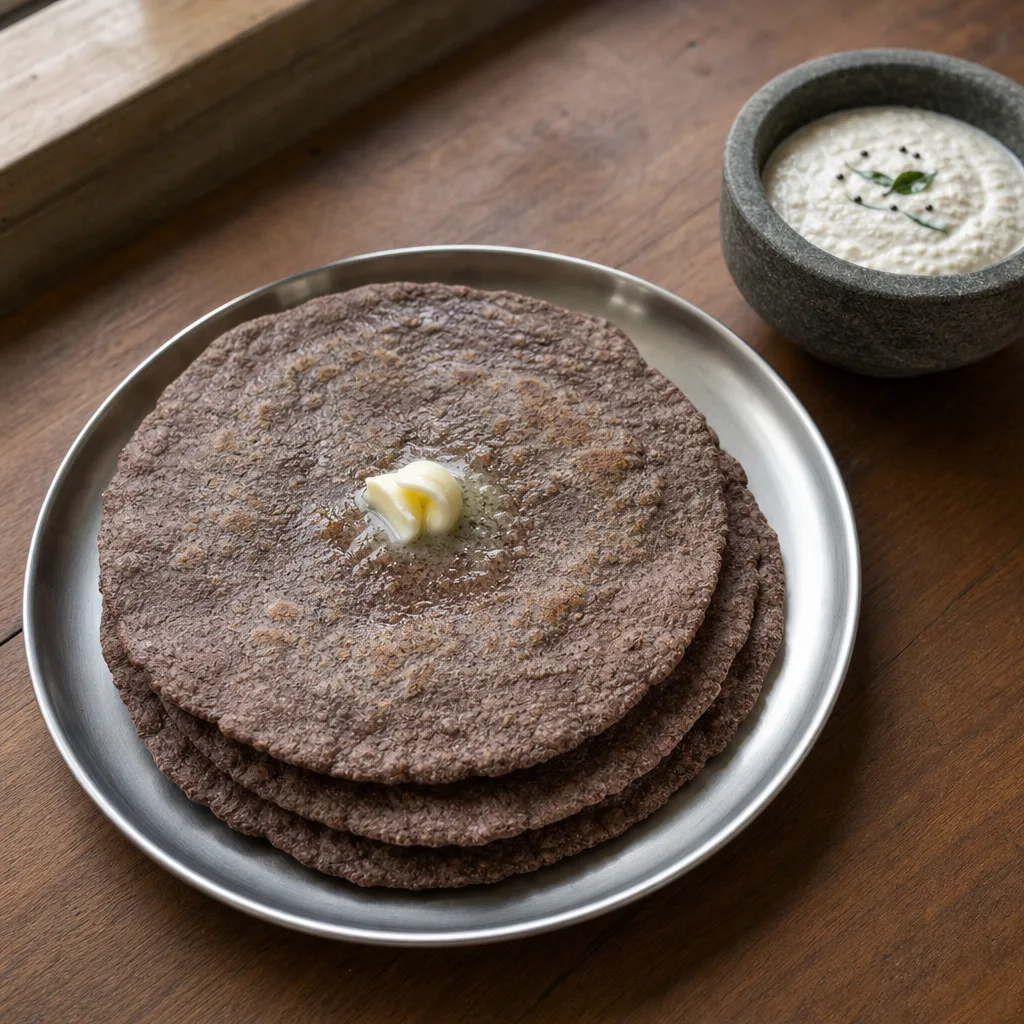
Ragi rotti is everyday food in Karnataka, eaten for breakfast or an early dinner. It is a soft, thick flatbread patted directly onto a hot tawa with wet hands, cooked until the surface dries and the underside develops pale brown patches. The inside stays tender and slightly dense, which is exactly right.
The version eaten at home almost always has shallots or onion, green chilli, and fresh coriander kneaded into the dough. Some families add grated fresh coconut; some add cumin. The fat used for cooking is either coconut oil or cold-pressed groundnut oil depending on the part of the state. In North Karnataka, groundnut oil is more common; in the Mysore belt, coconut oil appears.
The rotti is patted thin enough that it cooks through in four to five minutes, but thick enough that it does not crack at the edges when you lift it. Getting the water ratio right is the one skill to learn. Too dry and the dough crumbles; too wet and it sticks to your palm and tears.
Ingredients (serves 3)
For the dough
For cooking
Method
Combine the dry ingredients
Put the ragi flour and salt in a wide mixing bowl and stir together. Add the chopped shallots, green chilli, coriander, and coconut if using. Mix everything through the flour with your fingers so the onion and chilli are evenly distributed rather than clumping.
Add hot water and bring the dough together
Pour in 180 ml of hot water gradually, mixing with a spoon first and then your hand once it is cool enough to touch. Ragi flour absorbs water slowly, so work the dough for a full two minutes before deciding if you need more water. The dough should hold together when pressed and not crack at the edges, but it should not be sticky. Add water a tablespoon at a time if needed. Do not knead hard; just bring it together.
Rest the dough
Cover the bowl with a damp cloth and rest for ten minutes. This short rest lets the flour fully absorb the water and makes the dough easier to pat. If you skip this, the rotti will crack when you spread it.
Heat the tawa
Place a heavy iron tawa or thick flat pan over medium heat. Let it heat for two to three minutes. Sprinkle a few drops of water on the surface; they should evaporate within two seconds. That is the right temperature. Too cool and the rotti sticks; too hot and the outside dries before the inside cooks.
Wet your hands and divide the dough
Keep a small bowl of water beside you. Wet both hands thoroughly. Divide the dough into balls roughly the size of a large lime, about 80 g each. You should get six to seven pieces.
Pat the rotti onto the tawa
Place one ball in the centre of the hot tawa. With wet fingers, press and pat it outward in gentle circular motions, working from the centre toward the edges. Aim for a round about 18–20 cm across and roughly 4–5 mm thick. Wet your fingers again whenever the dough starts to drag. The surface will look rough and slightly uneven; that is normal. Make a small hole in the centre with your finger so the middle cooks evenly.
Cook the first side
Cover the tawa with a lid and cook on medium heat for two minutes. Remove the lid. The surface should look dry and matte, no longer raw and dark. Drizzle half a teaspoon of oil around the edges of the rotti where it meets the tawa.
Flip and finish
Slide a flat spatula under the rotti and flip it in one confident movement. Cook the second side uncovered for two to three minutes. The underside should show pale brown patches in places; it should not be uniformly dark. Drizzle a little more oil if the surface looks dry. Press gently with the spatula to ensure even contact.
Check it is cooked through
Press the centre lightly. It should feel firm, not soft and yielding. A rotti that is still raw in the middle will feel spongy and damp. If in doubt, return it to the tawa on low heat for another minute each side.
Remove and keep warm
Transfer to a plate lined with a clean cloth and fold the cloth loosely over the top. This keeps the rotti soft while you cook the rest. Pat each subsequent rotti directly onto the tawa the same way, re-wetting your hands each time.
How to serve
White butter (benne) or ghee spread on top while hot; coconut chutney; or a small bowl of plain yoghurt. In many Karnataka homes it is also eaten with saagu (mixed vegetable curry) or a simple tomato-onion chutney.
Served with: White butter (benne) or ghee spread on top while hot; coconut chutney; or a small bowl of plain yoghurt. In many Karnataka homes it is also eaten with saagu (mixed vegetable curry) or a simple tomato-onion chutney.
Cook's tips
The water temperature matters
Hot water makes the dough more pliable and less prone to cracking when you pat it. Cold water produces a stiffer, more crumbly dough that is harder to spread thinly on the tawa.
Wet hands, not oiled hands
Always wet your hands with water, not oil, when patting. Oil makes the dough slip and slide rather than spread. Keep re-wetting as you work.
If the dough crumbles
Ragi flour varies in how much water it absorbs depending on how finely it is ground and how dry it is. If your dough is crumbling and will not hold together, add water one tablespoon at a time, working it in fully before adding more.
Coconut is optional
Grated fresh coconut adds a slight sweetness and helps the rotti stay soft after cooking. Families in North Karnataka often skip it. If you use desiccated coconut, soak it in a tablespoon of warm water for five minutes first; dry desiccated coconut makes the rotti grainy.
Storing leftover rotti
Ragi rotti is best eaten fresh off the tawa. If you have leftovers, wrap them in a cloth and store at room temperature for up to four hours. To reheat, sprinkle a few drops of water on each side and warm on a dry tawa on low heat for one minute per side.
Regional variations
Andhra and Telangana households make a similar ragi rotte, sometimes thicker and cooked on an iron griddle without water-patting; Tamil Nadu Kongu households make ragi adai with lentils mixed in.
Glossary
- Ragi ರಾಗಿ
- Finger millet (Eleusine coracana); the staple grain of Karnataka, ground into flour for rotti and mudde.
- Tawa ತವಾ
- A flat or slightly concave iron griddle used for cooking flatbreads; a heavy one holds heat evenly and is essential here.
- Saagu ಸಾಗು
- A Karnataka mixed vegetable curry made with a coconut and poppy seed base; a common accompaniment to ragi rotti.
- Benne ಬೆಣ್ಣೆ
- Fresh white butter churned from curd; served on hot ragi rotti in Karnataka homes.
Two things decide whether this rotti works: the water temperature when you make the dough, and keeping your hands wet throughout the patting. Get those right and the rotti spreads smoothly, holds together on the tawa, and comes off soft and cooked through. Rush the resting time or let your hands dry out mid-pat, and the dough will crack and tear before it ever reaches the plate.
More Breads & Staples recipes
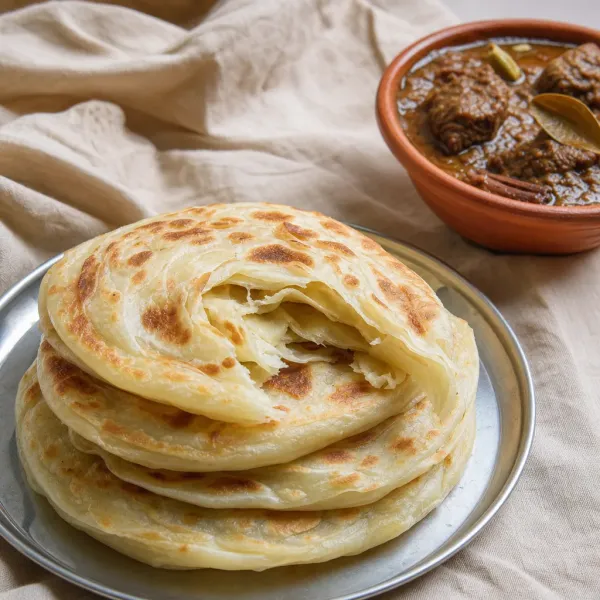
Malabar Parotta
Authentic Malabar parotta from a Mappila household kitchen: soft layered flatbread made by stretching, coiling and hand-slapping. Step-by-step tradit…
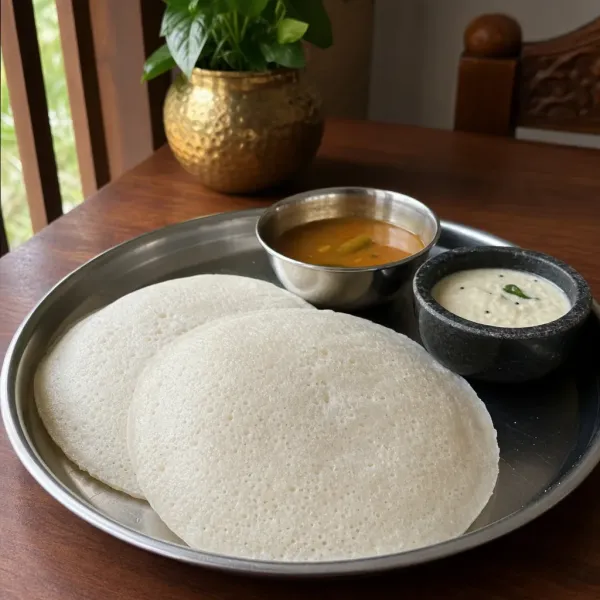
Kal Dosa (Thick Soft Stone-Tawa Dosa)
Traditional Tamil Nadu kal dosa recipe: thick, soft, pale dosa cooked covered on a heavy iron tawa. Fermented rice and urad batter with poha.
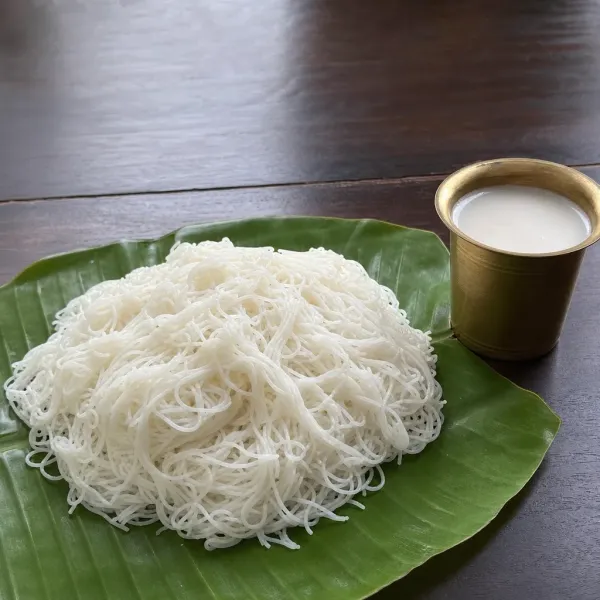
Rice Sevai (Santhakai)
Traditional Kongunad rice sevai made from fresh-ground raw rice dough, pressed and steamed. Step-by-step method with tips for the perfect soft noodle.
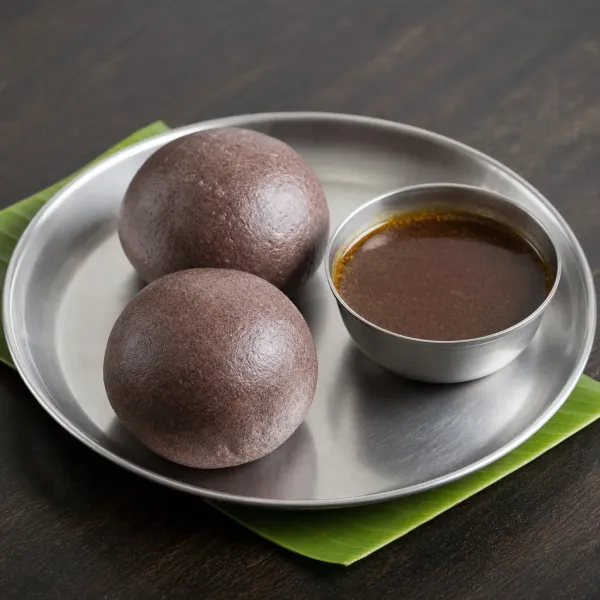
Ragi Mudde (Finger Millet Balls)
Traditional Karnataka ragi mudde recipe: finger millet balls cooked on the stovetop and shaped by hand, eaten with saaru or bassaru. Step-by-step met…
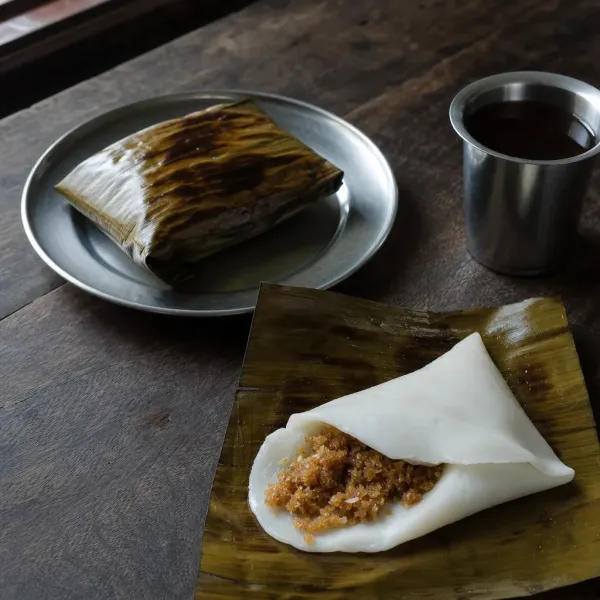
Ottada
Traditional Nasrani ottada recipe: soft rice flour flatbread filled with fresh coconut and jaggery, cooked on a banana leaf. Step-by-step Kerala meth…
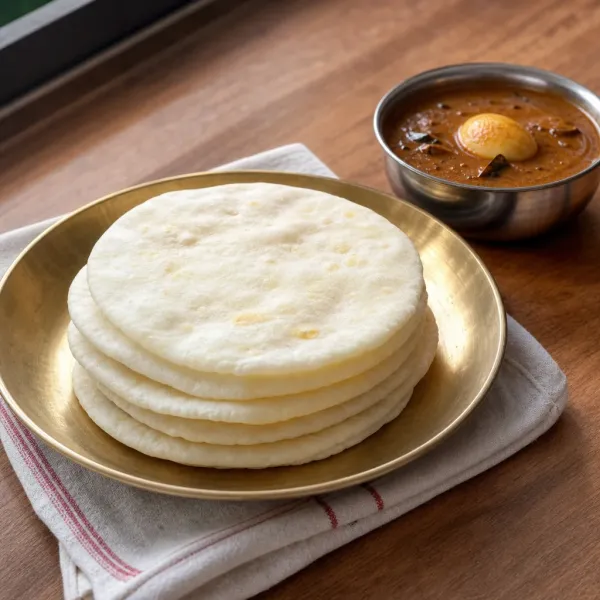
Neypathiri
Traditional Malabar Mappila neypathiri recipe: fine rice flour dough fried in pure ghee. Soft, white, and made for feast-day breakfasts.