

Ottada Recipe
Malayalam ഒറ്റടTamil ஒட்டடKannada ಒಟ್ಟಡTelugu ఒట్టడ
- Prep25 min
- Cook30 min
- Serves4
- DifficultyMedium
- DietVegetarian
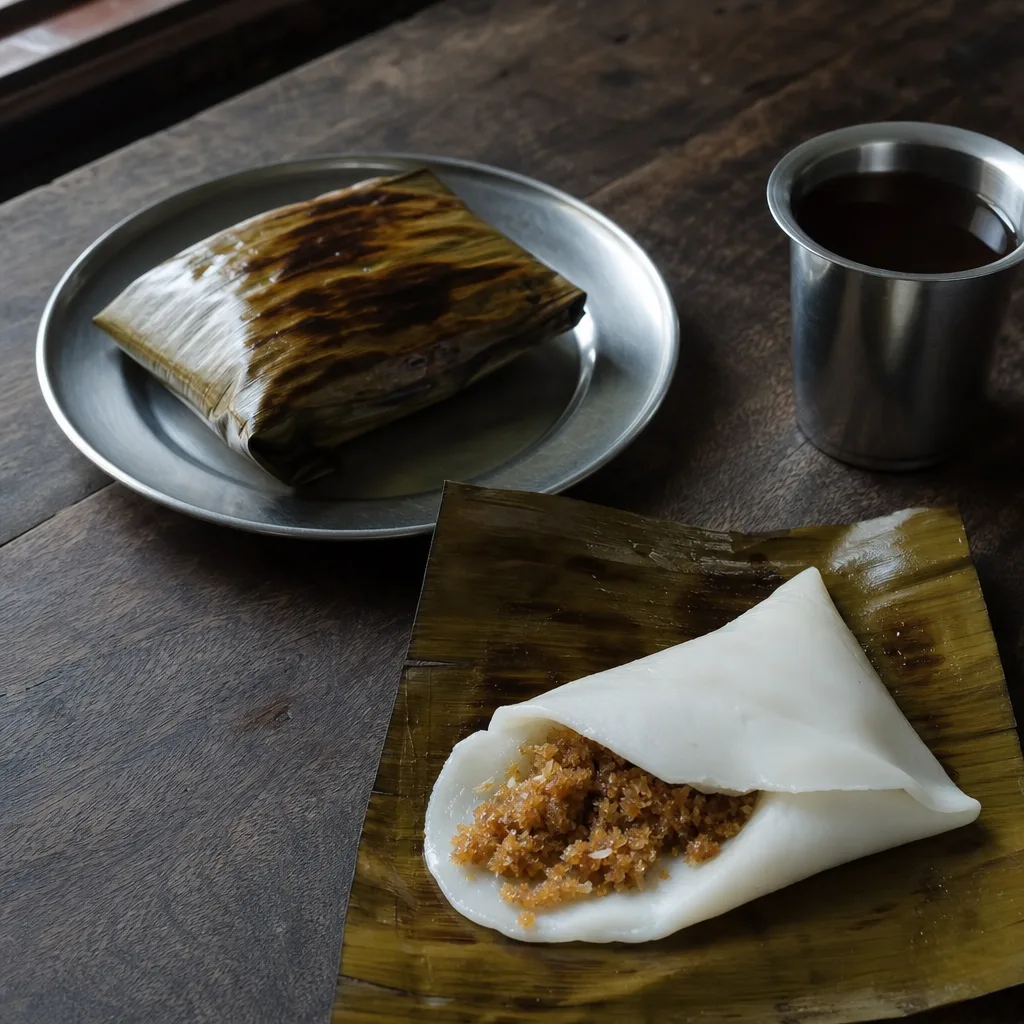
Ottada is a soft, thin rice flatbread pressed onto a banana leaf, filled with sweetened fresh coconut and jaggery, folded over itself and cooked on a tawa. The banana leaf steams the inside gently while the outside picks up a faint green fragrance and, where it touches the hot iron, a very light colour. It is not a crisp thing. When you fold it open, the dough should be pale, pliable and slightly translucent at the edges.
In Nasrani homes of central Kerala, ottada appears at breakfast, particularly during the weeks of Lent when it is made without ghee. Outside Lent, a small amount of coconut oil may go into the dough. It is also made for Onam sadya tables as a sweet side, and for children after school. Grandmothers often judge the dough by feel alone: it should be soft enough to press thin without cracking, firm enough not to stick to the fingers.
Households differ mainly on the filling. Some families keep it simple with grated coconut and powdered jaggery. Others add a pinch of cardamom or a few dried raisins. The dough itself is almost always made with rice flour and boiling water, mixed quickly and rested briefly. The banana leaf is the constant: it is what makes ottada ottada.
Ingredients (serves 4)
For the dough
For the filling
For cooking
Method
Prepare the banana leaves
Cut the banana leaf into rectangles roughly 25 cm by 20 cm, one per ottada. Wipe each piece with a clean damp cloth. Hold each piece 10 to 15 cm above a gas flame, moving it slowly, until it turns a deeper, slightly glossy green and becomes supple. This takes about 20 seconds per piece. A leaf that has not been softened will split when you fold it.
Make the filling
Combine the grated coconut, powdered jaggery and cardamom powder in a bowl. Mix well with your fingers until the jaggery is evenly distributed through the coconut. Taste: it should be pleasantly sweet but not cloying. Set aside. Do not cook the filling; it will warm through on the tawa.
Make the dough
Bring 300 ml of water to a full rolling boil. Put the rice flour and salt in a wide bowl. Pour the boiling water over the flour in a steady stream, stirring constantly with a wooden spoon or spatula. Work quickly; the flour will absorb the water and begin to come together almost immediately. Add the coconut oil. As soon as it is cool enough to handle, knead the dough with your hands for two to three minutes until it is smooth, pliable and not sticky. If it feels stiff, wet your palm with a little warm water and knead again. The dough should feel like soft modelling clay.
Rest the dough
Cover the dough with a clean damp cloth and rest it for 10 minutes. This allows the flour to fully hydrate and makes it easier to press thin without cracking at the edges.
Divide and press
Divide the dough into eight equal balls, each roughly 40 g. Place one ball in the centre of a softened banana leaf. With wet fingers, press it outward into a thin round roughly 12 to 14 cm across. Aim for an even thickness of about 3 mm throughout. The edge does not need to be perfectly round; a slightly irregular shape is fine and honest.
Fill and fold
Place two heaped tablespoons of the coconut-jaggery filling on one half of the pressed dough, leaving a 1 cm border at the edge. Lift the banana leaf from the unfilled side and fold it over so the bare half of the dough covers the filled half, making a half-moon shape. Press the edges gently to seal. The banana leaf is now folded around the ottada like a parcel.
Heat the tawa
Place a cast-iron tawa or a heavy flat pan over a medium-low flame. Let it heat for two minutes. Do not grease it; the banana leaf will sit directly on the iron.
Cook the first side
Place the banana-leaf parcel, seam side down, on the hot tawa. Cook for three to four minutes. You will see the leaf darken slightly and hear a quiet sizzle. The dough on the underside will cook through the leaf. Do not press down hard; a light press with the palm is enough to ensure contact.
Flip and finish
Carefully turn the parcel over using a flat spatula. Cook the second side for another two to three minutes. The leaf will darken further and may show small brown patches; this is correct. The dough inside should be fully cooked: soft, pale and slightly translucent at the thinner edges. If you are unsure, open one parcel to check.
Cook the remaining ottadas
Repeat with the remaining dough balls and filling. Keep finished ottadas stacked and covered with a cloth to stay warm and pliable while you work through the batch.
Serve in the leaf
Bring the ottadas to the table in their banana leaves. Let each person open their own leaf at the table. The inside will be pale, soft and fragrant with coconut and cardamom. Serve immediately; they tighten and become less pleasant if they sit too long.
How to serve
Plain black tea or milky sweet tea (chaya). Some households serve it alongside ripe banana. During Lent it is eaten without any accompaniment.
Served with: Plain black tea or milky sweet tea (chaya). Some households serve it alongside ripe banana. During Lent it is eaten without any accompaniment.
Cook's tips
Dough temperature matters
The water must be at a full boil, not just hot, when it hits the flour. Lukewarm water will give you a dough that cracks when pressed and will not hold the filling. If the dough cracks at the edges as you press it, it is either too cool or needs a little more water worked in.
Jaggery moisture
If your jaggery is very moist, the filling can make the dough soggy before cooking. Mix the filling just before you assemble, not ahead of time. If the jaggery is rock-hard, grate it fine or dissolve it in a teaspoon of warm water and squeeze it through the coconut.
Banana leaf substitution
There is no real substitute for banana leaf here. The leaf is not just packaging; it contributes moisture and fragrance to the dough as it cooks. Parchment paper will cook the dough but the result will be noticeably different.
Thickness
Pressing the dough too thick (more than 4 mm) means the centre takes longer to cook and the filling can become too hot and leak. Too thin (under 2 mm) and the dough tears when you fold it. Aim for the thickness of a thin chappathi.
Flame control
A flame that is too high will char the leaf and leave the dough undercooked in the centre. Medium-low, patient cooking is the right approach. If the leaf is blackening within a minute, lower the flame.
Regional variations
Some Nasrani households make ottada with a thicker, softer dough and steam it entirely without the banana leaf; a few Mappila households in Malabar make a similar leaf-wrapped rice pancake with a jaggery-coconut filling called pathiri variants, though those are distinct preparations.
Glossary
- Ottada ഒറ്റട
- A Kerala rice flatbread cooked on a banana leaf, typically with a sweet coconut filling; the name likely derives from 'otta' meaning single or plain.
- Sharkkara ശർക്കര
- Palm jaggery or cane jaggery used as a sweetener in Kerala cooking; darker palm jaggery has a more complex, slightly smoky sweetness.
- Pachari പച്ചരി
- Raw (unparboiled) white rice; the flour ground from pachari is used for idiyappam, ottada and other Kerala rice preparations.
- Chaya ചായ
- Tea; in Kerala context, typically strong milky tea made with small-leaf tea and sometimes ginger.
Two things decide whether ottada works: the dough and the leaf. If the boiling water is not hot enough, the dough will crack. If the banana leaf is not softened over the flame before folding, it will split and the parcel will open on the tawa, spilling the filling. Get those two steps right and the rest follows easily.
More Breads & Staples recipes
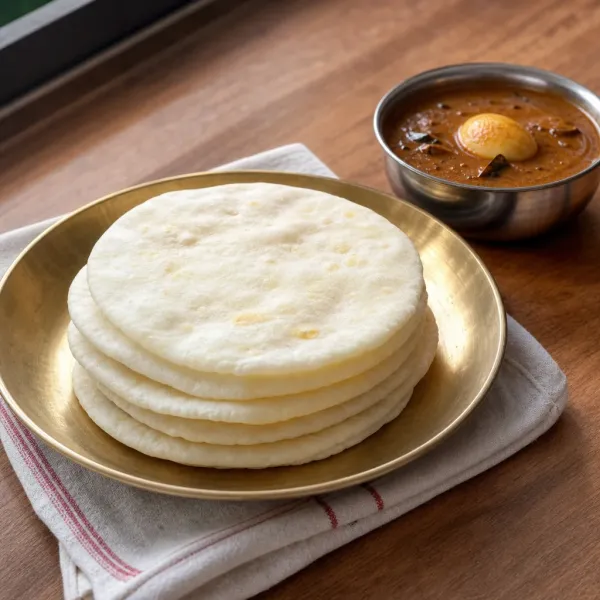
Neypathiri
Traditional Malabar Mappila neypathiri recipe: fine rice flour dough fried in pure ghee. Soft, white, and made for feast-day breakfasts.
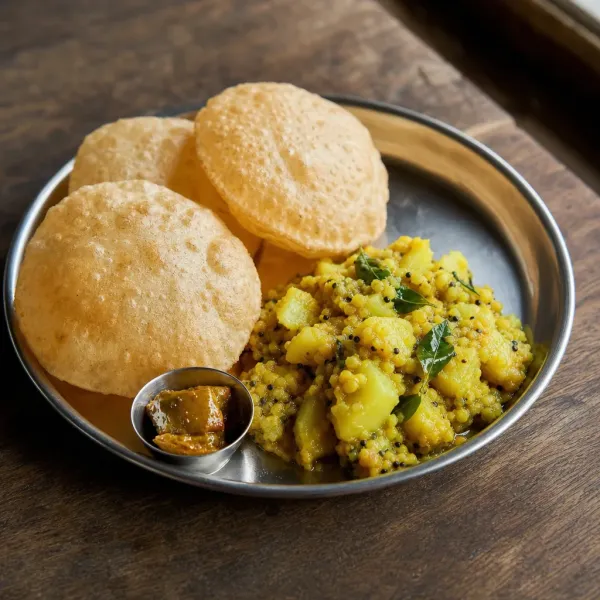
Poori with Potato Masala
Traditional Tamil Brahmin poori recipe with urulaikilangu masala. Stiff atta dough, hot groundnut oil, the right technique for a puffed, grease-free…
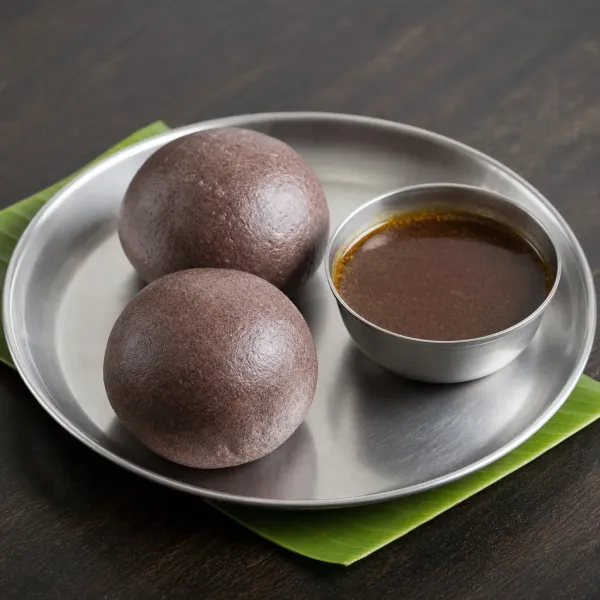
Ragi Mudde (Finger Millet Balls)
Traditional Karnataka ragi mudde recipe: finger millet balls cooked on the stovetop and shaped by hand, eaten with saaru or bassaru. Step-by-step met…
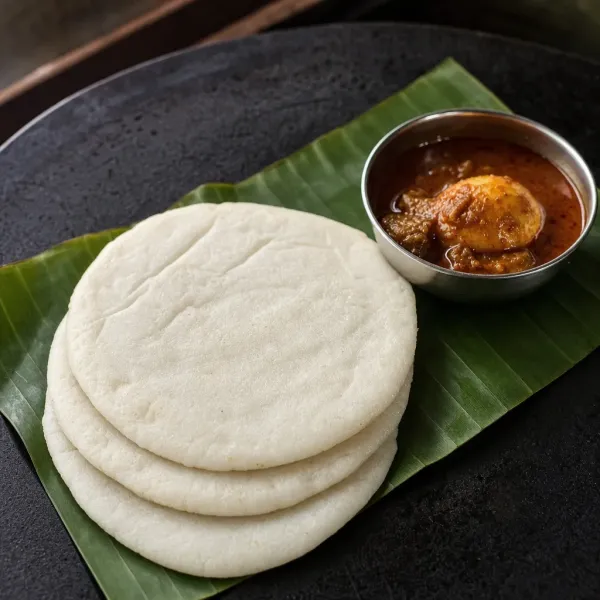
Orotti
Authentic Malabar Mappila orotti recipe: soaked raw rice ground and cooked into a soft dough, shaped by hand and finished on a dry iron griddle. Whit…
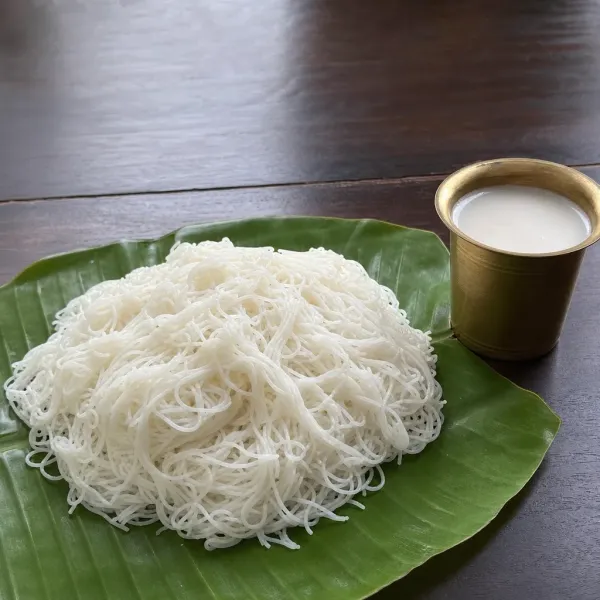
Rice Sevai (Santhakai)
Traditional Kongunad rice sevai made from fresh-ground raw rice dough, pressed and steamed. Step-by-step method with tips for the perfect soft noodle.
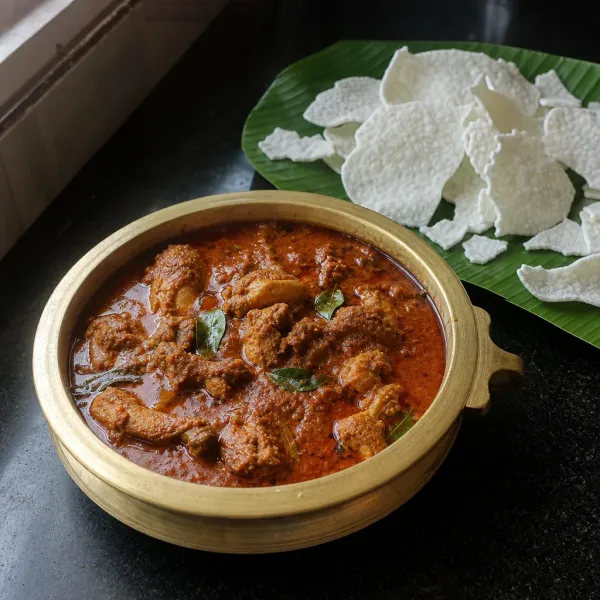
Kori Rotti: Mangalorean Crisp Rice Wafers with Chicken Gassi
Traditional Tulu-style kori rotti from coastal Karnataka: crisp dried rice wafers served with deep red coconut chicken gassi. Home recipe with fresh-…