

Neypathiri Recipe
Malayalam നെയ്പ്പത്തിരിTamil நெய்பத்திரிKannada ನೆಯ್ಪತ್ತಿರಿTelugu నెయ్పత్తిరి
- Prep20 min
- Cook40 min
- Serves4
- DifficultyMedium
- DietVegetarian
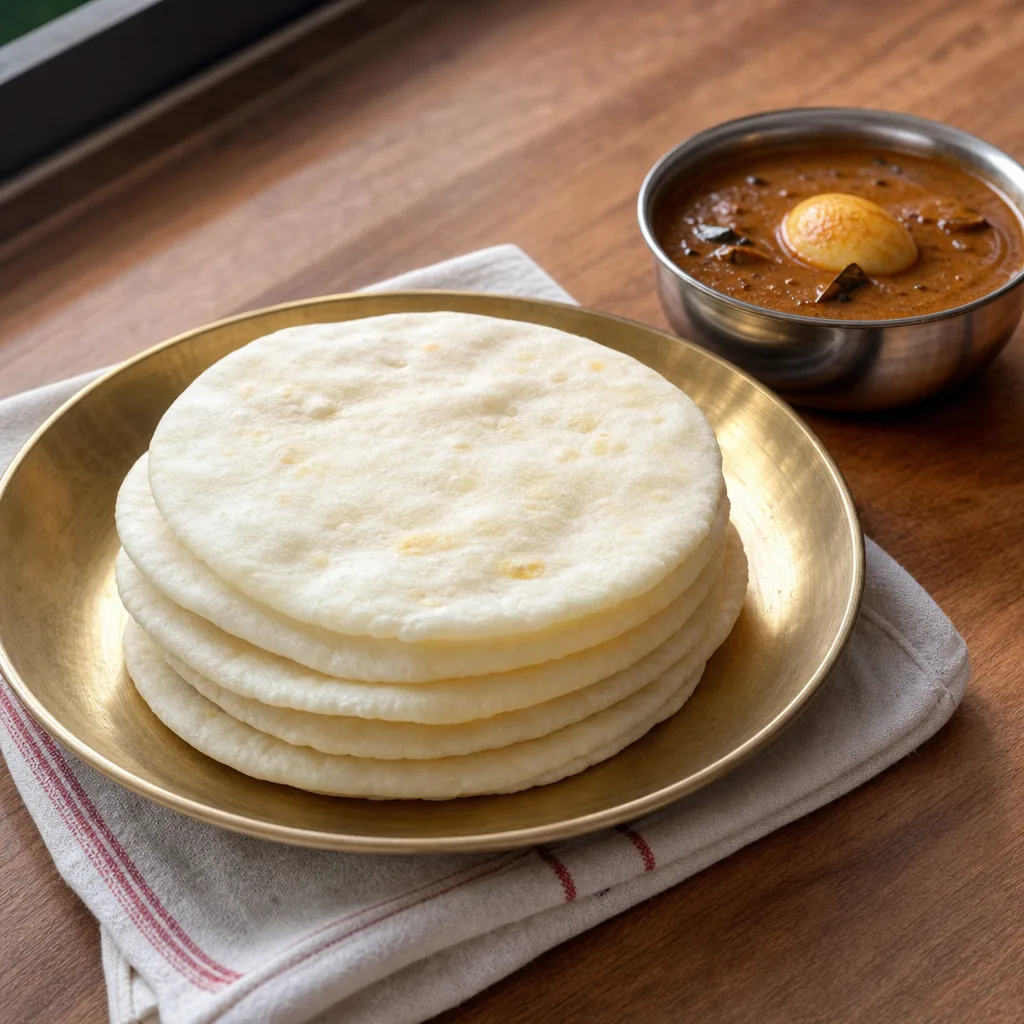
Neypathiri is a Mappila bread from the Malabar coast, made from fine rice flour, shaped into thin rounds, and shallow-fried in ghee. The name says everything: ney is ghee, pathiri is the rice flatbread that is the daily bread of Malabar Muslim households. It is richer than the dry-roasted pathiri eaten on ordinary mornings, and it belongs to the feast table – Eid mornings, wedding breakfasts, the spread laid out before the biriyani arrives.
The bread is white and soft at the centre with a very faint colour where the ghee has touched it. It is not crisp, not golden, not flaky. The texture is tender and slightly chewy, with the clean flavour of rice and the richness of ghee. It is thinner than a chapati and smaller than a roti, about the size of a saucer.
Households differ mainly in how they handle the dough. In some homes the dough is kept quite stiff and rolled between sheets of plantain leaf or plastic. In others it is softer and pressed out by hand on a wet surface. The frying fat is almost always pure ghee in the feast version; on ordinary days some families use a little coconut oil to stretch the ghee. The bread is always eaten hot, straight from the pan.
Ingredients (serves 4)
For the dough
For frying
Method
Boil the water
Bring 360 ml of water to a full rolling boil in a heavy-bottomed vessel. Add the salt and stir to dissolve. You need the water at a true boil when it meets the flour; lukewarm water will give you a crumbly dough that cracks at the edges when you roll it.
Mix the dough
Take the vessel off the heat. Add all 300 g of the rice flour at once and stir immediately and vigorously with a wooden spoon or the back of a ladle. The flour will absorb the water quickly and come together in a rough, steaming mass. Stir until no dry flour remains at the bottom. Cover and rest for 5 minutes.
Knead while warm
Turn the dough out onto a clean surface. It will be hot; wet your hands with cold water and knead firmly for 3 to 4 minutes until the dough is smooth, without cracks, and holds together when pressed. It should feel like soft modelling clay – not sticky, not dry. If it cracks when you press the edges, wet your hands again and knead a little more. Do not add more water directly; the steam in your hands is enough.
Divide and rest
Divide the dough into balls of about 40 g each – roughly the size of a large lime. You should get 12 to 14 balls. Place them on a plate, cover with a damp cloth, and rest for 5 minutes. Resting makes rolling easier and prevents the surface from drying out and cracking.
Roll the pathiri
Place one ball between two small squares of plantain leaf or between two sheets of clean plastic (cut from a zip-lock bag). Press it flat with your palm first, then roll with a rolling pin to a round of about 12 to 13 cm diameter and 2 to 3 mm thickness. The edges should be even; a thick edge will stay raw in the pan. Keep the unrolled balls covered while you work.
Heat the pan
Place a heavy iron tawa or a thick-bottomed flat pan over medium heat. Let it heat for 2 minutes. Add about ¾ tsp of ghee and swirl to coat the surface. The ghee should shimmer but not smoke.
Fry the first side
Peel the rolled pathiri carefully off the plastic or leaf and lay it flat on the pan. It will begin to look opaque at the edges within 30 seconds. Cook for about 1 to 1½ minutes on medium heat until the underside has faint pale-gold spots and the top surface has turned from shiny to matte. Do not press it down.
Fry the second side
Flip the pathiri with a flat spatula. Add a few drops of ghee around the edge so it runs under the bread. Cook for another 1 to 1½ minutes. The bread should puff very slightly in one or two places and feel firm but not hard when you press the centre gently. It stays white to very pale cream – there is no deep browning. Remove and keep covered in a container lined with a clean cloth.
Continue in batches
Roll and fry the remaining balls the same way, adding a little ghee for each. Keep the heat steady at medium throughout; if the pan gets too hot the outside will colour before the inside cooks through. Stack the finished pathiri and keep them covered so they stay soft.
Serve immediately
Neypathiri is at its best within 10 to 15 minutes of frying, while the ghee is still fragrant and the bread is pliable. Serve hot, stacked, on a plate.
How to serve
Mutta curry (Mappila egg curry) or chicken curry with coconut milk; also eaten with sweetened coconut milk or banana on the breakfast table. On feast days, it accompanies mutton or beef curry.
Served with: Mutta curry (Mappila egg curry) or chicken curry with coconut milk; also eaten with sweetened coconut milk or banana on the breakfast table. On feast days, it accompanies mutton or beef curry.
Cook's tips
The flour matters
Pathiri podi is a specific fine-milled, lightly roasted rice flour sold in Malabar and in shops serving Mappila households. Idiyappam flour from Tamil Nadu or raw rice flour ground at home will give a different texture. If you cannot find pathiri podi, roast plain fine rice flour in a dry pan on low heat for 4 to 5 minutes, stirring, until it smells faintly nutty but has not coloured, and cool completely before using.
Dough temperature
The dough must be kneaded while it is still warm. If it cools before you have finished kneading, it becomes stiff and will crack at the edges when rolled. Work quickly, or keep the covered dough in a warm spot.
Cracking edges
Cracked edges when rolling almost always mean the dough is too dry or too cool. Wet your hands, press the crack closed, and re-roll. Do not try to patch with extra flour.
Storing leftovers
Neypathiri firms up as it cools and does not store well. If you must keep them, wrap in a damp cloth and reheat on a tawa with a drop of ghee. They will not be as good as fresh.
Hand-patting shortcut
Some cooks skip the rolling pin and press the ball out on a wet banana leaf using the flat of the fingers in a circular motion. This is faster but takes practice to get an even thickness.
Regional variations
Soft hand-patted neypathiri made with a looser dough; plain pathiri (unfried, dry-roasted) from the same Mappila kitchen.
Glossary
- Neypathiri നെയ്പ്പത്തിരി
- Ghee-fried rice flatbread from the Mappila kitchen of Malabar; ney means ghee, pathiri means the thin rice bread.
- Pathiri podi പത്തിരി പൊടി
- Fine-milled, lightly roasted rice flour used specifically for making pathiri; different from raw rice flour or idiyappam flour.
- Ney നെയ്
- Ghee; clarified butter used as the frying fat in this bread.
- Tawa തവ
- A flat or slightly concave iron griddle used for cooking flatbreads.
- Mappila മാപ്പിള
- The Muslim community of Malabar (northern Kerala), whose cuisine is distinct from other Kerala communities and has strong Arab and Persian influences.
Two things decide whether neypathiri works: the flour must be the right fine-milled pathiri podi, and the dough must be kneaded while it is still hot from the boiling water. Get those two right and the rolling and frying are straightforward. Rush the kneading or let the dough cool, and you will fight cracked edges all the way to the pan.
More Breads & Staples recipes
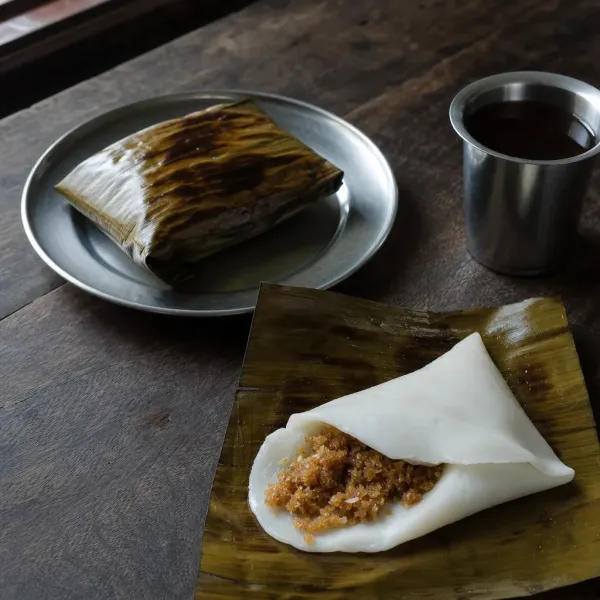
Ottada
Traditional Nasrani ottada recipe: soft rice flour flatbread filled with fresh coconut and jaggery, cooked on a banana leaf. Step-by-step Kerala meth…
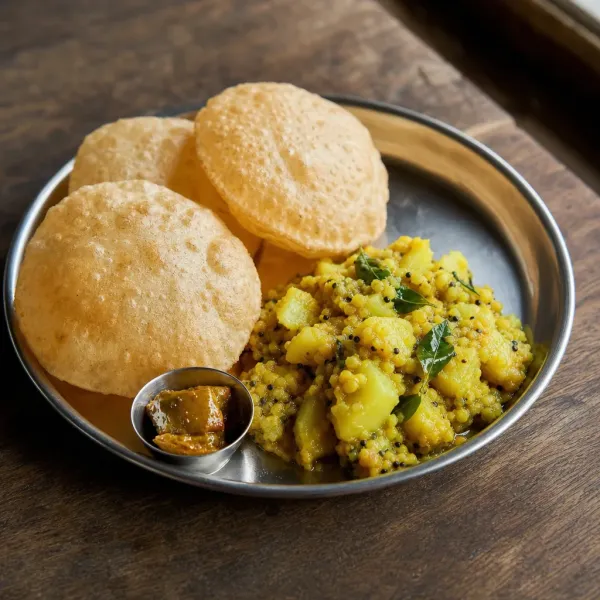
Poori with Potato Masala
Traditional Tamil Brahmin poori recipe with urulaikilangu masala. Stiff atta dough, hot groundnut oil, the right technique for a puffed, grease-free…
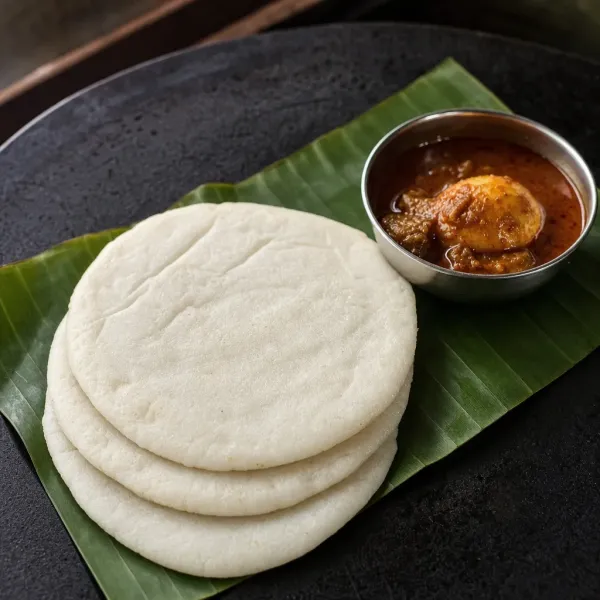
Orotti
Authentic Malabar Mappila orotti recipe: soaked raw rice ground and cooked into a soft dough, shaped by hand and finished on a dry iron griddle. Whit…
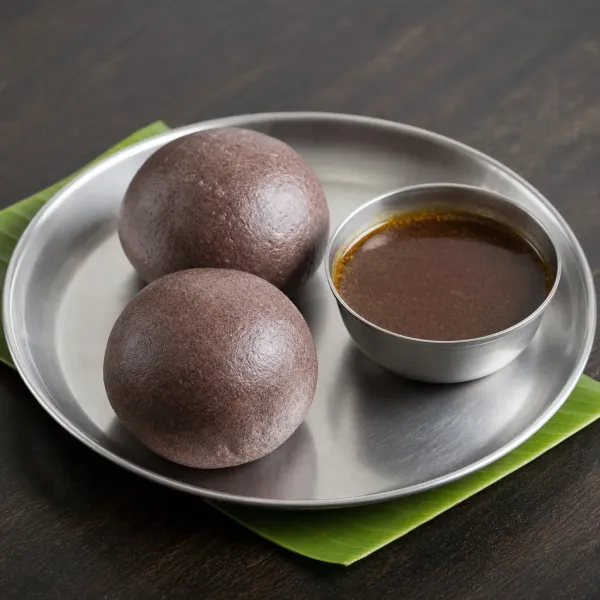
Ragi Mudde (Finger Millet Balls)
Traditional Karnataka ragi mudde recipe: finger millet balls cooked on the stovetop and shaped by hand, eaten with saaru or bassaru. Step-by-step met…
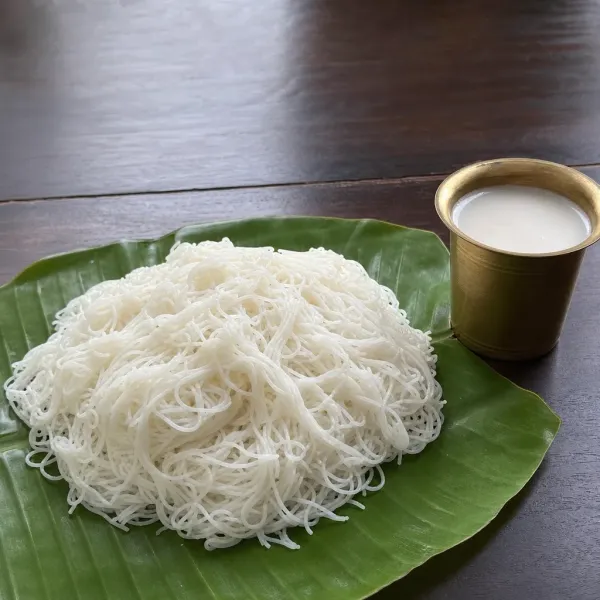
Rice Sevai (Santhakai)
Traditional Kongunad rice sevai made from fresh-ground raw rice dough, pressed and steamed. Step-by-step method with tips for the perfect soft noodle.
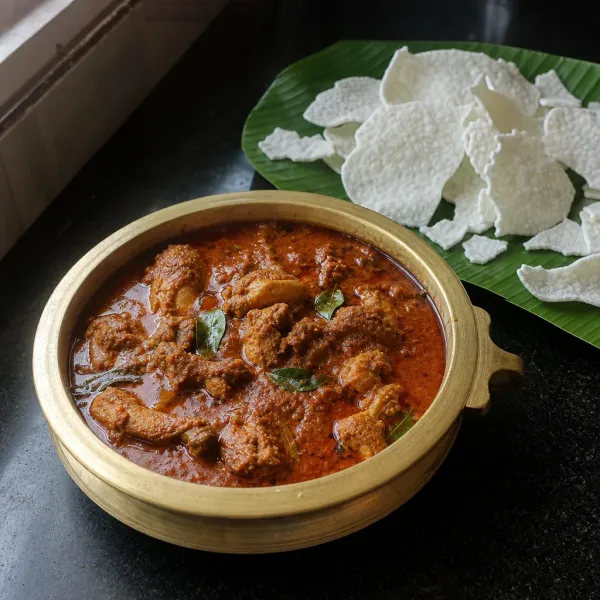
Kori Rotti: Mangalorean Crisp Rice Wafers with Chicken Gassi
Traditional Tulu-style kori rotti from coastal Karnataka: crisp dried rice wafers served with deep red coconut chicken gassi. Home recipe with fresh-…