

Ven Pongal (Khara Pongal) Recipe
Malayalam വെൺ പൊങ്കൽTamil வெண் பொங்கல்Kannada ವೆನ್ ಪೊಂಗಲ್Telugu వెన్ పొంగల్
- Prep10 min
- Cook35 min
- Serves4
- DifficultyEasy
- DietVegetarian
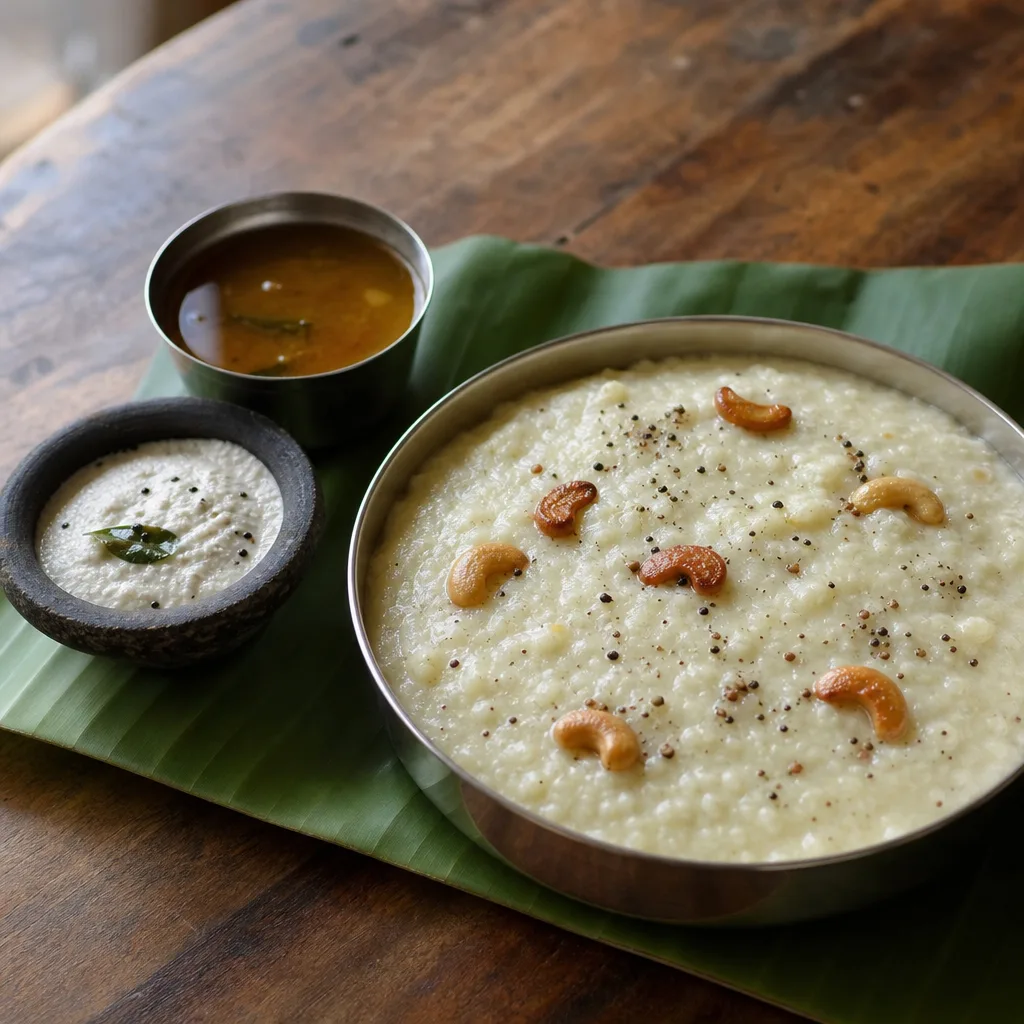
Ven pongal is a Tamil Brahmin morning dish, cooked in nearly every Iyer household on most days of the week and on every auspicious occasion. The name means white pongal, and white it stays: no turmeric, no tomato, no onion. Raw rice and split yellow moong dal are cooked together until they collapse into each other, then finished with a generous amount of ghee and coarsely cracked black pepper. The result is soft, yielding, and deeply savoury.
The consistency matters more than almost anything else. In a Tamil Brahmin kitchen it is loose enough to flow slowly when the vessel is tilted, never stiff or dry. Some grandmothers describe the right texture as pongal that can be eaten with a spoon without any effort. If it sets firm on the plate before you finish eating, it was not wet enough to begin with.
Households differ mostly in the pepper-to-ginger ratio and in how much ghee goes in at the end. Some cooks add a second spoonful of ghee just before serving. The cashews are fried in ghee separately and stirred in at the end so they stay crisp. A few families add a small amount of asafoetida both in the cooking water and again in the tempering; others add it only once.
Ingredients (serves 4)
For the pongal
For the tempering
Method
Dry-roast the dal
Put the moong dal in a dry heavy pan over medium heat. Stir constantly for 3 to 4 minutes until the dal smells nutty and turns a shade or two darker, but do not let it brown. Tip it out immediately and rinse it under cold water. Roasting firms the dal slightly so it holds a little texture even after long cooking, rather than dissolving completely.
Pressure-cook rice and dal together
Combine the rinsed rice and rinsed dal in a pressure cooker. Add 1.2 litres of water and salt. Cook on high heat until full pressure, then reduce the heat to low and cook for 12 minutes. Remove from heat and let the pressure release on its own. Do not rush this: the steam continuing to work inside is part of what makes the grains fully soft.
Check and loosen the consistency
Open the cooker. The mixture will look thick and porridge-like. Stir it vigorously with a ladle; the rice and dal should break down into each other with no distinct grains remaining. If it holds its shape when you lift the ladle, add another 100 to 200 ml of hot water and stir again over low heat for 2 to 3 minutes. It should flow slowly, not plop.
Fry the cashews
In a small pan, heat 1 tbsp of ghee over medium-low heat. Add the cashew halves and fry, stirring, for about 2 minutes until they are golden. Lift them out with a slotted spoon onto a small plate and set aside. Leave the ghee in the pan.
Make the tempering
To the same pan with the remaining cashew ghee, add 1 more tbsp of ghee and bring it to medium heat. Add the cumin seeds and let them sizzle for 20 seconds. Add the cracked pepper and ginger and stir for another 30 seconds; the pepper will darken slightly and smell sharp and fragrant. Add the curry leaves — stand back, they will sputter — and asafoetida, and stir once.
Combine tempering with pongal
Pour the entire tempering, including all the ghee, into the cooked rice-dal mixture. Stir well so the pepper and cumin are evenly distributed throughout. Taste for salt.
Finish with ghee and cashews
Add the remaining 2 tbsp of ghee directly to the pongal and stir it in. Scatter the fried cashews over the top. Serve immediately while it is still loose and hot; it will thicken as it cools.
How to serve
Sambar and coconut chutney are the classic pairing. Many households also serve it with a small mound of vadagam (sun-dried lentil crackers) or a wedge of lemon on the side. On festival days it is served on a banana leaf.
Served with: Sambar and coconut chutney are the classic pairing. Many households also serve it with a small mound of vadagam (sun-dried lentil crackers) or a wedge of lemon on the side. On festival days it is served on a banana leaf.
Cook's tips
Pot cooking without a pressure cooker
If you use a heavy pot, cook the rice and dal in 1.5 litres of water over medium heat, partially covered, for 35 to 40 minutes, stirring every 10 minutes and adding water as needed. The result is identical but requires more attention.
The pepper must be cracked, not powdered
Ground pepper disappears into the pongal and makes it merely spicy. Coarsely cracked pepper gives you small bursts of heat and a completely different texture. Use a mortar and pestle and crack it in two or three quick strokes per batch.
Consistency is the one thing you cannot fix later
If the pongal is too thick when it comes out of the cooker, you can add hot water and stir it back. If it is somehow too thin, continue cooking uncovered on low heat, stirring often. But if you serve it too stiff, no amount of ghee will rescue it.
Ghee quality changes the dish
Use good homemade or pure cow's-milk ghee. The flavour of the tempering relies on the ghee carrying the pepper and cumin. Refined oil or margarine will produce a flat result.
Reheating
Cold pongal sets very firm. To reheat, add 3 to 4 tbsp of water per cup of pongal and warm it over low heat, stirring constantly, until it loosens again. A splash of hot water works better than more ghee at this stage.
Regional variations
Karnataka households make a version called huggi or khichdi pongal with slightly more moong and less pepper; Andhra homes sometimes add curry leaves and dried red chillies more heavily and use a thinner consistency.
Glossary
- Pacharisi பச்சரிசி
- Raw (unparboiled) short-grain white rice used in Tamil cooking, distinct from the parboiled puzhungal arisi.
- Pasi paruppu பாசிப் பருப்பு
- Split and hulled green moong dal; yellow in colour after hulling, used in pongal and kootu.
- Perungayam பெருங்காயம்
- Asafoetida; the dried resin used in small amounts in Tamil Brahmin cooking as a digestive and flavouring.
- Vadagam வடகம்
- Small sun-dried lentil and spice crackers, deep-fried and served as an accompaniment to rice dishes.
Two things decide this dish: the consistency of the cooked rice and dal, which must be genuinely loose and flowing, and the quality of the pepper in the tempering, which must be cracked coarse and added to hot ghee so it blooms properly. Get those right and the rest follows.
More Breakfast & Tiffin recipes
Podi Idli
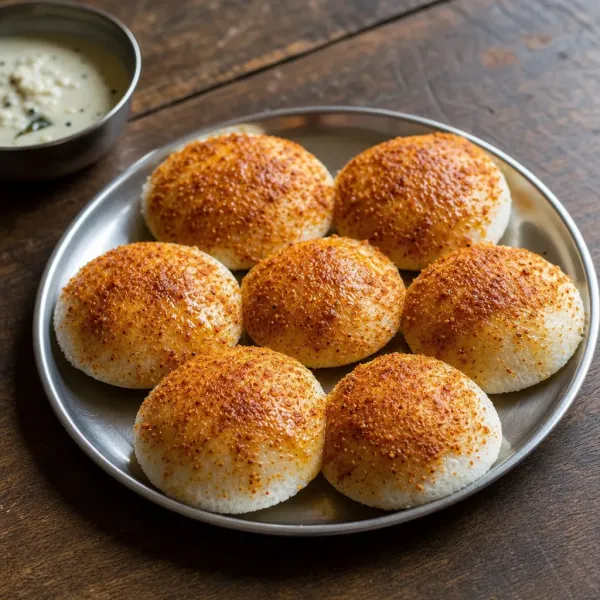
Soft steamed idli tossed in homemade milagai podi and gingelly oil. Traditional Tamil Iyer household recipe with full batter and podi method.
Onion Rava Dosa
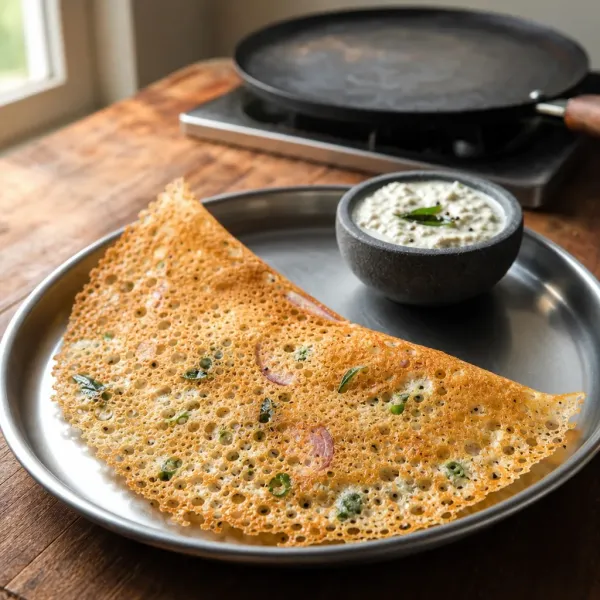
Traditional Tamil Nadu onion rava dosa with shallots, cumin, and curry leaves. Thin batter, iron tawa, gingelly oil. No fermentation needed.
Khara Bath
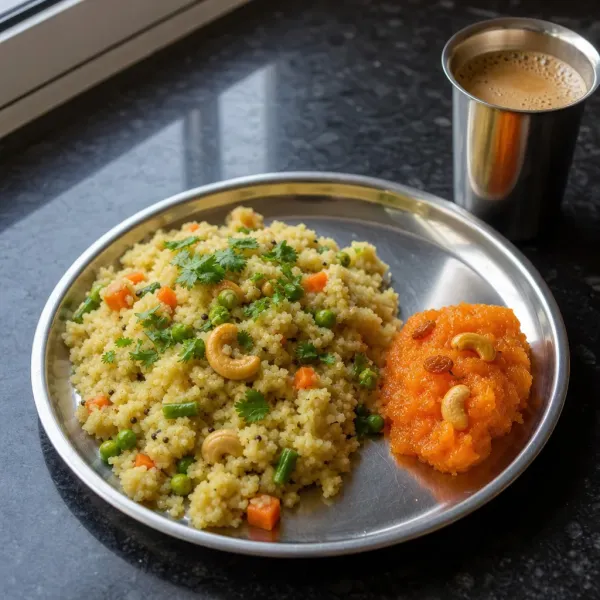
Authentic Karnataka khara bath made with toasted bombay rava, ghee, green chillies and vegetables. The Bengaluru household method, step by step.
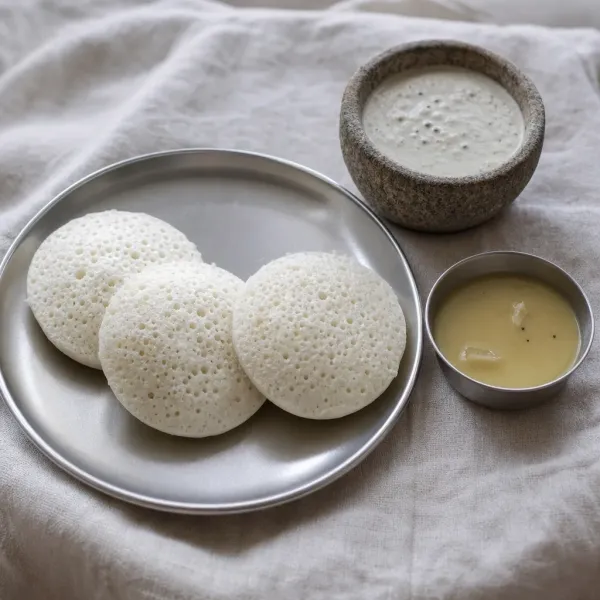
Karnataka Set Dosa
Traditional Karnataka set dosa recipe with raw rice, urad dal and poha. Soft, thick and spongy, served in threes with coconut chutney and sagu.
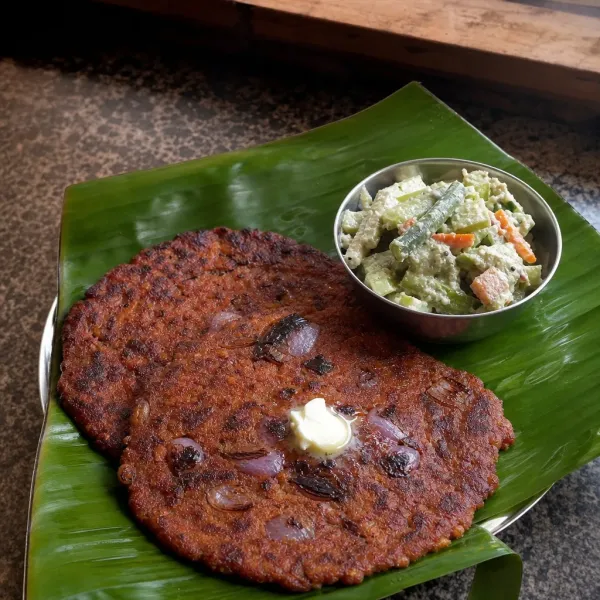
Adai
Traditional Tamil Iyer adai made with raw rice, chana dal and toor dal. Coarse-ground batter, shallot topping, cooked in gingelly oil. Served with av…
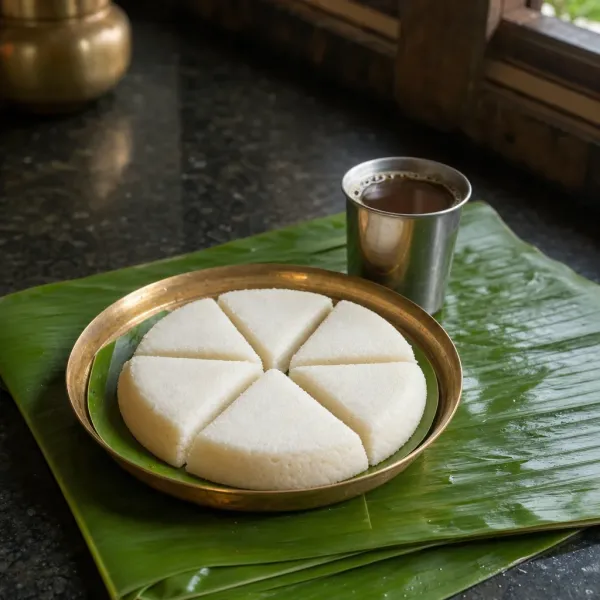
Kinnathappam
Traditional Nasrani kinnathappam: steamed rice cake with fresh coconut milk and jaggery. Soft, pale, and mildly sweet. Step-by-step household method.