

Onion Rava Dosa Recipe
Malayalam ഉള്ളി റവ ദോശTamil வெங்காய ரவா தோசைKannada ಈರುಳ್ಳಿ ರವೆ ದೋಸೆTelugu ఉల్లిపాయ రవ దోస
- Prep20 min
- Cook40 min
- Serves4
- DifficultyMedium
- DietVegetarian
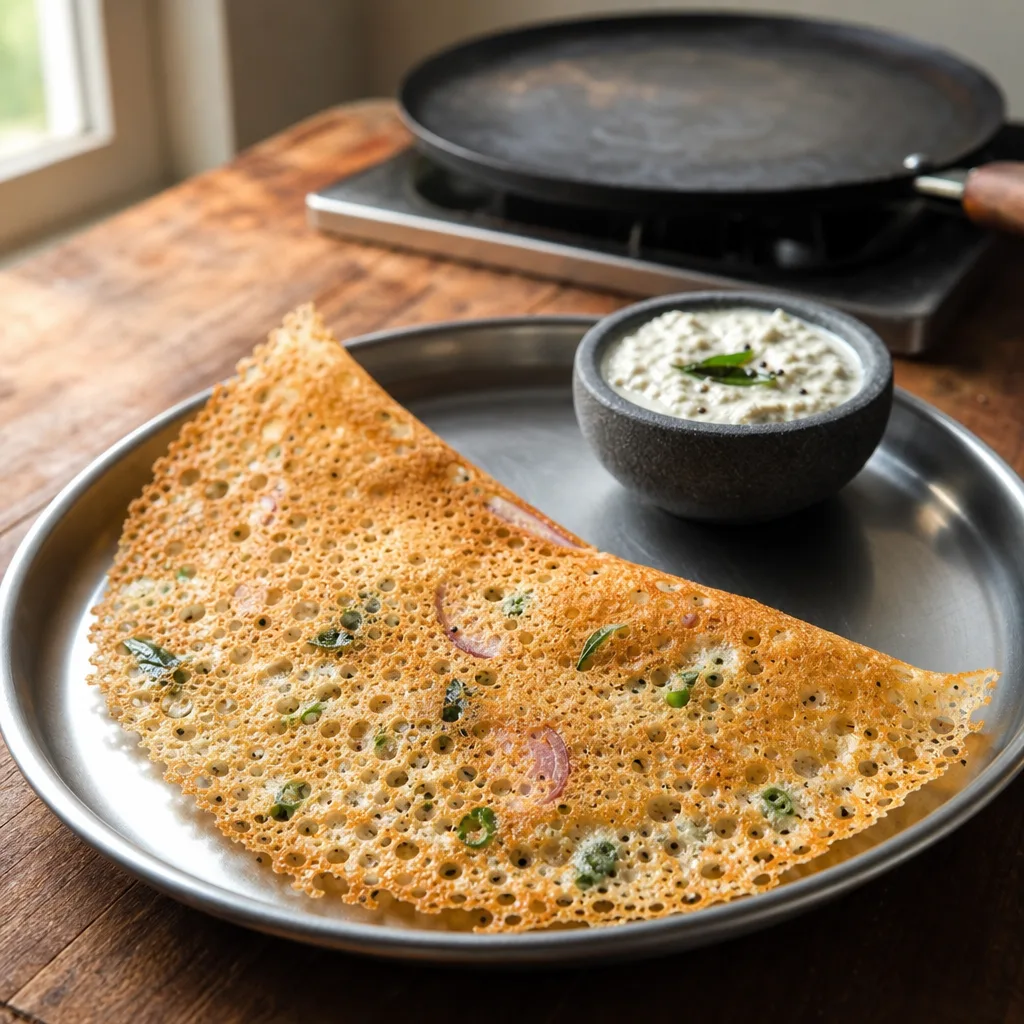
Rava dosa needs no soaking and no fermentation. You mix the batter, rest it briefly, and cook. That makes it the dosa you turn to when there is no time to plan ahead. The batter is very thin, almost like water with flour suspended in it, and that is exactly right. A thick batter will not give you the signature lacy holes.
In Tamil Nadu households this is a breakfast or evening tiffin dish. The shallots go in raw so they stay a little sharp and give bite against the crisp dosa. Some cooks add finely chopped green chilli directly into the batter; others add it in the tempering. Both are correct. The dosa is cooked only on one side, or very briefly flipped for a few seconds, and it comes off the pan golden, crisp, and riddled with holes.
The fat is gingelly oil or a mix of gingelly oil and ghee, poured around the edges and into the holes as it cooks. Some households use only ghee. Do not use refined oil; it will not give you the right flavour.
Ingredients (serves 4)
For the batter
For the tempering and onion mix
Method
Mix the dry flours
Put the fine rava, rice flour, and wheat flour in a wide bowl. Add the salt. Stir them together dry so everything is evenly combined before any water goes in. This prevents lumps of rava sitting at the bottom later.
Make the batter
Pour in 800 ml of water gradually, whisking as you go. The finished batter should be very thin, like a loose lassi. Lift a ladle and let it pour back: it should fall in a fast, watery stream with no resistance. If it feels even slightly thick, add more water. Err on the side of too thin rather than too thick; a thick batter will block the holes.
Rest the batter
Leave the batter to rest for 20 minutes at room temperature. The rava will absorb water and swell slightly. After resting, stir it again: the rava will have settled to the bottom. Check the consistency once more and add a splash of water if needed.
Prepare the onion mix
Combine the finely chopped shallots, green chilli, grated ginger, torn curry leaves, cumin seeds, and lightly crushed black pepper in a small bowl. This goes directly into the batter just before you cook, not earlier, or the shallots will begin to soften and release water.
Heat the pan
Place a heavy iron tawa or a thick cast-iron griddle over medium-high heat. Let it heat properly, at least 3 to 4 minutes. Sprinkle a few drops of water on the surface: they should skitter and evaporate instantly. This pan must be hotter than you would use for a regular dosa. A cool pan will give you a pale, soft result with no crispness.
Season the tawa
Rub the hot tawa with a cut shallot dipped in a few drops of gingelly oil. Do this before the first dosa and again if the dosa begins to stick. This is the traditional way to condition the pan between dosas.
Stir and add the onion mix to the batter
Stir the rested batter well from the bottom. Add the onion mix into the batter now and stir to distribute evenly. The batter must be stirred before every single ladle you pour, because the rava sinks fast.
Pour the batter
Hold the ladle high, about 15 to 20 cm above the tawa, and pour the batter in a wide, thin spiral starting from the outside edge and moving inward. Do not spread it with the back of the ladle the way you would a regular dosa. The holes form because the batter is poured from height onto a very hot surface; pressing it flat destroys them. If there are gaps that do not fill, spoon a little batter gently into those spots only.
Add oil and cook
Drizzle about ½ to 1 tsp of gingelly oil around the edges and into the visible holes. Keep the heat at medium-high. Cook until the edges lift freely and the underside is deep golden and crisp, about 2 to 3 minutes. The surface on top will look dry and set; the holes will be clearly visible and no longer wet-looking.
Flip or remove
Many cooks in Tamil Nadu remove the dosa without flipping, folding it straight off the pan. If you want a little colour on the top side, flip it briefly for 20 to 30 seconds only. Do not press it down. Slide it onto the plate immediately.
Continue with the remaining batter
Stir the batter thoroughly before each pour. If the tawa gets too hot and the batter sets before you finish pouring, reduce the heat slightly for one dosa, then bring it back up. A non-stick pan needs slightly lower heat throughout; the result will be less crisp but still lacy.
How to serve
Coconut chutney and tomato chutney are the most common accompaniments. Sambar is served alongside in tiffin hotels and often at home too. Some households serve it with only coconut chutney.
Served with: Coconut chutney and tomato chutney are the most common accompaniments. Sambar is served alongside in tiffin hotels and often at home too. Some households serve it with only coconut chutney.
Cook's tips
Maida versus atta
Many tiffin hotels and some households use a small quantity of maida in place of atta because it helps the lacy holes form more reliably. Traditional Iyer home kitchens more often use atta or skip the third flour entirely, relying on the rava-to-rice-flour ratio alone. Either works. Do not use more than 3 tbsp of either or the dosa will lose its crispness.
The batter sinks fast
Rava settles to the bottom of the bowl within a minute or two. If you forget to stir before pouring, the first ladle will be mostly water and the dosa will not hold together. Stir every time without fail.
Pan temperature is everything
If the tawa is not hot enough, the batter spreads flat before it can form holes and the dosa turns soft. If it is too hot, the batter sets the moment it touches the pan and you cannot complete the spiral pour. Medium-high heat, adjusted between dosas, is the working range.
Iron tawa versus non-stick
A seasoned iron tawa gives the best crispness and colour. A non-stick pan works but requires slightly lower heat and produces a paler result. The lacy holes still form on non-stick if the batter is thin enough.
Batter does not keep well
The rava continues to absorb water as the batter sits. If you leave it for more than an hour, it thickens noticeably and the holes become smaller. Add a little water and stir before cooking if this happens. Do not refrigerate the batter and use it the next day expecting the same result.
Regional variations
Karnataka households use a slightly thicker batter and sometimes add fresh coconut; Andhra versions increase green chilli and occasionally add ginger; tiffin hotels across South India often add a small quantity of maida to improve lace formation.
Glossary
- Rava ரவை
- Semolina; fine-ground rava (chiroti rava) is used here, not the coarser variety used for upma.
- Chinna vengayam சின்ன வெங்காயம்
- Small shallots; sharper and more pungent than large onions, traditional in Tamil Nadu cooking.
- Nallennai நல்லெண்ணெய்
- Gingelly oil, cold-pressed sesame oil; the traditional cooking fat for Tamil Nadu tiffin dishes and kuzhambu.
- Tawa தவா
- Flat griddle, ideally cast iron, used for cooking dosas and rotis.
- Pachari പച്ചരി
- Raw (unboiled) rice; used here as a reference term, though this recipe uses ready rice flour rather than ground raw rice.
Two things decide whether this dosa works: the batter must be genuinely thin, thinner than most cooks expect, and the tawa must be properly hot before the first ladle goes in. Get those two right and the holes take care of themselves.
More Breakfast & Tiffin recipes
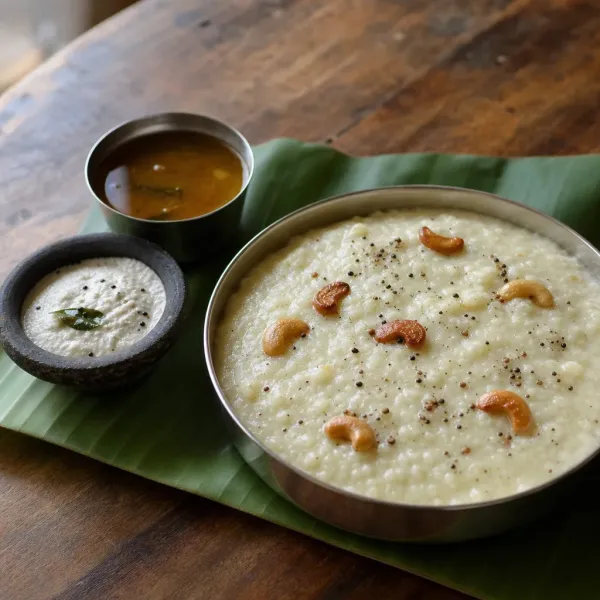
Ven Pongal (Khara Pongal)
Authentic Tamil Brahmin ven pongal with raw rice, moong dal, cracked pepper and ghee. Soft, flowing texture, no turmeric, no onion.
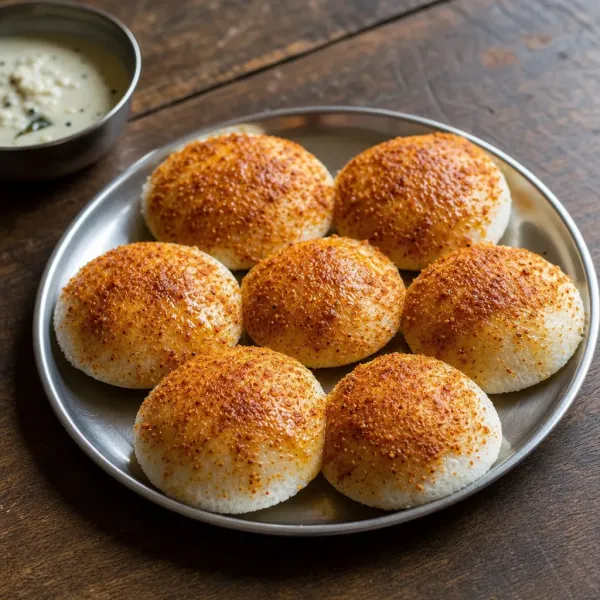
Podi Idli
Soft steamed idli tossed in homemade milagai podi and gingelly oil. Traditional Tamil Iyer household recipe with full batter and podi method.
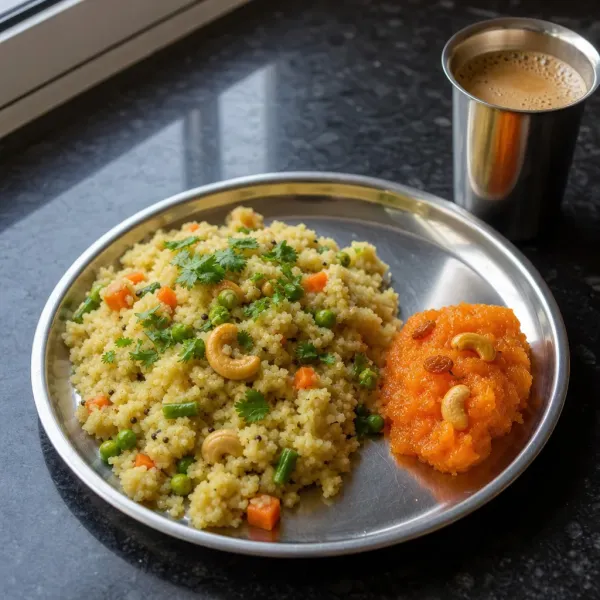
Khara Bath
Authentic Karnataka khara bath made with toasted bombay rava, ghee, green chillies and vegetables. The Bengaluru household method, step by step.
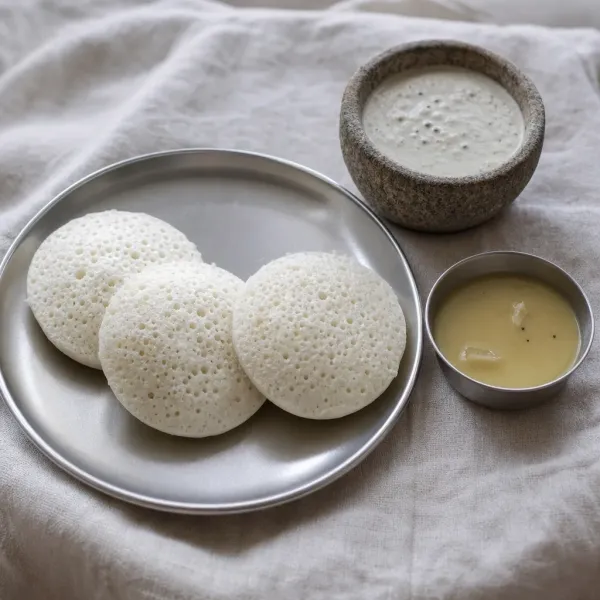
Karnataka Set Dosa
Traditional Karnataka set dosa recipe with raw rice, urad dal and poha. Soft, thick and spongy, served in threes with coconut chutney and sagu.
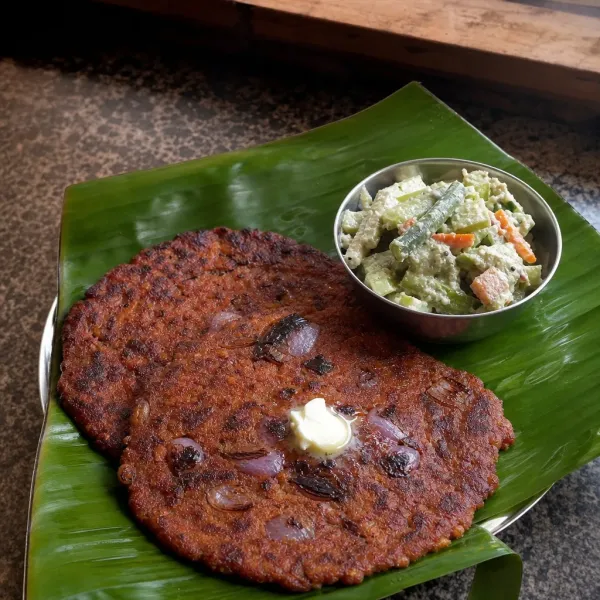
Adai
Traditional Tamil Iyer adai made with raw rice, chana dal and toor dal. Coarse-ground batter, shallot topping, cooked in gingelly oil. Served with av…
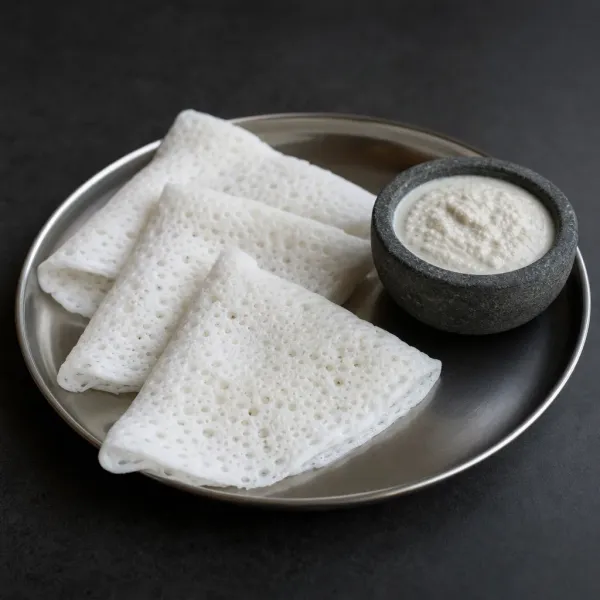
Neer Dosa
Traditional Mangalorean neer dosa made with raw rice and fresh coconut. No fermentation, cooked on one side only. Soft, white and lacy.