

Neer Dosa Recipe
Malayalam നീർ ദോശTamil நீர் தோசைKannada ನೀರ್ ದೋಸೆTelugu నీర్ దోశ
- Prep15 min
- Soak / ferment4 hr
- Cook30 min
- Serves4
- DifficultyEasy
- DietVegan
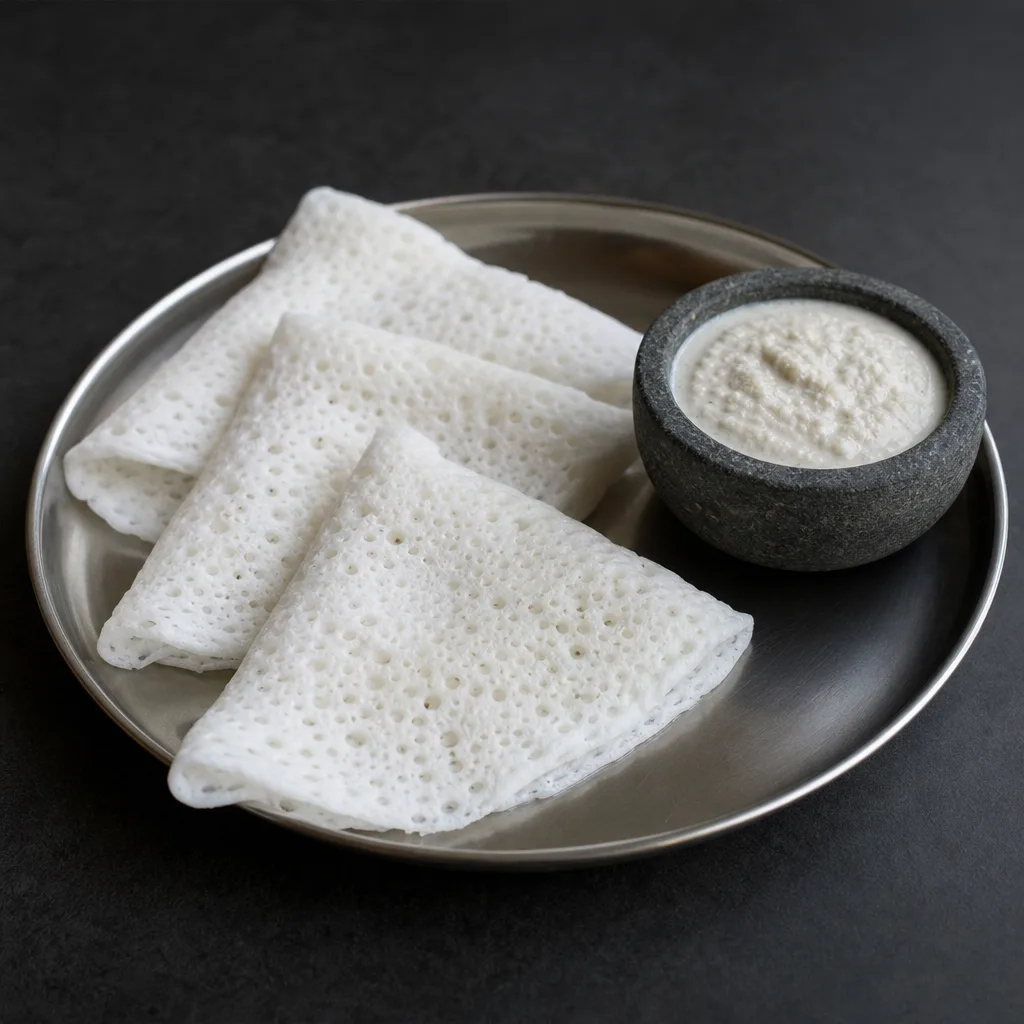
Neer dosa belongs to the coastal belt of Karnataka, to Mangalore, Udupi and the villages between them. The name simply means water dosa: the batter is thin as water, made from nothing more than soaked raw rice, fresh grated coconut and salt. There is no fermentation, no leavening, no souring. You soak the rice for a few hours, grind it fine, and cook it the same day.
The dosa is cooked on one side only, on a medium flame, and lifted while it is still pale and soft. It folds easily and is never crisp. The surface has small lacy holes where the thin batter settled. The texture is delicate, almost silky, and it tears if you handle it roughly. That softness is the whole point.
In Konkani Catholic homes it goes to the table with coconut milk sweetened with jaggery, or with a chicken or mutton curry. In everyday Tulu households it is more likely eaten with coconut chutney or a simple egg curry. Households differ mainly on the rice-to-coconut ratio: some use a small amount of coconut for body, others use none at all and rely on the rice alone.
Ingredients (serves 4)
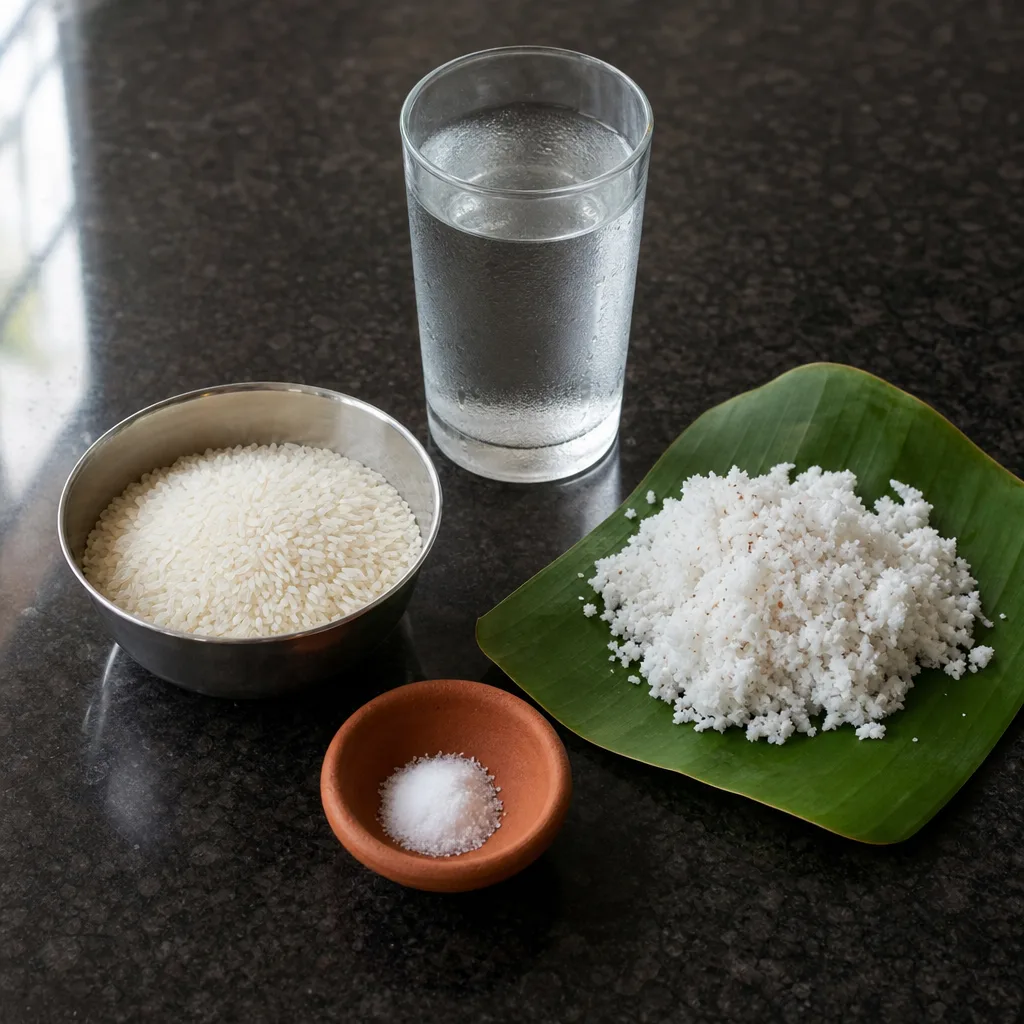
For the batter
For the pan
Method
Soak the rice
Rinse the raw rice two or three times until the water runs mostly clear. Cover with cold water by at least 5 cm and leave to soak for 4 hours at room temperature. The grains should feel soft enough to break easily between your fingers. Drain completely before grinding.
Grind to a smooth batter
Put the drained rice and fresh grated coconut into a wet grinder or a powerful blender. Add about half the water and grind for 8 to 10 minutes, scraping down the sides once or twice. The batter must be completely smooth with no gritty feel when you rub a little between your fingers. Add the remaining water gradually until the batter is very thin, close to the consistency of whole milk. Add salt and mix.
Rest the batter briefly
Let the batter rest for 10 minutes while you heat the pan. This is not fermentation; it simply lets the starch settle evenly. The batter will look slightly opaque and white. Stir it well before you ladle each dosa, as the rice starch settles quickly.
Heat the pan
Place a flat iron tawa or a non-stick pan over medium heat. Let it heat for 2 minutes. Sprinkle a few drops of water on the surface; they should skitter and evaporate in under a second. Wipe the surface lightly with a cloth dipped in a little coconut oil. The pan should be hot but not smoking.
Pour and spread the batter
Lift the pan off the heat with one hand and hold it at a slight tilt. Pour a ladleful of batter (roughly 80 ml) onto the centre and swirl the pan immediately in a circular motion so the batter runs into a thin, even circle about 20 cm across. Work quickly; the batter sets fast. Return the pan to the heat. Do not press or spread with a spoon.
Cook on one side only
Cook over medium heat without a lid for about 90 seconds to 2 minutes. The dosa is ready when the surface has turned from wet and glossy to matte and dry, and small lacy holes have appeared across it. The edges will lift very slightly from the pan. Do not flip it. The dosa should be white and soft throughout, with no browning anywhere.
Remove and fold
Slide a thin spatula under the dosa gently and lift it off the pan. Fold it in half, then in half again to make a triangle, or roll it loosely into a cylinder. Place it on the serving plate. Work gently; it tears easily while still warm.
Repeat for remaining dosas
Stir the batter before each dosa, as the starch settles within a minute or two. Wipe the pan lightly with oiled cloth between each one. If the pan gets too hot and the batter sets before you can swirl it, lift the pan off the heat for 20 seconds before the next pour. Adjust heat as you go; medium is the right zone throughout.
How to serve
Sweetened coconut milk (thick coconut milk stirred with jaggery); coconut chutney; chicken curry; mutton curry; egg curry. In many homes, a ripe banana and a small bowl of jaggery are placed alongside for a simple breakfast.
Served with: Sweetened coconut milk (thick coconut milk stirred with jaggery); coconut chutney; chicken curry; mutton curry; egg curry. In many homes, a ripe banana and a small bowl of jaggery are placed alongside for a simple breakfast.
Cook's tips
The batter must be thin
If the batter is too thick the dosa will be rubbery and will not form lacy holes. It should pour off the ladle in a thin, fast stream, not fall in a slow ribbon. Add water a tablespoon at a time if you are unsure, and test with one dosa before committing.
Stir before every ladle
Rice starch sinks fast in a thin batter. If you do not stir, the first few dosas will be watery and the last ones will be thick and gummy. Keep a spoon in the batter bowl throughout.
Pan temperature is everything
Too cool and the batter spreads unevenly and sticks. Too hot and it sets in patches before you can swirl. A medium flame maintained steadily gives you the most control. Cast iron holds heat well but takes longer to cool if it overheats; non-stick is more forgiving for beginners.
No fermentation needed
Unlike most dosas, this one needs no overnight soak, no sour smell, no bubbling batter. The rice soaks for 4 hours only. Soaking longer than 6 hours can make the batter slightly sour, which is not traditional here.
Blender versus wet grinder
A wet grinder gives a smoother, slightly silkier result because it works the starch more thoroughly. A high-speed blender works well if you grind for a full 3 to 4 minutes and check the texture. A standard household mixie may leave a slightly grainy batter; grind in two batches and give it more time.
Storing the batter
Use the batter the same day it is ground. Refrigerating it overnight causes the starch to thicken and the texture of the dosa changes. If you must store it, add a splash of water and stir well before using the next morning.
Regional variations
Some Havyaka Brahmin households make a similar thin rice crepe; a slightly thicker version with grated coconut in the batter is made in parts of Udupi district.
Glossary
- Neer ನೀರ್
- Water, in Tulu and Kannada; describes the watery thinness of this batter.
- Pachari പച്ചരി
- Raw (unparboiled) white rice; the standard rice for grinding batters in Kerala and coastal Karnataka.
- Tawa ತವಾ
- A flat griddle, either cast iron or non-stick, used for cooking dosas and rotis.
- Tulu Nadu ತುಳುನಾಡು
- The coastal region of Karnataka centred on Mangalore and Udupi, home of the Tulu-speaking people and this dish.
Two things decide whether neer dosa works. The first is batter consistency: it must be thin enough to swirl across a hot pan in one motion, forming a near-translucent sheet. The second is restraint at the stove: cook it on one side only, remove it while it is still pale and soft, and fold it without pressing. Rush either of those and you lose the silky, lacy quality that makes it worth making.
More Breakfast & Tiffin recipes
Uggani
Traditional Rayalaseema uggani recipe: soaked borugulu tossed with mustard tempering, roasted peanuts, green chilli and lemon. Ready in 25 minutes.
Vellayappam
Traditional Kerala Nasrani vellayappam recipe: thick, soft, pale fermented rice pancake made with pachari and coconut. Overnight batter, cooked cover…
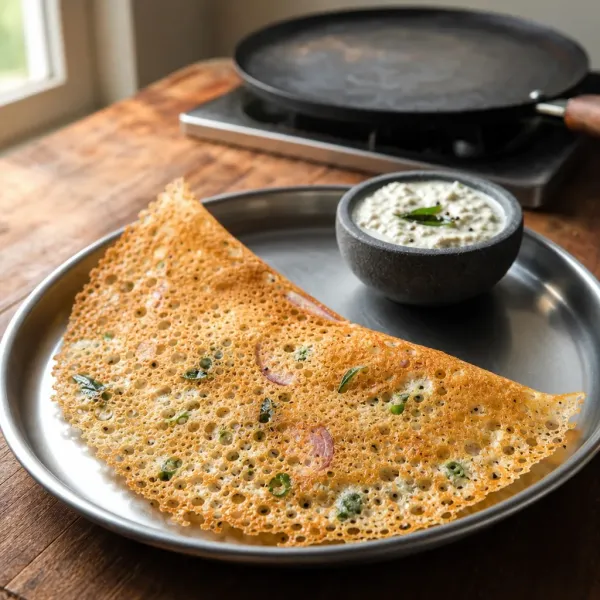
Onion Rava Dosa
Traditional Tamil Nadu onion rava dosa with shallots, cumin, and curry leaves. Thin batter, iron tawa, gingelly oil. No fermentation needed.
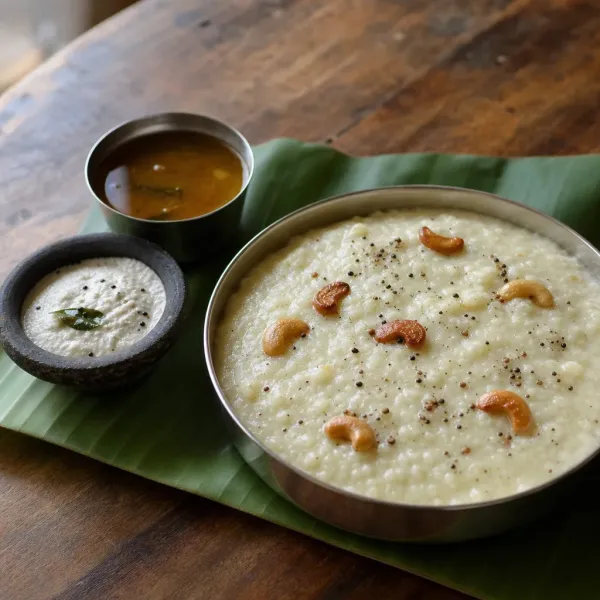
Ven Pongal (Khara Pongal)
Authentic Tamil Brahmin ven pongal with raw rice, moong dal, cracked pepper and ghee. Soft, flowing texture, no turmeric, no onion.
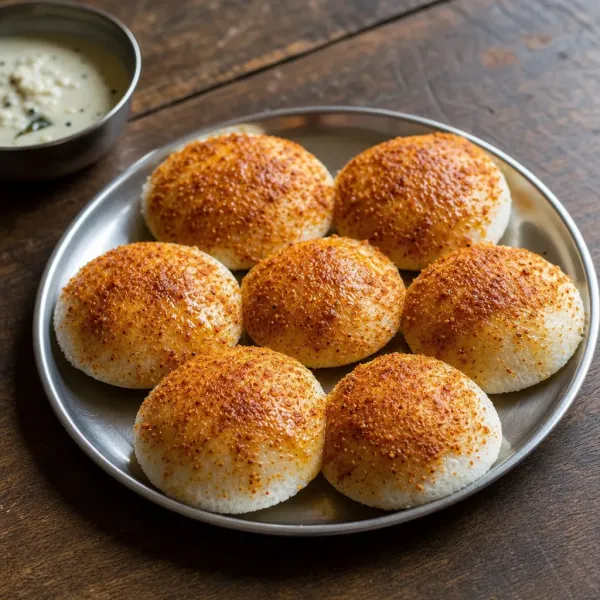
Podi Idli
Soft steamed idli tossed in homemade milagai podi and gingelly oil. Traditional Tamil Iyer household recipe with full batter and podi method.
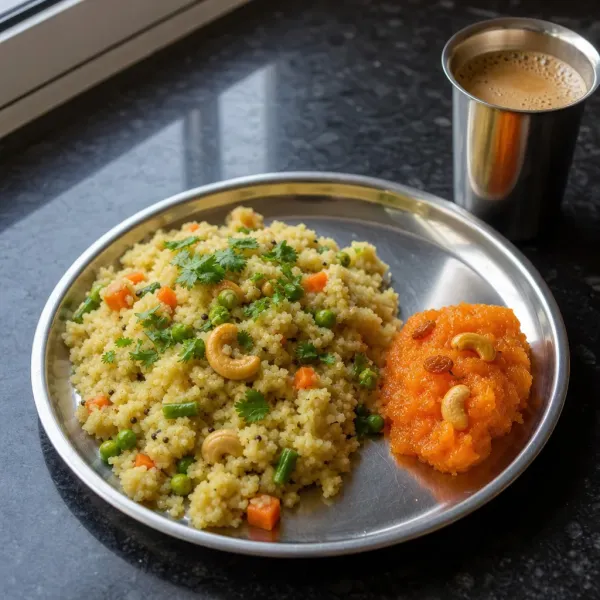
Khara Bath
Authentic Karnataka khara bath made with toasted bombay rava, ghee, green chillies and vegetables. The Bengaluru household method, step by step.