

Podi Idli Recipe
Malayalam പൊടി ഇഡ്ഡലിTamil பொடி இட்லிKannada ಪೊಡಿ ಇಡ್ಲಿTelugu పొడి ఇడ్లీ
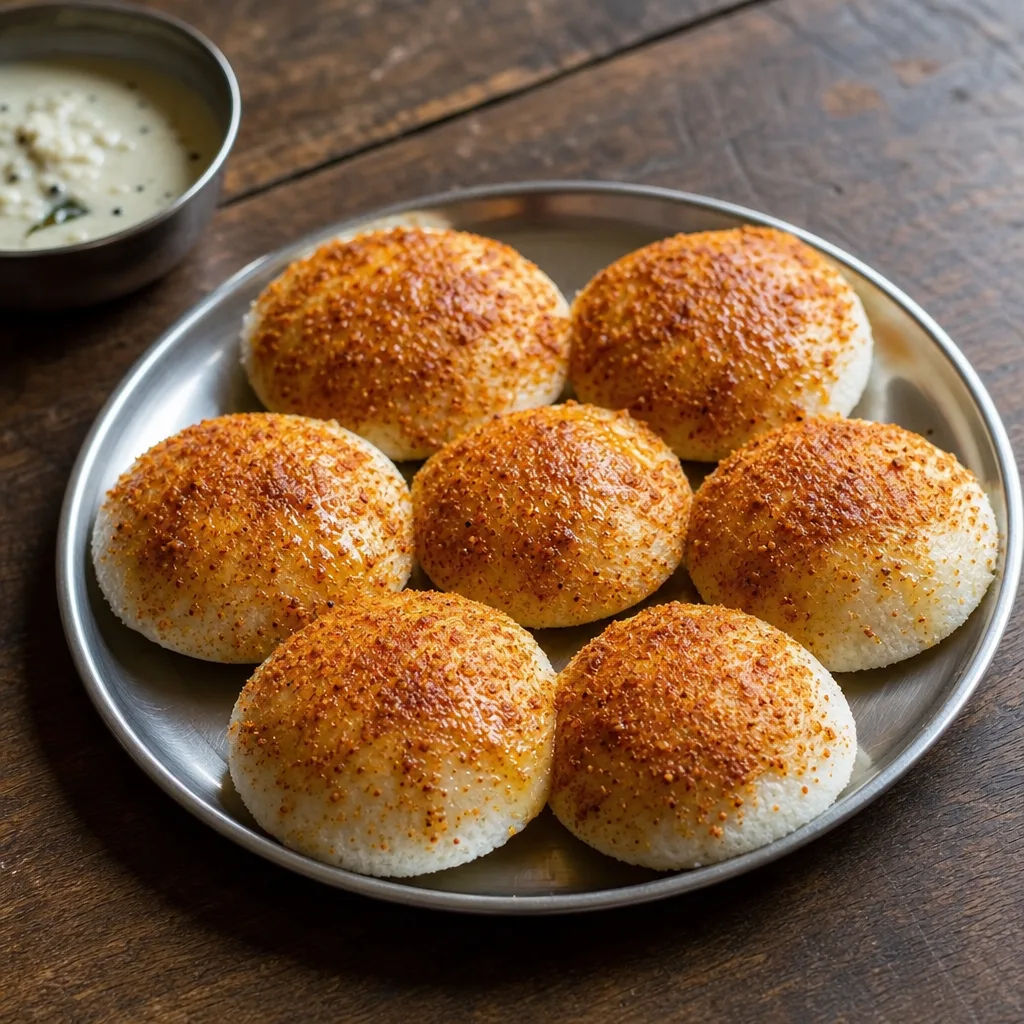
- Prep20 min
- Soak / ferment14 hr
- Cook40 min
- Serves4
- DifficultyMedium
- DietVegan
Podi idli is a morning staple in Tamil Brahmin homes, made when there is leftover idli from the previous day or when freshly steamed idli are cut and tossed straight from the plate. The podi — milagai podi, literally chilli powder, though it is a coarse spiced lentil powder — is the whole point. Every household grinds its own, and no two are identical. Some lean heavily on urad dal for nuttiness, others balance it with chana dal for body, and the heat comes from dried red chillies roasted until fragrant but not burnt.
The gingelly oil is not optional. It carries the podi into every surface of the idli and gives the dish its characteristic warm, slightly bitter depth. Coconut oil would make it a different dish entirely. The idli themselves should be soft enough to absorb the oil but not so fresh and hot that they turn mushy when tossed — ten minutes off the steamer is about right.
Households differ mainly on the podi ratio and on whether the idli are kept whole, halved, or quartered. Children's portions get less podi and a little more oil. Some families add a tempering of mustard and curry leaves directly in the pan before tossing; others prefer the clean, dry finish of podi and oil alone. Both are genuine.
Ingredients (serves 4)
For the idli batter
For the milagai podi
For tossing
Method
Soak the batter ingredients
Rinse the idli rice two or three times until the water runs mostly clear, then cover with fresh water and soak for 6 hours. In a separate vessel, soak the urad dal and fenugreek seeds together for 4 hours. Keep them apart; they grind differently and need to be handled separately.
Grind and ferment the batter
Drain the urad dal and fenugreek. Grind them first in a wet grinder with a little cool water, adding water in small splashes, until the batter is very smooth, white, and airy — almost like a thick foam. This takes 20 to 25 minutes in a stone wet grinder. Transfer to a large vessel. Drain the rice and grind it to a slightly coarse, grainy batter — not completely smooth; a little texture is correct. Mix both batters together thoroughly with your hand, which helps start fermentation. Add salt, cover loosely, and leave in a warm corner of the kitchen for 8 to 10 hours in summer, up to 14 hours in a cooler climate. The batter is ready when it has risen visibly, smells faintly sour, and small bubbles are visible on the surface.
Dry-roast the chillies for the podi
Heat a heavy iron or steel kadai over medium-low flame. Add the dried red chillies with no oil and roast, turning constantly, until they darken slightly and smell toasty — about 2 minutes. Do not let them blacken or the podi will turn bitter. Remove and cool on a plate.
Roast the dals for the podi
Add the teaspoon of gingelly oil to the same kadai over medium-low heat. Add the urad dal and chana dal together and roast, stirring without stopping, until they turn a deep golden-brown and smell nutty — about 5 to 6 minutes. Add the sesame seeds in the last minute and let them pop and colour lightly. Add the asafoetida, stir once, and immediately take the pan off the heat. The residual heat is enough. Spread everything on a plate to cool completely. Grinding warm spices gives an oily, clumped podi.
Grind the podi
Once everything is fully cool, combine the roasted chillies, dals, sesame, and asafoetida in a dry mixer-grinder jar. Add salt. Pulse in short bursts to a coarse, slightly gritty powder — not fine dust. Taste for salt and heat. Store in an airtight jar. This podi keeps for 3 to 4 weeks at room temperature in a dry kitchen.
Steam the idli
Fill the idli steamer with enough water to last 12 to 15 minutes of steaming without running dry. Bring it to a full boil. Lightly grease the idli moulds with a few drops of gingelly oil on a piece of cloth or your fingers. Pour the fermented batter into the moulds, filling each about three-quarters full — the idli will puff up. Place the plates in the steamer, cover tightly, and steam over medium-high heat for 10 to 12 minutes. The idli are done when a toothpick inserted in the centre comes out clean and the surface looks set and slightly shiny, not wet.
Rest the idli briefly
Remove the steamer from the heat and let the idli sit, covered, for 2 minutes. Then open and leave them uncovered for another 5 to 8 minutes before unmoulding. Idli that are lifted too soon stick and tear. Run a wet spoon around the edge of each mould and the idli will lift cleanly.
Toss in podi and gingelly oil
Place the idli in a wide plate or shallow vessel. Drizzle the gingelly oil over them evenly. Spoon the milagai podi over the top. Using a flat spoon or your fingers, gently turn the idli so every surface is coated — do not press or they will break. The idli should be lightly warm at this point, not piping hot. Serve immediately.
How to serve
Plain coconut chutney or sambar on the side, though in many households podi idli is eaten as is, without any accompaniment, especially as a quick breakfast or evening tiffin.
Served with: Plain coconut chutney or sambar on the side, though in many households podi idli is eaten as is, without any accompaniment, especially as a quick breakfast or evening tiffin.
Cook's tips
The wet grinder matters
A stone wet grinder gives the urad dal batter its characteristic airy, voluminous texture. A mixer-grinder produces a denser batter and the idli will be less soft. If using a mixer, grind in short intervals with ice-cold water to prevent the motor from heating the batter.
Fermentation in a cold climate
If your kitchen is below 25°C, place the covered batter vessel inside an oven with only the light switched on, or wrap it in a thick cloth. Under-fermented batter makes flat, dense idli that stick to the mould.
Choosing the chillies for podi
Gundu chillies (round, moderately hot) give a rounder heat; Byadagi chillies give deep colour with less fire. Most Tamil households use a mix. Avoid Kashmiri chillies — they colour without flavour and are not traditional here.
Using store-bought podi
Commercial milagai podi works but is usually finer in texture and saltier. Reduce the quantity when tossing and taste before adding more. Freshly ground podi has a fragrance that no packaged version matches.
Leftover idli
Day-old idli that have firmed up in the refrigerator are actually ideal for podi idli — they hold their shape when tossed and absorb the oil without turning mushy. Bring them to room temperature first, or steam briefly for 3 minutes to soften.
Regional variations
Podi idli is made across Tamil Nadu households regardless of community; the podi recipe varies — Iyengar households often use a slightly sweeter, more urad-heavy podi, and some Brahmin kitchens omit asafoetida; in Karnataka the same idea appears with chutney pudi and coconut oil instead of gingelly oil.
Glossary
- Milagai podi மிளகாய் பொடி
- Literally 'chilli powder'; in practice a coarse spiced lentil and chilli powder used as a dry condiment with idli and dosa.
- Nallennai நல்லெண்ணெய்
- Cold-pressed gingelly (sesame) oil; the everyday cooking and finishing oil of Tamil Nadu.
- Idli arisi இட்லி அரிசி
- A short-grain, parboiled rice variety used specifically for idli and dosa batter; gives a softer texture than raw rice.
- Vendhayam வெந்தயம்
- Fenugreek seeds; added in small quantity to idli batter to aid fermentation and add a slight bitter note.
- Perungayam பெருங்காயம்
- Asafoetida; used in South Indian Brahmin cooking as a digestive and flavouring, especially where onion and garlic are avoided.
- Kadalai paruppu கடலை பருப்பு
- Split chana dal (Bengal gram); used in milagai podi for body and a mild sweetness.
- Ulutham paruppu உளுத்தம் பருப்பு
- Split urad dal; the primary dal in idli batter and the main base of milagai podi.
Two things decide whether podi idli works: the quality of the podi and the condition of the idli. A freshly ground podi with properly roasted dals and chillies has a fragrance and texture that coats the idli rather than sitting on top of it. And the idli themselves must be soft enough to absorb the gingelly oil but firm enough to hold together when turned. Get both right and the dish needs nothing else.
More Breakfast & Tiffin recipes
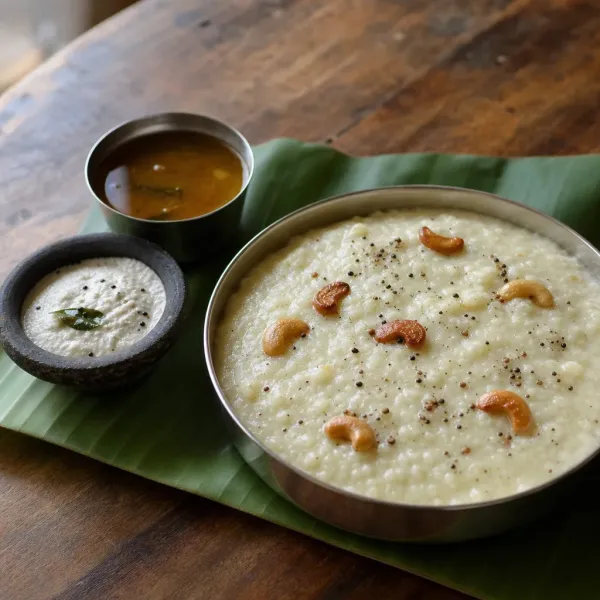
Ven Pongal (Khara Pongal)
Authentic Tamil Brahmin ven pongal with raw rice, moong dal, cracked pepper and ghee. Soft, flowing texture, no turmeric, no onion.
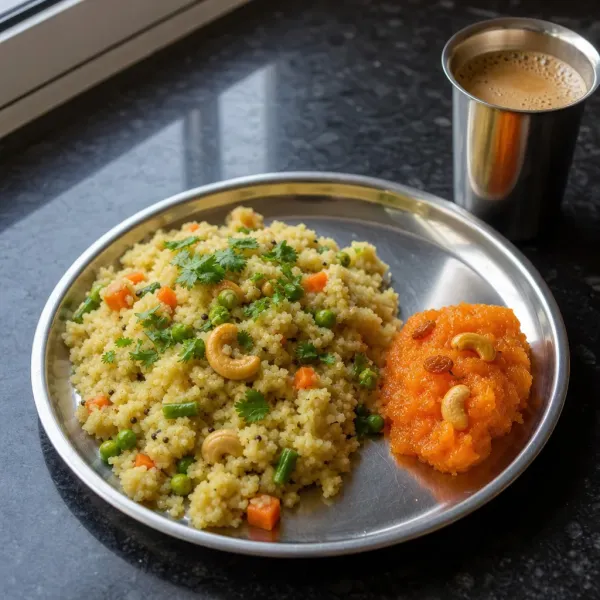
Khara Bath
Authentic Karnataka khara bath made with toasted bombay rava, ghee, green chillies and vegetables. The Bengaluru household method, step by step.
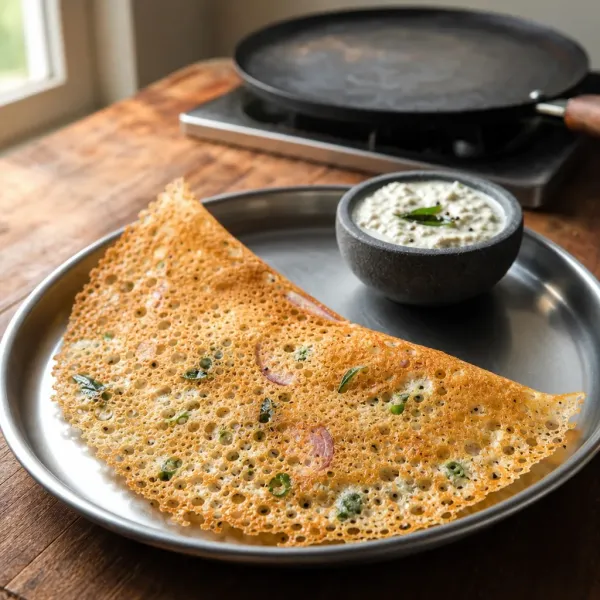
Onion Rava Dosa
Traditional Tamil Nadu onion rava dosa with shallots, cumin, and curry leaves. Thin batter, iron tawa, gingelly oil. No fermentation needed.
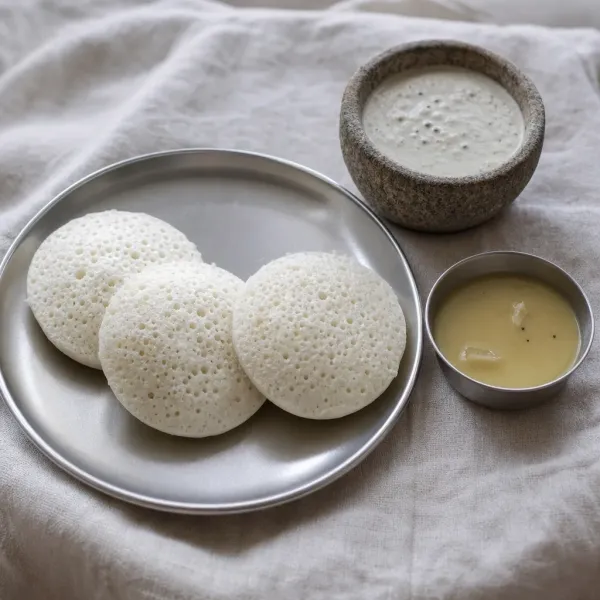
Karnataka Set Dosa
Traditional Karnataka set dosa recipe with raw rice, urad dal and poha. Soft, thick and spongy, served in threes with coconut chutney and sagu.
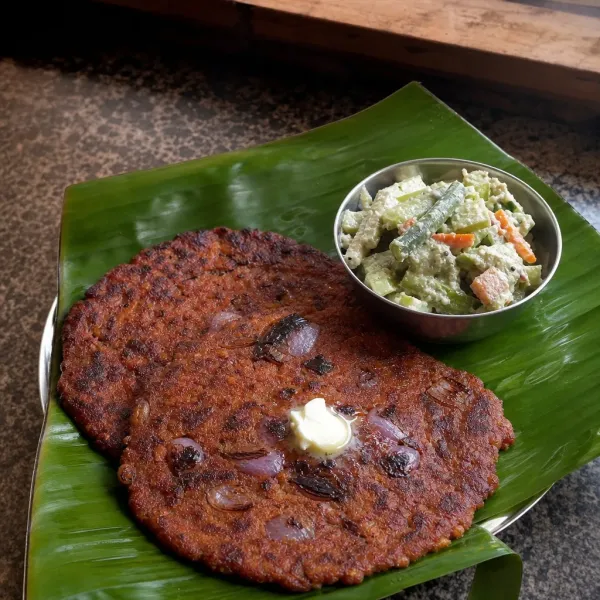
Adai
Traditional Tamil Iyer adai made with raw rice, chana dal and toor dal. Coarse-ground batter, shallot topping, cooked in gingelly oil. Served with av…
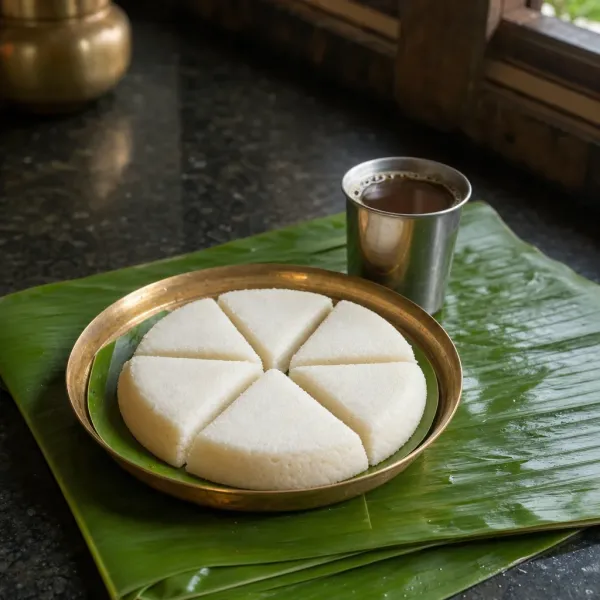
Kinnathappam
Traditional Nasrani kinnathappam: steamed rice cake with fresh coconut milk and jaggery. Soft, pale, and mildly sweet. Step-by-step household method.