

Khara Bath Recipe
Malayalam ഖാര ബാത്ത്Tamil கார பாத்Kannada ಖಾರಾ ಬಾತ್Telugu ఖారా బాత్
- Prep15 min
- Cook25 min
- Serves4
- DifficultyEasy
- DietVegetarian
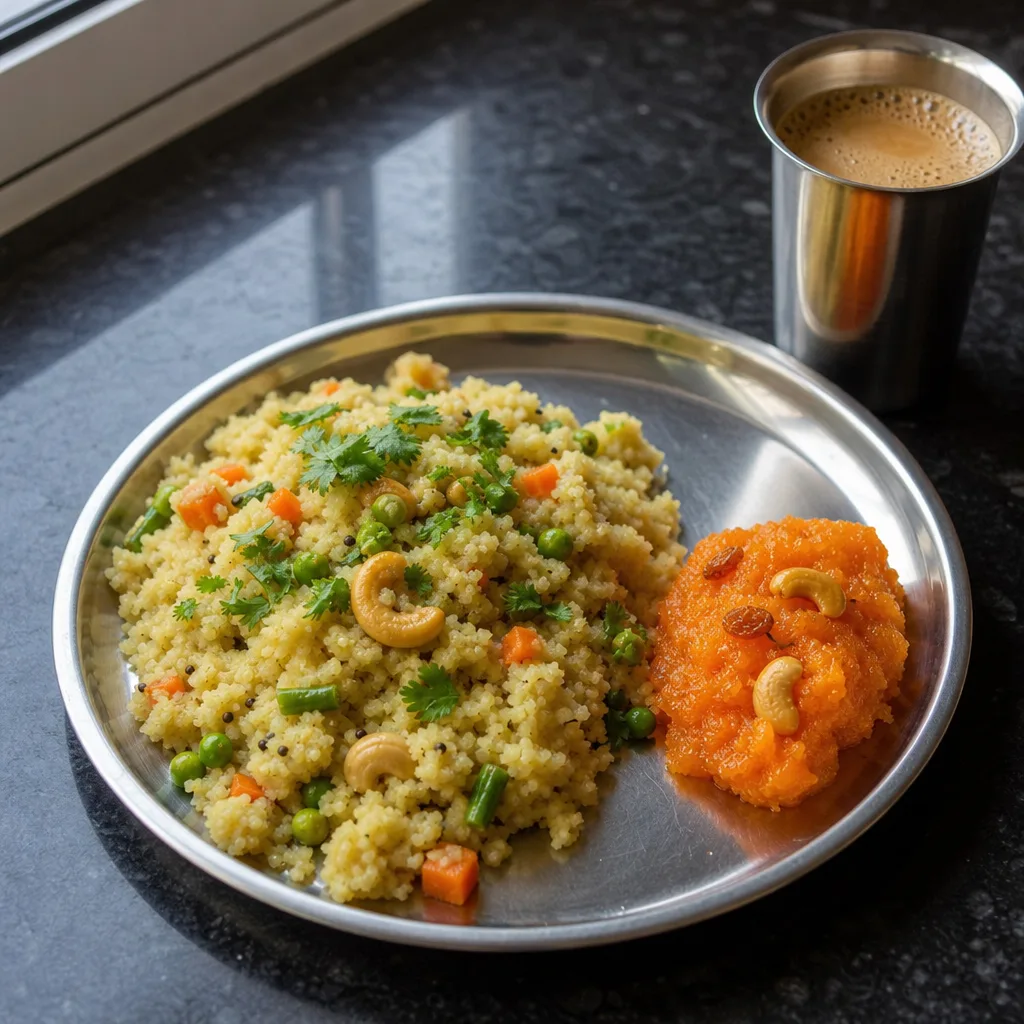
Khara bath is the savoury twin of kesari bath, and in Bengaluru the two are often served together on the same plate at breakfast — a combination called chow chow bath. The word khara simply means spicy or pungent in Kannada, and the dish earns the name through a generous hand with green chillies, a proper tempering in ghee, and the fragrance of fresh curry leaves.
The base is medium-coarse bombay rava, toasted until it smells nutty before any liquid touches it. Vegetables go in — carrot, beans, green peas, and sometimes potato — cut small so they cook through in the time the rava takes to absorb the water. Tomato gives a gentle sourness and keeps the bath from feeling heavy. The ratio of water to rava is the one number worth memorising: two and a half cups of water for every cup of rava, and it must be boiling water added all at once.
Households differ on fat: some use only ghee throughout, others start with ghee for the tempering and add a little more at the end. The vegetables you use depend on what is in the house — capsicum, cauliflower, and carrot all appear in different kitchens. What does not change is the toasting of the rava and the boiling of the water before they meet.
Ingredients (serves 4)
For tempering
Vegetables
For the bath
Garnish
Method
Toast the rava
Set a wide, heavy pan — an iron kadai or thick-bottomed aluminium vessel — over medium-low heat. Add the rava dry, without any fat, and stir it constantly with a wide spatula. After 5 to 7 minutes it will turn faintly golden at the edges and smell nutty, like warm wheat flour. Do not walk away; it catches quickly once it starts colouring. Tip it out onto a plate and set aside. If the rava goes into the tempering untoasted, the bath turns gluey.
Boil the water
Put the 625 ml of water on to boil in a separate vessel. Keep it at a rolling boil until you need it. This is not optional — cold or warm water added to the rava causes lumps that cannot be fixed.
Start the tempering
In the same wide pan, heat 3 tablespoons of ghee over medium heat. Add the mustard seeds and wait for them to pop — about 30 seconds. Add the chana dal and urad dal and stir until the chana dal turns pale gold, about 1 minute. Add the cashew halves and fry until they are a warm honey colour, another 30 to 40 seconds.
Add aromatics
Add the curry leaves — stand back, they will spit in the ghee. Add the slit green chillies and grated ginger immediately after. Stir for 20 seconds until the raw smell of ginger softens.
Cook the shallots
Add the chopped shallots and a small pinch of salt to help them soften. Cook over medium heat, stirring often, for 4 to 5 minutes until they are translucent and just beginning to colour at the edges. Do not rush this step; undercooked shallots leave a sharp raw taste in the finished bath.
Add tomato and turmeric
Add the chopped tomato and turmeric powder. Stir and cook for 3 to 4 minutes until the tomato breaks down and the ghee begins to separate at the edges of the pan. The mixture should look jammy, not watery.
Cook the vegetables
Add the carrot, beans, and green peas. Stir everything together, add 2 tablespoons of the boiling water, cover the pan, and cook on medium-low for 4 minutes. The vegetables should be just barely tender — they will finish cooking with the rava. Check and stir once halfway through.
Add the rava
Reduce the heat to low. Add the toasted rava to the pan and stir it through the vegetable mixture for 1 minute so every grain is coated in the ghee and spices. This brief toasting in the fat is the second insurance against lumps.
Pour in the boiling water
Pour all the boiling water over the rava in one steady pour, stirring constantly and quickly with the other hand. Add salt now. The mixture will hiss and steam dramatically — keep stirring for 30 seconds to ensure no lumps form. Lower the heat to the smallest flame you have.
Steam and finish
Cover the pan tightly and cook on the lowest heat for 4 to 5 minutes. The rava will absorb all the water and swell. Remove the lid — the surface should look set and dry, not wet. Add the final tablespoon of ghee, scatter the coriander leaves, and squeeze the lemon over the top. Fold gently two or three times with a fork to keep the texture light. Serve immediately.
How to serve
Plain sweetened kesari bath (as chow chow bath, the two served side by side on the same plate); or with coconut chutney; or with a small steel cup of filter coffee.
Served with: Plain sweetened kesari bath (as chow chow bath, the two served side by side on the same plate); or with coconut chutney; or with a small steel cup of filter coffee.
Cook's tips
The water ratio is fixed
Two and a half cups of boiling water to one cup of medium rava gives a soft, separate-grained bath. Fine chiroti rava absorbs water faster and can turn pasty — if that is all you have, reduce water slightly to 2¼ cups and watch the heat carefully.
Vegetables can vary
Capsicum, cauliflower florets, and potato (par-boiled and cubed) all appear in Karnataka households. Keep the total vegetable weight around 200 g so the rava-to-vegetable balance stays right.
Reheating
Khara bath stiffens as it cools. To reheat, sprinkle a tablespoon of water over the portion, cover, and warm on very low heat for 2 to 3 minutes. Do not microwave uncovered — it dries out.
Ghee versus oil
Some households use refined oil for the tempering and add ghee only at the end. The result is lighter but less fragrant. Using ghee throughout is the older Bengaluru household practice.
Regional variations
Udupi version uses more ghee and sometimes adds grated coconut; Dharwad households may use more green chilli and less tomato; some families omit tomato entirely and adjust sourness with a squeeze of lemon at the end.
Glossary
- Khara ಖಾರ
- Kannada word meaning spicy or pungent; used to distinguish this savoury preparation from the sweet kesari bath.
- Bath ಬಾತ್
- Kannada term (from the Sanskrit bhakta, cooked grain) for a cooked rava or rice preparation; used broadly for upma-style dishes in Karnataka.
- Bombay rava ಬಾಂಬೆ ರವೆ
- Medium-coarse semolina (sooji) milled from durum wheat; the standard rava used for Karnataka bath; coarser than chiroti rava.
- Chow chow bath ಚೌಚೌ ಬಾತ್
- The Bengaluru breakfast tradition of serving khara bath and kesari bath side by side on the same plate.
- Chana dal ಕಡಲೆ ಬೇಳೆ
- Split Bengal gram, used whole in tempering for crunch and a nutty flavour.
Two things decide whether this works: the rava must be toasted until genuinely nutty before any liquid touches it, and the water must be at a full rolling boil when it goes in. Get those two right and the bath will be soft, separate-grained, and fragrant with ghee and curry leaves. Rush either step and you will have paste.
More Breakfast & Tiffin recipes
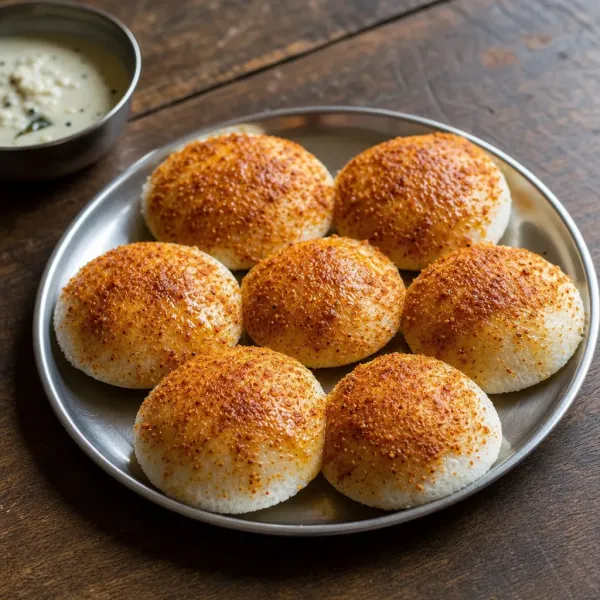
Podi Idli
Soft steamed idli tossed in homemade milagai podi and gingelly oil. Traditional Tamil Iyer household recipe with full batter and podi method.
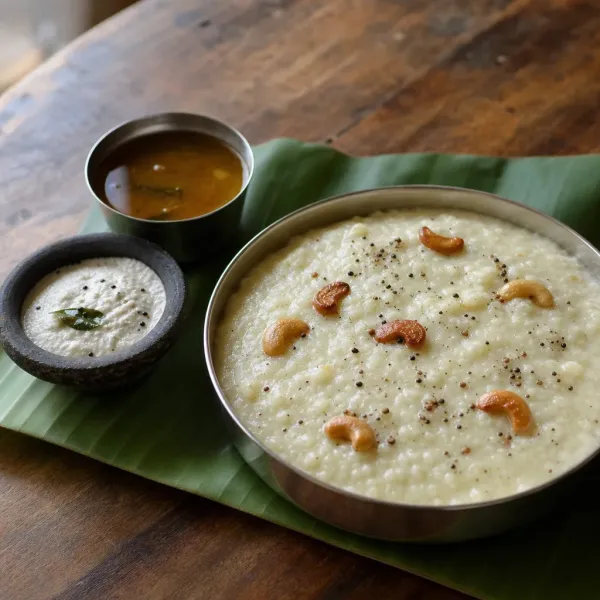
Ven Pongal (Khara Pongal)
Authentic Tamil Brahmin ven pongal with raw rice, moong dal, cracked pepper and ghee. Soft, flowing texture, no turmeric, no onion.
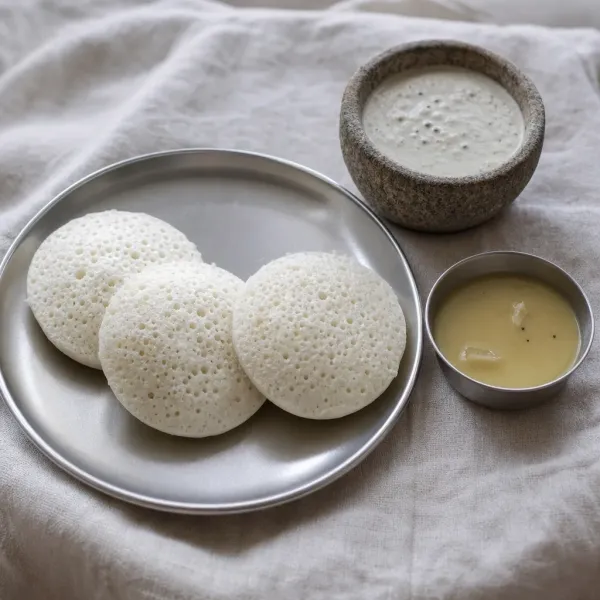
Karnataka Set Dosa
Traditional Karnataka set dosa recipe with raw rice, urad dal and poha. Soft, thick and spongy, served in threes with coconut chutney and sagu.
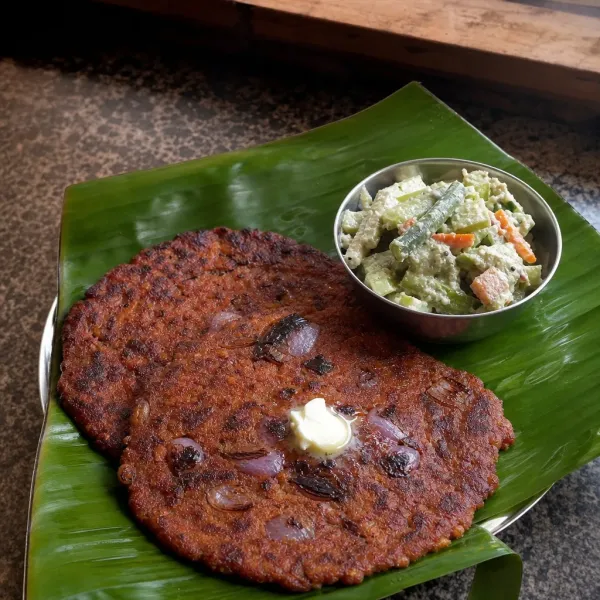
Adai
Traditional Tamil Iyer adai made with raw rice, chana dal and toor dal. Coarse-ground batter, shallot topping, cooked in gingelly oil. Served with av…
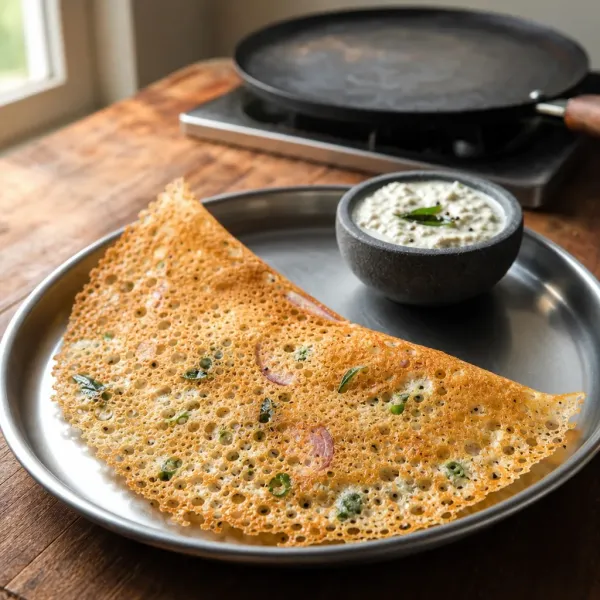
Onion Rava Dosa
Traditional Tamil Nadu onion rava dosa with shallots, cumin, and curry leaves. Thin batter, iron tawa, gingelly oil. No fermentation needed.
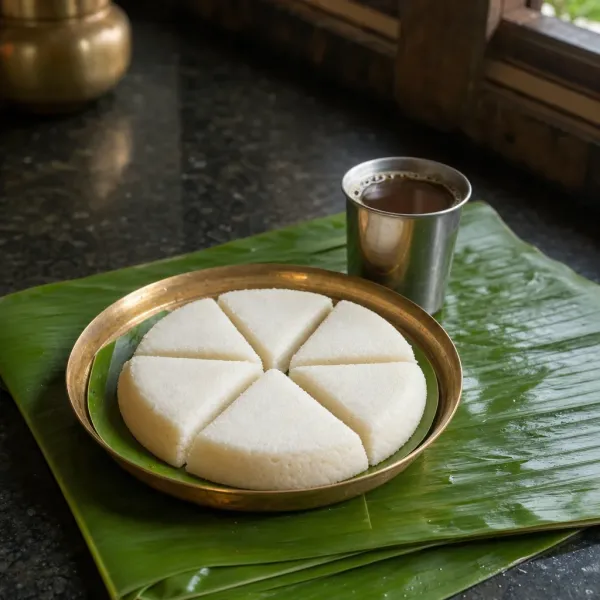
Kinnathappam
Traditional Nasrani kinnathappam: steamed rice cake with fresh coconut milk and jaggery. Soft, pale, and mildly sweet. Step-by-step household method.