

Karnataka Set Dosa Recipe
Malayalam സെറ്റ് ദോശTamil செட் தோசைKannada ಸೆಟ್ ದೋಸೆTelugu సెట్ దోసె
- Prep20 min
- Soak / ferment14 hr
- Cook40 min
- Serves4
- DifficultyMedium
- DietVegan
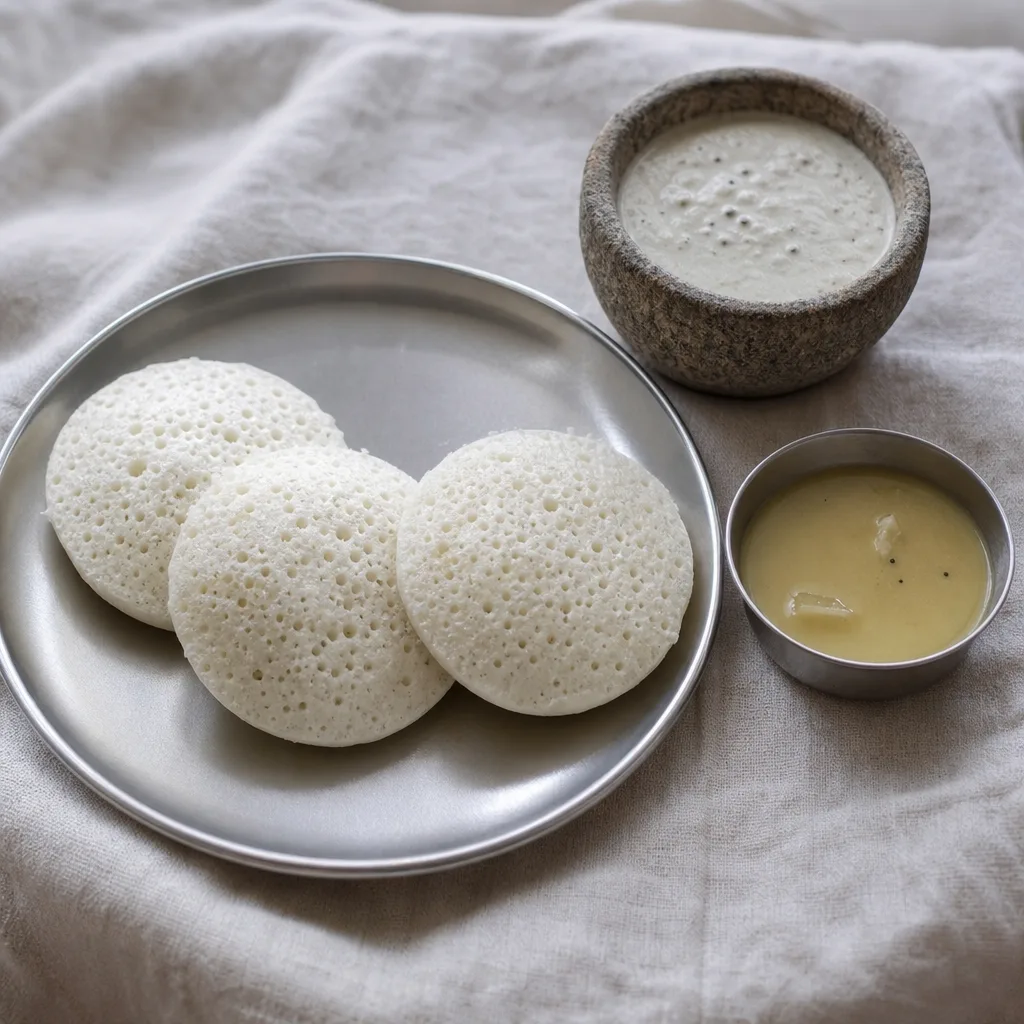
Set dosa is a Karnataka household staple and a tiffin-room institution. It is soft, thick, and deeply spongy — nothing like the crisp golden dosa of a restaurant griddle. The name comes from the way it is always served: three small dosas to a plate, one set. They arrive pale, porous, and slightly moist, cooked on one side only in most households, or briefly on both sides if the family prefers a firmer texture.
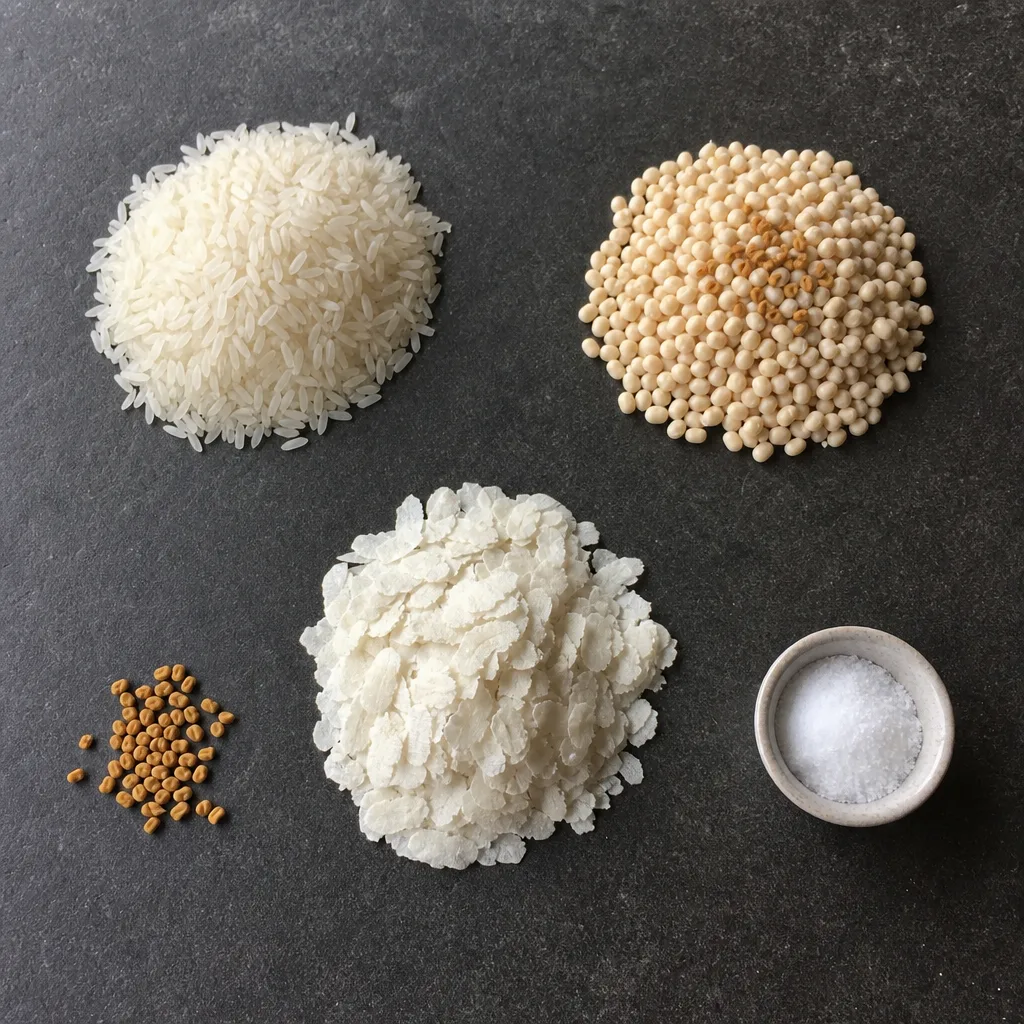
The batter uses three things: raw rice, urad dal, and poha. The poha is the detail that separates this from a standard dosa batter. It softens the texture and helps the dosa stay pillowy even as it cools. Fermentation is done overnight, and in Bengaluru's climate that usually means eight to ten hours in a warm kitchen corner is enough in summer, twelve to fourteen in cooler months.
At home, set dosa is eaten with two things on the side: a coconut chutney and a thin, tangy sagu — a mixed vegetable kurma that is mildly spiced and slightly sweet. Some families also keep a small bowl of chutney powder mixed with coconut oil. The dosa itself is cooked in a modest amount of oil, not ghee, and the surface stays pale throughout.
Ingredients (serves 4)
For the batter
For cooking
Method
Soak the ingredients
Wash the raw rice twice and soak it in plenty of cold water for 5 to 6 hours. In a separate bowl, soak the urad dal and fenugreek seeds together for 4 to 5 hours. Twenty minutes before you plan to grind, soak the poha in just enough water to cover it — it should be soft and swollen but not waterlogged. Do not discard the soaking water from the urad dal; use it while grinding.
Grind the urad dal first
Drain the urad dal and fenugreek, reserving the soaking water. Add the dal to a wet grinder or powerful blender. Grind with small additions of the reserved soaking water, using about 80 to 100 ml in total, until the batter is very smooth, light, and almost fluffy. This takes 12 to 15 minutes in a wet grinder. The batter should hold a soft peak when you lift a spoonful — that aeration matters for the sponge.
Grind the rice and poha
Drain the rice and grind it together with the soaked poha, adding water as needed — roughly 100 to 120 ml — until the batter is smooth but with just a very faint graininess, not as silky as the urad batter. Do not over-add water; the combined batter should be thick, about the consistency of a pourable yoghurt.
Combine and ferment
Mix the rice batter into the urad batter thoroughly using your hand or a large spoon. The combined batter should be thick and airy. Transfer to a large vessel — it will nearly double in volume. Cover loosely with a lid or plate. Leave in a warm spot for 10 to 14 hours. In a warm kitchen above 28°C, 10 hours is usually enough. The batter is ready when it has risen noticeably, smells pleasantly sour, and has a bubbly, slightly domed surface. Do not over-ferment; a sharp, vinegary smell means it has gone too far.
Season the batter
Add salt to the fermented batter and stir gently from the bottom up. Do not beat out all the air. The consistency should still be thick — thicker than regular dosa batter. If it looks too stiff to spread, add a tablespoon or two of water, but err on the side of keeping it thick.
Heat the pan
Place a cast-iron tawa or a heavy non-stick pan over medium heat. Let it warm for 2 minutes. Sprinkle a few drops of water onto the surface — they should sizzle and evaporate immediately. Wipe the pan with a cloth lightly dampened with oil. The pan should be evenly hot but not smoking.
Pour and spread the batter
Pour a ladleful of batter — about 80 to 90 ml — onto the centre of the pan. Using the back of the ladle, spread it gently in slow concentric circles to a round of about 12 to 13 cm in diameter. Set dosa is thicker than regular dosa; do not try to spread it thin. The edges will be about 5 to 6 mm thick.
Cook on one side with oil
Drizzle about 1 teaspoon of oil around the edges of the dosa. Cover the pan with a lid and cook on medium-low heat for 2 to 3 minutes. The dosa is ready when the top surface looks set and dry, with visible pores all over, and the underside is a very pale golden — not brown. The surface should not look wet or raw.
Flip if your family prefers it
Most Karnataka households serve set dosa cooked on one side only — the top stays soft and pale. If you prefer a slightly firmer texture, remove the lid, flip the dosa, and cook the other side for 30 seconds only. Do not press it down. Slide it off the pan immediately.
Cook in batches of three
Continue with the remaining batter, adjusting heat as needed — the pan can get too hot after the first few dosas, so turn the flame down slightly. Serve each set of three together on a plate while still warm. Set dosa does not hold well for long; it becomes dense as it cools.
How to serve
Coconut chutney and a thin mixed-vegetable sagu (Karnataka-style kurma). Some households also serve with chutney pudi mixed with coconut oil.
Served with: Coconut chutney and a thin mixed-vegetable sagu (Karnataka-style kurma). Some households also serve with chutney pudi mixed with coconut oil.
Cook's tips
Wet grinder versus blender
A wet grinder gives a noticeably better texture — the urad batter becomes more aerated. A high-speed blender works, but grind in short pulses and keep the batter cold so it does not heat up and kill the fermentation cultures.
Fermentation in cooler climates
If your kitchen is below 24°C, place the covered vessel inside an oven with just the light on, or wrap it in a thick towel. At 20°C or below, fermentation can take 16 to 18 hours. Check the smell and the rise, not just the clock.
Why poha matters
Poha adds starch that keeps the dosa soft and moist even after it comes off the pan. Do not skip it or substitute rolled oats — the texture will be wrong.
The pan temperature is the most common mistake
If the pan is too hot, the batter sets before you can spread it and the dosa comes out dense rather than spongy. If it is too cool, the dosa sticks. Medium heat and a lid are what create the steam that cooks the top without flipping.
Storing leftover batter
Refrigerate after fermentation. Use within two days. The batter will continue to sour slowly in the fridge; by day two it will have a sharper taste, which some people prefer.
Regional variations
Udupi hotels serve a thinner, crisper version; some northern Karnataka households use more urad and get a slightly denser sponge.
Glossary
- Avalakki ಅವಲಕ್ಕಿ
- Kannada word for poha — flattened, parboiled rice flakes used in batters and snacks.
- Sagu ಸಾಗು
- A Karnataka mixed-vegetable curry, mildly spiced with a coconut and poppy-seed base, traditionally served with set dosa and poori.
- Chutney pudi ಚಟ್ನಿ ಪುಡಿ
- A dry, coarsely ground chutney powder made from roasted lentils, dried chilli, and coconut; mixed with oil before eating.
- Tawa ತವಾ
- A flat or slightly concave griddle, traditionally cast iron, used for cooking dosa and roti.
Two things decide whether set dosa works: the aeration of the urad batter and the fermentation. If the urad is not ground long enough, the dosa will be flat and dense rather than spongy. And if the batter is under-fermented, it will not have the slight tang or the open, porous crumb that makes this different from a plain rice pancake. Everything else — the pan, the oil, the heat — is secondary to getting those two stages right.
More Breakfast & Tiffin recipes
Adai
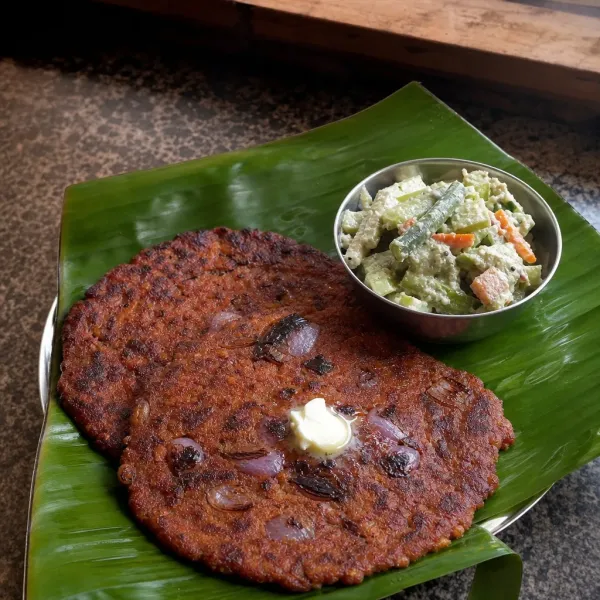
Traditional Tamil Iyer adai made with raw rice, chana dal and toor dal. Coarse-ground batter, shallot topping, cooked in gingelly oil. Served with av…
Khara Bath
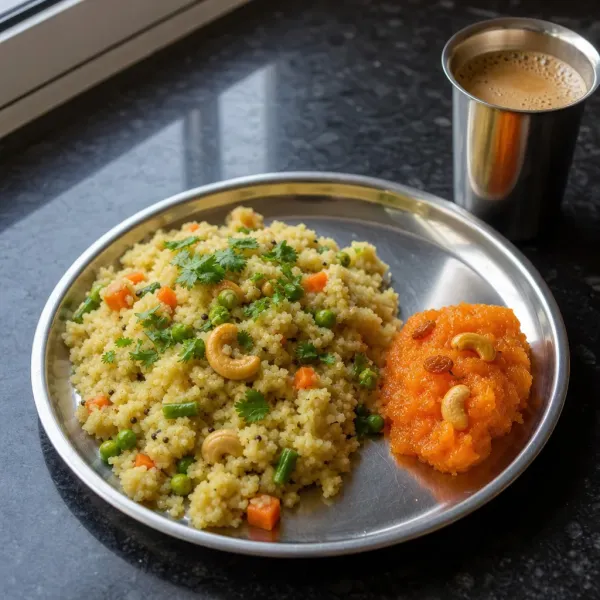
Authentic Karnataka khara bath made with toasted bombay rava, ghee, green chillies and vegetables. The Bengaluru household method, step by step.
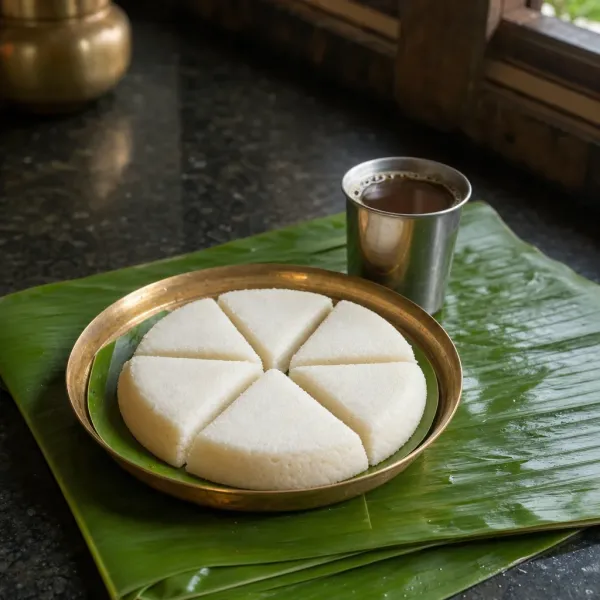
Kinnathappam
Traditional Nasrani kinnathappam: steamed rice cake with fresh coconut milk and jaggery. Soft, pale, and mildly sweet. Step-by-step household method.
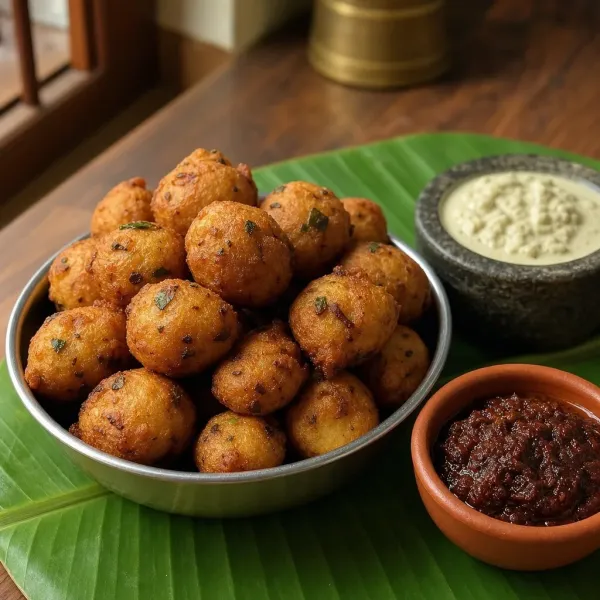
Punugulu
Traditional Andhra punugulu made from fermented dosa batter with shallots, green chilli and curry leaves, deep-fried to a golden crust. Step-by-step…
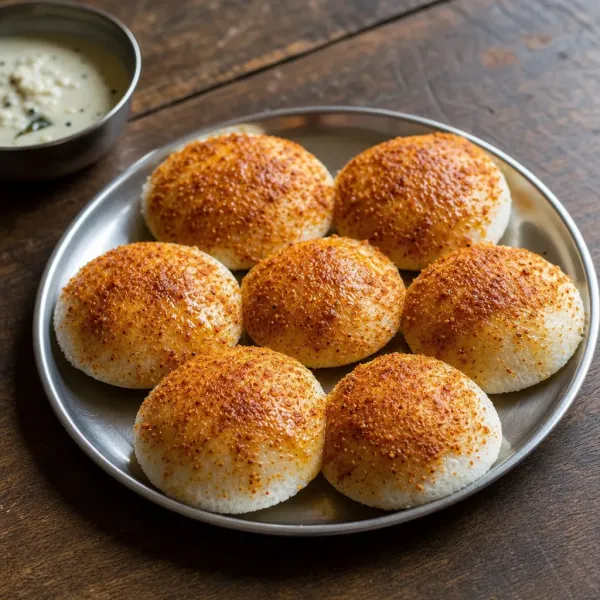
Podi Idli
Soft steamed idli tossed in homemade milagai podi and gingelly oil. Traditional Tamil Iyer household recipe with full batter and podi method.
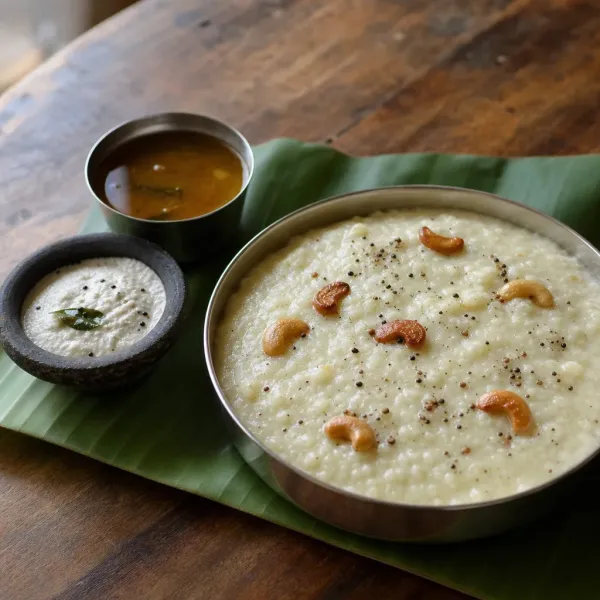
Ven Pongal (Khara Pongal)
Authentic Tamil Brahmin ven pongal with raw rice, moong dal, cracked pepper and ghee. Soft, flowing texture, no turmeric, no onion.