

Mangalorean Chicken Sukka Recipe
Malayalam ചിക്കൻ സുക്കTamil சிக்கன் சுக்காKannada ಚಿಕನ್ ಸುಕ್ಕTelugu చికెన్ సుక్కా
- Prep30 min
- Cook50 min
- Serves4
- DifficultyMedium
- DietNon-vegetarian
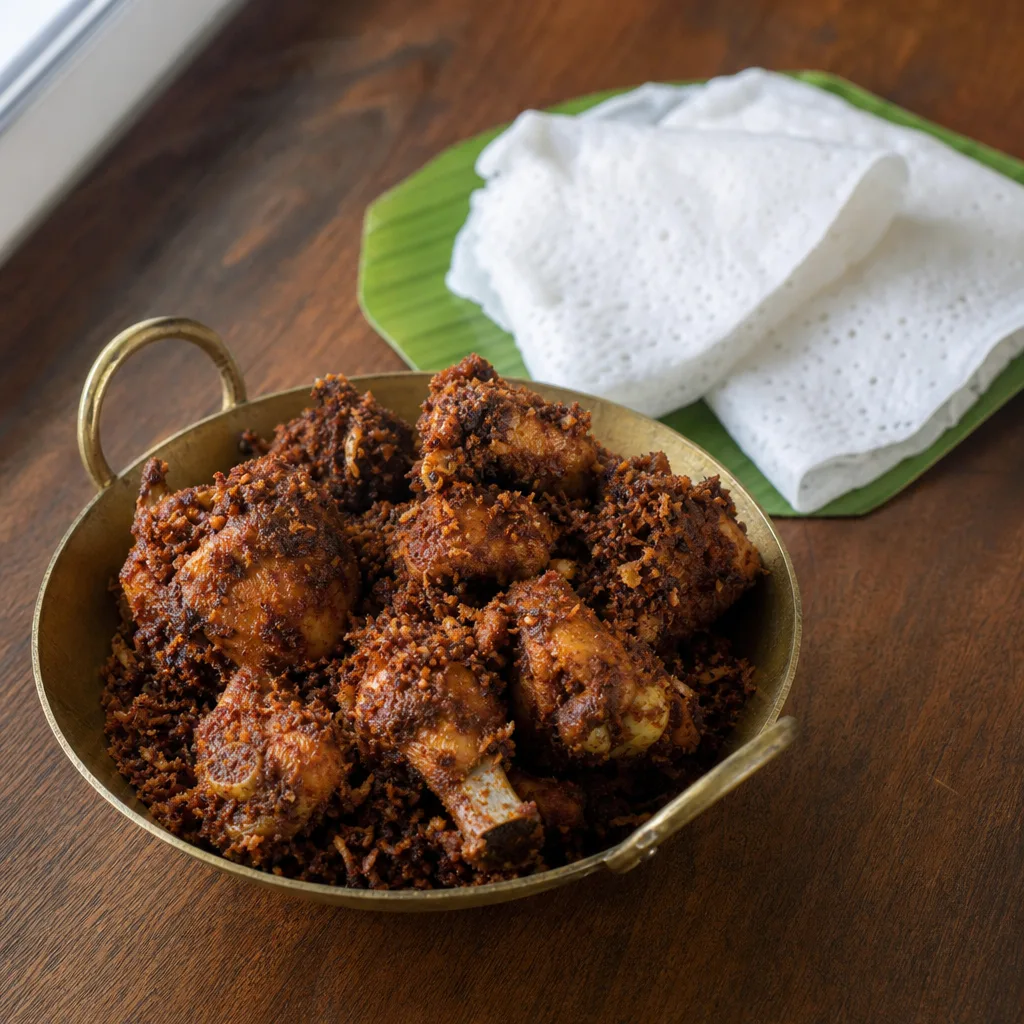
Sukka is a dry, intensely spiced preparation, not a gravy. The chicken is coated in a roasted masala and cooked until almost all moisture has left, then tossed with freshly grated coconut so that every piece is encrusted rather than sauced. It belongs firmly to the coastal Karnataka table, where this method of finishing a meat or seafood dish with roasted-ground spices and fresh coconut is its own culinary grammar.
In Konkani Catholic homes it is made most often on Sundays and for guests. Families who have moved away from Mangalore still make it for weddings, homecomings, and feast days. The masala is always freshly roasted and ground; a paste from the fridge or a store-bought powder will not give the right flavour. The byadagi chilli does most of the colour work here: it is not as fiery as a standard dried red chilli but it gives a deep, brick-red hue and a mild warmth. Guntur chilli can supplement it if you want more heat, but the colour and flavour shift.
Households differ on two things: the ratio of byadagi to hotter chillies, and how much fresh coconut goes in at the end. Some cooks add the coconut and keep it on the heat for just a minute, leaving it white and moist against the dark masala. Others stir it over low heat until the coconut picks up a faint colour and binds tightly to the chicken. Both are correct. What is not negotiable is that the coconut must be freshly grated, not desiccated.
Ingredients (serves 4)
For the chicken
For the sukka masala (dry-roast and grind fresh)
Method
Marinate the chicken
Pat the chicken pieces dry. Rub all over with ½ tsp turmeric and salt. Set aside while you roast the masala. The chicken does not need a long marinade here; even 15 minutes is fine.
Dry-roast the whole spices
Heat a wide iron or heavy-bottomed pan over medium-low heat. Add the byadagi and Guntur chillies first and toss them for about 90 seconds until they darken slightly and become fragrant, then tip onto a plate. In the same dry pan, roast the coriander seeds, cumin, peppercorns, fennel, cloves, cardamom, cinnamon, and kalpasi together, stirring constantly, until the coriander turns a shade or two darker and smells nutty, about 2 to 3 minutes. Do not let anything burn; burnt coriander will make the masala bitter. Add to the plate with the chillies and let the whole lot cool completely.
Grind the masala
Put the cooled roasted spices into a wet grinder or mixie. Add the turmeric powder and the tamarind loosened in 1 tbsp of water. Grind to a smooth, thick paste, adding a little more water, a tablespoon at a time, only as needed to keep the blades moving. You want a dense paste, not a watery one. The paste should smell fiery and sweet at the same time from the byadagi and the whole spices.
Fry the shallots, garlic and ginger
Heat the coconut oil in a wide, heavy-bottomed kadai or cheenachatti over medium heat. Add the sliced shallots and cook, stirring often, until they are golden and beginning to crisp at the edges, about 10 to 12 minutes. Do not rush this; undercooked shallots will keep a raw sweetness that sits at odds with the roasted masala. Add the garlic and ginger and stir for 2 more minutes until fragrant.
Add the curry leaves and masala paste
Add the curry leaves and let them splutter for 30 seconds. Now add the ground masala paste. Stir it into the oil and shallot mixture and fry over medium heat for 4 to 5 minutes, stirring frequently, until the oil begins to separate around the edges and the raw smell of the chillies has gone. If it sticks, sprinkle a tablespoon of water and continue.
Cook the chicken in the masala
Add the marinated chicken pieces and turn them to coat well in the masala. Stir-fry over medium-high heat for 3 to 4 minutes so the masala coats every surface. Add 3 tbsp of water, mix well, then cover with a lid and cook over medium-low heat for 20 to 25 minutes, turning the pieces once halfway through. Check that the chicken is cooked through; the juices at the thickest part should run clear and the meat should feel firm.
Reduce until almost dry
Remove the lid and raise the heat to medium. Keep stirring and turning the chicken as the remaining moisture evaporates. This takes 8 to 10 minutes. You want the masala to cling to the chicken in a dry crust, not pool at the bottom. If the masala begins to catch, reduce the heat slightly and keep moving the pieces. The colour should be a deep brick-red.
Finish with fresh coconut
Reduce the heat to low. Add the freshly grated coconut and fold it through the chicken. Stir for 1 to 2 minutes so the coconut is thoroughly coated in the masala. If you prefer the coconut to stay white and moist, take the pan off the heat now. If you want it to bind more tightly and take on a little colour, keep it on low heat for another 2 to 3 minutes, stirring. Taste for salt and adjust.
How to serve
Mangalorean boiled rice (kori rotti in the Tulu tradition, or neer dosa for a lighter accompaniment); also eaten with sannas or plain steamed rice. A simple cucumber-shallot salad dressed with coconut oil and salt often appears alongside.
Served with: Mangalorean boiled rice (kori rotti in the Tulu tradition, or neer dosa for a lighter accompaniment); also eaten with sannas or plain steamed rice. A simple cucumber-shallot salad dressed with coconut oil and salt often appears alongside.
Cook's tips
Byadagi chilli is not optional
The deep red colour of sukka comes almost entirely from the byadagi chilli, which has a mild heat but an intense pigment. Replacing it entirely with Kashmiri chilli changes the flavour noticeably. If you cannot find byadagi, Kashmiri is the closest substitute for colour, but add a little extra Guntur for heat.
Fresh coconut, not desiccated
Desiccated coconut absorbs moisture and turns gummy. Frozen grated coconut (thawed and pressed dry) is acceptable if fresh is unavailable, but the texture will not be the same.
Bone-in chicken holds better
Boneless breast will overcook and dry out in the long frying-down stage. Bone-in thighs and drumsticks stay moist and pull away cleanly from the bone once done. Small pieces about 60 to 80 g each are ideal.
Grinding the masala
A wet grinder gives a smoother, finer paste than a mixie and is worth the effort here because the texture of the masala directly affects how evenly it coats the chicken. If using a mixie, grind in short bursts, scraping down the sides often.
Storing leftovers
Sukka keeps well, often tasting better the next day as the masala settles into the meat. Reheat in the pan with a splash of water over low heat rather than microwaving, which drives out the moisture unevenly.
Regional variations
Bunt community sukka uses more onion in the base and sometimes adds a small piece of jaggery; Beary-style sukka is related to the Mappila tradition and uses different aromatics; Mangalorean Muslim (Beary) versions may omit fresh coconut at the final stage.
Glossary
- byadagi ಬ್ಯಾಡಗಿ
- A variety of dried red chilli from the Byadagi taluk of Haveri district, Karnataka; known for deep colour and moderate heat.
- sukka ಸುಕ್ಕ
- Tulu/Konkani term for a dry-spiced preparation in which meat or seafood is cooked with a roasted ground masala until almost no liquid remains, then finished with fresh coconut.
- kalpasi ಕಲ್ಪಾಸಿ
- Stone flower or dagad phool; a lichen used as a spice in Chettinad and Konkani Catholic cooking; contributes an earthy, slightly woody background note.
- cheenachatti ചീനച്ചട്ടി
- A wide, flat-bottomed wok used across South Indian coastal kitchens; ideal for the stir-frying stage of sukka because the wide surface helps moisture evaporate evenly.
- sambar onion ಚಿಕ್ಕ ಈರುಳ್ಳಿ
- Small shallots (Allium ascalonicum) used widely across South India; sweeter and more aromatic than large onions, and the correct choice for sukka.
Two things decide whether this dish works. The first is the masala: it must be roasted until the coriander is genuinely nutty and the chillies are fragrant and just beginning to darken, then ground smooth. Under-roasted spices taste raw no matter how long you cook the chicken. The second is patience in the drying-down stage: if you stop too early, the masala stays wet and sits on the chicken rather than encrusting it, and the fresh coconut you add at the end will steam and turn soft instead of coating each piece cleanly.
More Non-Vegetarian recipes
Beef Ularthiyathu
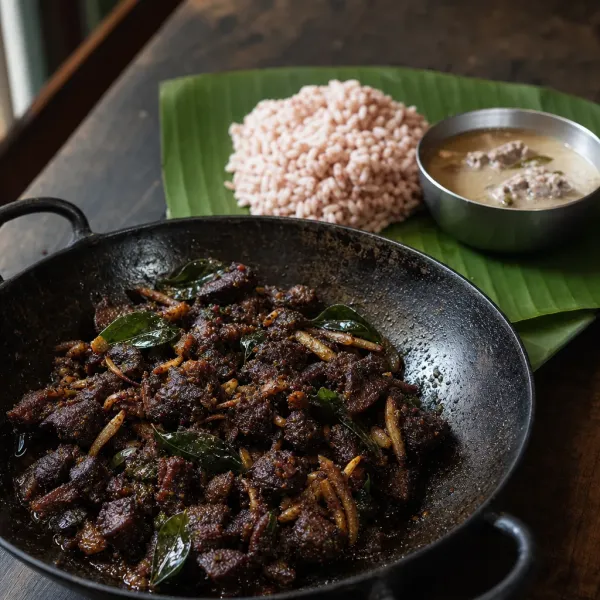
Traditional Kerala Nasrani beef ularthiyathu with coconut slivers. Slow-roasted in an iron kadai with shallots, black pepper, and fresh curry leaves.
Kozhi Varuval
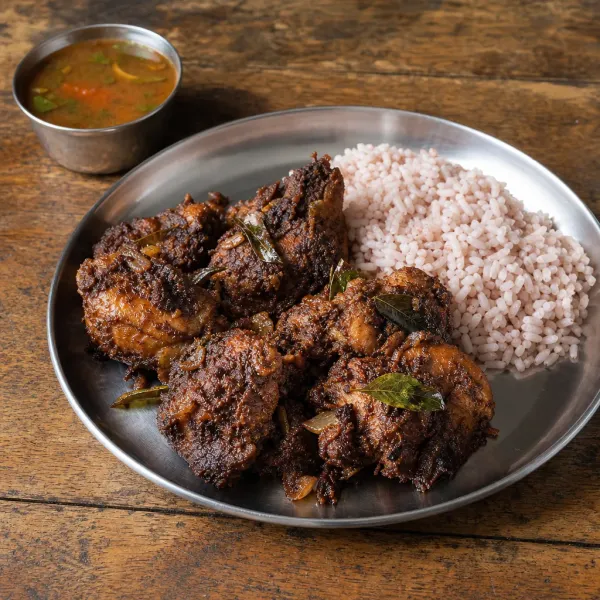
Traditional Kongunad kozhi varuval: bone-in chicken roasted dry in gingelly oil with shallots, tomato, and freshly ground spices. Stovetop method, no…
Mutton Pepper Fry
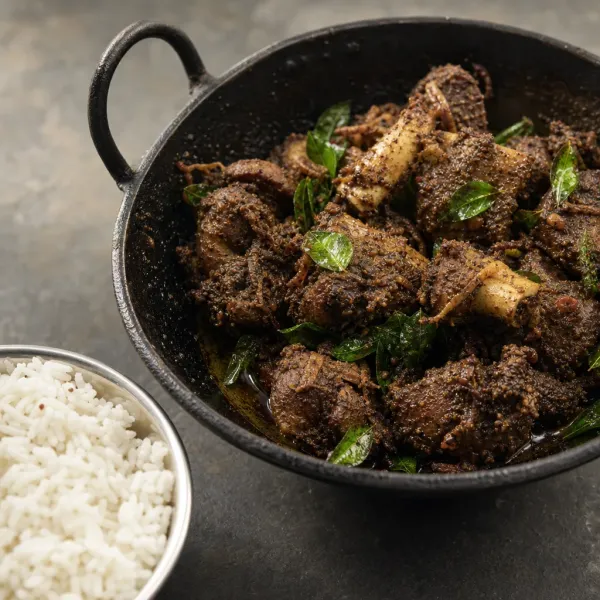
Traditional Chettinad mutton pepper fry in gingelly oil with cracked black pepper, kalpasi and marathi mokku. Bone-in mutton, iron pan finished.
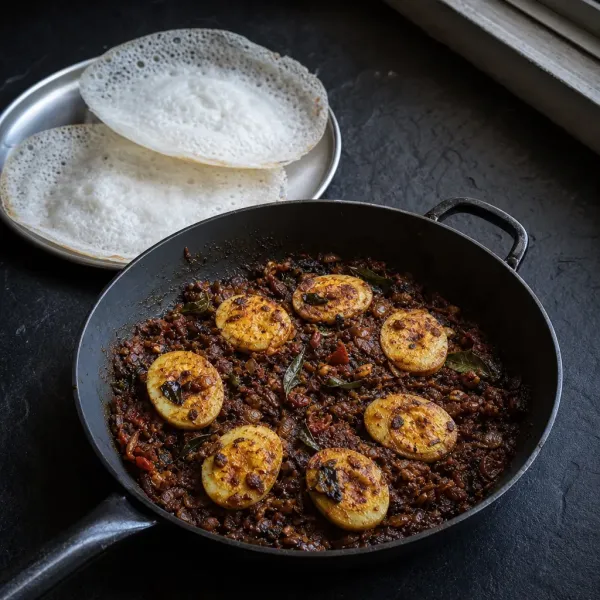
Kerala Egg Roast
Traditional Kerala egg roast from a Nasrani kitchen: hard-boiled eggs in a dark shallot and tomato masala, cooked in coconut oil and served with appa…
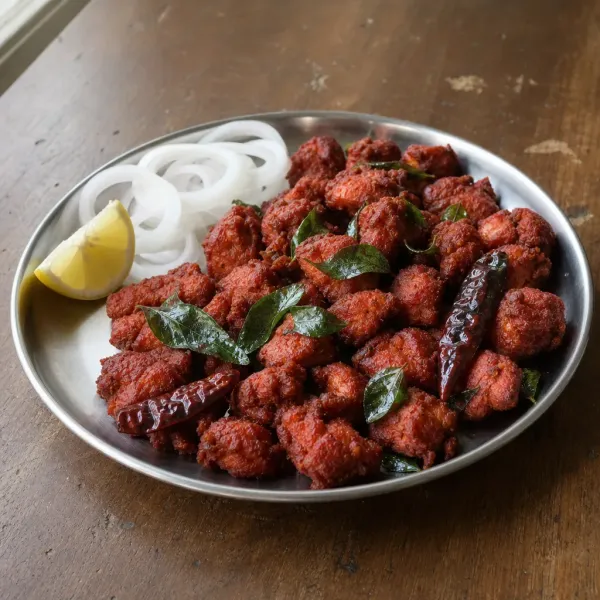
Chicken 65
The original Chennai-style Chicken 65: double-fried boneless chicken in Kashmiri chilli and gingelly oil. Dry, crisp, no sauce. Traditional household…
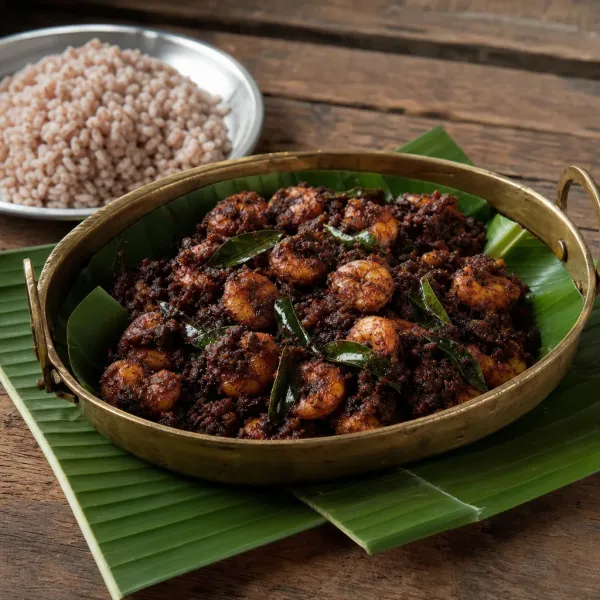
Chemmeen Roast
Traditional Kerala Nasrani chemmeen roast with shallots, kudampuli and coconut oil. Step-by-step method with the slow roasting technique that makes i…