

Onion Pakoda (Vengaya Pakoda) Recipe
Malayalam ഉള്ളി പക്കോഡTamil வெங்காய பக்கோடாKannada ಈರುಳ್ಳಿ ಪಕೋಡTelugu ఉల్లిపాయ పకోడీ
- Prep15 min
- Cook25 min
- Serves4
- DifficultyEasy
- DietVegan
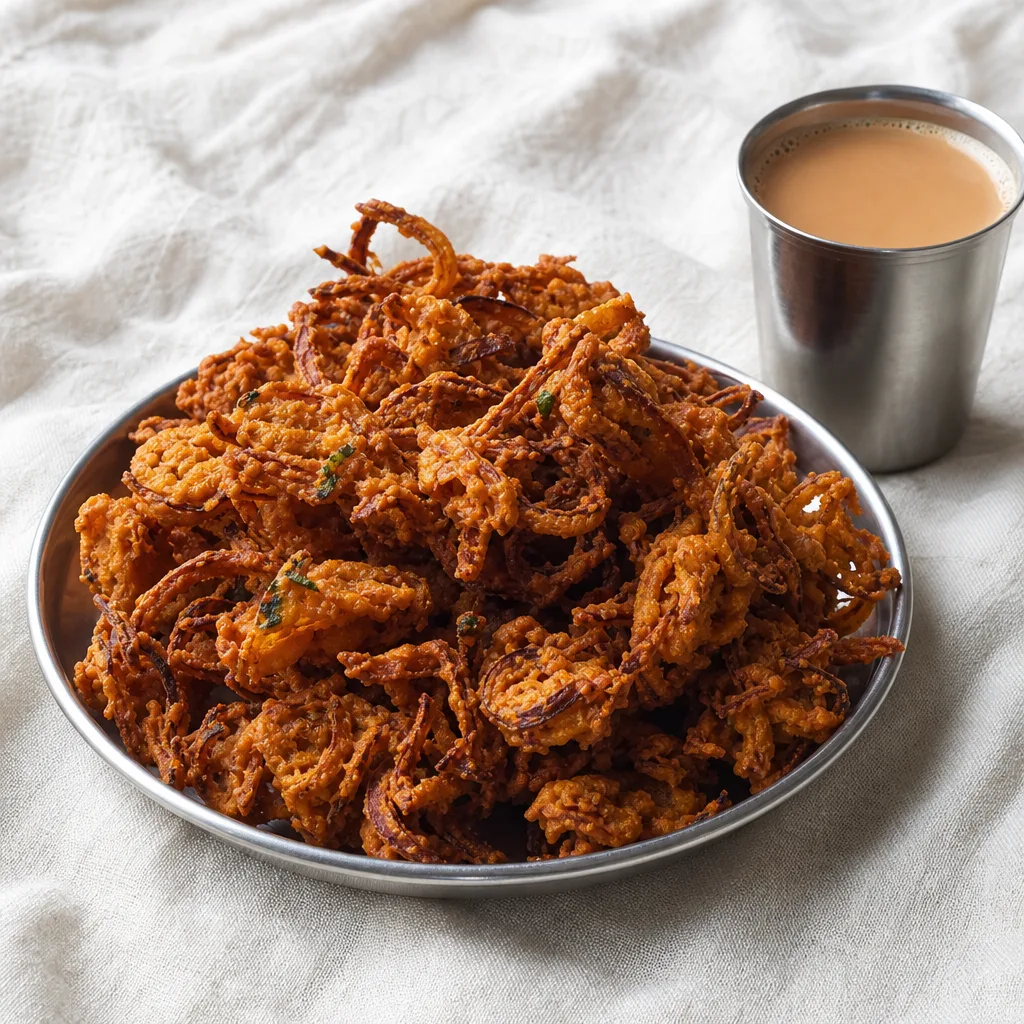
Vengaya pakoda is the pakoda that appears on every tea-shop counter in Tamil Nadu by mid-morning and sells out before lunch. It is not a special-occasion snack; it is an everyday one, made fast, eaten faster, always with tea. In Kongunad homes and small kadais, the ratio leans heavily on besan with just enough rice flour to give the crust its snap. The onion is sliced thin, not chopped, so strands of it run through each cluster and char very slightly at the tips.
The batter here is not a batter in the usual sense. There is almost no water added. The salt draws moisture from the onion slices, and that moisture, combined with a few drops of water if needed, binds the flour to the onion. This is the technique that separates a properly made pakoda from a battered-onion fritter. The clusters should be loose and irregular, not round balls.
Households differ mainly on heat: some add only green chilli, some only red chilli powder, some both. Curry leaves are non-negotiable in most kitchens. A few cooks add a pinch of cooking soda to lighten the interior, though many consider it unnecessary if the oil temperature is correct.
Ingredients (serves 4)
For the pakoda
Method
Slice the onion
Halve the onions from tip to root, then slice each half lengthwise into thin strips, about 3 mm wide. Do not slice into rings. Separate all the strands with your fingers so no clumps remain. Thin, separated strands are what give the finished pakoda its loose, craggy texture.
Salt the onion and rest
Put the sliced onion in a wide bowl. Add the salt and mix well with your hands, squeezing gently. Leave for 8 to 10 minutes. The onion will release a noticeable amount of liquid and soften slightly. This is the moisture that will bind the flour; do not drain it away.
Add the aromatics
Add the chopped green chillies, torn curry leaves, grated ginger and red chilli powder to the salted onion. Mix everything together with your hands so the aromatics are distributed evenly through the onion strands.
Add the flours
Sprinkle the sifted besan and the rice flour over the onion mixture. Using your hands, work the flour into the onion, pressing and mixing firmly. The moisture from the onion should be enough to coat everything. If the mixture feels completely dry and the flour is not adhering, add water a teaspoon at a time, no more than 2 to 3 tsp total. The mixture should hold together when pressed but still look shaggy and loose, not like a smooth batter. If it becomes wet and smooth, the pakoda will be dense.
Heat the oil
Pour the gingelly oil into a deep kadai or heavy pot to a depth of at least 7 cm. Heat on medium flame. To test readiness, drop a small pinch of the mixture into the oil. It should sink slightly, then rise steadily to the surface within 3 to 4 seconds and begin to sizzle. If it rises instantly and browns fast, the oil is too hot; lower the flame and wait a minute.
Fry the first batch
Pick up small, loose portions of the mixture, roughly the size of a large walnut, and drop them gently into the oil. Do not press them into balls; let them fall in as irregular clusters. Fry 8 to 10 pieces at a time without crowding. Overcrowding drops the oil temperature and makes the pakoda absorb oil rather than crisp.
Turn and finish frying
After about 2 minutes, turn the pakoda gently with a slotted spoon. Fry for another 2 to 3 minutes until they are an even deep golden brown. The tips of the onion strands that poke out from the clusters will colour a shade darker, which is correct and desirable. Do not rush this; undercooked besan has a raw, bitter taste.
Drain
Lift the pakoda out with the slotted spoon and drain on a plate lined with paper or a clean cloth. Fry the remaining mixture in batches, checking the oil temperature between batches. Serve immediately while the crust is still crisp.
How to serve
Hot milky tea (chai) or filter coffee. In Tamil Nadu homes, a fresh coconut chutney or tomato chutney is sometimes placed alongside, though many people eat them plain.
Served with: Hot milky tea (chai) or filter coffee. In Tamil Nadu homes, a fresh coconut chutney or tomato chutney is sometimes placed alongside, though many people eat them plain.
Cook's tips
The no-water rule
Resist adding water. Every teaspoon of water you add beyond what the onion releases makes the inside denser and the outside less crisp. If the onions are very dry (old stored onions), add water half a teaspoon at a time only.
Oil temperature is everything
If the oil is too cool, the pakoda soaks up oil and turns greasy. If too hot, the outside browns before the besan inside cooks through. Medium heat, steady and consistent, is the right approach. Adjust the flame between batches if needed.
Gingelly oil
Traditional Tamil Nadu pakoda is fried in gingelly oil, which gives a faint nutty background flavour. A neutral refined oil works perfectly well and is what many households use today for economy. Do not use cold-pressed gingelly oil for frying; use the refined version.
Keeping them crisp
Pakoda softens within 20 to 30 minutes of frying as the steam from the onion inside migrates outward. There is no real way around this. Fry just before serving.
Shallots instead of onions
Small shallots (chinna vengayam) sliced thin make a sweeter, more intensely flavoured pakoda. The technique is identical. This is common in many home kitchens and is not a compromise.
Regional variations
Kerala tea-shop version uses shallots and adds curry leaves and green chilli; Andhra version sometimes includes ajwain and more chilli powder; Karnataka version occasionally adds rice flour in a higher ratio for extra crunch.
Glossary
- Besan கடலை மாவு
- Flour ground from dried split chickpeas (chana dal); the main binding flour in pakoda.
- Kadalai maavu கடலை மாவு
- Tamil name for besan; the same chickpea flour.
- Nallennai நல்லெண்ணெய்
- Gingelly oil, also called sesame oil; the traditional frying medium in Tamil Nadu for savoury snacks and kuzhambu.
- Vengaya pakoda வெங்காய பக்கோடா
- Onion pakoda; vengayam means onion in Tamil.
- Kadai கடாய்
- A deep, round-bottomed iron or steel wok used for deep frying across South India.
Two things decide this recipe: the moisture balance in the mixture and the steadiness of the oil temperature. Get the mixture shaggy and just barely cohesive, and keep the oil at a consistent medium heat, and the pakoda will be crisp-edged, cooked through and light enough to eat a handful without regret.
More Snacks recipes
Madras Mixture
Authentic Tamil Madras mixture with fresh omapodi, ribbon pakoda, peanuts and cashews, fried in gingelly oil and tossed with curry leaves.
Pazham Pori
Classic Kerala pazham pori: ripe nendra banana slices in a turmeric maida batter, deep fried in coconut oil. Traditional household recipe with step-b…
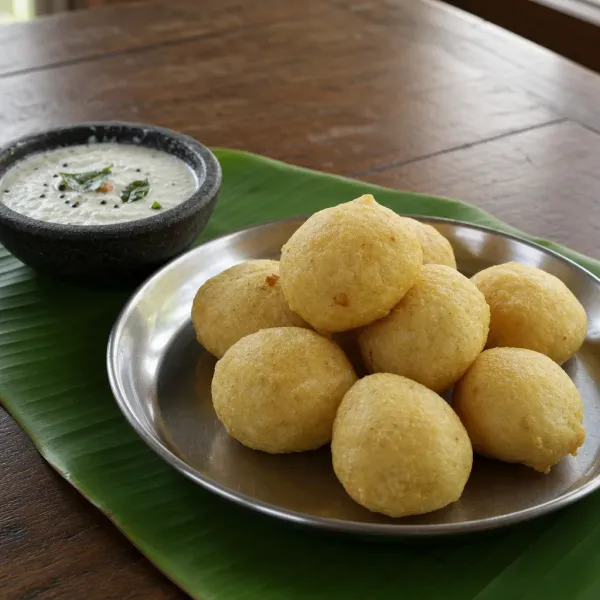
Urulaikizhangu Bonda
Traditional Tamil Brahmin urulaikizhangu bonda: spiced potato filling, crisp besan-rice flour batter, fried in gingelly oil. No onion, no garlic.
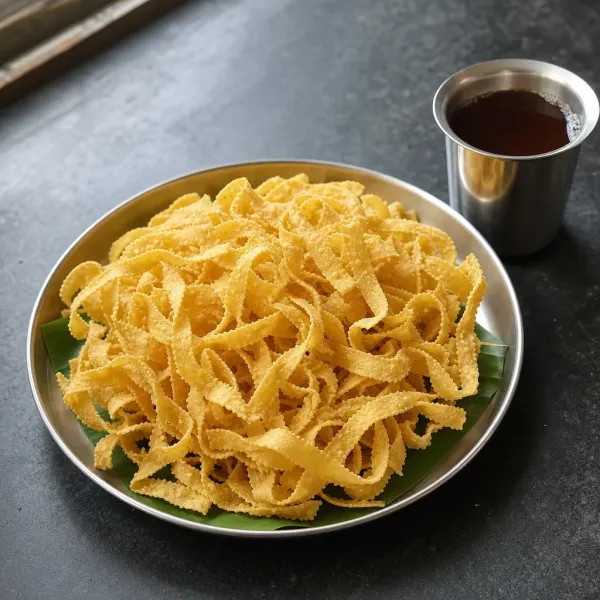
Ribbon Pakoda (Ola Pakoda)
Traditional Tamil Nadu ribbon pakoda made with rice flour, besan, butter and sesame. Step-by-step method for crisp, pale-golden Diwali snack strips.
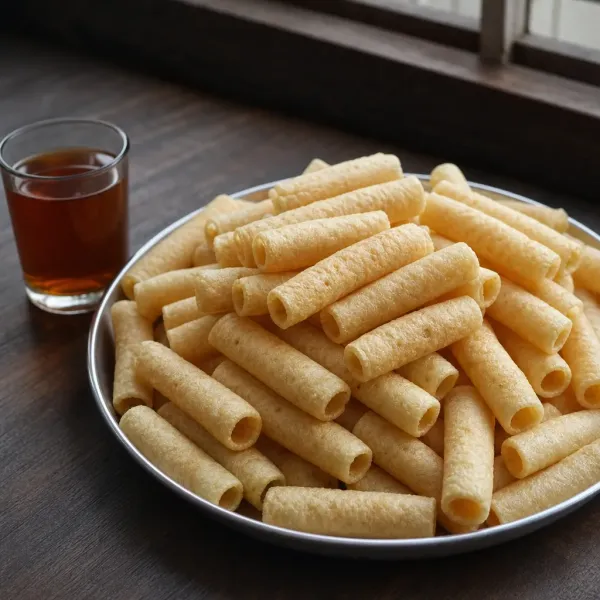
Kuzhalappam
Traditional Kerala kuzhalappam recipe: hollow rice crisps pressed through a tube mould and deep-fried in coconut oil with cumin and sesame.