

Ribbon Pakoda (Ola Pakoda) Recipe
Malayalam റിബൺ പക്കോഡTamil ரிப்பன் பக்கோடாKannada ರಿಬ್ಬನ್ ಪಕೋಡTelugu రిబ్బన్ పకోడా
- Prep20 min
- Cook40 min
- Serves8 to 10 (as a snack, yields roughly 500
- DifficultyMedium
- DietVegan
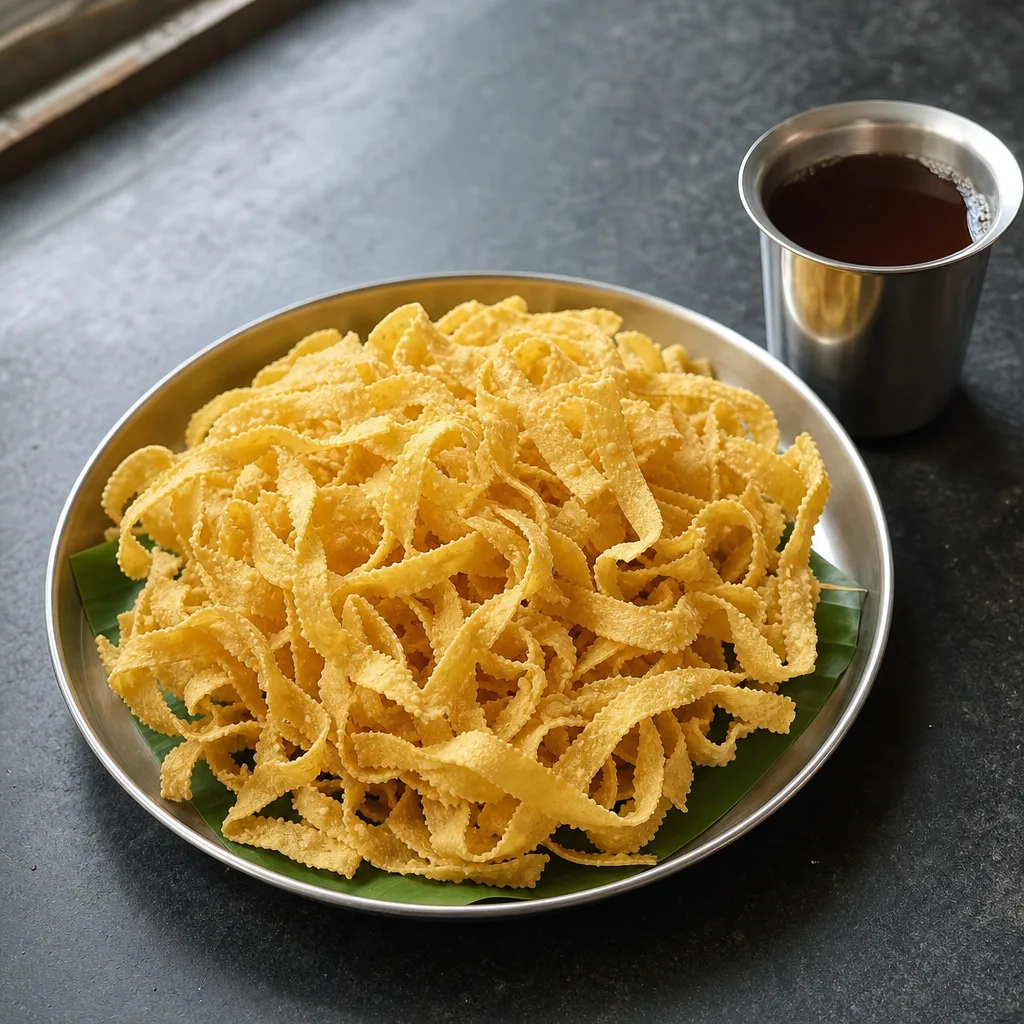
Ribbon pakoda is a Diwali staple across Tamil Nadu, pressed through the flat ribbon plate of a murukku press directly into hot oil. The dough goes in as a long, rippling strip and comes out as thin, crisp, pale-golden wafers that snap cleanly. It keeps well in a tin for ten days, which is why families make it in large batches before the festival.
The base is always rice flour and besan in a fixed ratio, seasoned with red chilli, asafoetida, and sesame seeds. Gingelly oil is the traditional frying medium in Tamil Nadu, though many households today use refined oil or a mix. Butter is worked into the dough — just a small amount — and this is not optional: it is what gives the finished strip its characteristic layered snap rather than a hard crunch.
Household variation is real but narrow. Some cooks add a pinch of ajwain alongside the sesame. Some grind a few dried red chillies to a paste rather than using chilli powder, which gives a slightly different colour and a cleaner heat. The ratio of rice flour to besan is the one thing cooks argue about: more rice flour gives a crisper, more brittle result; more besan gives a slightly softer bite.
Ingredients (serves 8 to 10 (as a snack, yields roughly 500 )
For the dough
For frying
Method
Sieve the flours together
Sieve the rice flour and besan together into a wide, flat vessel — a thalam or a large plate works well. Sieving together ensures no lumps of besan survive into the dough. If either flour feels at all damp, spread it on a plate and leave it in the shade for 20 minutes before you start.
Rub in the butter
Add the butter in small pieces to the sieved flour. Rub it in with your fingertips until the mixture resembles fine breadcrumbs and no visible lumps of butter remain. This step is the one people rush, and if the butter is not fully worked in, the finished strips will be hard rather than crisp. The flour should feel slightly sandy and hold together briefly when you press a fistful.
Add the seasonings
Add the sesame seeds, red chilli powder, asafoetida, and salt. Mix through evenly with your hand so the chilli and asafoetida are distributed throughout the flour rather than sitting in patches.
Bring the dough together
Add water a little at a time — start with 100 ml — and knead to a smooth, stiff dough. It should be firmer than chapati dough and should not stick to your hands. If it is too soft, the strips will absorb more oil and come out greasy. If it is too stiff, pressing through the mould will be hard work and the strips may crack. Aim for a dough that holds its shape when you press it but is not crumbly.
Rest the dough briefly
Cover the dough with a damp cloth and rest it for 10 minutes. This relaxes the dough slightly and makes pressing easier. Do not rest it longer or it may soften too much as the sesame releases moisture.
Fit the ribbon plate and fill the press
Fit the murukku press with the flat ribbon plate — this is the plate with a long horizontal slit, not the star or round holes. Grease the inside of the press lightly with a few drops of oil. Fill it two-thirds full with dough. Do not pack it to the top or it becomes hard to press cleanly.
Heat the oil
Pour the oil into a heavy kadai and heat over a medium flame. To test the temperature, drop a small piece of dough into the oil. It should rise to the surface within 3 to 4 seconds without browning immediately. The right temperature is around 175°C. Too hot and the outside colours before the inside dries out; too cool and the strips soak oil.
Press the strips into the oil
Hold the press directly over the oil and press the dough in a slow, steady back-and-forth motion to form long ribbons across the surface of the oil. Work in a circular or zigzag pattern to fill the kadai without the strips overlapping too much. Fry in batches — do not crowd the kadai. The strips will sizzle actively at first.
Fry until the sizzle quietens
Fry on medium heat, turning once with a slotted spoon or spider, until the sizzling drops to a quiet whisper and the strips are pale golden — not deep brown. This takes about 4 to 5 minutes per batch. The colour should be a light, even gold, not amber. Lift one strip and break it: it should snap cleanly with no soft centre.
Drain and cool completely
Lift the fried strips with a slotted spoon and drain them on a plate lined with newspaper or absorbent paper. Spread them in a single layer. Do not stack while hot or they will soften where they touch. Leave them to cool completely to room temperature before tasting for crispness — they crisp further as they cool.
Break and store
Once fully cool, break the strips into roughly 8–10 cm pieces and store in an airtight tin or jar. They keep well for 10 to 12 days at room temperature. If they soften after a few days, spread them on a tray and warm them in a low oven (150°C) for 5 minutes, then cool again.
How to serve
Served as a standalone snack with tea or coffee. During Diwali it is part of a tray of mixed savouries alongside murukku, thattai, and sweet items like ladoo or mixture.
Served with: Served as a standalone snack with tea or coffee. During Diwali it is part of a tray of mixed savouries alongside murukku, thattai, and sweet items like ladoo or mixture.
Cook's tips
Rice flour quality matters
Use dry, fine rice flour made for murukku and pakoda — the kind sold specifically for this purpose in Tamil Nadu. Idiyappam flour (which is par-boiled) gives a different texture and is not a substitute here. If your flour has any moisture, dry-roast it briefly in a pan over low heat, cool it completely, and then sieve.
The butter is not optional
Some recipes substitute oil for butter. Oil works but gives a harder result. The small amount of butter is what gives the characteristic layered, flaky snap. Do not use melted butter — it must be rubbed in cold so it coats the flour particles.
Dough stiffness is the key variable
If the dough is too soft, the strips come out oily and do not crisp properly. If too stiff, they crack when pressed and the edges are jagged. Test with a small batch before committing the whole dough to the oil.
Maintaining oil temperature
After each batch, let the oil come back to temperature before pressing the next one. A minute between batches is usually enough. If you rush and add cold dough to oil that has cooled, the strips absorb oil heavily.
Gingelly oil versus refined oil
Traditional Tamil Nadu households use gingelly oil, which adds a faint nutty background note. It also has a lower smoke point, so watch the heat carefully. Many modern households use refined groundnut oil or a half-and-half mix, which is a genuine and common shortcut.
Regional variations
Kerala households make a very similar version called ola pakoda using the same murukku press with the ribbon plate; some Karnataka households add roasted chana dal flour to the mix. The proportions of rice flour to besan vary slightly by family.
Glossary
- Perungayam பெருங்காயம்
- Asafoetida; the dried resin used in small quantities as a digestive seasoning in South Indian cooking.
- Besan கடலை மாவு
- Chickpea flour; ground from dried chana dal, used as a binder and for body in savoury snacks.
- Murukku press முறுக்கு அச்சு
- A cylindrical hand press with interchangeable plates, used to extrude dough directly into hot oil for murukku, ribbon pakoda, and similar snacks.
- Kadai கடாய்
- A deep, round-bottomed iron or steel wok used for deep-frying across South India.
- Gingelly oil நல்லெண்ணெய்
- Cold-pressed sesame oil used as the traditional frying and cooking fat in Tamil Nadu.
- Thalam தாலம்
- A wide, shallow brass or steel plate used for mixing dough and preparing snacks in Tamil households.
Ribbon pakoda lives or dies on two things: the stiffness of the dough and the steadiness of the oil temperature. Get the dough right — firm enough to hold its shape, soft enough to press without cracking — and keep the oil at a consistent medium heat, and the strips will come out pale, crisp, and cleanly snapping. Rush either step and you get either greasy ribbons or bitter, over-browned ones.
More Snacks recipes
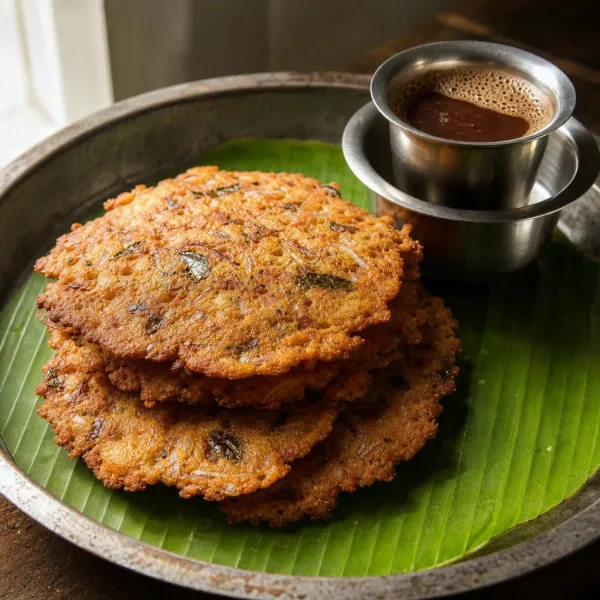
Maddur Vade
Authentic Maddur vade recipe from Mandya, Karnataka — thin, crisp rice flour and shallot discs fried to deep gold, the way they were made at Maddur s…
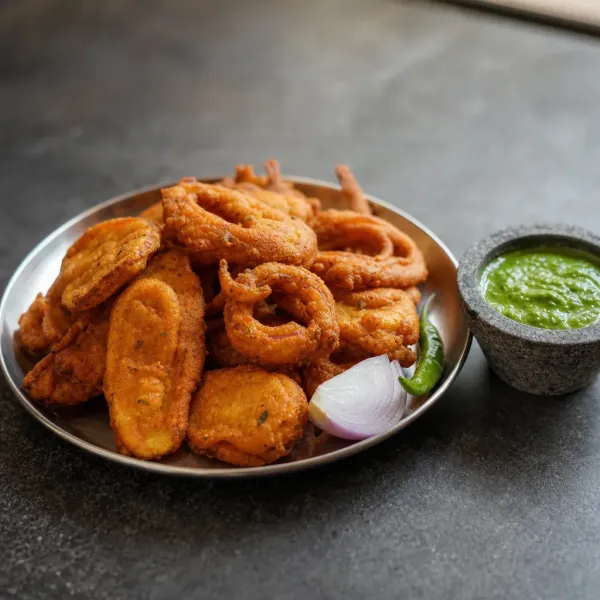
Urulaikizhangu Bonda
Traditional Tamil Brahmin urulaikizhangu bonda: spiced potato filling, crisp besan-rice flour batter, fried in gingelly oil. No onion, no garlic.
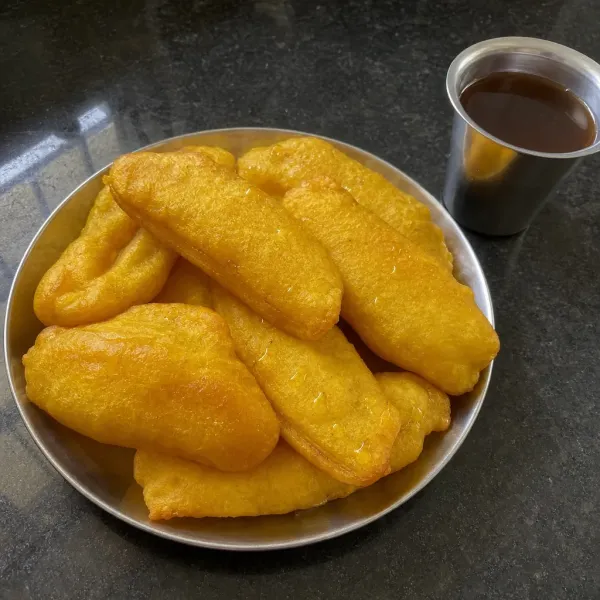
Pazham Pori
Classic Kerala pazham pori: ripe nendra banana slices in a turmeric maida batter, deep fried in coconut oil. Traditional household recipe with step-b…
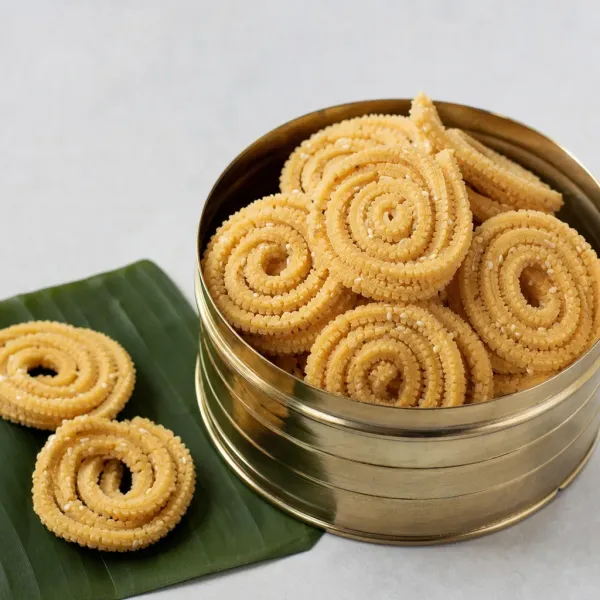
Murukku: Tamil Nadu Brahmin Household Recipe
Crisp rice flour murukku from a Tamil Iyer kitchen: the traditional ratio, the right dough consistency, and how to fry it pale gold all the way throu…
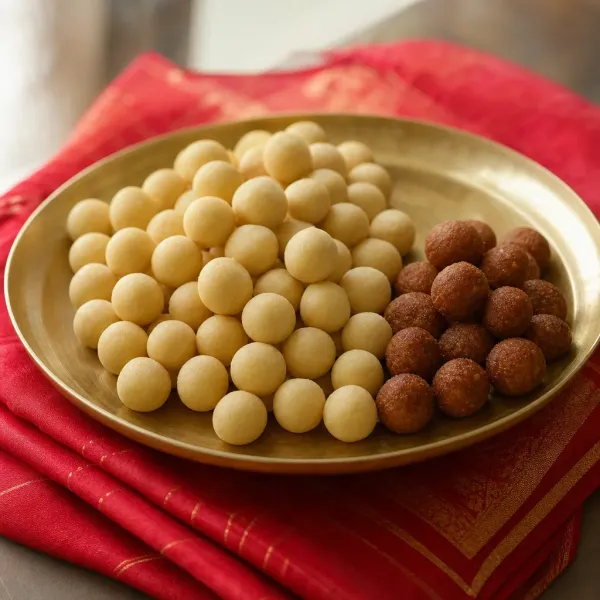
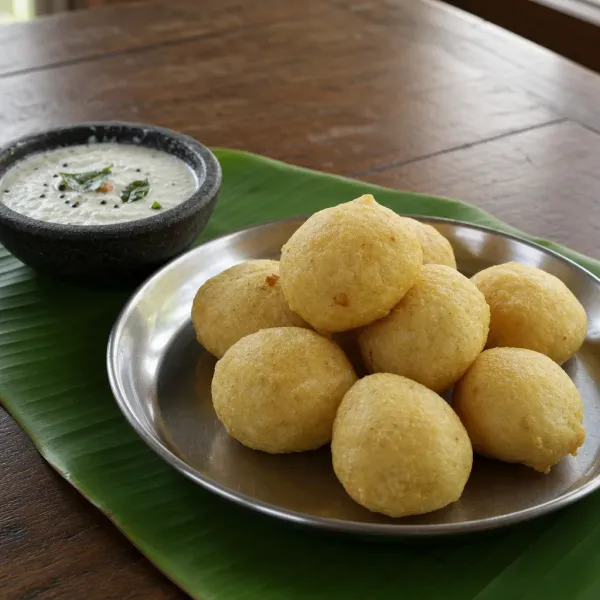
Uppu Seedai
Traditional Tamil Iyer uppu seedai for Gokulashtami: savoury deep-fried rice balls with roasted flour, butter, coconut and sesame. Step-by-step metho…