

Gothambu Payasam Recipe
Malayalam ഗോതമ്പ് പായസംTamil கோதுமை பாயசம்Kannada ಗೋಧಿ ಪಾಯಸTelugu గోధుమ పాయసం
- Prep10 min
- Cook50 min
- Serves6
- DifficultyEasy
- DietVegetarian
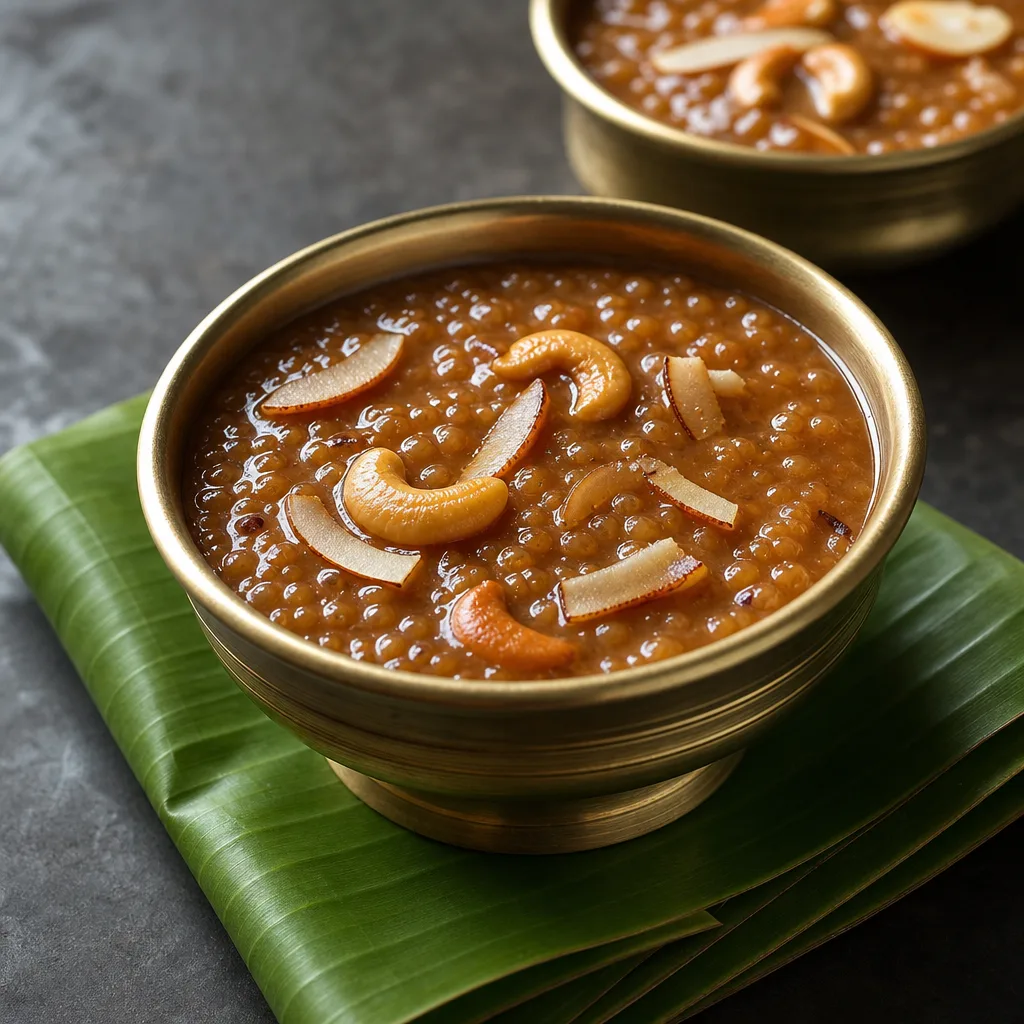
Gothambu payasam is a Lenten and festival sweet in Nasrani homes across Travancore. It appears on the sadya leaf for Onam and Christmas, and it is one of the payasams that does not need milk, which makes it suitable for fast days when dairy is avoided. The base is broken wheat cooked soft in water, then finished with jaggery and thick coconut milk. The result is a deep amber, gently spiced sweet that is thicker and more substantial than a rice payasam.
The jaggery used in most Travancore households is dark Kasaragod or Palakkad jaggery, which gives a slight molasses edge. Some families add a small piece of edible camphor (pachakarpooram) along with the cardamom; others do not. Coconut oil is the fat for the tempering, and the dried ginger and cumin that finish the dish are a distinctly Nasrani touch that you will not find in every Kerala household.
The payasam thickens as it cools, so serve it while it is still warm and pourable. Leftover payasam eaten the next morning, cold and set like a pudding, is its own pleasure.
Ingredients (serves 6)
For the payasam
For the tempering
Method
Dry-roast the broken wheat
Heat a heavy-bottomed vessel or uruli over medium flame. Add the broken wheat and roast, stirring constantly, for 3 to 4 minutes until it smells nutty and a few grains begin to colour very lightly at the edges. This step keeps the grains separate during cooking. Remove from heat and set aside.
Cook the wheat until completely soft
Return the roasted wheat to the vessel and pour in 750 ml water. Bring to a boil over high heat, then reduce to a low simmer. Cook covered for 25 to 30 minutes, stirring every 5 minutes and adding a splash more water if the wheat sticks. The wheat is ready when every grain is fully soft and the mixture looks like a thick, slightly sticky porridge. There must be no hard bite left; undercooked wheat will not absorb the jaggery properly.
Make the jaggery syrup
While the wheat cooks, combine the grated jaggery with 100 ml water in a small saucepan. Heat over medium flame, stirring, until the jaggery dissolves completely, about 5 minutes. Do not boil it hard. Strain through a fine sieve or a piece of muslin to remove any grit or sand. Set aside.
Add the jaggery syrup to the cooked wheat
Pour the strained jaggery syrup into the cooked wheat, stirring as you pour. The mixture will loosen at first. Cook over medium-low heat, stirring continuously, for 5 minutes until everything comes together and the colour deepens to a dark amber. Do not rush this step; the jaggery needs time to absorb into the grain.
Add the thin coconut milk
Pour in the thin coconut milk and stir well. Simmer gently over low heat for 5 minutes, stirring often. The payasam will thicken slightly. Keep the flame low from this point; coconut milk will curdle if it boils hard.
Add the thick coconut milk and spices
Reduce the flame to the lowest setting. Pour in the thick coconut milk slowly, stirring as you go. Add the ground cardamom, dried ginger powder, cumin powder, and the pinch of salt. Stir gently for 2 to 3 minutes. The payasam should be warm through but must not bubble. Remove from heat the moment you see the first signs of a simmer at the edges.
Fry the garnish
Heat coconut oil in a small frying pan over medium flame. Add the cashew halves and fry, stirring, until golden, about 2 minutes. Add the coconut slivers and fry for another minute until they are golden at the edges and smell toasted. Pour the entire contents of the pan, oil and all, over the payasam. Stir once to combine.
Serve warm
Ladle into small steel or brass bowls immediately while the payasam is still warm and pourable. It thickens further as it sits, so if it has rested for a while, stir in a few tablespoons of warm water to loosen it before serving.
How to serve
Served on its own as a sweet course on the Onam sadya leaf, or offered after a meal on feast days. In some homes it is served alongside ada pradhaman as a second payasam on the sadya.
Served with: Served on its own as a sweet course on the Onam sadya leaf, or offered after a meal on feast days. In some homes it is served alongside ada pradhaman as a second payasam on the sadya.
Cook's tips
Extracting coconut milk at home
Grate one medium coconut (roughly 200 g grated flesh). Add 200 ml warm water, knead well, and squeeze through a muslin cloth. This is the thick first extract. Add another 300 ml warm water to the same grated coconut, knead again, and squeeze. This is the thin second extract. Using fresh milk gives a much richer result than tinned, though tinned is a reasonable weekday shortcut.
Choosing the jaggery
Dark, slightly moist jaggery gives the deepest flavour. Very pale or dry jaggery produces a lighter, less complex payasam. Avoid jaggery that smells of chemicals or has a sharp artificial sweetness.
The coconut slivers
Thenga kothu (fresh coconut slivers) are not the same as desiccated coconut. Cut thin strips from a piece of fresh coconut flesh. They fry to a golden, slightly chewy garnish. Desiccated coconut burns quickly and has a flat flavour here.
Preventing curdling
Once the thick coconut milk goes in, never let the payasam boil. A rolling boil will break the coconut milk and leave an oily, grainy surface. Low heat and constant gentle stirring are all that is needed.
Edible camphor
Some Nasrani families add a tiny grain of pachakarpooram (edible camphor) along with the cardamom. Use no more than a grain the size of a mustard seed; too much makes the payasam medicinal. This is optional and entirely a family preference.
Regional variations
A jaggery-and-coconut-milk version is made across Kerala without community distinction; Tamil Nadu makes a similar dish called godhumai payasam using milk and sugar, closer to a North Indian kheer.
Glossary
- Gothambu ഗോതമ്പ്
- Wheat in Malayalam; broken wheat (cracked wheat) is the form used in this payasam.
- Payasam പായസം
- Kerala's term for a sweet pudding or kheer served as part of a sadya or festival meal.
- Sharkkara ശർക്കര
- Jaggery; in Kerala this usually refers to dark palm or cane jaggery.
- Chukku ചുക്ക്
- Dried ginger powder, used as a digestive spice in many Kerala sweets and medicines.
- Thenga kothu തേങ്ങ കൊത്ത്
- Thin slivers cut from fresh coconut flesh and fried in oil as a garnish.
- Pachakarpooram പച്ചക്കർപ്പൂരം
- Edible camphor; a tiny amount used to perfume certain payasams and sweets.
- Sadya സദ്യ
- The traditional Kerala feast served on a banana leaf, typically for Onam, Vishu, and weddings.
Two things decide this payasam. The first is cooking the broken wheat completely soft before the jaggery touches it; any hardness at that stage will remain in the finished dish. The second is keeping the heat very low once the thick coconut milk goes in, so the milk stays smooth and the payasam finishes with a clean, rich sweetness rather than an oily or grainy surface.
More Sweets & Payasam recipes
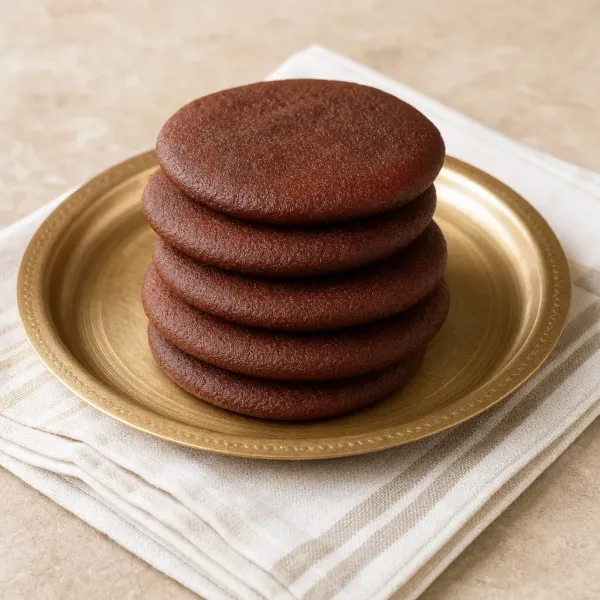
Adhirasam
Authentic Tamil Iyer adhirasam made with freshly ground pacharisi and dark jaggery syrup. Festival sweet for Karthigai Deepam and Diwali, with step-b…
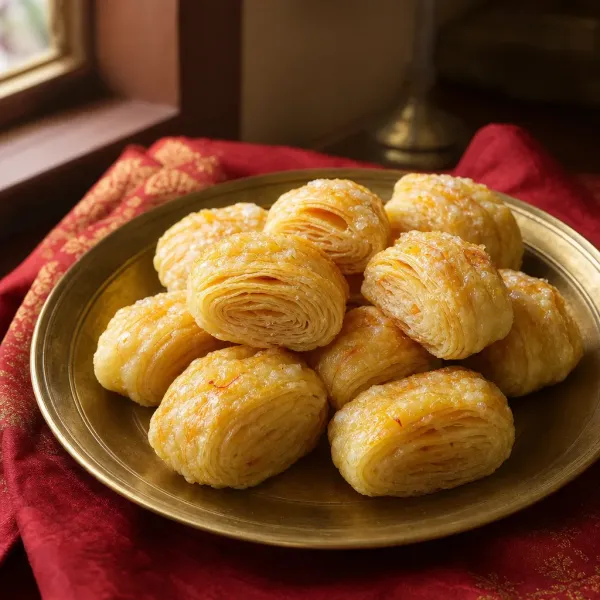
Chiroti
Traditional Karnataka chiroti with ghee-layered maida dough, deep fried and coated in cardamom sugar syrup. Festival sweet from the Dharwad kitchen.
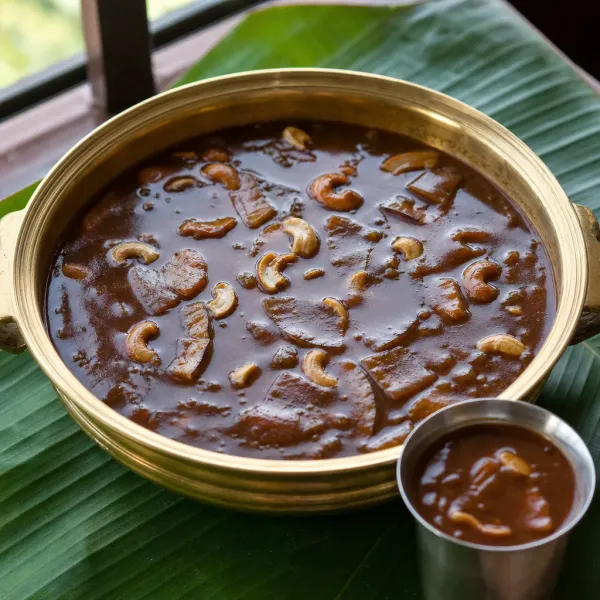
Ada Pradhaman
Authentic Kerala ada pradhaman with rice ada, dark jaggery and fresh coconut milk. Traditional Onam sadya recipe with step-by-step method.
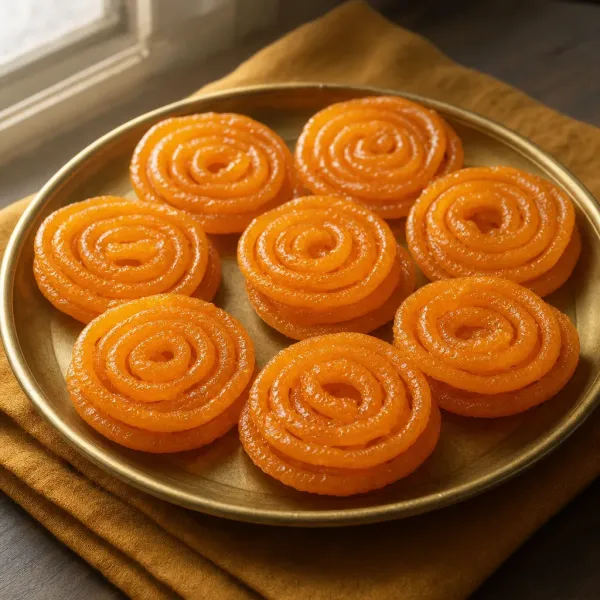
Jangiri (Jhangiri)
Traditional Tamil Nadu jangiri made with aerated urad dal batter piped into coils, fried gently and soaked in saffron-cardamom sugar syrup. Step-by-s…
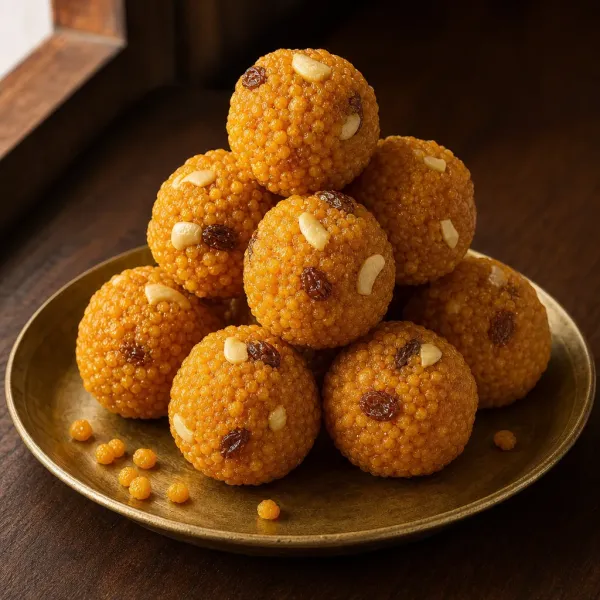
Boondi Ladoo
Traditional Telangana boondi ladoo with one-thread sugar syrup, cardamom, cloves and edible camphor. Step-by-step method for firm, festival-ready lad…
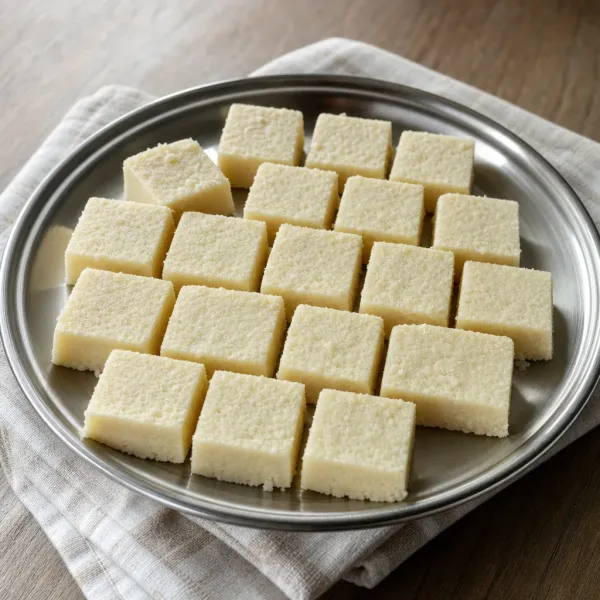
Paal Kova
Authentic Kongunad paal kova made by slowly reducing full-fat cow's milk with sugar. Pale, grainy, soft fudge — no condensed milk shortcut.