

Pazham Pori Recipe
Malayalam പഴം പൊരിTamil வாழைப்பழ பஜ்ஜிKannada ಬಾಳೆಹಣ್ಣಿನ ಬಜ್ಜಿTelugu అరటిపండు బజ్జీ
- Prep10 min
- Cook20 min
- Serves4
- DifficultyEasy
- DietVegetarian
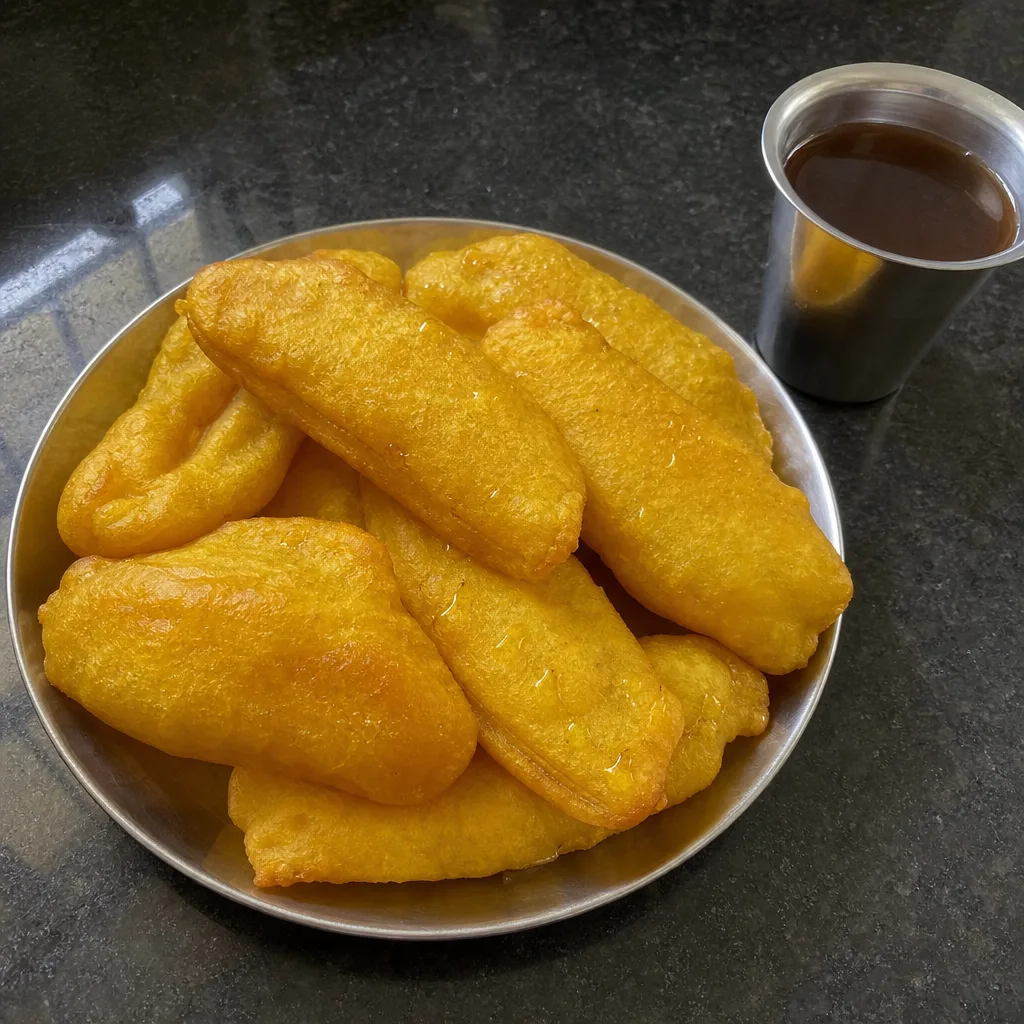
Pazham pori belongs to every corner of Kerala but it is most at home in the tea shops of Travancore, where it sits in a glass case beside vellayappam and unniyappam and disappears by mid-morning. The batter is plain maida-based, coloured gold with turmeric and sweetened lightly, and the banana used is nendrapazham — the large, starchy, faintly tangy variety that holds its shape in hot oil and turns soft and almost jammy inside without collapsing.
Households make this as an evening snack with tea, or as part of a sadya side table, or simply when a bunch of nendrapazham has ripened past the point of eating raw. The banana should be ripe but firm — yellow with a few black spots is ideal. Fully black fruit turns too sweet and wet and the fritter will not hold. Unripe fruit is starchy and bland.
Every family adjusts the sweetness of the batter to taste. Some add a spoon of rice flour to make the crust a little crisper; others keep it pure maida for a softer, more yielding coat. Both are correct. The oil must be coconut oil for the flavour to be right.
Ingredients (serves 4)
For the batter
For frying
Method
Make the batter
Put the maida, rice flour, turmeric, sugar and salt in a wide bowl. Add water a little at a time, whisking as you go, until you have a smooth, thick batter that coats the back of a spoon and falls off in a slow, heavy ribbon. It should not be runny. Let it rest for five minutes while you prepare the bananas.
Slice the bananas
Peel each nendrapazham and cut it lengthwise into three or four slices, each roughly 8 mm thick. You can also cut them on a slight diagonal for a wider surface. Do not slice too thin or they will cook to mush before the batter colours.
Heat the oil
Pour coconut oil into a deep, heavy kadai to a depth of at least 6 cm. Heat over a medium flame until the oil reaches around 170–175 °C. To test without a thermometer, drop a tiny bit of batter in — it should sink slightly, then rise to the surface and sizzle steadily within two seconds. If it shoots straight to the top and browns in seconds, the oil is too hot.
Coat and slide in
Dip each banana slice into the batter, turning it so every surface is evenly coated. Let the excess drip off for a second, then lower the slice gently into the oil. Do not drop it from a height or the oil will splash. Fry three or four pieces at a time; do not crowd the kadai or the temperature will drop and the batter will turn greasy.
Fry the first side
Leave the fritters undisturbed for about two minutes. The batter will set and the underside will turn a deep golden yellow. Resist the urge to move them before they are ready — if they stick to the ladle when you try to turn them, they need another thirty seconds.
Turn and finish
Flip each piece carefully and fry the second side for another minute and a half to two minutes, until both sides are evenly golden. The finished fritter should be the colour of ripe turmeric, not dark brown. Dark brown means the sugar has burned and the inside will taste bitter.
Drain and serve immediately
Lift the fritters out with a slotted spoon and set them on a plate lined with paper. They are at their best within five minutes of coming out of the oil, while the outside is still slightly crisp and the banana inside is soft and warm. Serve at once.
How to serve
Hot black tea or milky tea (chaya). Sometimes eaten plain as a snack without any accompaniment.
Served with: Hot black tea or milky tea (chaya). Sometimes eaten plain as a snack without any accompaniment.
Cook's tips
Choosing the banana
Nendrapazham is not interchangeable with small yellow dessert bananas. The latter are too wet and sweet and will make the fritter soggy. If nendrapazham is unavailable, raw plantain at the just-ripe stage is closer in texture, though the flavour will differ.
Batter consistency is everything
Too thin and the coating slides off the banana in the oil, leaving bare patches. Too thick and you get a doughy crust that is raw in the middle. The batter should cling visibly to a spoon and not pour off in a stream.
Oil temperature
If the oil is too cool, the fritters absorb oil and come out heavy. If it is too hot, the outside burns before the banana warms through. Medium heat, steady throughout, is the right approach. Lower the flame slightly after the first batch if the oil has climbed in temperature.
Rice flour
The rice flour is optional but it does give a noticeably crisper crust that holds for a few extra minutes after frying. Households that prefer a softer, more pillowy coating leave it out entirely.
No advance preparation
Do not slice the bananas ahead of time and leave them sitting out — they oxidise and go brown at the cut edges. Slice them just before you are ready to fry.
Regional variations
In northern Kerala some households add a pinch of cumin to the batter; in Tamil Nadu a similar fritter uses a thinner besan batter rather than the maida-based Kerala one.
Glossary
- Nendrapazham നേന്ത്രപ്പഴം
- The large cooking banana of Kerala, eaten ripe as a snack or fritter and unripe in curries and chips; distinct from dessert bananas in starch content and texture.
- Maida മൈദ
- Refined white wheat flour, lower in fibre than atta; used for batters, pastry and soft breads across South Asian cooking.
- Kadai കടാഹം
- A deep, round-bottomed iron or steel pan used for deep frying and stir-frying.
- Pazham pori പഴം പൊരി
- Literally 'fried banana'; the Kerala snack of ripe nendra banana slices dipped in a turmeric-tinted maida batter and deep fried in coconut oil.
Two things decide whether this works: the ripeness of the banana and the heat of the oil. A banana that is too raw will be starchy and flavourless inside; one that is too soft will fall apart in the batter. And oil that is not hot enough will give you a greasy, pale fritter no matter how good the batter is. Get those two right and the rest follows naturally.
More Snacks recipes
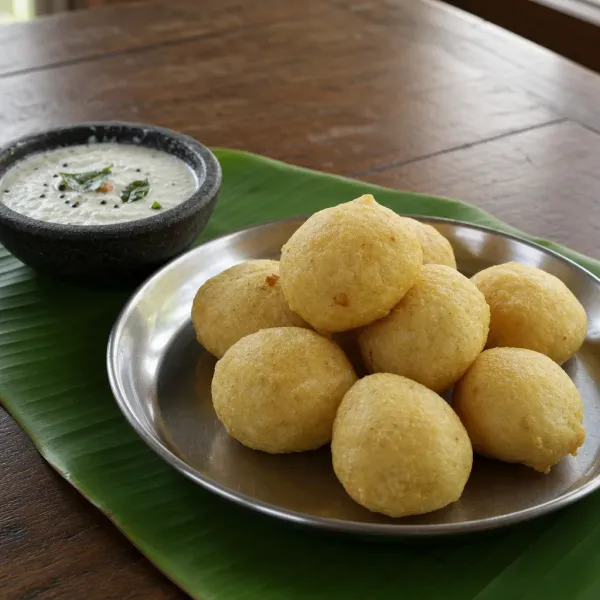
Urulaikizhangu Bonda
Traditional Tamil Brahmin urulaikizhangu bonda: spiced potato filling, crisp besan-rice flour batter, fried in gingelly oil. No onion, no garlic.
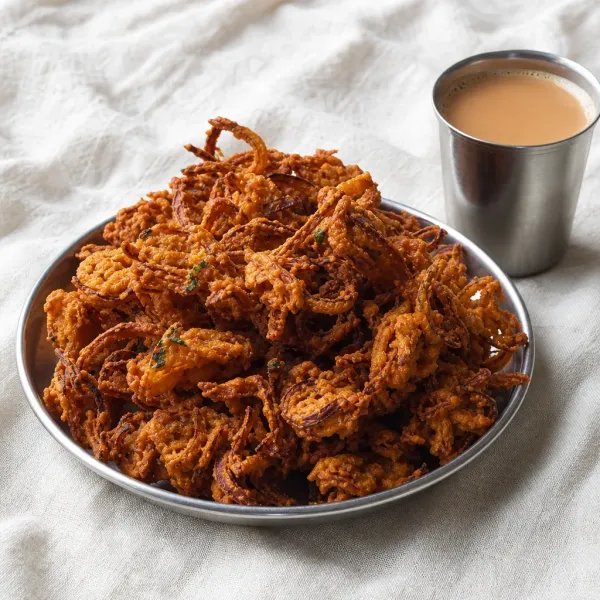
Onion Pakoda (Vengaya Pakoda)
Traditional Tamil Nadu vengaya pakoda made with thinly sliced onion, besan and rice flour. No excess water, fried in gingelly oil for a crisp, craggy…
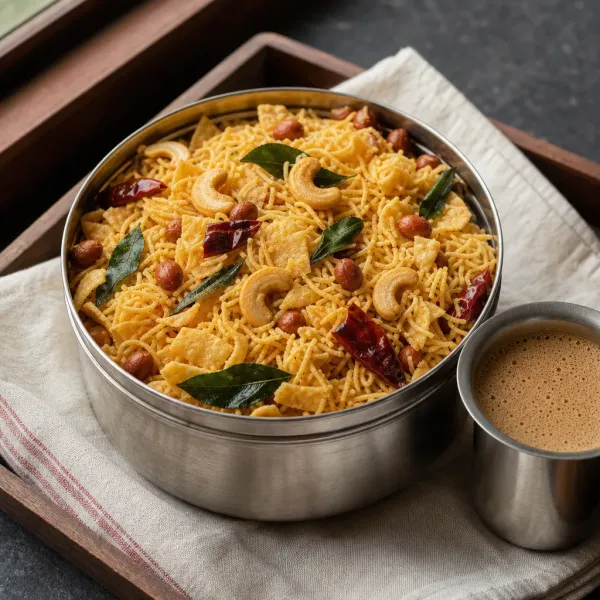
Madras Mixture
Authentic Tamil Madras mixture with fresh omapodi, ribbon pakoda, peanuts and cashews, fried in gingelly oil and tossed with curry leaves.
Ribbon Pakoda (Ola Pakoda)
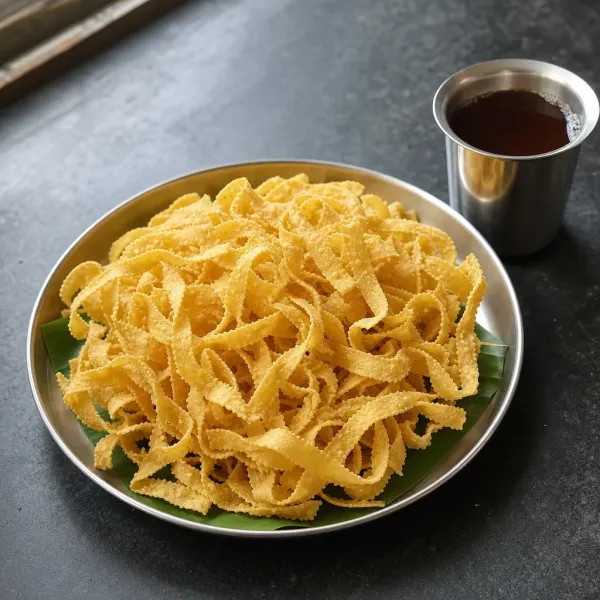
Traditional Tamil Nadu ribbon pakoda made with rice flour, besan, butter and sesame. Step-by-step method for crisp, pale-golden Diwali snack strips.
Maddur Vade
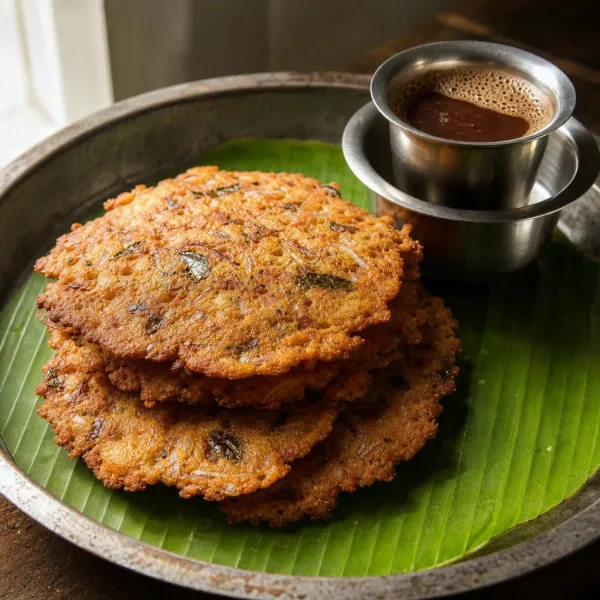
Authentic Maddur vade recipe from Mandya, Karnataka — thin, crisp rice flour and shallot discs fried to deep gold, the way they were made at Maddur s…