

Bajji Recipe
Malayalam ബജ്ജിTamil பஜ்ஜிKannada ಬಜ್ಜಿTelugu బజ్జి
- Prep20 min
- Cook25 min
- Serves4
- DifficultyEasy
- DietVegan
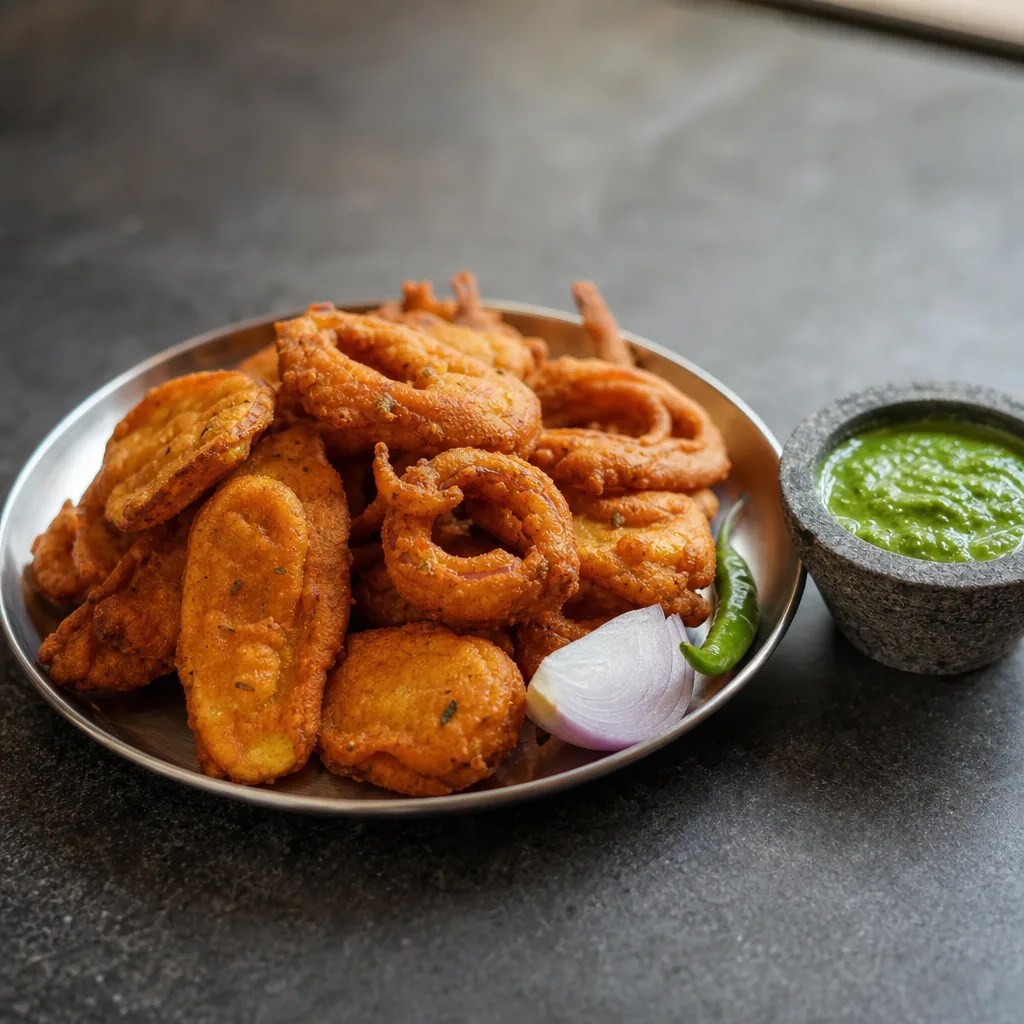
Bajji is the fritter you smell before you see it — the hot gingelly oil, the sizzle, the turmeric-yellow batter browning at the edges of a blackened kadai. In Tamil Nadu it belongs firmly to the street corner and the home veranda during the evening rains. It is not a restaurant dish and not a festival dish. It is what someone makes when the weather turns and everyone wants something hot and crisp with tea.
The two most common versions in a Tamil household are onion bajji, made with large white or red onion sliced into thick rings, and vazhakkai bajji, made with raw plantain sliced on a diagonal into coins or ovals. Both use the same batter: besan as the base, rice flour for crispness, a good amount of dried red chilli, salt, and a pinch of asafoetida. The fat is gingelly oil, which gives the fritter its particular flavour. Sunflower oil is used in many households today, but gingelly oil is the traditional choice.
Households differ mainly in the chilli. Some use only red chilli powder; others grind a paste of dried red chillies and add it wet. Some add a small amount of ajwain for digestion. The batter thickness is the thing most cooks feel strongly about: too thin and the coating slides off; too thick and you are eating raw flour. It should coat the back of a spoon and drip off slowly.
Ingredients (serves 4)
For the batter
For the fritters
Method
Prepare the vegetables
Peel the onions and slice them into rings about 5–6 mm thick. Separate the rings gently and set aside on a dry plate. Peel the raw plantain — the skin is stiff, so score it lengthwise and pull away — then slice diagonally into ovals about 4–5 mm thick. Pat both vegetables dry with a clean cloth. Any surface moisture will make the batter slide.
Make the batter
Sift the besan and rice flour together into a wide bowl. Add the red chilli powder, asafoetida, and salt. Mix the dry ingredients well. Now add cold water a little at a time, whisking as you go, until you have a smooth, thick batter with no lumps. It should coat the back of a spoon and fall off in a slow, heavy drip — not pour off, not cling in a thick clump. Start with 130 ml and add more only if needed.
Heat the oil
Pour the gingelly oil into a deep kadai to a depth of at least 7–8 cm. Heat on a medium-high flame. To test: drop a small blob of batter into the oil. It should sink slightly, then rise to the surface and sizzle steadily within two or three seconds. If it shoots straight up, the oil is too hot; lower the flame and wait a minute. If it sinks and sits, the oil is not ready yet.
Fry the plantain bajji first
Dip each plantain slice into the batter, let the excess drip for a second, then lower it carefully into the oil. Fry in batches of four or five — do not crowd the kadai or the temperature drops and the batter turns greasy. Fry on medium heat for about 3–4 minutes, turning once, until the batter is golden and set all around. The plantain inside will be fully cooked through. Lift out with a slotted spoon and drain on a wire rack or paper.
Fry the onion bajji
Dip the onion rings into the batter, coating them well. The rings tend to slip, so hold them briefly with your fingers to let the batter grip before lowering into the oil. Fry on medium heat for 2–3 minutes per batch, turning once. The onion bajji is ready when the batter is deep golden and the onion inside has softened and sweetened — you can tell by pressing gently with the spoon. Drain well.
Serve immediately
Bajji waits for no one. Serve the fritters as soon as they come out of the oil. They lose their crispness within ten minutes. Arrange them on a plate lined with paper to catch the last of the oil, and bring them straight to the table.
How to serve
Green chutney made from coriander and green chilli, or a simple coconut chutney. In Tamil Nadu, a wedge of raw onion and a green chilli on the side is common. Hot tea or filter coffee alongside.
Served with: Green chutney made from coriander and green chilli, or a simple coconut chutney. In Tamil Nadu, a wedge of raw onion and a green chilli on the side is common. Hot tea or filter coffee alongside.
Cook's tips
The batter thickness
This is the single thing most likely to go wrong. Too thin and the coating slides off the vegetable in the oil, leaving a naked slice and a loose batter cloud. Too thick and you bite into a doughy shell. Mix to the consistency of a thick dosa batter — it should coat without running off immediately.
Gingelly oil and substitution
Untoasted gingelly oil (nallennai, sesame oil that is pale yellow, not the dark roasted kind) is the traditional fat. It gives the bajji a faint nuttiness. Sunflower or groundnut oil works and is used in many households, but do not use the dark toasted sesame oil sold for East Asian cooking — the flavour is wrong entirely.
Plantain versus banana
Use raw plantain (vazhakkai), which is starchy, firm, and holds its shape. A ripe or semi-ripe banana will turn mushy and sweet inside the batter. If plantain is unavailable, raw green banana is the next closest thing.
Oil temperature
Keep the flame at medium throughout. High heat browns the outside before the interior is cooked and produces a bitter note from the besan. If the oil smokes, remove the kadai from the heat for thirty seconds before continuing.
Ajwain variation
Some households add ¼ tsp of ajwain (omam) to the batter. It is not universal but it is genuinely traditional in parts of Tamil Nadu, and it aids digestion. Add it with the dry ingredients if you like.
Regional variations
Kerala has a similar fritter using the same batter but often adds curry leaves and a pinch of turmeric; Andhra bajji batter is sometimes thinner and the chilli heat is higher; some Tamil households add a spoon of hot oil to the batter (moichu) for extra crispness.
Glossary
- Besan கடலை மாவு
- Chickpea flour, the base of the bajji batter.
- Arisi maavu அரிசி மாவு
- Fine rice flour; adds crispness to the batter.
- Vazhakkai வாழக்காய்
- Raw green plantain, starchy and firm, used as a vegetable.
- Nallennai நல்லெண்ணெய்
- Gingelly oil; untoasted sesame oil used for frying in Tamil Nadu cooking.
- Perungayam பெருங்காயம்
- Asafoetida; added in a small pinch to the batter for flavour and digestion.
- Kadai கடாய்
- Deep, round-bottomed iron or steel frying pan used for deep frying.
Two things decide whether the bajji works: the batter thickness and the oil temperature. Get those right and the rest follows. The batter must be thick enough to grip the vegetable and thin enough to cook through without turning doughy; the oil must be hot enough to set the coating immediately but not so hot that it colours before the inside is done. Everything else — the chilli level, the choice of vegetable, the oil you use — is household preference.
More Snacks recipes
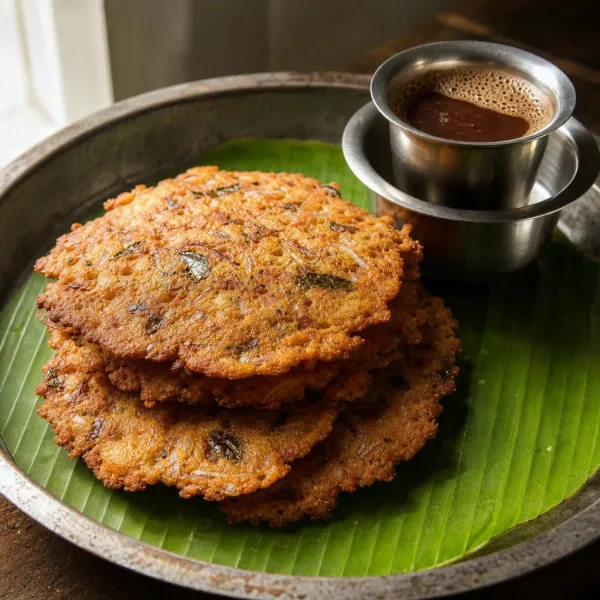
Maddur Vade
Authentic Maddur vade recipe from Mandya, Karnataka — thin, crisp rice flour and shallot discs fried to deep gold, the way they were made at Maddur s…
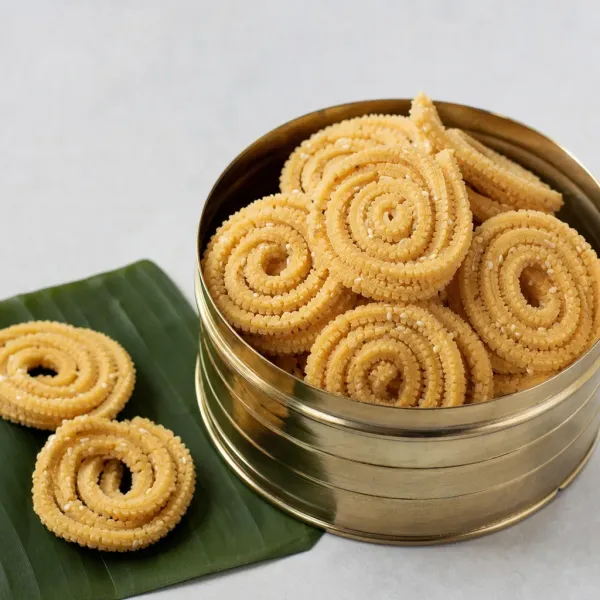
Murukku: Tamil Nadu Brahmin Household Recipe
Crisp rice flour murukku from a Tamil Iyer kitchen: the traditional ratio, the right dough consistency, and how to fry it pale gold all the way throu…
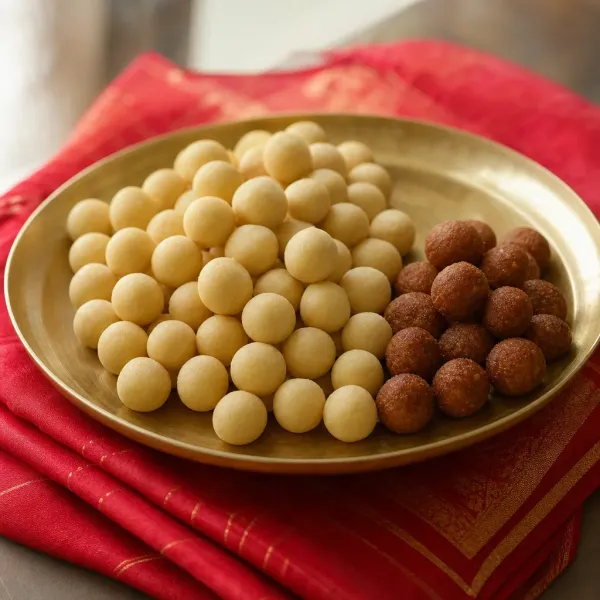
Uppu Seedai
Traditional Tamil Iyer uppu seedai for Gokulashtami: savoury deep-fried rice balls with roasted flour, butter, coconut and sesame. Step-by-step metho…
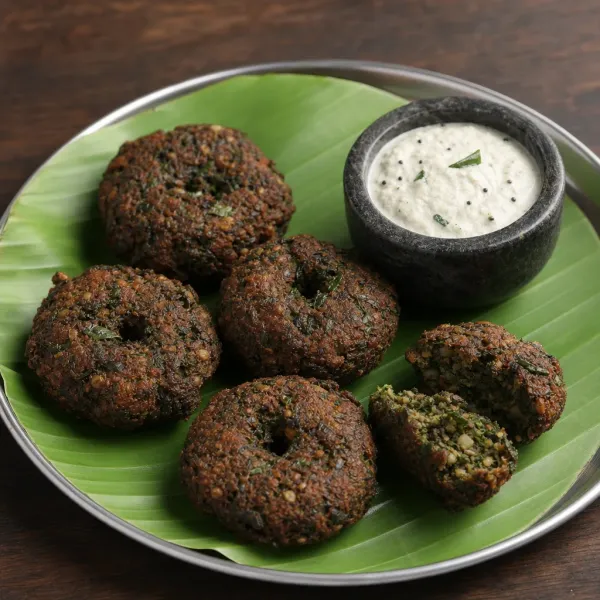
Keerai Vadai
Traditional Tamil Iyer keerai vadai made with coarsely ground chana dal, arai keerai, shallots and fennel. Crisp, vegan, fried in gingelly oil.
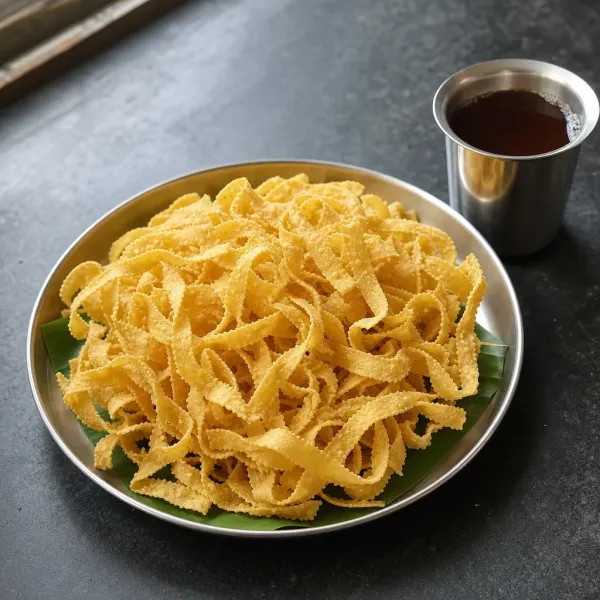
Ribbon Pakoda (Ola Pakoda)
Traditional Tamil Nadu ribbon pakoda made with rice flour, besan, butter and sesame. Step-by-step method for crisp, pale-golden Diwali snack strips.
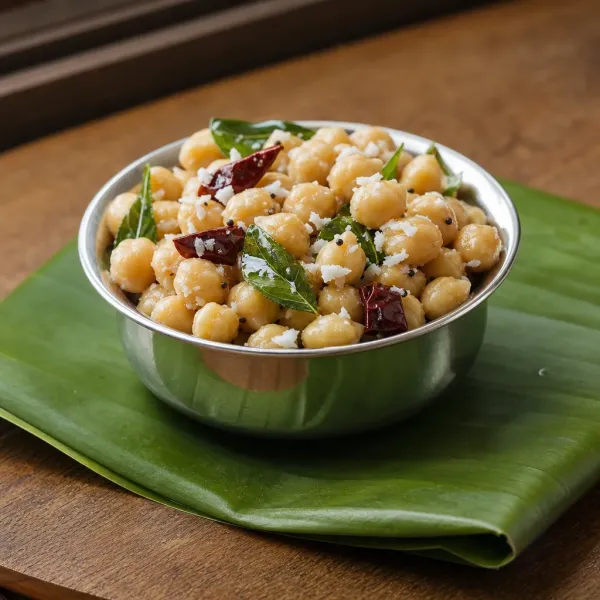
Kondakadalai Sundal
Traditional Tamil Brahmin kondakadalai sundal for Navratri. White chickpeas tempered with mustard, urad dal, dried chilli, and finished with fresh co…