Keerai Vadai Recipe
Malayalam കീര വടTamil கீரை வடைKannada ಕೀರೆ ವಡೆTelugu కీర వడ
- Prep20 min
- Soak / ferment3 hr
- Cook30 min
- Serves4
- DifficultyMedium
- DietVegan
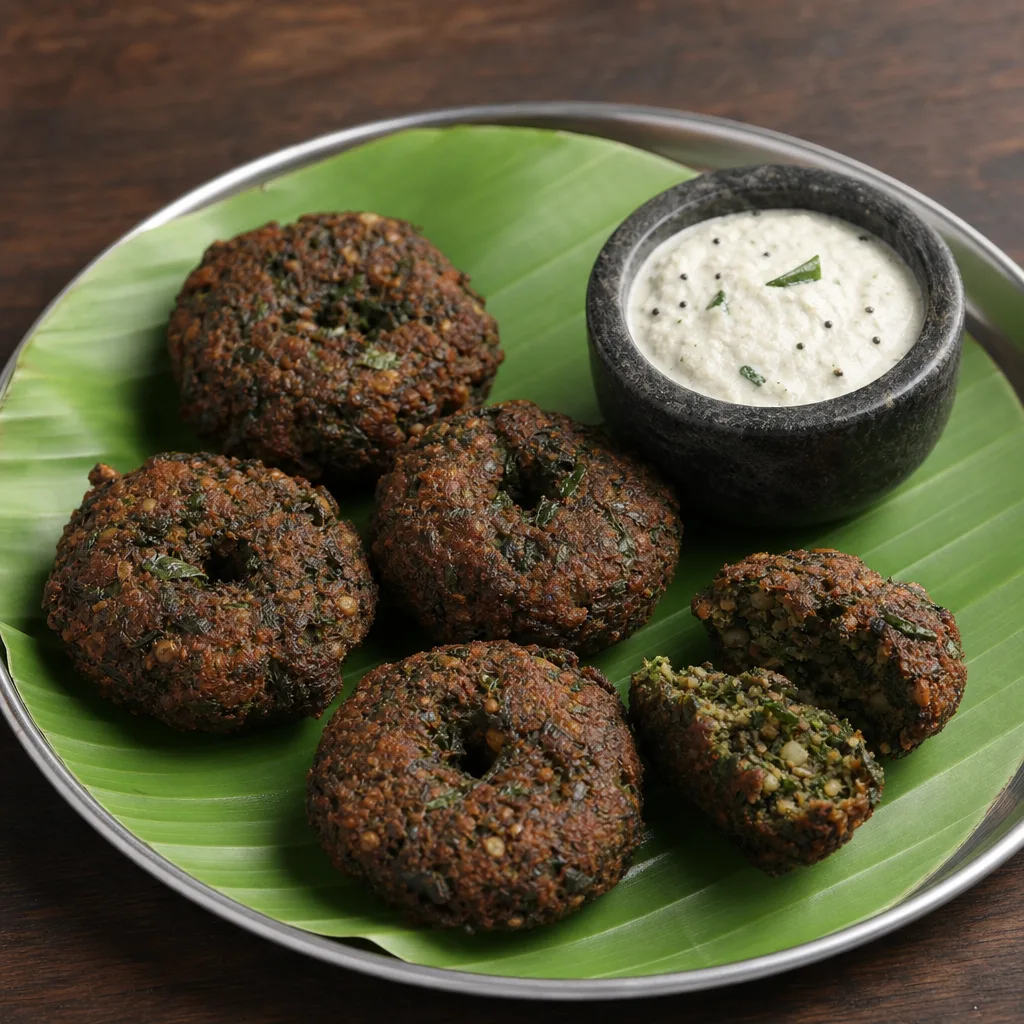
This is a dry-fried vada made from coarsely ground chana dal packed with chopped greens. In Tamil Iyer kitchens it appears on festival days and on ordinary weekday mornings when someone soaked the dal the night before without making a plan. The greens most often used are arai keerai (Amaranthus dubius) or drumstick leaves, both of which hold their shape in the hot oil and add a faint bitterness that cuts the richness of the dal.
The batter is ground only until coarse — a smooth paste will give you something closer to a pakoda than a vadai. The shallots are mixed in raw, so they stay sharp and give each bite a little sweetness against the heat of the dried chillies. In most households the ratio of greens to dal is generous: the finished vadai should be visibly green when you break it open.
These are eaten fresh from the oil. They soften quickly and do not reheat well, so the family is called to the table while the last batch is still draining.
Ingredients (serves 4)
For soaking
For the vadai mixture
For frying
Method
Soak the dal
Rinse the chana dal twice in cold water until the water runs clear. Cover with fresh cold water by at least 5 cm and leave to soak for 3 hours. In a warm kitchen this is enough; in a cold monsoon kitchen give it 30 minutes more. The dal is ready when a piece breaks cleanly between your fingers without any hard, chalky centre.
Drain and dry the dal
Drain the soaked dal through a colander and shake it well. Spread it on a clean kitchen cloth for 5 minutes. Excess water in the batter will make the vadai absorb oil and turn soft. Do not rinse it again after draining.
Grind the dal coarsely
Put the drained dal into a mixer jar with the dried red chillies and fennel seeds. Grind in short pulses — 4 or 5 bursts of 3 seconds each. You want a rough, sandy texture with some dal pieces still visible, not a smooth paste. Do not add water. If the jar struggles, scrape down the sides and pulse again rather than adding liquid.
Mix in the remaining ingredients
Tip the ground dal into a wide bowl. Add the chopped greens, shallots, grated ginger, curry leaves, and salt. Mix firmly with your hand, pressing and turning, until everything is evenly distributed. The mixture should hold its shape when you press a small amount in your palm. If it feels too wet, the greens released water — leave the bowl uncovered for 10 minutes and mix again.
Shape the vadai
Wet your palms lightly with water. Take a lime-sized portion of the mixture, about 40 g. Roll it into a ball, then flatten it between your palms to a disc roughly 6 cm across and 1 cm thick. Press a small hole in the centre with your thumb — this helps it cook evenly through. Set aside on a plate. Shape all the vadai before you begin frying.
Heat the oil
Pour the gingelly oil into a heavy kadai and heat it over a medium flame. To test the temperature, drop in a tiny piece of the dal mixture. It should rise to the surface within 3 seconds and begin to sizzle steadily. If it rises in 1 second the oil is too hot; reduce the flame and wait a minute. If it sinks and sits there, the oil is not ready.
Fry the first batch
Slide 3 or 4 vadai gently into the oil — do not crowd the kadai or the temperature drops and they absorb oil. Fry on medium heat for 3 to 4 minutes without moving them, until the underside is a deep reddish-brown. Turn carefully with a slotted spoon and fry the other side for 2 to 3 minutes more. The finished vadai should be uniformly dark golden-brown all over and feel firm, not soft, when you press the edge lightly.
Drain and fry remaining batches
Lift the vadai out with a slotted spoon and rest them on a plate lined with paper. Let the oil come back to temperature for a minute between batches — a thermometer should read around 170°C, or use the dal-drop test again. Continue until all the vadai are fried.
Serve immediately
Keerai vadai are at their best in the first 15 minutes after frying, while the outside is still crisp and the inside is moist and fragrant from the greens. Arrange on a steel plate or banana leaf and serve at once.
How to serve
Coconut chutney and a cup of filter coffee or hot tea. On festival days, alongside sambar as part of a larger meal.
Served with: Coconut chutney and a cup of filter coffee or hot tea. On festival days, alongside sambar as part of a larger meal.
Cook's tips
Greens to use
Arai keerai is the classic choice. Drumstick leaves (murungai keerai) are equally traditional and give a slightly more bitter, aromatic result. Palak (spinach) can be used but releases more water; squeeze it firmly in a cloth before adding. Avoid very tender, watery greens — they make the mixture slack.
The coarse grind is not optional
A smooth batter gives a dense, oily result with no texture. If you accidentally over-grind, mix in 2 tablespoons of whole soaked dal (reserved before grinding) to restore some roughness.
Why the vadai cracks when shaping
If the mixture crumbles and will not hold, the dal was not soaked long enough or was not ground fine enough to release its starch as a binder. Grind a small portion a little finer, mix it back in, and try again.
Oil temperature matters more than timing
Frying on too high a heat browns the outside before the dal inside is cooked through. Medium heat, steady throughout, is what gives an evenly cooked vadai. Gingelly oil smokes at a lower point than refined oils — watch the flame.
Storing leftover mixture
The shaped vadai can be refrigerated on a plate, covered, for up to 4 hours before frying. Once fried they do not store well. Fry only as many as will be eaten.
Regional variations
Kerala Mappila version uses ulunnu (urad dal) as the base; Andhra households sometimes use a mixed-dal batter; some Tamil households use a half-chana, half-toor dal split.
Glossary
- Keerai கீரை
- Generic Tamil word for leafy greens; the specific green is named before it (arai keerai, murungai keerai, etc.).
- Vadai வடை
- Fried savoury cake or fritter, usually dal-based; called vada in Hindi and many other languages.
- Kadalai paruppu கடலை பருப்பு
- Chana dal; split Bengal gram, the primary pulse used in this batter.
- Arai keerai அரை கீரை
- Amaranthus dubius, a common cooking green in Tamil Nadu; mild, slightly earthy.
- Murungai keerai முருங்கை கீரை
- Drumstick leaves; small, aromatic leaves from the Moringa tree, used fresh.
- Sombu சோம்பு
- Fennel seeds; used whole in this batter for a faint anise note.
- Nallennai நல்லெண்ணெய்
- Gingelly oil; cold-pressed sesame oil used for frying in Tamil Nadu cooking.
- Chinna vengayam சின்ன வெங்காயம்
- Small shallots; the preferred allium in Tamil cooking, sharper and more aromatic than large onions.
Two things decide this vadai: the grind and the oil temperature. Keep the dal coarse enough to have texture and the oil steady at medium heat throughout frying, and the result is a crisp, green-flecked fritter that holds together cleanly when you break it. Rush either of those and you get something soft, oily, or raw in the middle.
More Snacks recipes
Kondakadalai Sundal
Traditional Tamil Brahmin kondakadalai sundal for Navratri. White chickpeas tempered with mustard, urad dal, dried chilli, and finished with fresh co…
Uppu Seedai
Traditional Tamil Iyer uppu seedai for Gokulashtami: savoury deep-fried rice balls with roasted flour, butter, coconut and sesame. Step-by-step metho…
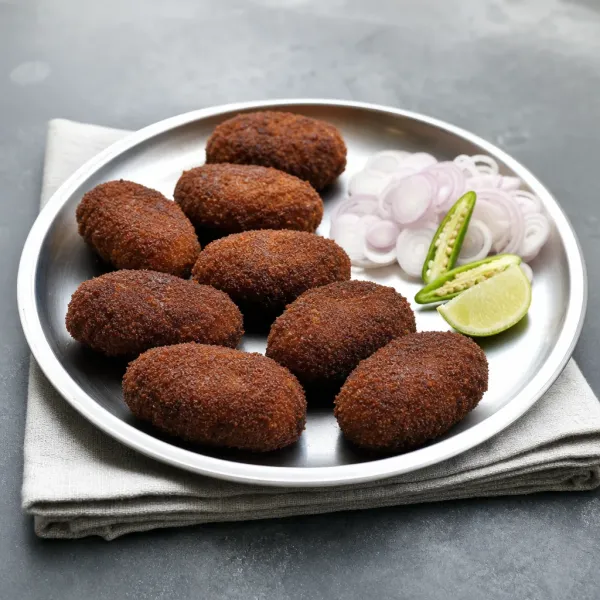
Kerala Beef Cutlet
Traditional Kerala Nasrani beef cutlet with shallots, black pepper and coconut oil. Crisp breadcrumb crust, soft spiced filling. Step-by-step method.
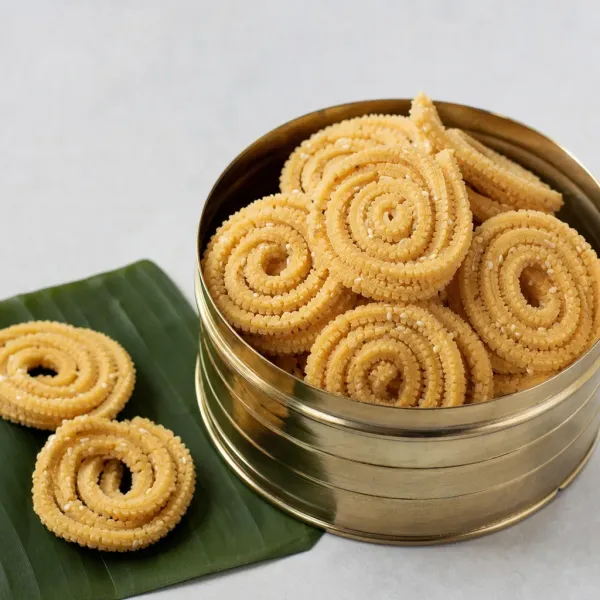
Murukku: Tamil Nadu Brahmin Household Recipe
Crisp rice flour murukku from a Tamil Iyer kitchen: the traditional ratio, the right dough consistency, and how to fry it pale gold all the way throu…
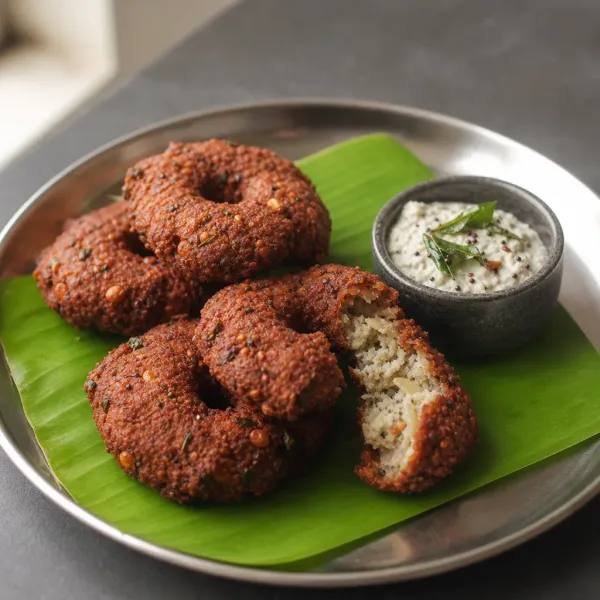
Vazhaipoo Vadai
Traditional Tamil Iyer-style vazhaipoo vadai made with chana dal and fresh banana blossom, fried in gingelly oil. Step-by-step home recipe.