

Kara Sev Recipe
Malayalam കാര സേവ്Tamil கார சேவ்Kannada ಕಾರ ಸೇವ್Telugu కారా సేవ్
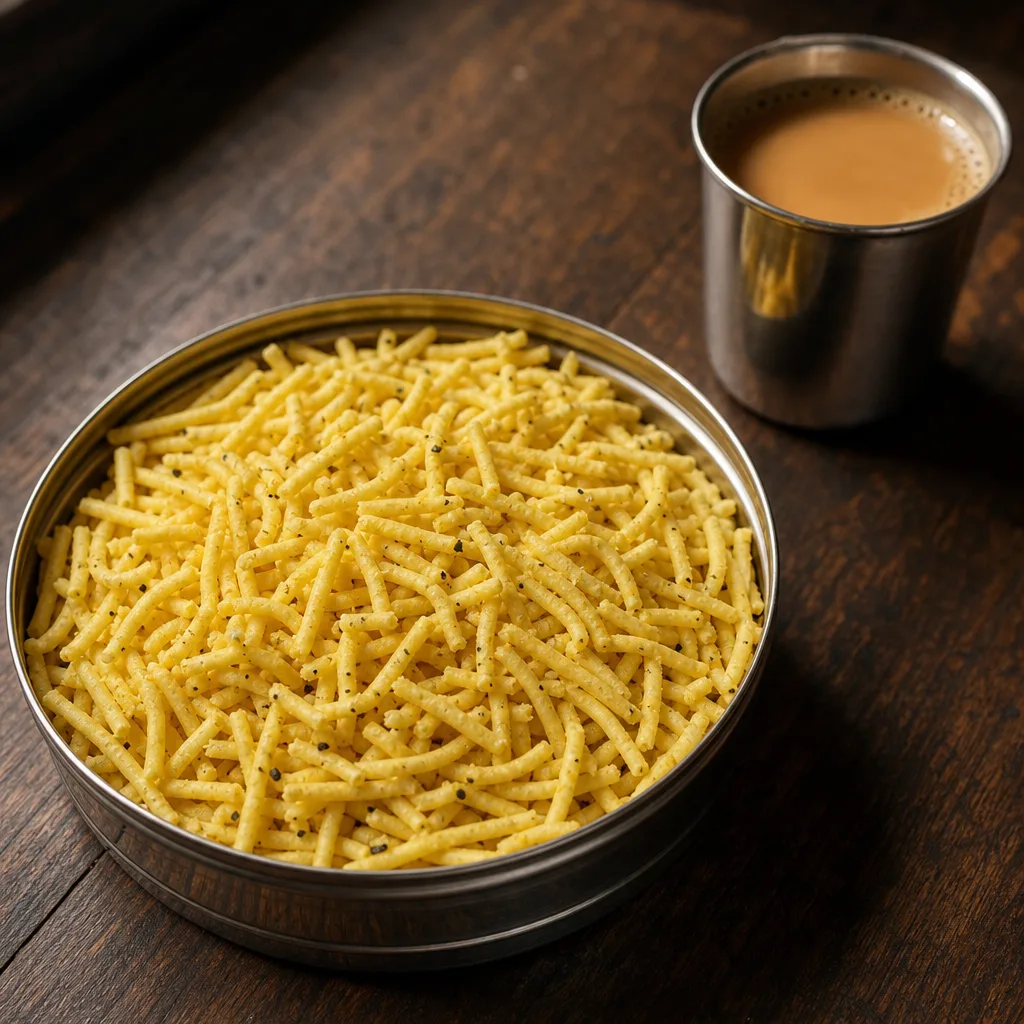
- Prep20 min
- Cook40 min
- Serves8 to 10 as a snack
- DifficultyMedium
- DietVegan
Kara sev is a Diwali and Krishna Jayanti staple in Tamil Brahmin households, made in large batches and stored in tins that last a week if the oil temperature was right. It is a pressed snack, not a rolled one — the dough is pushed through a murukku press fitted with the single-hole or three-hole plate, directly into hot oil, in long coils that are broken after frying.
The heat comes from black pepper, not just red chilli — that combination is what marks the Tamil Brahmin household version. Asafoetida is generous. The fat is refined groundnut oil or coconut oil depending on the family, though many Kongunad Iyer households use groundnut oil for deep frying because it handles sustained high heat well. The dough must be soft enough to press without cracking but not so wet that it spreads in the oil.
Households differ mainly on the pepper-to-chilli ratio and on whether ajwain is added. Some add a pinch of turmeric for colour; others consider that a departure. The recipe below follows the plain, pepper-forward version without turmeric.
Ingredients (serves 8 to 10 as a snack)
For the dough
For frying
Method
Sift the flours
Sift the besan and rice flour together into a wide mixing bowl. Add the coarsely ground black pepper, red chilli powder, asafoetida and salt. Mix well with your hand so the spices are evenly distributed through the flour before any liquid touches it.
Add hot fat to the flour
Heat the 2 tablespoons of oil until it just begins to shimmer — do not let it smoke. Pour it directly over the spiced flour. Rub the hot fat into the flour with your fingertips until the mixture resembles coarse, slightly clumping breadcrumbs. This step makes the finished sev flaky rather than hard.
Bring the dough together
Add warm water a little at a time, mixing as you go. You want a smooth, pliable dough — softer than a chapati dough but not sticky. It should press easily through the murukku press without cracking at the edges. Stop adding water the moment the dough holds together cleanly. If the dough is too stiff the sev will crack; too wet and it will absorb oil.
Rest the dough
Cover the dough with a damp cloth and rest it for 10 minutes. This relaxes the gluten in the besan and makes pressing easier. Do not rest it longer or it will begin to soften and stick.
Fit the press and heat the oil
Fit the murukku press with the single-hole or three-hole round plate. Fill the press about two-thirds full with dough — overfilling makes it hard to press evenly. Heat the groundnut oil in a heavy kadai over medium-high heat to around 175°C. To test without a thermometer, drop a small pinch of dough into the oil; it should rise to the surface within 3 seconds without browning immediately.
Press the sev into the oil
Hold the press directly over the oil and press the dough in a slow circular motion to form loose coils. Work in batches — do not crowd the kadai. The coils will sizzle actively. Do not stir for the first 30 seconds; let the sev set before you move it.
Fry to crispness
Fry each batch for 3 to 4 minutes, turning gently with a slotted spoon once the underside is set. The sev is ready when the active sizzling quietens noticeably — that is the moisture leaving. The colour should be a pale golden yellow, not brown. If it browns quickly, lower the heat; the inside will be raw if the outside colours too fast.
Drain well
Lift the sev with the slotted spoon and hold it over the kadai for a few seconds to let excess oil drain. Transfer to a wide plate lined with absorbent paper. Do not stack batches on top of each other while hot; they will steam and lose crispness.
Break and cool completely
Once the sev is cool enough to handle, break the coils into pieces roughly 5 to 7 cm long. Spread in a single layer and leave to cool completely at room temperature — at least 20 minutes. Sev that is stored warm will turn soft.
Store in an airtight tin
Pack into a dry, airtight tin or steel dabba. Properly fried and fully cooled kara sev keeps crisp for 7 to 10 days. If it softens slightly after a few days, spread it on a tray and warm in a low oven (150°C) for 5 minutes, then cool again before closing the tin.
How to serve
Eaten as a standalone snack, often as part of a Diwali mixture (Deepavali marundhu) alongside murukku, ribbon pakoda and sweet items such as adhirasam. Also served with tea.
Served with: Eaten as a standalone snack, often as part of a Diwali mixture (Deepavali marundhu) alongside murukku, ribbon pakoda and sweet items such as adhirasam. Also served with tea.
Cook's tips
Coarse pepper matters
Fine pepper powder disappears into the dough and gives only heat, not the distinct pepper bite that defines this version. Crack the pepper in a mortar or pulse briefly in a mixer — you want fragments, not dust.
Oil temperature is everything
If the oil is too cool, the sev drinks oil and turns greasy. If it is too hot, the outside colours before the inside is cooked and the sev will be soft at the centre. Keep the heat steady at medium-high throughout; the temperature drops each time you add a batch, so give it a minute to recover between batches.
Dough dries out quickly
Keep the dough covered with a damp cloth between batches. Dry dough cracks in the press and the sev comes out broken rather than in clean strands.
Murukku press plate
The single-hole round plate gives a thicker, rounder strand; the three-hole plate gives thinner strands that crisp faster. Both are traditional. Do not use the star plate — that is for murukku, and the ridges burn before the interior is done.
Regional variations
Karnataka households make a thicker, coarser version with more pepper and less chilli; Andhra kara sev sometimes includes ajwain and a small amount of rice flour for extra crispness.
Glossary
- Kadalai maavu கடலை மாவு
- Chickpea flour, also called besan; the primary flour in this snack.
- Perungayam பெருங்காயம்
- Asafoetida; used generously in Tamil Brahmin cooking wherever onion and garlic are absent.
- Murukku press முறுக்கு அச்சு
- A cylindrical hand press with interchangeable perforated plates, used to extrude dough directly into hot oil.
- Kadai கடாய்
- A deep, wide, round-bottomed iron or steel pan used for deep frying.
- Dabba டப்பா
- An airtight steel storage tin, standard in South Indian kitchens for keeping fried snacks crisp.
Two things decide whether kara sev works: the dough must be soft enough to press without cracking, and the oil must hold steady at the right temperature throughout frying. Get those right and the pepper and asafoetida do the rest.
More Snacks recipes
Vazhaipoo Vadai
Traditional Tamil Iyer-style vazhaipoo vadai made with chana dal and fresh banana blossom, fried in gingelly oil. Step-by-step home recipe.
Kerala Beef Cutlet
Traditional Kerala Nasrani beef cutlet with shallots, black pepper and coconut oil. Crisp breadcrumb crust, soft spiced filling. Step-by-step method.
Kondakadalai Sundal
Traditional Tamil Brahmin kondakadalai sundal for Navratri. White chickpeas tempered with mustard, urad dal, dried chilli, and finished with fresh co…
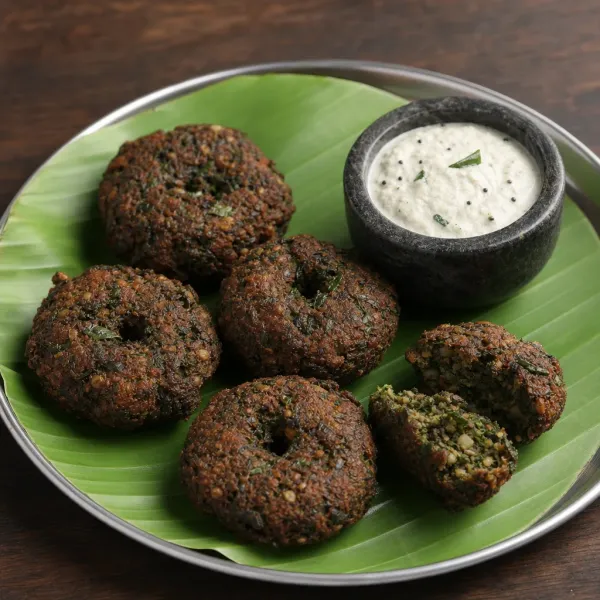
Keerai Vadai
Traditional Tamil Iyer keerai vadai made with coarsely ground chana dal, arai keerai, shallots and fennel. Crisp, vegan, fried in gingelly oil.
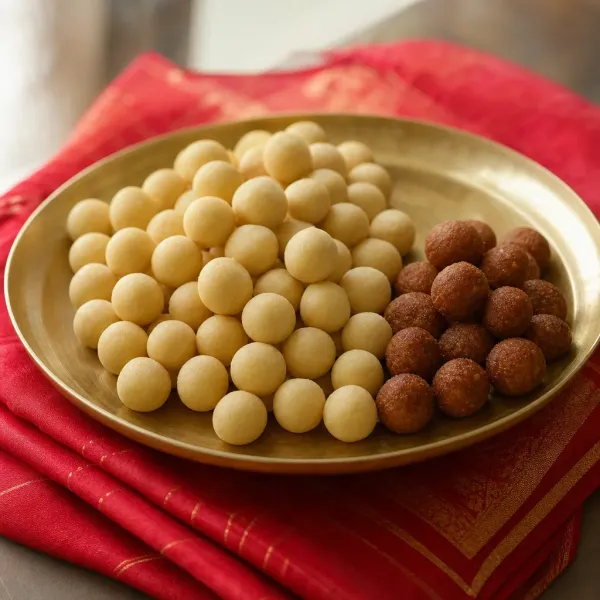
Uppu Seedai
Traditional Tamil Iyer uppu seedai for Gokulashtami: savoury deep-fried rice balls with roasted flour, butter, coconut and sesame. Step-by-step metho…
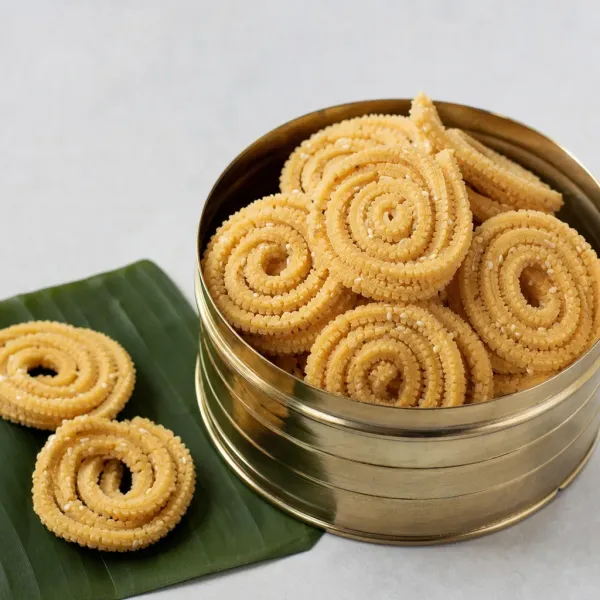
Murukku: Tamil Nadu Brahmin Household Recipe
Crisp rice flour murukku from a Tamil Iyer kitchen: the traditional ratio, the right dough consistency, and how to fry it pale gold all the way throu…