

Vazhaipoo Vadai Recipe
Malayalam വാഴപ്പൂ വടTamil வாழைப்பூ வடைKannada ಬಾಳೆಹೂವಿನ ವಡೆTelugu అరటిపూల వడ
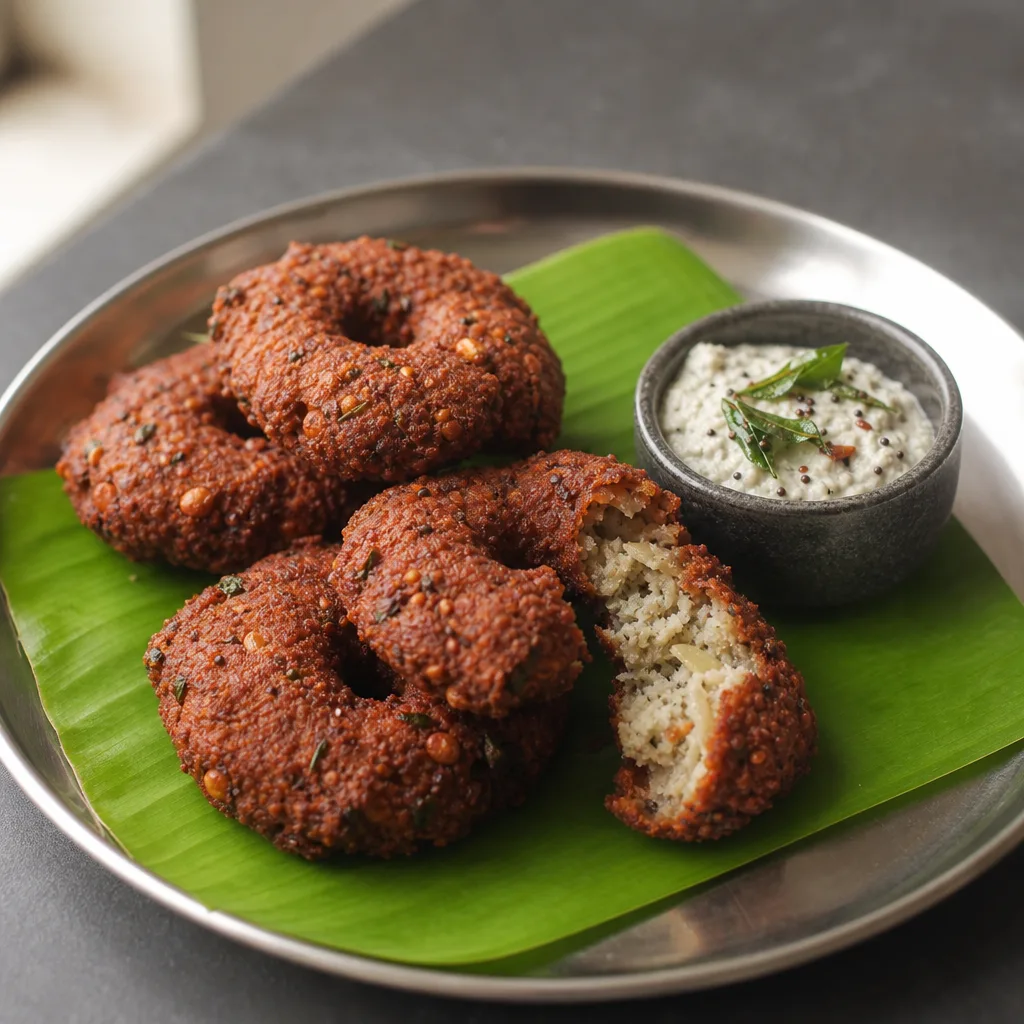
- Prep40 min
- Soak / ferment2 hr
- Cook30 min
- Serves4
- DifficultyMedium
- DietVegan
Vazhaipoo vadai is a dish that takes patience before it takes skill. The banana blossom must be cleaned properly — every tough outer petal peeled away, every tiny floret stripped of its stamens and pistil — or the vadai will be bitter and the texture will be wrong. Once that work is done, the rest comes together quickly.
In an Iyer household this is festival food, made on days when something special is needed but the kitchen stays vegetarian. It appears at Karthigai Deepam, at weddings, and on the days when the banana tree in the backyard finally flowers. The batter is chana dal, soaked and ground coarse, held together just enough to shape. The banana blossom goes in shredded fine, and the whole thing fries in gingelly oil until the outside is deep brown and the inside is just cooked through.
Every family has a small difference. Some add a little raw rice to the dal for crunch. Some use only green chilli, some mix in dried red chilli too. The amount of coconut varies. What does not vary is the cleaning of the blossom — that step is non-negotiable — and the coarse grind of the dal, which gives the vadai its characteristic open, slightly crumbly texture rather than the smooth density of a medu vadai.
Ingredients (serves 4)
For cleaning the banana blossom
For the vada batter
For frying
Method
Soak the chana dal
Rinse the chana dal twice and cover with cold water by at least 5 cm. Leave it for 2 hours at room temperature. The dal is ready when a piece crushes easily between your fingers but still has a little resistance at the centre — it should not be soft all the way through. Drain completely and set aside.
Clean the banana blossom
Peel back and discard the tough outer purple-maroon petals one at a time. Underneath each petal you will find a cluster of long pale florets. Pull these florets free and drop them immediately into a bowl of buttermilk or yoghurt water — they blacken fast. Inside each floret there is a thin, stiff stamen with a little knob at the tip and a small waxy pistil at the base; pull both out and discard them. Work through all the florets this way. The inner heart of the blossom, once you reach petals that are pale yellow and very tender, can be used whole after a fine chop.
Parboil the florets briefly
Drain the cleaned florets from the soaking liquid. Bring a small pot of salted water to a boil, add the florets, and cook for 4 to 5 minutes. They should be just tender, not mushy. Drain, rinse once under cold water to stop the cooking, and squeeze out as much moisture as you can with your hands. Chop the cooked florets fine — about 3 to 4 mm pieces. Spread on a clean cloth and press again to remove any remaining water. A wet blossom will make the vadai fall apart in the oil.
Grind the dal coarsely
Put the drained chana dal and the dried red chillies into a grinder or food processor. Grind without adding water, or with just 1 to 2 tbsp of water if the machine struggles. Stop when the dal resembles coarse breadcrumbs — you want visible broken pieces, not a smooth paste. This coarse texture is what gives the vadai its body. Over-grinding produces a paste that fries up dense and doughy.
Mix the batter
In a wide bowl, combine the ground dal with the chopped banana blossom, green chillies, grated ginger, curry leaves, coriander leaves, grated coconut, fennel seeds, and salt. Mix firmly with your hand — you want everything evenly distributed and the mixture to just hold together when pressed. Do not add water. If the mixture seems too dry to hold shape, the coconut and residual moisture from the blossom are usually enough; if it is still crumbling, add no more than 1 tbsp of water.
Shape the vadai
Divide the mixture into portions of about 40 g each — roughly the size of a large lime. Wet your palms lightly with water. Press each portion between your palms into a flat disc about 1.5 cm thick with smooth edges. The edges should not crack; if they do, the mixture is too dry and needs just a few drops more water. Lay the shaped vadai on a plate.
Heat the oil
Pour gingelly oil into a deep, heavy kadai to a depth of at least 6 cm. Heat over a medium flame until a small piece of batter dropped in rises to the surface within 3 to 4 seconds — this is around 170°C. Do not let the oil smoke. If the oil is too hot the outside will darken before the inside cooks; too cool and the vadai will absorb oil and be greasy.
Fry in batches
Slide 3 to 4 vadai into the oil gently — do not crowd the kadai. Fry on medium heat for 3 to 4 minutes on the first side without disturbing them, until the underside is deep golden brown. Turn carefully and fry for another 3 to 4 minutes. The finished vadai should be an even, deep reddish-brown all over, firm to a light press, and cooked through with no raw dal smell. Lift out with a slotted spoon and drain on a rack or on clean paper.
Check the first batch before continuing
Break one vadai open. The inside should be cooked and slightly crumbly, with visible flecks of banana blossom, coconut, and herbs. If the centre looks raw or pasty, lower the heat slightly and fry the next batch a minute longer on each side. Adjust salt if needed before shaping the remaining vadai.
Fry the remaining batches
Continue frying in batches, keeping the oil temperature steady. Between batches, skim out any loose bits of batter from the oil so they do not burn and darken the oil. Serve the vadai as soon as they come out of the oil — they are at their best in the first 20 minutes, while the outside is still crisp.
How to serve
Coconut chutney and hot filter coffee in the morning; or as a teatime snack on its own. In a full meal context, served as an accompaniment to sambar rice.
Served with: Coconut chutney and hot filter coffee in the morning; or as a teatime snack on its own. In a full meal context, served as an accompaniment to sambar rice.
Cook's tips
The cleaning is the whole job
Removing the stamen and pistil from every floret is tedious but not optional. The stamen in particular turns fibrous and bitter when cooked. Set aside 20 to 25 minutes just for cleaning. It goes faster with two people.
Keeping the blossom from blackening
Banana blossom oxidises almost immediately when cut. Drop each floret into the buttermilk water as you go, not after you have finished cleaning. If it has already darkened, it is still edible but less attractive.
Gingelly oil and temperature
Gingelly oil has a lower smoke point than refined oils. Keep the flame at medium throughout. If the oil begins to smoke, take the kadai off the heat for a moment before continuing.
Make-ahead option
The cleaned, parboiled, and squeezed banana blossom can be prepared a few hours ahead and refrigerated. The shaped unfried vadai can sit for up to 30 minutes covered. Do not mix the batter the night before — the dal will absorb moisture and the texture changes.
If the vadai breaks in the oil
The batter has too much moisture or too little binding. Squeeze the banana blossom more firmly next time, and check that the dal was not ground too fine. A tablespoon of rice flour worked into the mixture is a household fix, though traditional recipes do not include it.
Regional variations
Vellalar and non-Brahmin Tamil versions include shallots and sometimes fennel seed; Kerala versions occasionally use a mix of toor dal and chana dal and finish with coconut oil tempering folded into the batter.
Glossary
- Vazhaipoo வாழைப்பூ
- Banana blossom; the purple-sheathed flower of the banana plant, used as a vegetable in South Indian cooking.
- Kadalai paruppu கடலை பருப்பு
- Chana dal; split Bengal gram, the base dal for this vadai and for many Tamil Nadu dishes.
- Sombu சோம்பு
- Fennel seeds; used in small amounts in Tamil Nadu cooking for a mild, slightly sweet note.
- Nallennai நல்லெண்ணெய்
- Gingelly oil; cold-pressed sesame oil used for frying and seasoning in Tamil Nadu cooking.
- Vadai வடை
- A category of fried savoury snack made from ground lentil or dal batter; distinct from medu vadai (urad dal) in texture and composition.
Two things decide this vadai: how dry the banana blossom is before it goes into the batter, and how coarse the dal is ground. Get both right and the vadai holds its shape in the oil, fries to a proper crust, and stays pleasantly crumbly inside. Rush either step and you will have either a greasy disc that falls apart or a dense puck with no texture.
More Snacks recipes
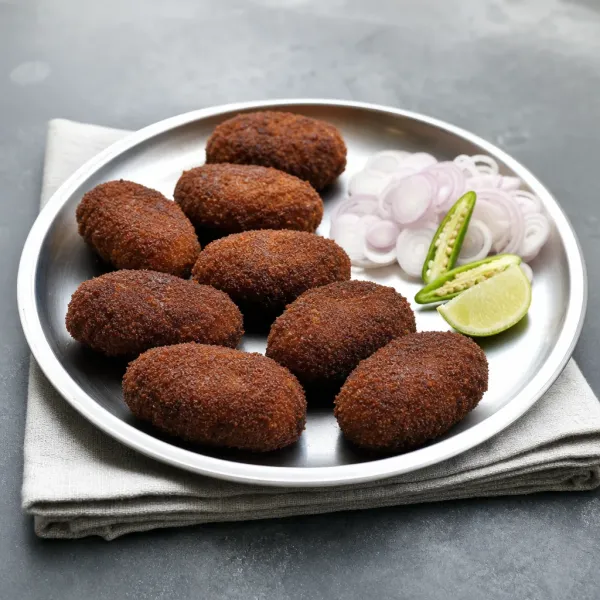
Kerala Beef Cutlet
Traditional Kerala Nasrani beef cutlet with shallots, black pepper and coconut oil. Crisp breadcrumb crust, soft spiced filling. Step-by-step method.
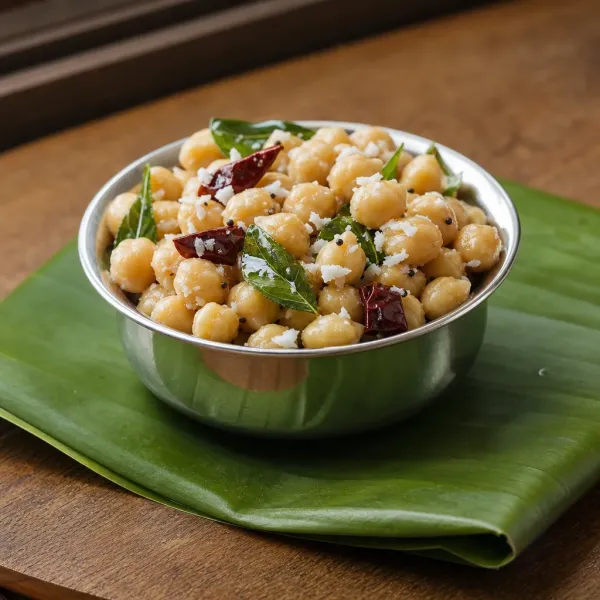
Kondakadalai Sundal
Traditional Tamil Brahmin kondakadalai sundal for Navratri. White chickpeas tempered with mustard, urad dal, dried chilli, and finished with fresh co…
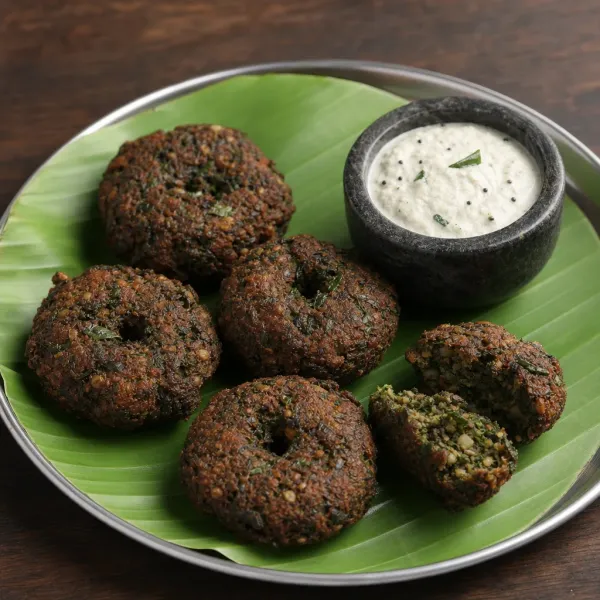
Keerai Vadai
Traditional Tamil Iyer keerai vadai made with coarsely ground chana dal, arai keerai, shallots and fennel. Crisp, vegan, fried in gingelly oil.
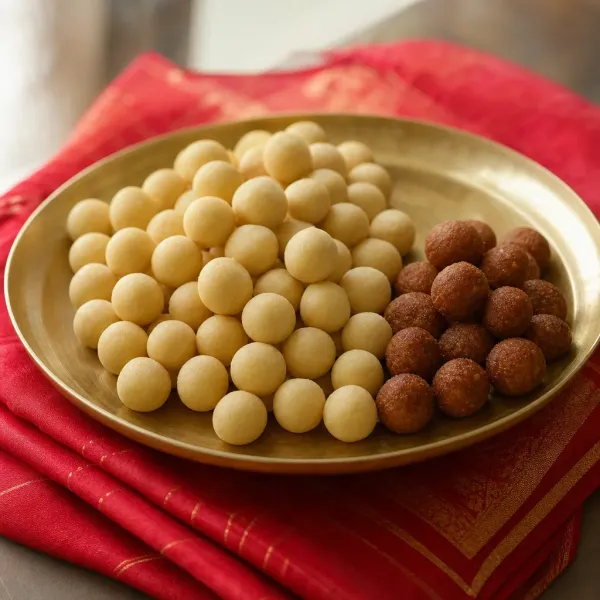
Uppu Seedai
Traditional Tamil Iyer uppu seedai for Gokulashtami: savoury deep-fried rice balls with roasted flour, butter, coconut and sesame. Step-by-step metho…
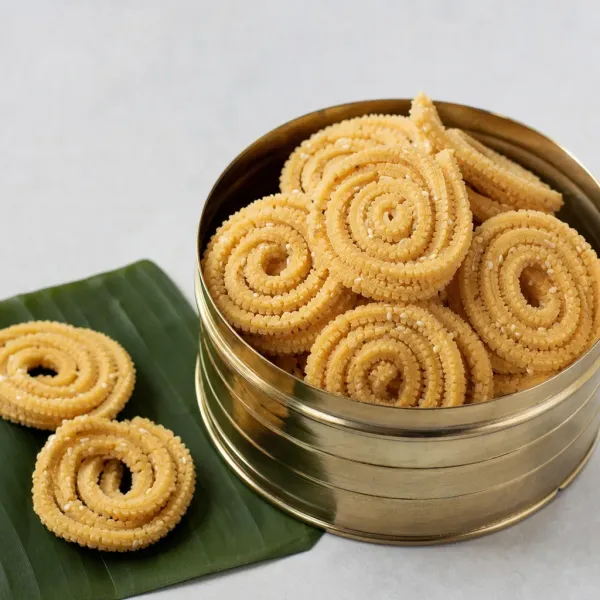
Murukku: Tamil Nadu Brahmin Household Recipe
Crisp rice flour murukku from a Tamil Iyer kitchen: the traditional ratio, the right dough consistency, and how to fry it pale gold all the way throu…