

Kerala Nasrani Beef Curry (Irachi Olathiyathu Style Gravy) Recipe
Malayalam നാടൻ ബീഫ് കറിTamil கேரள மாட்டிறைச்சி கறிKannada ಕೇರಳ ಬೀಫ್ ಕರಿTelugu కేరళ బీఫ్ కర్రీ
- Prep25 min
- Cook55 min
- Serves4
- DifficultyMedium
- DietNon-vegetarian
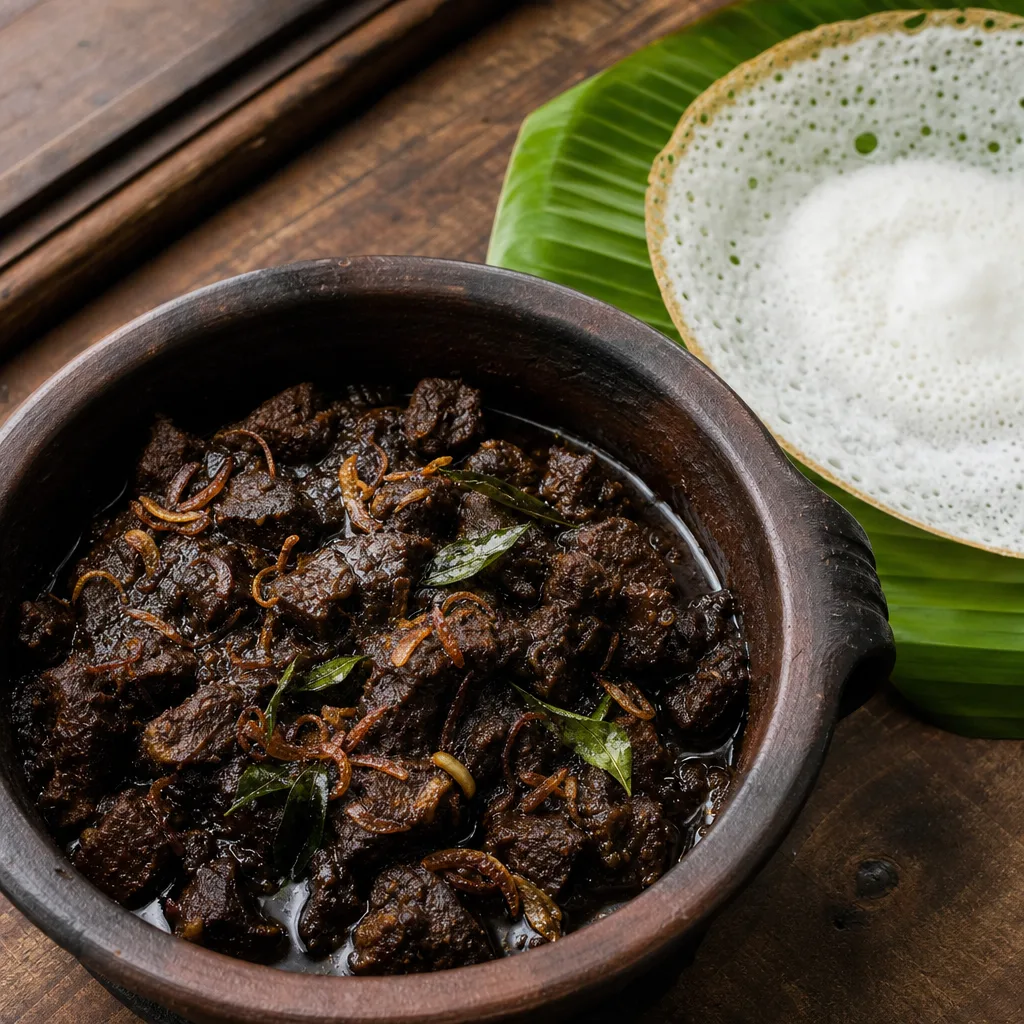
This is the beef curry that sits at the centre of a Nasrani Sunday table in Central Travancore. It is made in nearly every Syrian Christian household in Kottayam, Ernakulam, and Thiruvalla, and the basic logic, beef cooked in its own steam with freshly ground spices and finished in coconut oil with plenty of shallots and curry leaves, is consistent even where the ratios shift. It is not a thin stew. The gravy is dark, deeply spiced, and coats the meat.
Households differ on two things: whether to add coconut pieces (thenga kothu) and whether to use a pressure cooker or a traditional manchatti (clay pot). The clay pot version takes longer but the flavour is different; the meat stays firmer and the oil separates more cleanly at the end. Both are genuine. Vinegar is common in some Kottayam households as a souring note in place of nothing else; many households use none at all and simply rely on the natural acidity of the shallots.
It is eaten at breakfast with appam or idiyappam, and again at lunch and dinner with matta rice. Leftover curry, reheated the next morning when the spices have had time to settle into the fat, is considered better than the freshly made version by most Nasrani cooks.
Ingredients (serves 4)
For the beef
Whole spices (added at the beginning)
Ground spices
For finishing
Method
Marinate the beef
Put the beef pieces in a heavy pot or manchatti. Add the coriander powder, black pepper, Kashmiri chilli powder, hot chilli powder, turmeric, and fennel powder directly onto the meat. Add the ginger, garlic, green chillies, and 120 g of the sliced shallots. Add the whole cinnamon, cloves, and cardamom. Season with salt and mix everything together well with your hands so each piece of beef is coated. Set aside for 15 minutes at room temperature while you gather the rest of your ingredients. Do not skip this resting step; even 15 minutes helps the salt begin drawing moisture from the meat, which becomes the initial cooking liquid.
Cook the beef in its own steam
Add 3 tablespoons of the coconut oil to the pot. Place the pot on medium-low heat with the lid on. The shallots and meat will begin to release liquid within 5 minutes; you will hear it begin to bubble. Do not add any water. Cook on medium-low heat for 30 to 35 minutes, lifting the lid every 10 minutes to stir and make sure nothing is catching at the bottom. If the pot looks very dry before the meat is tender, add no more than 3 to 4 tablespoons of warm water. The beef is ready when it is completely tender and a piece yields easily to a fork but has not fallen apart.
Reduce the gravy
Once the meat is tender, remove the lid and raise the heat to medium. Let the remaining liquid reduce until the gravy is thick and dark and clings to the meat. This takes 8 to 12 minutes. Stir occasionally so the spices do not scorch. The oil will begin to separate and rise to the surface when the gravy has reduced sufficiently. This separation is correct; it tells you the moisture has cooked off and the spices have properly fried in the oil.
Fry down the shallots and curry leaves separately
In a small frying pan, heat the remaining 2 tablespoons of coconut oil over medium heat. Add the 80 g of sliced shallots and fry them, stirring often, until they are deep golden brown and beginning to crisp at the edges. This takes about 8 to 10 minutes on medium heat; do not rush it over high heat or they will burn on the outside while staying raw inside. Add the remaining curry leaves in the last minute of frying. The leaves will splutter and crisp.
Finish and rest
Pour the fried shallots, crisped curry leaves, and all the oil from the frying pan over the beef curry. Stir once to combine. Taste for salt. Let the curry rest off the heat for at least 10 minutes before serving. This resting time matters; it allows the crisp shallots to soften slightly into the gravy and the spices to settle. The curry served straight from the heat is sharper and less integrated than the curry served after it has rested.
How to serve
Appam or idiyappam at breakfast; matta rice at lunch or dinner. Many households also serve it alongside small amounts of pickle (uppilittath) and a dry vegetable thoran.
Served with: Appam or idiyappam at breakfast; matta rice at lunch or dinner. Many households also serve it alongside small amounts of pickle (uppilittath) and a dry vegetable thoran.
Cook's tips
Pressure cooker shortcut
Many households now use a pressure cooker for steps 1 and 2. Combine all the marinated beef with the oil in the cooker, cook on medium heat for 3 to 4 whistles, then open and reduce the gravy on open flame as described in step 3. The result is slightly less firm in texture but perfectly acceptable and very common in everyday cooking.
The bone question
A portion of bone-in cuts (knuckle or marrow bones) cooked alongside the boneless meat gives the gravy a gelatinous body it will not otherwise have. If you use only boneless shank, the gravy is thinner. This is worth doing on days you have the cuts available.
Black pepper is the dominant spice here
This is not a red chilli curry. The Nasrani tradition reaches for black pepper as the primary heat source in beef dishes. If you reduce the black pepper to avoid heat, you change the character of the dish fundamentally. Reduce the hot chilli powder instead if needed.
Coconut pieces
Some Central Travancore households fry small pieces of fresh coconut (thenga kothu, roughly 1 cm cubes) in coconut oil until lightly browned and add them in the final step alongside the shallots. This is a regional household variation, not universal, but completely traditional where it is practised.
Storage
This curry keeps for 2 days at room temperature in most Kerala climates (covered, in a cool part of the kitchen) and up to 5 days refrigerated. Reheat gently; the fat will have solidified and will liquefy as it warms. The flavour deepens considerably by day two.
Regional variations
Mappila beef curry (Malabar) uses fennel, star anise, and Malabar-specific masala; Kodava pandi curry uses pandi (pork) but a structurally similar technique applied to beef exists in Coorg communities; Syrian Christian Thiruvithamkoor households sometimes finish with a coconut paste that Ernakulam households skip.
Glossary
- Chuvannulli ചുവന്നുള്ളി
- Small red shallots native to Kerala; sharper and more pungent than large onions, used throughout Keralite cooking.
- Manchatti മൺചട്ടി
- Traditional Kerala clay cooking pot; retains and distributes heat gently; prized for slow-cooked dishes.
- Karugapatta കറുവപ്പട്ട
- True cinnamon (Cinnamomum verum); grown in Kerala; thinner and more fragrant than cassia.
- Grambu ഗ്രാമ്പൂ
- Cloves; a key whole spice in Nasrani meat cookery.
- Elakka ഏലക്ക
- Green cardamom; used whole in this curry for fragrance.
- Perinjeerakam പെരുംജീരകം
- Fennel seeds; used in small quantities in Nasrani cooking, in larger quantities in Mappila cooking.
- Thenga kothu തേങ്ങാക്കൊത്ത്
- Small cubes of fresh coconut flesh; fried and added to certain meat curries for texture.
- Irachi ഇറച്ചി
- Meat; in everyday Kerala usage it most commonly refers to beef in Christian households.
Two things decide this curry. The first is patience during the reduction: the gravy must cook down until the oil separates and the spices fry rather than merely simmer, and pulling it off the heat too early leaves a watery, undercooked-tasting result. The second is the finishing step: the separately fried golden shallots and crisped curry leaves stirred in at the end are not garnish, they are part of the texture and aroma of the finished dish, and skipping them produces a noticeably flatter curry.
More Non-Vegetarian recipes
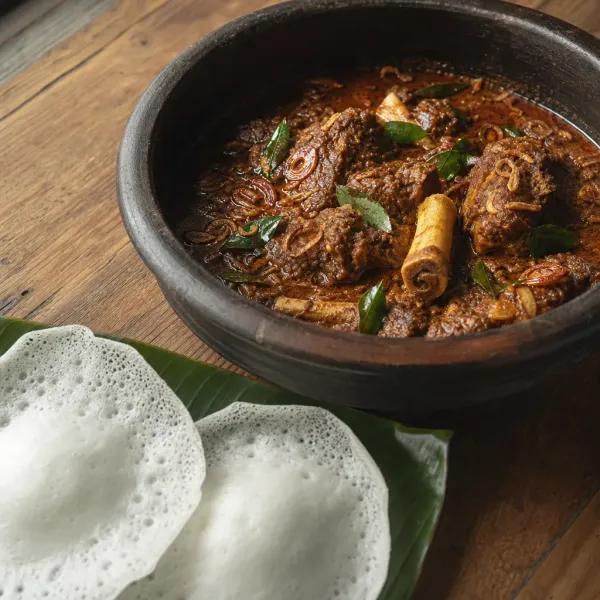
Kerala Nasrani Mutton Curry
Traditional Syrian Christian mutton curry from central Kerala, built on roasted spices and slow-fried shallots. Served with appam or matta rice.
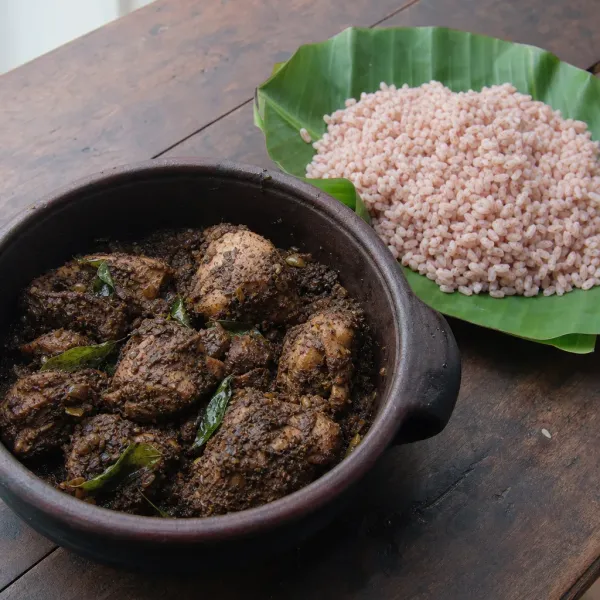
Kurumulaku Kozhi (Kerala Pepper Chicken)
Traditional Kerala Nasrani pepper chicken cooked with freshly cracked black pepper, shallots, curry leaves and coconut oil. A semi-dry Travancore Syr…
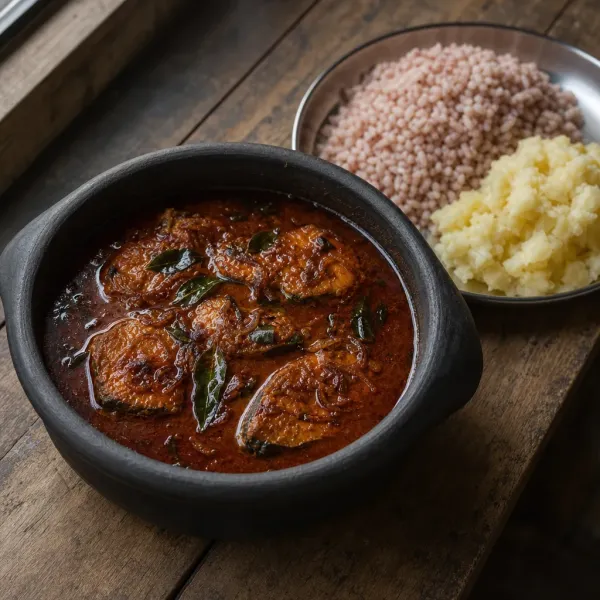
Kerala Meen Curry with Kudampuli
Traditional Kerala fish curry from Travancore, cooked in a clay pot with kudampuli, shallots and coconut oil. No coconut milk, no shortcuts.
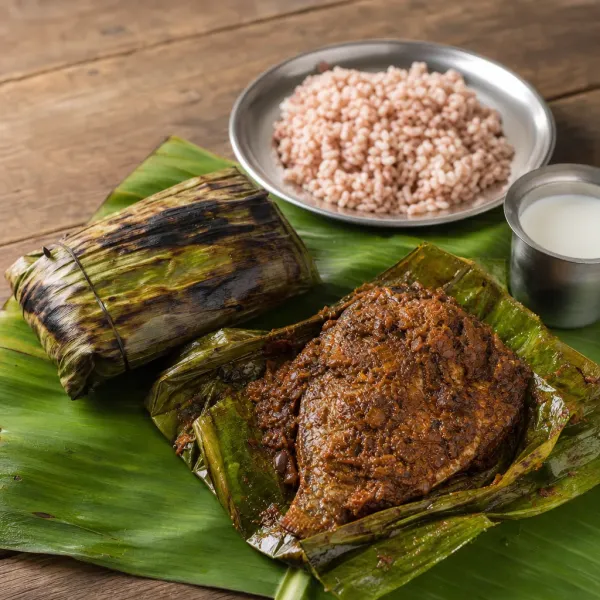
Karimeen Pollichathu
Traditional Nasrani karimeen pollichathu from central Travancore: pearl spot fish coated in a shallot-coconut oil masala, wrapped in banana leaf and…
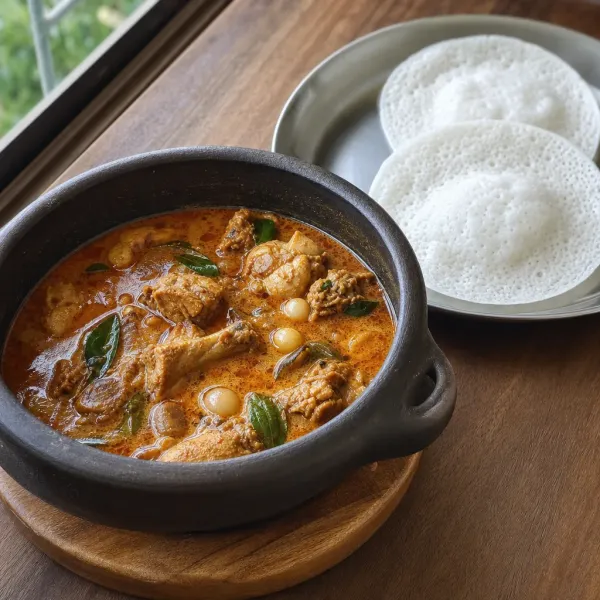
Nadan Kozhi Curry
Traditional Kerala Nasrani chicken curry with fresh-ground spices, pearl shallots, and two-press coconut milk. Served with appam or matta rice.
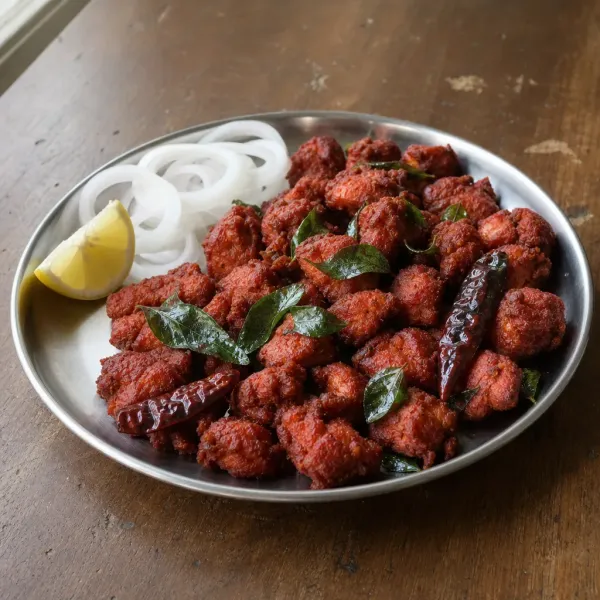
Chicken 65
The original Chennai-style Chicken 65: double-fried boneless chicken in Kashmiri chilli and gingelly oil. Dry, crisp, no sauce. Traditional household…