

Aatu Kaal Paya Recipe
Malayalam ആട്ടുകാൽ പായTamil ஆட்டுக்கால் பாயாKannada ಆಡಿನ ಕಾಲು ಪಾಯTelugu మేక కాళ్ళ పాయ
- Prep30 min
- Cook3 hr
- Serves4
- DifficultyHard
- DietNon-vegetarian
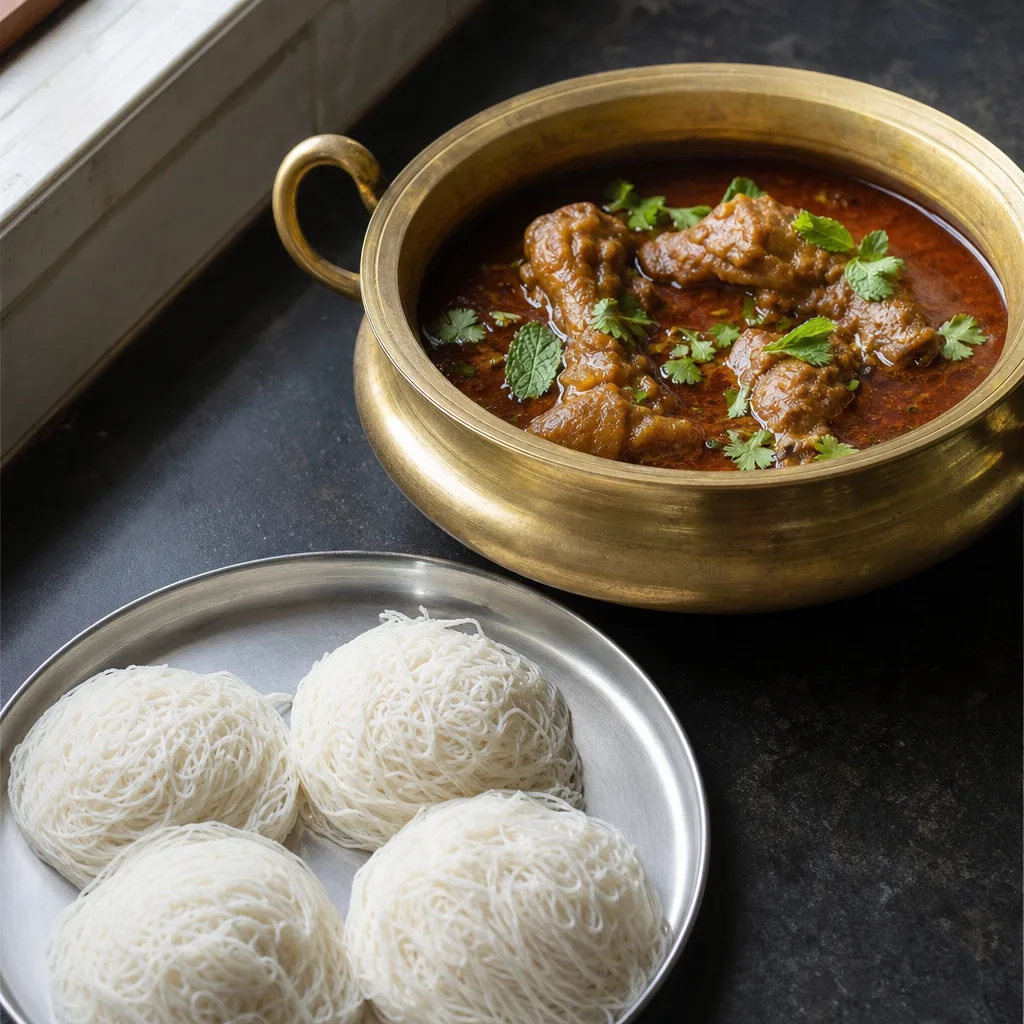
Paya is a long-cooked trotter stew eaten at breakfast, most often on Fridays and on the morning after a wedding. The trotters are cleaned, split and boiled for a long time until the collagen dissolves into the broth and the meat at the joint loosens completely. No shortcut produces the same body in the gravy.
In Tamil Muslim households the stew is built on a base of shallots, ginger and garlic cooked down in oil until deeply soft, then whole spices and ground masala go in before the pre-boiled trotters are added and the whole thing simmers together for another hour. The gravy is thin but not watery; it coats a spoon lightly because of the gelatin from the bones, not from any thickener.
It is eaten with idiyappam, the rice noodle cakes soaking up the broth. Some households add a small amount of coconut milk at the very end to soften the heat; others leave it purely spiced and dark. The recipe here is without coconut milk, which is the more common Tamil Muslim household version.
Ingredients (serves 4)
For cleaning and first boil
Whole spices
Aromatics
Ground masala
Fat and finishing
Method
Clean the trotters
Singe any remaining hair off the trotters directly over a gas flame, turning with tongs. Scrape the skin with a knife under running water. Rinse four or five times until the water runs clear. If the butcher has not split them, ask him to; trying to split trotters at home is dangerous and unnecessary.
First boil to remove scum
Put the trotters in a large pot with 2 litres of water, ½ tsp turmeric and salt. Bring to a hard boil. A grey-brown scum will rise within the first 5 minutes. Skim it off completely with a ladle. Reduce to a steady simmer and cook uncovered for 45 minutes. The trotters should be partially tender but not falling apart yet. Drain and set aside; discard this cooking water or keep it if it is clean and scum-free after skimming.
Fry the whole spices
Heat the gingelly oil in a heavy-bottomed pot or a pressure cooker base over medium heat. Add the cinnamon, cardamom, cloves, peppercorns, star anise, bay leaves and kalpasi. Let them sizzle for 30 to 40 seconds until fragrant. The oil will smell warm and resinous; do not let the spices darken past light brown or the gravy will be bitter.
Cook the shallots low and slow
Add all the sliced shallots at once. Reduce the heat to medium-low. Cook, stirring often, for 15 to 20 minutes until the shallots are deep golden and beginning to catch at the edges. This step cannot be rushed; undercooked shallots leave a raw sweetness in the gravy that never cooks out later.
Add ginger, garlic and tomato
Add the crushed garlic and ginger paste. Stir and fry for 4 to 5 minutes until the raw smell is completely gone. Add the chopped tomatoes and cook on medium heat, mashing them as they soften, for another 8 minutes until the oil begins to separate at the edges of the masala.
Add the ground masala
Lower the heat. Add the coriander powder, both chilli powders, turmeric, black pepper powder and fennel powder. Stir constantly for 2 minutes. Add a splash of water (about 3 tbsp) if the masala sticks. You are looking for the oil to pool around the edges again before you move to the next step; that tells you the raw spice smell has cooked out.
Add the trotters and braise
Add the par-boiled trotters to the masala and turn them to coat well. Add 600 ml of water. Stir, scraping any masala from the base of the pot. If using a regular pot, cover and cook on a low simmer for 1½ to 2 hours, checking every 20 minutes and adding water in small amounts to keep the gravy from drying out. If using a pressure cooker, cook on high pressure for 25 to 30 minutes, then release naturally.
Check the trotters
The trotters are ready when the meat at the joint pulls away easily with a spoon and the skin is completely soft and gelatinous. The broth should be a dark reddish-brown and coat a spoon lightly. If it is too thin, simmer uncovered for 10 to 15 minutes. If it is too thick, add a little hot water and stir.
Finish and rest
Taste and adjust salt. Add the torn coriander and mint leaves, stir once, and turn off the heat. Cover and let the paya rest for at least 10 minutes before serving. The flavour deepens noticeably as it sits.
How to serve
Idiyappam (steamed rice noodle cakes). Some households also serve it with parotta or plain rice at lunch.
Served with: Idiyappam (steamed rice noodle cakes). Some households also serve it with parotta or plain rice at lunch.
Cook's tips
Pressure cooker reality
Most households today use a pressure cooker for the long braise. After the masala is built in step 6, add the trotters and 600 ml water, close the lid and cook on high pressure for 25 to 30 minutes, then allow natural pressure release. The texture is very close to the slow-cooked version. The first boil (step 2) still matters even with a pressure cooker; skip it and you will have a greasy, scummy gravy.
Kalpasi is not optional here
Stone flower (kalpasi) is what gives Tamil Muslim paya its particular earthy depth. It is available in any Tamil grocery. Rinse it well before use as it can carry grit. If you genuinely cannot find it, leave it out rather than substituting something else.
Gingelly oil matters
Use cold-pressed gingelly oil, not refined sesame oil. The flavour is different. If you cannot find it, use a neutral oil, but the characteristic background warmth of the dish will be missing.
The gravy sets overnight
Paya made the previous evening and reheated the next morning is noticeably better. The gelatin from the bones sets the gravy into a soft jelly overnight; when reheated it loosens into a silky broth. This is why it is traditionally made the night before a morning feast.
Sourcing the trotters
Ask your butcher specifically for goat trotters split lengthwise and chopped into pieces. Whole unsplit trotters take much longer to cook and are difficult to eat. The split pieces also release more collagen into the broth.
Regional variations
Mappila (Malabar Muslim) paya uses more coconut milk and ground coconut paste and is finished with coconut oil; Ambur-style paya is drier and more intensely spiced; some Hyderabadi households make a similar dish called nahari with a different spice set.
Glossary
- Kalpasi கல்பாசி
- Stone flower, a dried lichen (Parmotrema perlatum) used as a spice in Tamil Muslim and Chettinad cooking; earthy and faintly smoky.
- Sombu சோம்பு
- Fennel seed; used ground in Tamil Muslim meat gravies to balance heat.
- Aatu kaal ஆட்டுக்கால்
- Goat trotter; literally 'goat leg', referring to the foot and lower leg.
- Paya பாயா
- Trotter stew; the word is shared across South Asian Muslim cooking traditions from the Urdu/Persian paya meaning 'foot'.
- Chinna vengayam சின்ன வெங்காயம்
- Small shallots; literally 'small onion'; the standard allium in Tamil cooking, not the large onion.
- Pattai பட்டை
- Cinnamon bark; used whole in Tamil spice-forward gravies.
Two things decide this dish: the patience to skim the first boil properly so the broth stays clean, and the time given to the shallot base, which must be deeply golden before anything else goes in. Both steps are slow and neither can be compensated for later.
More Mutton, Beef & Pork recipes
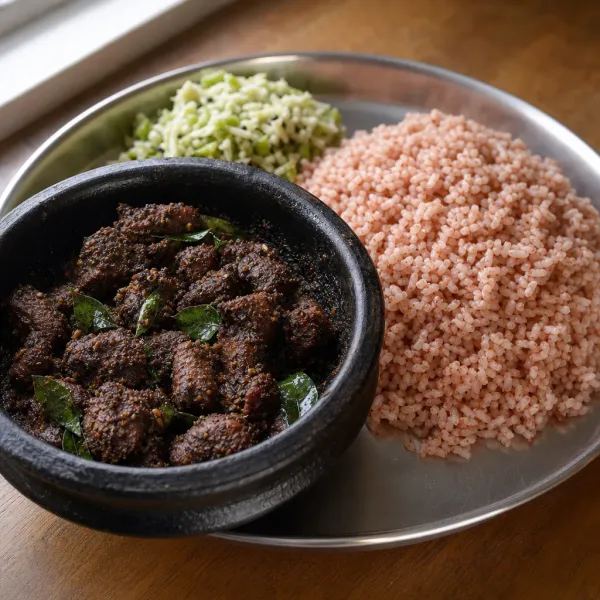
Kerala Nasrani Beef Pepper Fry
Traditional Syrian Christian beef pepper fry from Travancore: pressure-cooked, reduced dry, then fried hard in coconut oil with shallots and cracked…
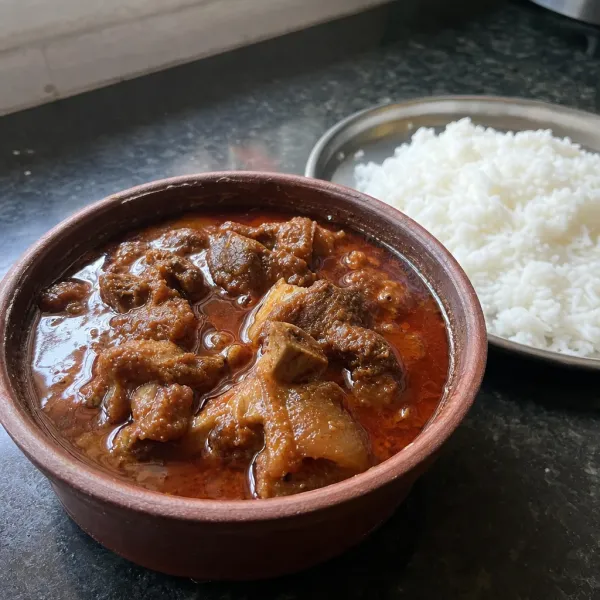
Pork Bafat
Traditional Mangalorean Catholic pork bafat made with bone-in pork and homemade bafat powder. Slow-cooked, brick-red, and deeply spiced.
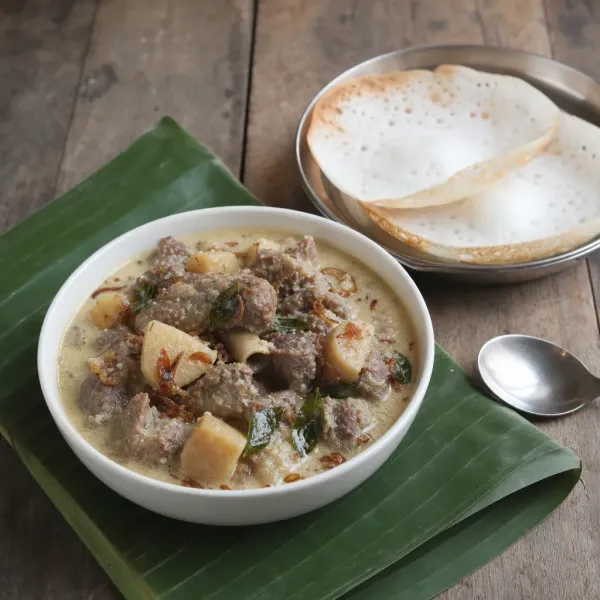
Kerala Mutton Stew
Traditional Nasrani mutton stew from Travancore: bone-in mutton, shallots, whole spices and fresh coconut milk. Served with appam. Step-by-step metho…
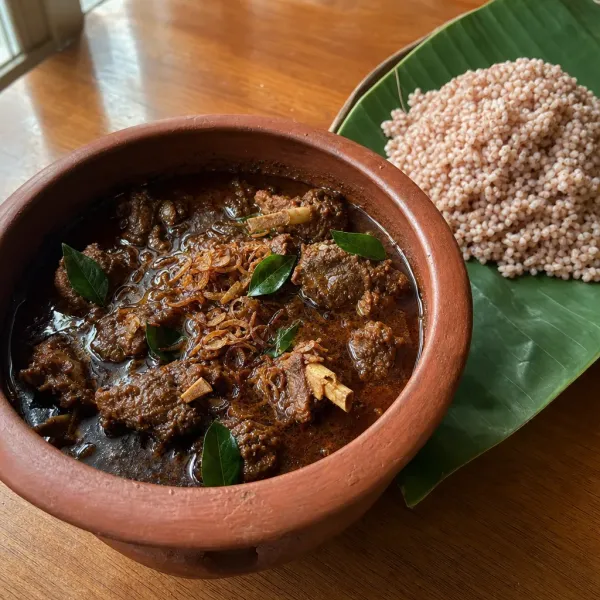
Mutton Varutharacha Curry
Traditional Kerala Nasrani mutton curry with deep-roasted coconut paste, kudampuli and coconut oil. Step-by-step household method from Travancore.
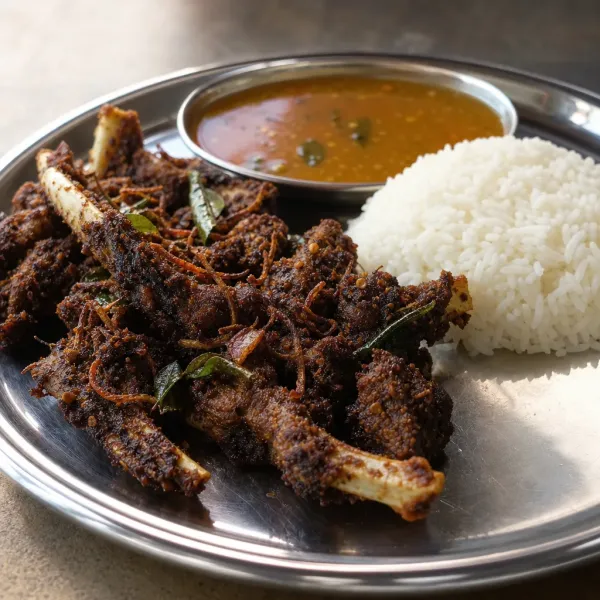
Mutton Chops Fry
Traditional Chettinad mutton chops fry with freshly ground kalpasi masala, fried in gingelly oil with shallots until dry and deeply spiced.
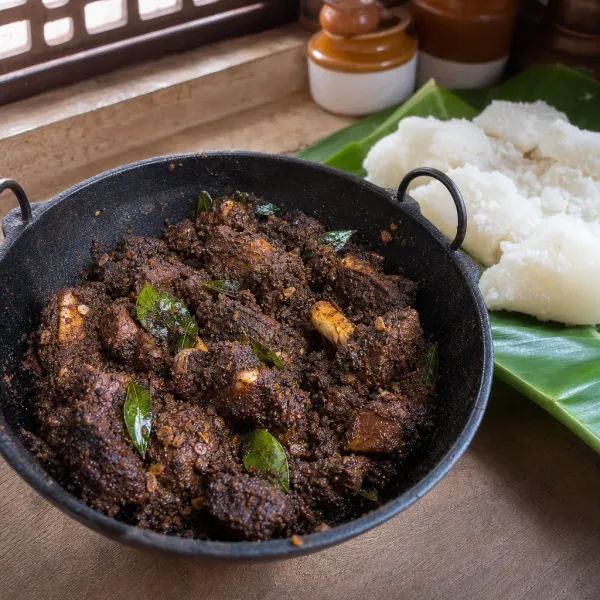
Kerala Beef Roast (Nadan Beef Roast)
Authentic Kerala Nasrani beef roast with thick dark masala, cooked the traditional way with shallots, coconut oil and curry leaves. Step-by-step hous…