

Mutton Chops Fry Recipe
Malayalam മട്ടൺ ചോപ്സ് ഫ്രൈTamil மட்டன் சாப்ஸ் ஃப்ரைKannada ಮಟನ್ ಚಾಪ್ಸ್ ಫ್ರೈTelugu మటన్ చాప్స్ ఫ్రై
- Prep30 min
- Cook55 min
- Serves4
- DifficultyMedium
- DietNon-vegetarian
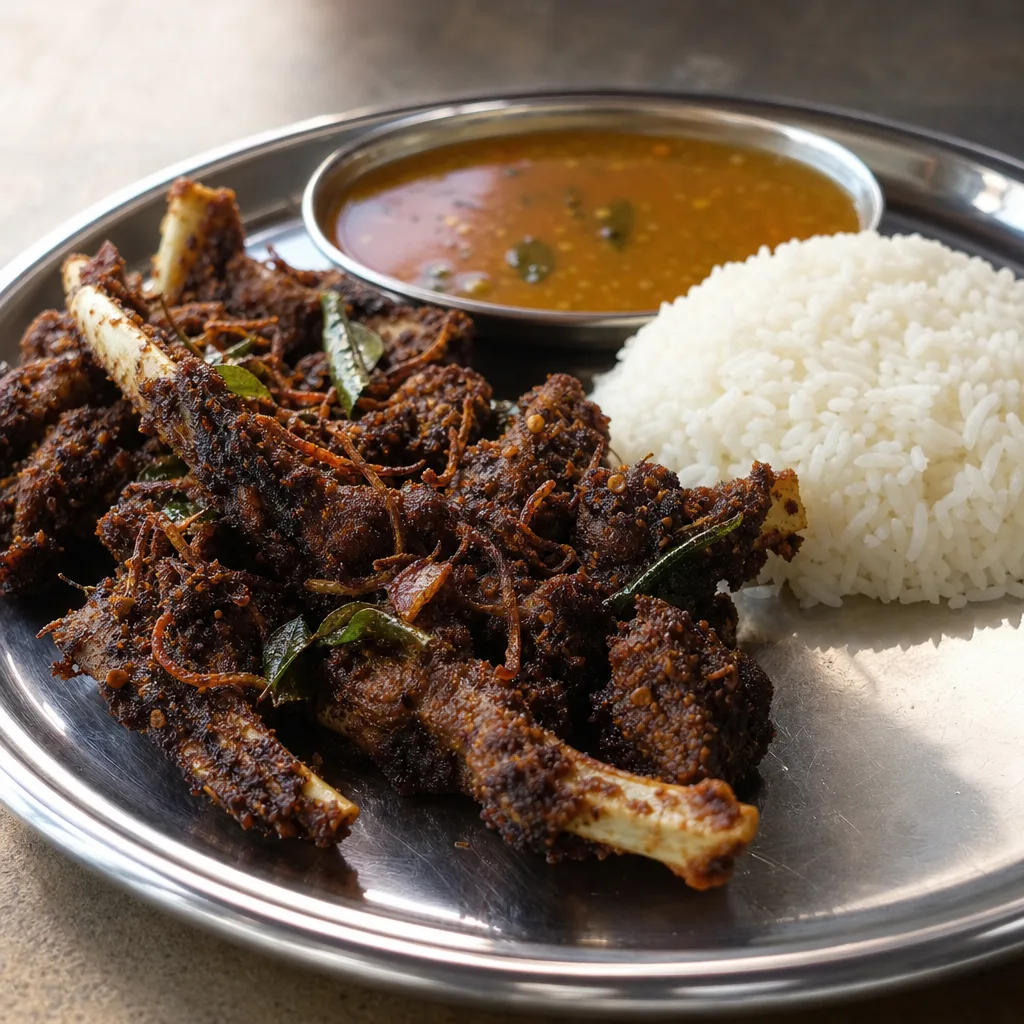
In Chettinad kitchens, mutton chops are pressure-cooked until just tender, then fried in gingelly oil with a freshly ground masala until the coating is dry and deeply fragrant. The dish is not saucy. By the time it is done, the spice paste has clung to every piece and the oil has come back to the surface of the pan. That is when it is ready.
The masala here is what separates this from generic mutton fry. Kalpasi, marathi mokku, and star anise are ground fresh with peppercorns and fennel. Chettinad cooks do not use garam masala from a tin. The shallots are small and South Indian, fried until they colour properly, which takes patience.
This is eaten at midday with plain boiled rice, or wrapped inside a soft parotta at dinner. Households differ on the amount of pepper — some go heavy, some balance it with more fennel — but the dry, clinging finish is consistent.
Ingredients (serves 4)
Mutton
For the fresh masala (to grind)
For cooking
Method
Grind the masala
Dry-roast the coriander seeds, peppercorns, fennel, cumin, kalpasi, marathi mokku, and star anise in a small pan over low heat for about 2 minutes, stirring constantly, until they smell toasted but have not darkened. Cool completely. Grind them with the dried red chillies, ginger, and garlic, adding 3 to 4 tablespoons of water to get a smooth, thick paste. Set aside.
Marinate the chops
Put the mutton chops in a bowl. Add half the ground masala paste, the turmeric, and salt. Mix well so every piece is coated. Leave to marinate for at least 20 minutes at room temperature while you prepare the rest. If your kitchen is very warm, 15 minutes is enough.
Pressure-cook the chops
Transfer the marinated chops and all the marinade into a pressure cooker. Add 250 ml water. Cook on medium heat for 4 whistles, then lower the heat and cook for another 5 minutes. Let the pressure release naturally. Open the cooker: the meat should be cooked through but not falling off the bone. If there is excess liquid in the cooker, pour it off and reserve it.
Fry the shallots
Heat the gingelly oil in a wide, heavy pan — a kadai works well — over medium heat. Add the shallots and fry, stirring often, for 10 to 12 minutes until they are golden brown all over. Do not rush this step; pale shallots will make the finished dish taste raw and sweet rather than deep and savoury.
Add curry leaves and remaining masala
Add the curry leaves to the pan and let them splutter for 30 seconds. Add the remaining half of the ground masala paste. Fry on medium heat, stirring continuously, for 4 to 5 minutes until the raw smell is gone and the oil begins to separate at the edges of the masala.
Add the cooked chops
Add the pressure-cooked chops to the pan. Stir to coat each piece in the fried masala. If the pan looks very dry, add 2 to 3 tablespoons of the reserved cooking liquid. Stir and fry on medium-high heat for 8 to 10 minutes, turning the chops regularly so they colour on multiple sides.
Dry-fry to finish
Reduce the heat to medium-low and continue frying, stirring every minute or so, for another 8 to 10 minutes. The masala should cling tightly to the meat, the surface of each chop should look dry and slightly darkened at the edges, and the oil should have returned to the surface of the pan. That is the sign the fry is done. Taste and adjust salt.
How to serve
Plain boiled rice (raw rice or seeraga samba) with a simple rasam or kuzhambu on the side; or with soft layered parotta for an evening meal.
Served with: Plain boiled rice (raw rice or seeraga samba) with a simple rasam or kuzhambu on the side; or with soft layered parotta for an evening meal.
Cook's tips
Kalpasi and marathi mokku
These two spices are non-negotiable in Chettinad cooking. They are available at shops that stock Chettinad masala items and at most large South Indian grocery stores. If you cannot find them, the dish will still be good but it will not taste Chettinad.
Gingelly oil
Use cold-pressed untoasted gingelly oil, not the dark toasted sesame oil used in Chinese cooking. The flavour is milder and suits the long frying time. Coconut oil will change the character of the dish noticeably.
Chops cut
Ask your butcher for individual rib chops. Chops that are too thick will not dry-fry evenly; the coating scorches before the interior heats through. About 2 cm thickness is right.
Reserved cooking liquid
Keep the pressure-cooker liquid close by when frying. It carries flavour from the marinade and prevents the masala from scorching if the pan gets too dry. Add it one tablespoon at a time, not all at once.
Reheating
This dish reheats very well in a dry pan over low heat. The second-day version is often better because the spices have settled into the meat overnight.
Regional variations
Mappila-style mutton chops fry uses coconut oil and fennel-heavy masala with kudampuli; Andhra versions add dried red chillies and curry leaves in a mustard-tempered finish.
Glossary
- Kalpasi கல்பாசி
- Stone flower or rock lichen, a dried fungus used as a spice in Chettinad cooking; earthy and faintly smoky.
- Marathi mokku மராத்தி மொக்கு
- Dried flower pod of Randia dumetorum; adds a faint astringency and depth to Chettinad masalas.
- Sombu சோம்பு
- Fennel seeds; used heavily in Chettinad cooking to balance heat and add sweetness.
- Gingelly oil நல்லெண்ணெய்
- Cold-pressed untoasted sesame oil; the cooking fat of Tamil Nadu, used in kuzhambu, pickles, and meat fries.
- Chinna vengayam சின்ன வெங்காயம்
- Small South Indian shallots; sweeter and more pungent than large onions, essential to Chettinad cooking.
Two things decide whether this dish works: the freshness of the ground masala and the patience at the frying stage. A paste ground from whole spices that have just been dry-roasted will smell entirely different from pre-ground powder. And the long, slow dry-fry at the end is not optional — it is where the flavour concentrates and the coating sets. Pull the pan off too early and you have a wet, half-cooked masala on the outside of the meat. Stay with it until the oil surfaces and the chops look almost lacquered, and the dish will be exactly what it should be.
More Mutton, Beef & Pork recipes
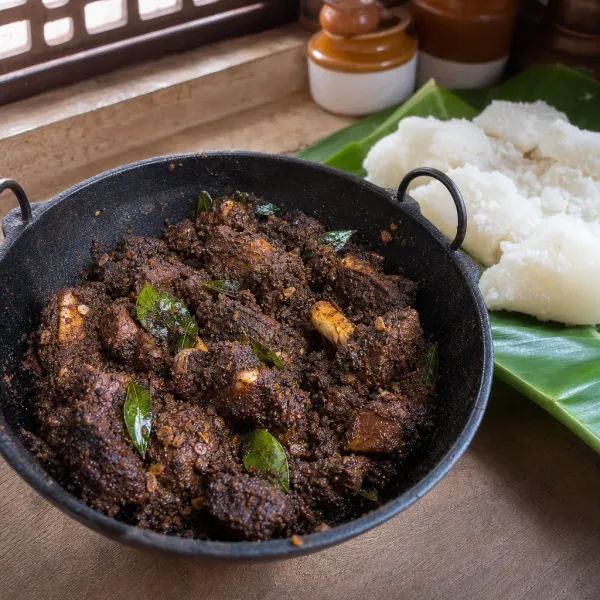
Kerala Beef Roast (Nadan Beef Roast)
Authentic Kerala Nasrani beef roast with thick dark masala, cooked the traditional way with shallots, coconut oil and curry leaves. Step-by-step hous…
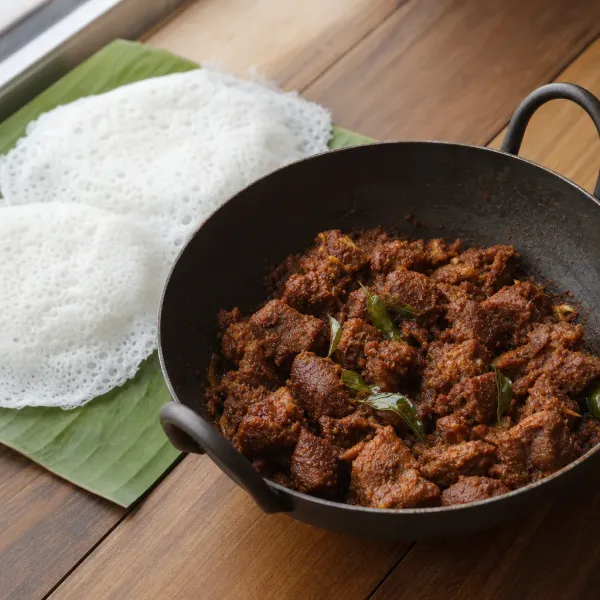
Mangalorean Mutton Ghee Roast
Traditional Konkani Catholic mutton ghee roast from Mangalore, made with Byadagi chillies, tamarind, and pure ghee. Step-by-step home recipe.
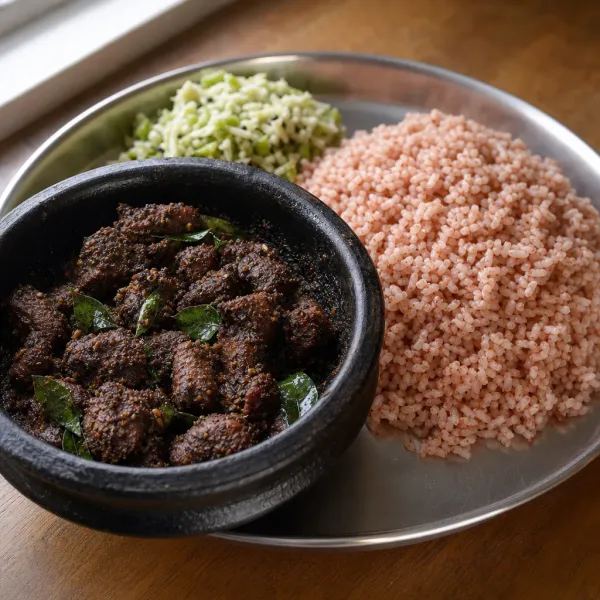
Kerala Nasrani Beef Pepper Fry
Traditional Syrian Christian beef pepper fry from Travancore: pressure-cooked, reduced dry, then fried hard in coconut oil with shallots and cracked…
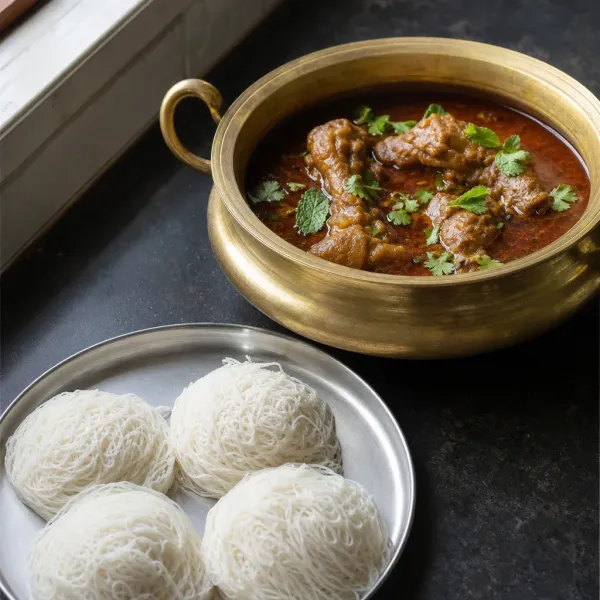
Aatu Kaal Paya
Traditional Tamil Muslim goat trotter stew slow-cooked with shallots, whole spices and kalpasi. Served with idiyappam for a classic breakfast.
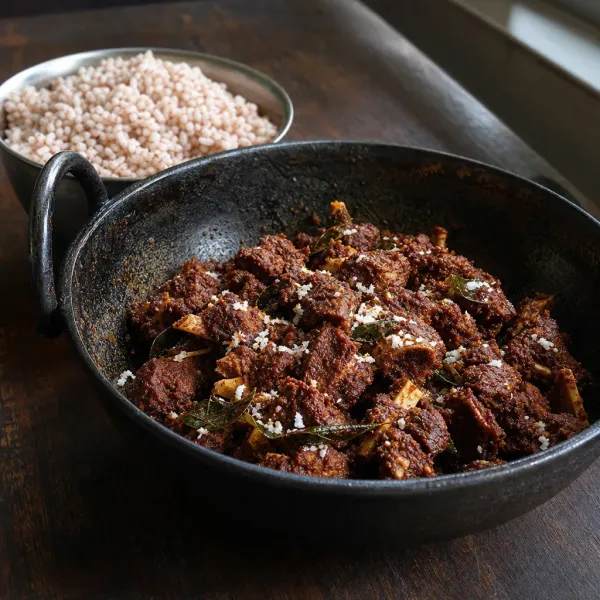
Mangalorean Mutton Sukka
Traditional Mangalorean mutton sukka from the Konkani Catholic kitchen: bone-in mutton slow-cooked with freshly roasted Byadgi chilli masala and grat…
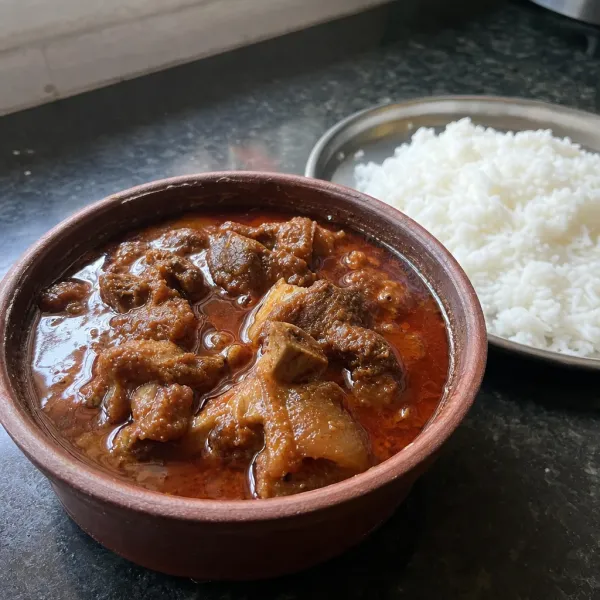
Pork Bafat
Traditional Mangalorean Catholic pork bafat made with bone-in pork and homemade bafat powder. Slow-cooked, brick-red, and deeply spiced.