

Mangalorean Mutton Ghee Roast Recipe
Malayalam മട്ടൺ ഘി റോസ്റ്റ്Tamil மட்டன் நெய் ரோஸ்ட்Kannada ಮಟನ್ ತುಪ್ಪ ರೋಸ್ಟ್Telugu మటన్ నెయ్యి రోస్ట్
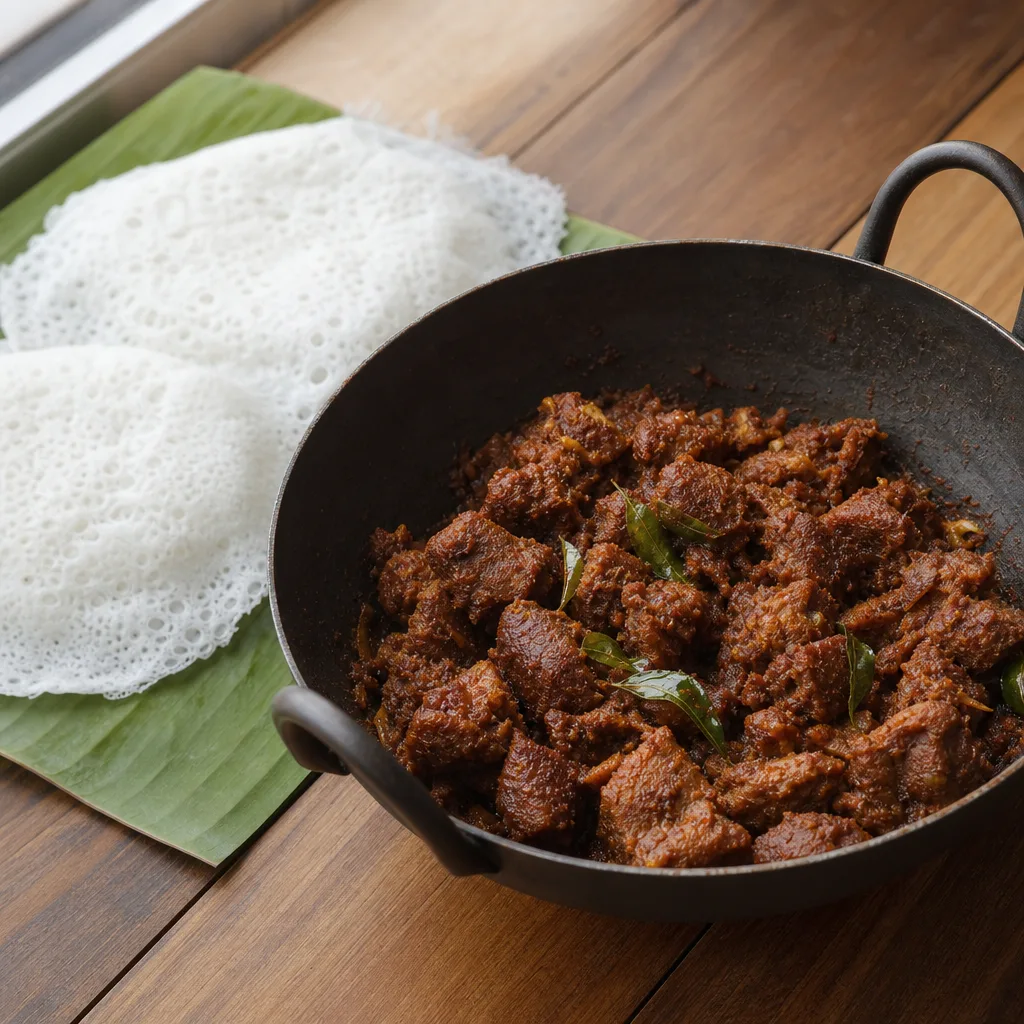
- Prep25 min
- Cook55 min
- Serves4
- DifficultyMedium
- DietNon-vegetarian
Ghee roast comes from the Tulu Nadu coast, the stretch of Karnataka that runs from Udupi down to Mangalore and a little beyond. The dish is not a roast in the oven sense. The meat is cooked until the masala is almost completely dry, then turned continuously in hot ghee until every piece is coated in a dark, fragrant paste that clings rather than runs. The colour comes from Byadagi chillies, which are grown in northern Karnataka and give a deep brick-red without the scorching heat of other varieties.
In Konkani Catholic homes this is made on Sundays or for guests, never as a weekday dish. The masala is always ground fresh on a stone or in a wet grinder. The tamarind is soaked and the pulp extracted by hand. The ghee is real, home-clarified if possible. These are not optional details; they are what the dish is.
It is eaten with neer dosa, which is made right alongside it, or with sanna, the soft fermented rice and coconut cakes that are the other great accompaniment from this coast. Some households serve it with plain boiled rice when it is a lunch dish. The masala left in the pan is scraped up and eaten; nothing is wasted.
Ingredients (serves 4)
For the meat
For the ghee roast masala
For cooking
Method
Dry-roast the whole spices
Set a heavy iron or thick-bottomed pan over medium-low heat. Add the Byadagi chillies, coriander seeds, cumin, black pepper, cloves, cardamom, cinnamon, fennel, and fenugreek together. Roast, stirring constantly, for 3 to 4 minutes until the coriander seeds darken slightly and the chillies puff a little. The kitchen will smell toasty, not sharp. Tip everything onto a plate immediately and let it cool completely. Do not let the fenugreek go dark brown or the finished dish will be bitter.
Grind the masala
Put the cooled roasted spices into a wet grinder or heavy stone grinder. Add the garlic, ginger, and the extracted tamarind pulp. Grind to a very smooth, thick paste, adding only as much water as needed to keep the grinder moving, no more than 3 to 4 tbsp. The paste should be deep brick-red and hold its shape on a spoon. A coarse paste will not coat the meat evenly, so grind patiently.
Cook the mutton until just tender
Place the mutton pieces in a wide heavy pan with the salt and 250 ml water. Cover and cook over medium heat for 30 to 35 minutes, turning once halfway, until the meat is just cooked through and a knife enters without resistance. The meat should not be falling off the bone yet; it will cook further in the masala. Reserve any stock left in the pan.
Fry the shallots in ghee
In a wide, heavy kadai, heat 4 tbsp of the ghee over medium heat. Add the sliced shallots and curry leaves. Fry, stirring often, for 10 to 12 minutes until the shallots are soft, translucent, and beginning to turn a pale gold at the edges. Do not rush this; undercooked shallots leave a raw sweetness that sits awkwardly against the roasted masala.
Add the masala and cook it down
Add the ground masala paste to the shallots and stir well to combine. Cook over medium heat, stirring frequently, for 8 to 10 minutes. The paste will spit at first, then settle. It is ready when the ghee begins to separate and pool at the edges and the raw smell of the chillies has gone, replaced by a deeper, rounded fragrance. If the masala sticks, add a splash of the reserved mutton stock.
Add the mutton and coat it
Add the cooked mutton pieces to the masala. Stir well so every piece is coated. Add any remaining reserved stock, a little at a time, just enough to help the masala cling without making it saucy. Cook over medium heat, turning the pieces every couple of minutes, for 8 to 10 minutes. The liquid should evaporate almost completely.
Roast in the remaining ghee
Add the remaining 2 tbsp of ghee and increase the heat to medium-high. Now keep turning the mutton pieces continuously. This is the roasting stage. The masala will darken, stick to the meat, and the pieces will take on a dry, almost caramelised coat. Do this for 4 to 5 minutes. Watch carefully; the line between roasted and burnt is narrow. The meat should look glossy and dark, not wet, not charred.
Check seasoning and rest
Taste and adjust salt. Take the pan off the heat and let it rest for 5 minutes before serving. The masala continues to cling as it cools slightly. Scrape the pan when you serve; the bits stuck to the bottom are the best part.
How to serve
Neer dosa (white, soft, lacy, cooked on one side only) or sanna (fermented rice and coconut cakes, steamed). Also eaten with plain boiled rice at lunch.
Served with: Neer dosa (white, soft, lacy, cooked on one side only) or sanna (fermented rice and coconut cakes, steamed). Also eaten with plain boiled rice at lunch.
Cook's tips
Byadagi chillies are not optional
The brick-red colour and mild heat of this dish depend on Byadagi chillies specifically. Kashmiri chillies give a different flavour profile and a slightly different colour. Guntur or bird's eye chillies will make the dish far too hot and change its character entirely. Byadagi are available in most South Indian grocery stores and online.
The ghee quantity in context
Six tablespoons sounds like a lot. It is a celebratory dish and the ghee is part of what it is. Restaurant versions use considerably more. Do not substitute oil; the flavour is built on ghee.
Pressure cooker shortcut for the mutton
Many households use a pressure cooker for step 3: cook the mutton with salt and water for 3 whistles on medium heat, then release pressure naturally. The meat is ready in about 20 minutes instead of 35. This is genuinely common and does not affect the final dish.
Storage
It keeps well in the refrigerator for 2 days. Reheat in a pan with a teaspoon of ghee over low heat, not in a microwave, which makes the meat dry and the masala separate.
The fenugreek warning
Fenugreek is in the masala in a small amount for a reason. It adds a faint bitterness that balances the tamarind. Too much, or over-roasted, and the whole dish tastes medicinal. Keep to the quantity given and pull the spices off the heat the moment the coriander darkens.
Regional variations
Bunt household version uses more dried red chillies and a longer dry-roast; restaurant versions (Kundapur style) use a larger quantity of ghee and finish with a higher heat to get a darker, stickier coat; chicken ghee roast follows the same masala.
Glossary
- Byadagi ಬ್ಯಾಡಗಿ
- A variety of dried red chilli grown in Byadagi, Haveri district, Karnataka; prized for its deep colour and moderate heat.
- Ghee roast ತುಪ್ಪ ರೋಸ್ಟ್
- A Mangalorean cooking technique in which meat or prawns are cooked in a spice paste that is then dried and caramelised in clarified butter.
- Sanna ಸಾನ್ನ
- Soft, slightly sweet steamed cakes made from fermented rice and coconut, a staple accompaniment in Konkani Catholic and Bunt households of Mangalore.
- Neer dosa ನೀರ್ ದೋಸೆ
- Literally 'water dosa'; a thin, white, soft rice crepe from coastal Karnataka, made with a very thin batter and cooked on one side only.
- Kadai ಕಡಾಯಿ
- A wide, deep, round-bottomed pan used across South Asian cooking; the shape allows even heat distribution and easy stirring.
Two things decide whether this works: the patience to grind the masala truly smooth, and the discipline to keep stirring in the final roasting stage without letting the heat go too high. Rush the grind and the paste sits on the meat rather than becoming it. Lose attention in the last five minutes and the masala burns instead of caramelising. Get both right and the dish takes care of itself.
More Mutton, Beef & Pork recipes
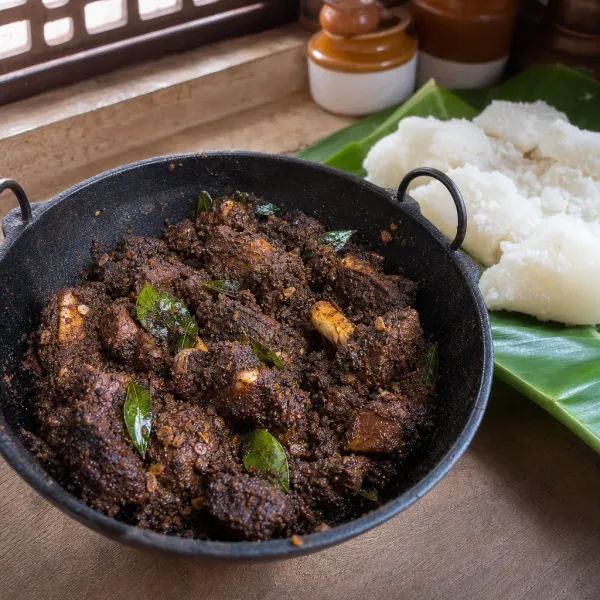
Kerala Beef Roast (Nadan Beef Roast)
Authentic Kerala Nasrani beef roast with thick dark masala, cooked the traditional way with shallots, coconut oil and curry leaves. Step-by-step hous…
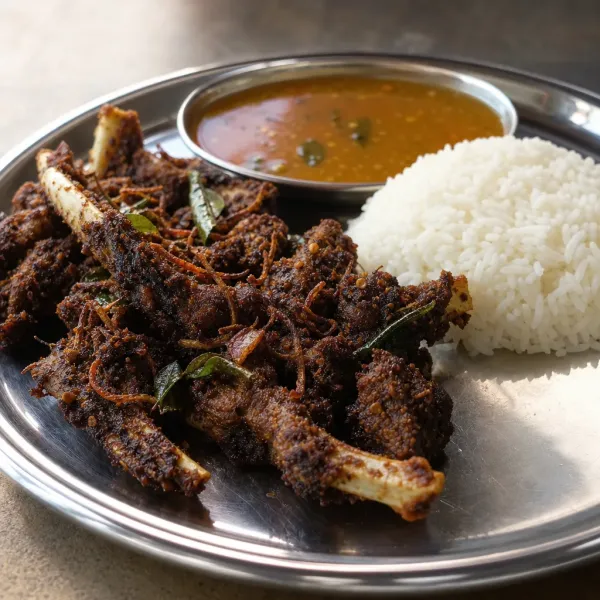
Mutton Chops Fry
Traditional Chettinad mutton chops fry with freshly ground kalpasi masala, fried in gingelly oil with shallots until dry and deeply spiced.
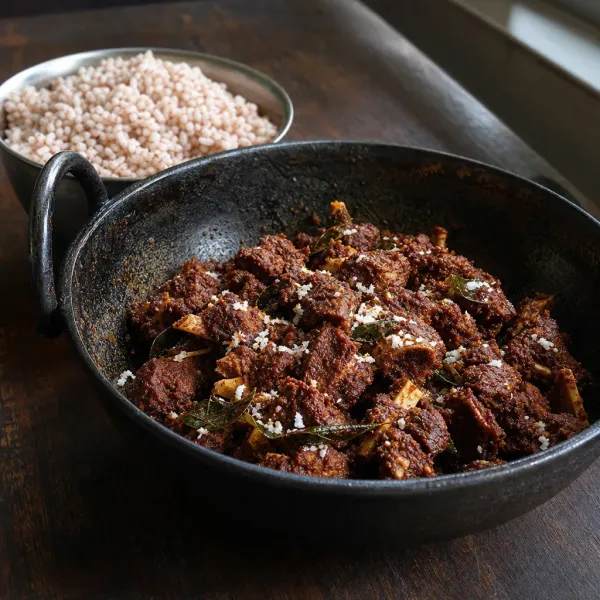
Mangalorean Mutton Sukka
Traditional Mangalorean mutton sukka from the Konkani Catholic kitchen: bone-in mutton slow-cooked with freshly roasted Byadgi chilli masala and grat…
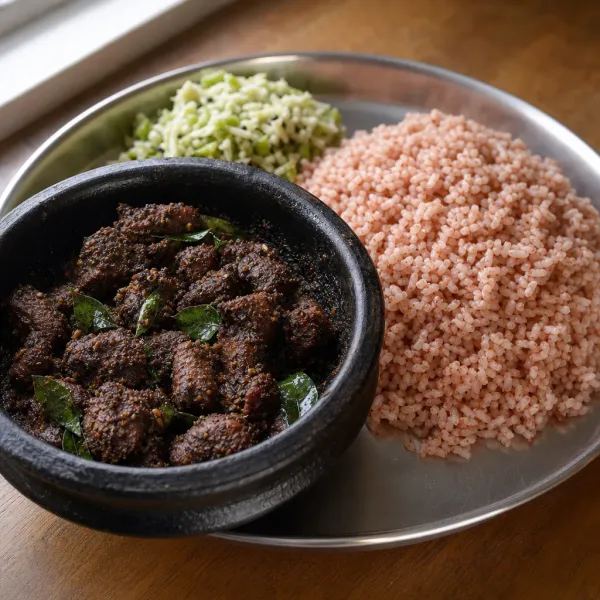
Kerala Nasrani Beef Pepper Fry
Traditional Syrian Christian beef pepper fry from Travancore: pressure-cooked, reduced dry, then fried hard in coconut oil with shallots and cracked…
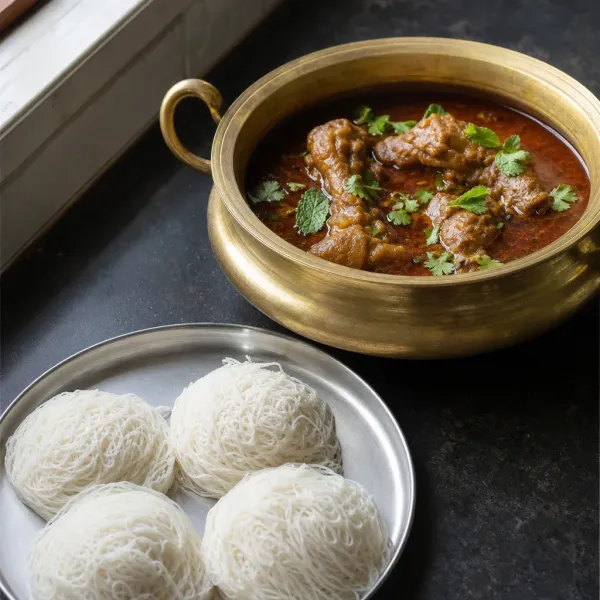
Aatu Kaal Paya
Traditional Tamil Muslim goat trotter stew slow-cooked with shallots, whole spices and kalpasi. Served with idiyappam for a classic breakfast.
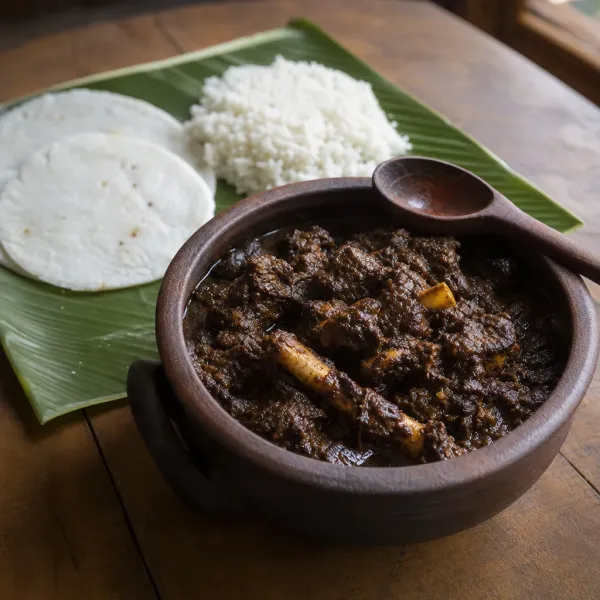
Coorg Pandi Curry
Authentic Kodava pandi curry with freshly roasted Coorg masala and kachampuli. Bone-in pork cooked low and slow the traditional Kodagu way.