

Coorg Pandi Curry Recipe
Malayalam കൂർഗ് പന്തി കറിTamil கூர்க் பன்றி கறிKannada ಕೊಡಗಿನ ಪಂದಿ ಕರಿTelugu కూర్గ్ పంది కర్రీ
- Prep30 min
- Cook1 hr 15 min
- Serves6
- DifficultyMedium
- DietNon-vegetarian
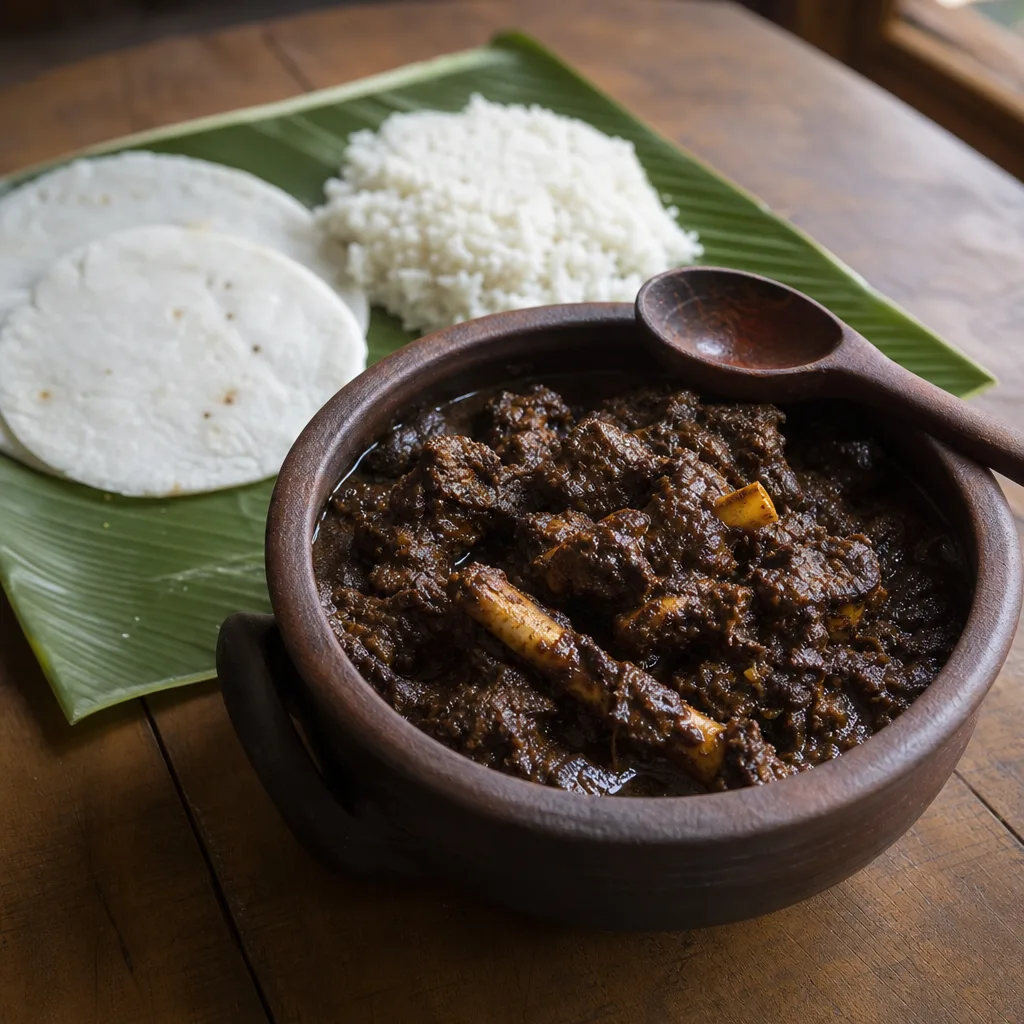
Pandi curry is the dish Kodava households cook for every occasion that matters: weddings, the harvest festival of Kailpodhu, a son returning from the army. It is made with pork, cooked long and slow until the fat renders and the meat is deeply tender, and finished with kachampuli, the sour Coorg vinegar pressed from the Garcinia gummi-gutta fruit. That last addition is what separates it from every other pork curry in South India. The kachampuli gives a dark, almost smoky sourness that tamarind cannot replicate.
The spice blend is dry-roasted and ground fresh for each batch. Coriander, black pepper, cumin, dried red chillies, cinnamon, cloves, cardamom, and stone flower (kalpasi) go into the pan one by one, then are ground together. The colour of the finished curry is very dark, nearly black, because of the kachampuli and the roasted spices. It is not a red curry.
In Kodava homes the pork is almost always bone-in, cut from the shoulder or belly, with the skin on. The fat is not trimmed. Cooking it in its own fat, with just a little coconut oil to start, is how the flavour builds. Most families cook this in a heavy-bottomed vessel, traditionally an earthen pot, and low heat is kept throughout once the initial browning is done.
Ingredients (serves 6)
For the pork
For the Coorg masala (dry-roast and grind fresh)
Method
Roast the whole spices
Set a dry heavy pan over low heat. Add the coriander seeds first and roast, stirring constantly, for about 2 minutes until they smell nutty and turn a shade darker. Add the black pepper, cumin, dried red chillies, cloves, cardamom, cinnamon, and stone flower one at a time, giving each 30 seconds before adding the next. The moment the spices smell roasted and the chillies have darkened slightly, tip everything onto a plate to cool. Do not let them smoke or the masala will taste bitter.
Grind the masala
Once completely cool, grind the roasted spices to a fine powder in a spice grinder or on a grinding stone. Add the turmeric powder and mix it in. Set aside. Grinding on a stone gives a slightly coarser, more fragrant result, but a dry grinder works well.
Brown the pork
Heat the coconut oil in a heavy-bottomed vessel or earthen pot over medium-high heat. Add the pork pieces in a single layer, skin side down first, and leave them undisturbed for 3–4 minutes until the skin colours and some fat renders out. Turn and brown the other sides. Do this in batches if needed; crowding the pan steams rather than browns the meat. Remove the browned pieces and set aside.
Cook the aromatics
In the fat remaining in the pot, add the sliced shallots and cook over medium heat, stirring often, for 8–10 minutes until they are soft and beginning to colour at the edges. Add the garlic and ginger and cook for another 3 minutes until the raw smell is gone.
Add the masala
Add the ground Coorg masala to the pot and stir it into the shallot mixture. Cook over medium-low heat for 2–3 minutes, stirring constantly, until the masala smells fragrant and has darkened slightly. If it begins to stick, add a splash of water, no more than 2–3 tbsp.
Return the pork and cook covered
Return the browned pork to the pot and stir to coat every piece in the masala. Add salt. Pour in about 100 ml water, just enough to prevent scorching. Cover tightly and cook over low heat for 45–50 minutes, stirring every 10 minutes and checking the liquid. The pork should cook almost entirely in its own fat and juices. Add water only if it looks like it is about to catch.
Check the pork is tender
After 45 minutes, press a piece of pork with the back of a spoon. It should yield easily and the meat should be pulling away from the bone. If it still resists, cover and cook for another 10–15 minutes. The fat should have rendered and the gravy should be dark, thick, and clinging to the meat rather than pooled at the bottom.
Add the kachampuli
Stir in the kachampuli and cook uncovered over medium-low heat for 5 minutes, letting it absorb into the meat. Taste and adjust salt. The curry should be intensely savoury, sour, and dark. Do not add more water at this stage; the gravy is meant to be thick and coating, not soupy.
Rest before serving
Take the pot off the heat and let it rest, covered, for at least 10 minutes. The flavour deepens as it sits. This curry tastes better the next day once the kachampuli has had time to work through the meat.
How to serve
Akki rotti (rice roti) or kotte kadubu (rice dumplings steamed in jackfruit leaves), or plain cooked matta rice. Some families serve it alongside kadambuttu (steamed rice balls).
Served with: Akki rotti (rice roti) or kotte kadubu (rice dumplings steamed in jackfruit leaves), or plain cooked matta rice. Some families serve it alongside kadambuttu (steamed rice balls).
Cook's tips
Kachampuli is not tamarind
Kachampuli is a thick, very dark, intensely sour extract. It is not interchangeable with tamarind water or any other souring agent. If you cannot find it, the dish will taste different. Some shops outside Kodagu stock it labelled as 'Coorg vinegar' or 'Garcinia vinegar'. Do not substitute kokum or tamarind and call it pandi curry.
Do not trim the fat
The rendered pork fat is how the curry develops its body and richness. Lean pork will produce a dry, tight result. Shoulder and belly with skin on are the right cuts.
Earthen pot if you have one
A traditional earthen pot holds heat evenly and adds a faint earthiness to the gravy. A heavy cast-iron or thick-bottomed steel vessel is the next best option. A thin-bottomed pan will cause the masala to scorch.
It tastes better the next day
This is genuinely true and not just a saying. Cook it the evening before if you can. Reheat gently over low heat with the lid on.
Byadagi chillies for colour, guntur for heat
Byadagi chillies give a deep red-brown colour without excessive heat. If you want more heat, add a couple of guntur chillies alongside. The finished curry is dark, not bright red.
Regional variations
Some households use only shallots; others add a small amount of sliced onion. A drier version cooked for festivals has less liquid and a thicker coating of masala.
Glossary
- Kachampuli ಕಾಚಂಪುಳಿ
- Thick, dark, very sour extract made by boiling down the juice of Garcinia gummi-gutta fruit; the defining souring agent of Kodava cooking.
- Kalpasi ಕಲ್ಪಾಸಿ
- Stone flower, a dried lichen (Parmotrema perlatum) used in small quantities in Chettinad and Kodava spice blends for a faintly earthy, mossy aroma.
- Pandi ಪಂದಿ
- Pork in Kodava and Kannada.
- Kotte kadubu ಕೊಟ್ಟೆ ಕಡುಬು
- Steamed rice dumplings wrapped and cooked in jackfruit leaves; a traditional Kodava accompaniment.
- Kadambuttu ಕಡಂಬುಟ್ಟು
- Steamed rice balls, a Kodava staple often served with pandi curry.
- Byadagi ಬ್ಯಾಡಗಿ
- A variety of dried red chilli from the Byadagi region of Karnataka, prized for deep colour and moderate heat.
Two things decide whether this works: the kachampuli and the patience to cook the pork low and slow until its own fat does the work. Rush either and you get tough meat in a flat-tasting gravy. Get both right and the curry is dark, sour, deeply savoury, and unmistakably from Kodagu.
More Mutton, Beef & Pork recipes
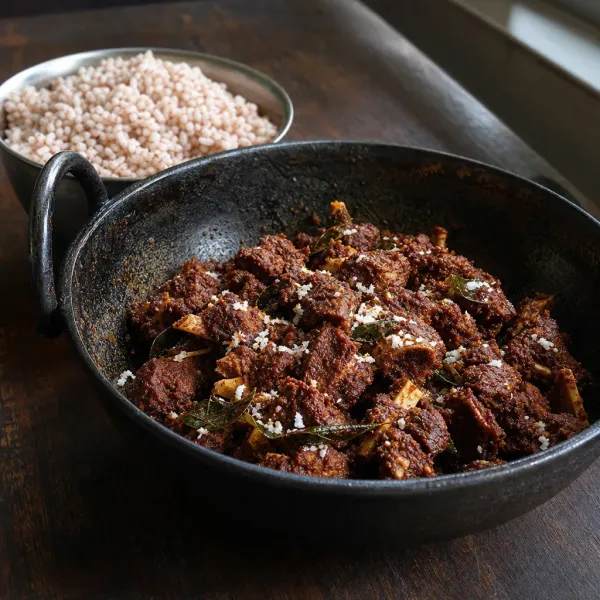
Mangalorean Mutton Sukka
Traditional Mangalorean mutton sukka from the Konkani Catholic kitchen: bone-in mutton slow-cooked with freshly roasted Byadgi chilli masala and grat…
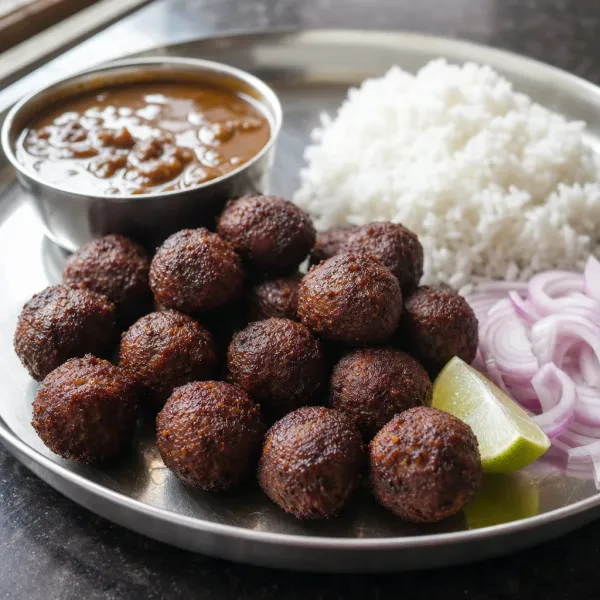
Mutton Kola Urundai
Authentic Chettinad mutton kola urundai with kalpasi, marathi mokku and gingelly oil. Traditional Chettiar household recipe with step-by-step method.
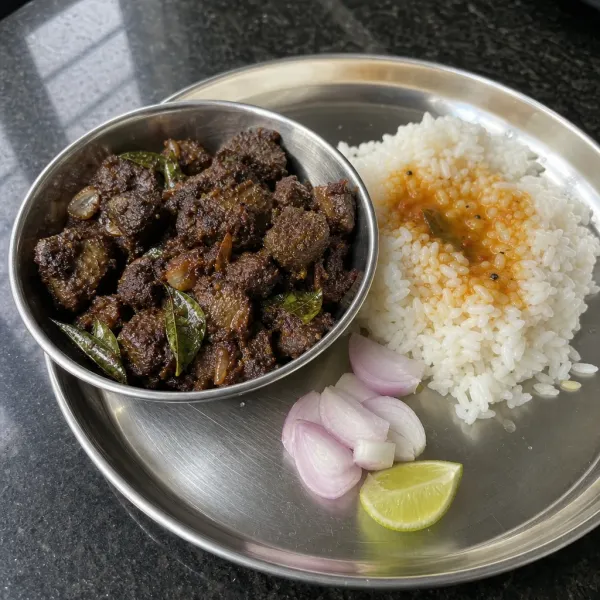
Eeral Varuval
Authentic Chettinad eeral varuval: mutton liver dry-fried with kalpasi, marathi mokku, shallots and gingelly oil. Traditional method, exact quantitie…
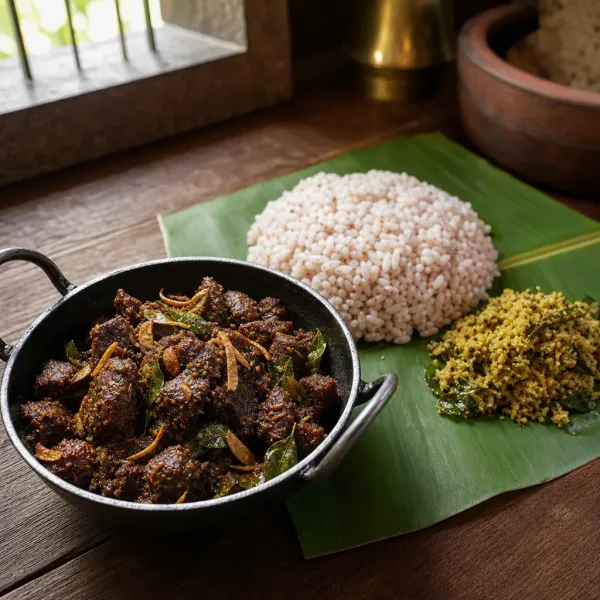
Beef Peralan (Kerala Nasrani Style)
Traditional Kerala Nasrani beef peralan: semi-dry, spiced with black pepper and coriander, finished with fried coconut slivers in coconut oil. Authen…
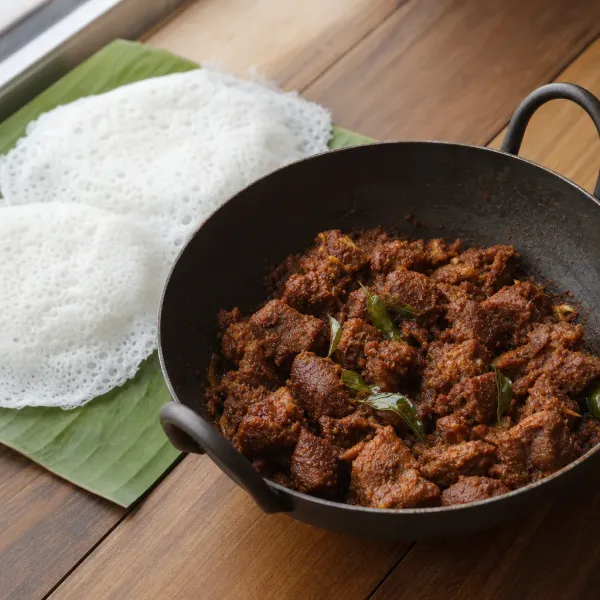
Mangalorean Mutton Ghee Roast
Traditional Konkani Catholic mutton ghee roast from Mangalore, made with Byadagi chillies, tamarind, and pure ghee. Step-by-step home recipe.
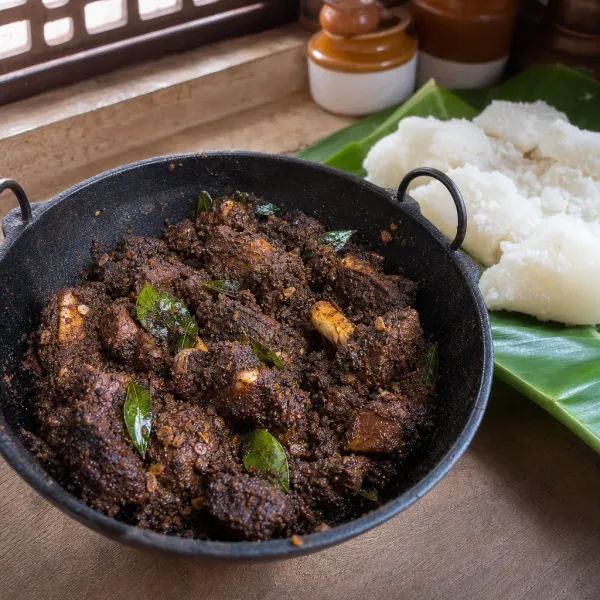
Kerala Beef Roast (Nadan Beef Roast)
Authentic Kerala Nasrani beef roast with thick dark masala, cooked the traditional way with shallots, coconut oil and curry leaves. Step-by-step hous…