

Mutton Kola Urundai Recipe
Malayalam മട്ടൺ കോல ഉരുണ്ടൈTamil மட்டன் கோல உருண்டைKannada ಮಟನ್ ಕೋಲ ಉರುಂಡೈTelugu మటన్ కోల ఉరుండై
- Prep30 min
- Cook40 min
- Serves4
- DifficultyMedium
- DietNon-vegetarian
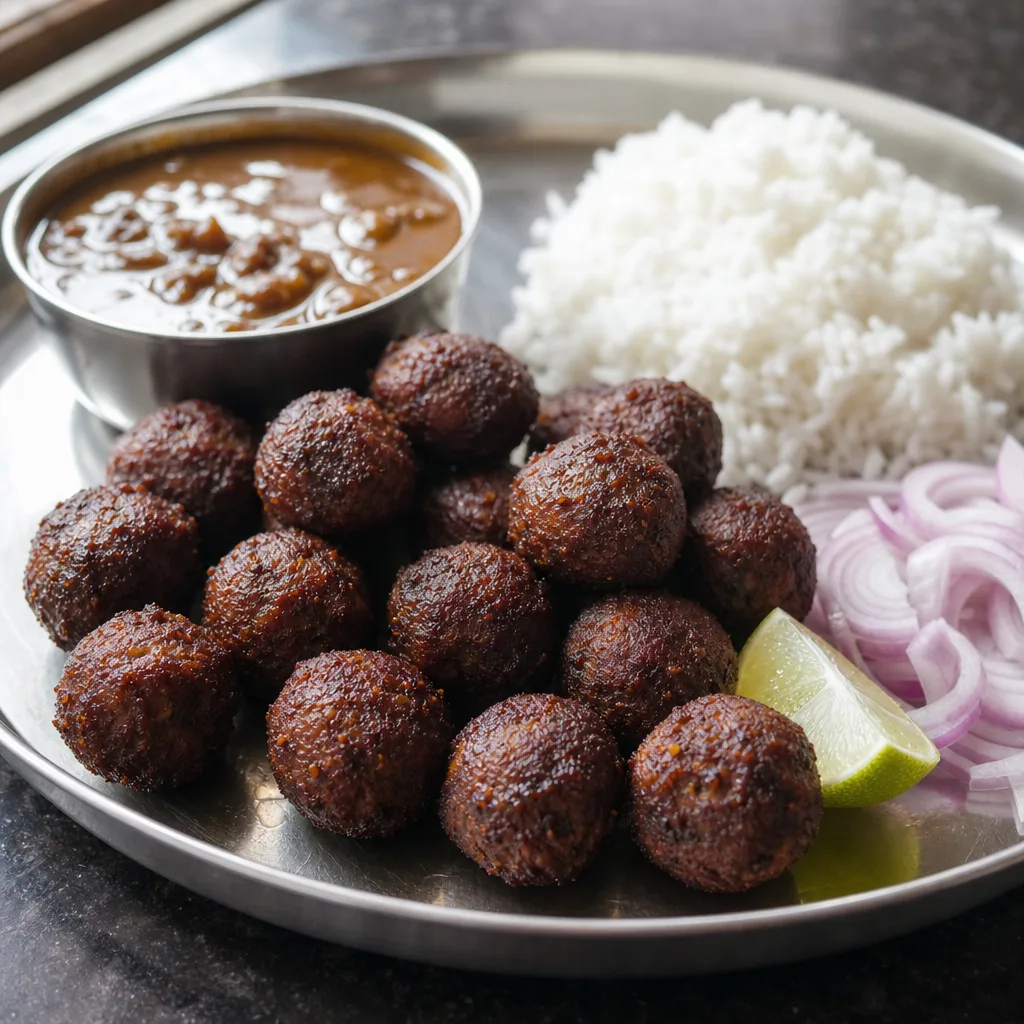
Kola urundai is a Chettiar household staple, made whenever mutton is bought fresh and the cook has a little time. The word kola refers to the minced or pounded meat, and urundai simply means a ball. These are not meatballs in any borrowed sense — the flavour comes entirely from a Chettinad spice paste ground fresh each time: kalpasi, marathi mokku, star anise, and the dried red chillies that give the dish its particular heat without turning it sour.
In Chettinad homes they are made with freshly minced mutton, not lamb, and the fat is gingelly oil. The balls are shallow-fried until the outside sets into a firm, dark-spiced crust while the inside stays just tender. They are eaten as a side with rice and kuzhambu, or served at the start of a meal as a snack with sliced shallots and a wedge of lime.
Household differences are mainly in heat: some families use Gundu chillies for roundness, others use Kanthari-dried varieties brought from the hills for sharpness. The spice paste always includes fresh coconut — a small quantity, enough to help bind and carry the aromatics into the meat, not enough to make the ball soft or sweet.
Ingredients (serves 4)
For the spice paste
For the kola
Method
Cook the mutton
Put the mutton pieces in a pressure cooker with ½ tsp turmeric, a pinch of salt, and just enough water to cover — about 150 ml. Cook on medium heat for 4 whistles, then lower the flame and cook for another 10 minutes. Let the pressure drop on its own. The meat should be completely tender and pulling away from the bone. Reserve the stock for another use.
Pick and pound the meat
Once the mutton is cool enough to handle, pick every scrap of meat off the bone. Discard all bone, gristle, and hard fat. Place the meat in a wide stone grinder or heavy mortar and pound it coarsely — you want a rough, fibrous texture, not a smooth paste. Do not use a food processor; it makes the meat gluey and the balls will not hold their shape after frying.
Dry-roast the whole spices
In a dry iron kadai over low heat, roast the kalpasi, marathi mokku, star anise, cinnamon, cloves, black peppercorns, and fennel seeds together for about 2 minutes, stirring constantly. They should smell fragrant and the fennel seeds should turn a shade darker. Tip them onto a plate and let them cool completely before grinding.
Grind the spice paste
In a wet grinder or stone grinder, grind the roasted whole spices first to a coarse powder. Add the dried red chillies, shallots, garlic, ginger, and grated coconut. Grind with a very small splash of water — no more than 2 tbsp — to a thick, slightly coarse paste. It should not be watery. Watery paste makes the balls fall apart in the oil.
Mix the kola
In a wide bowl, combine the pounded mutton, the ground spice paste, the finely chopped curry leaves, and salt. Mix firmly with your hands, pressing and folding until everything is evenly combined and the mixture holds together when you squeeze a pinch. Taste a small amount raw if you wish, or fry a tiny test ball first to check the salt and spice before shaping all of them.
Shape the balls
Divide the mixture into portions of about 25 g each and roll each one between your palms into a smooth, compact ball roughly the size of a large marble — about 3 cm across. Press firmly so there are no cracks on the surface. Cracks will open further in the hot oil and the ball will break. Lay them on a plate as you go. This quantity should give you approximately 18 to 20 balls.
Heat the oil
Pour the gingelly oil into a flat iron kadai or heavy frying pan and heat over medium flame. The oil is ready when a tiny piece of the mix dropped in sizzles immediately and rises to the surface. Do not let the oil smoke — gingelly oil burns at a lower point than refined oil and will turn bitter.
Fry the first batch
Lower the balls gently into the oil, leaving space between them — do not crowd the pan. Fry on medium-low heat, turning them every minute or so with a slotted spoon. They need about 8 to 10 minutes in total. The outside should form a deep reddish-brown crust that is firm to the touch. If you rush this on high heat the outside chars before the spice paste inside is cooked through.
Drain and serve
Lift the finished balls out with a slotted spoon and rest them on a plate lined with a clean cloth for a minute. Fry the remaining balls in the same oil. Serve hot. They toughen as they cool, so bring them to the table straight from the pan.
How to serve
Plain steamed matta rice or seeraga samba rice with Chettinad kuzhambu (such as milagu kuzhambu or vatha kuzhambu); also served as a starter with thinly sliced raw shallots and lime wedges.
Served with: Plain steamed matta rice or seeraga samba rice with Chettinad kuzhambu (such as milagu kuzhambu or vatha kuzhambu); also served as a starter with thinly sliced raw shallots and lime wedges.
Cook's tips
Marathi mokku and kalpasi
These are the two spices that mark a dish unmistakably as Chettinad. Both are available in Tamil Nadu grocery stores and in Indian stores that stock Chettinad ingredients. Do not substitute or omit them — the flavour profile changes fundamentally without them.
Why the balls break
Two causes: the spice paste had too much water, or the mutton was not pounded finely enough to create enough binding. If the mix feels loose before shaping, refrigerate it for 20 minutes — the fat from the mutton firms up and helps it hold.
Minced mutton shortcut
Many households today ask the butcher to mince the mutton on the machine. If you use raw mince, cook it in the spice paste in a dry pan first until all the moisture evaporates and the meat is fully cooked and dry, then shape and fry. This is a genuine and common household shortcut.
Storing leftovers
Kola urundai can be stored in an airtight box in the refrigerator for up to two days. Reheat in a dry pan over low heat, turning gently — do not microwave, which makes them rubbery.
Chilli heat
Six Gundu chillies gives medium heat by Chettinad standards. Gundu chillies are round, moderately hot, and give colour without excessive sharpness. If you use Kanthari-dried or long red chillies, reduce the quantity and taste before shaping.
Regional variations
Some Chettiar households add a small quantity of roasted chana dal to the keema mix for binding; a few deep-fry rather than shallow-fry, producing a darker, drier ball.
Glossary
- Kola கோல
- Minced or pounded meat preparation; the base of kola urundai.
- Urundai உருண்டை
- A ball; used for any round shaped food, sweet or savoury.
- Kalpasi கல்பாசி
- Stone flower (Parmotrema perlatum), a lichen used as a spice in Chettinad and Mughal-influenced cooking; smoky, faintly mossy aroma.
- Marathi mokku மரத்தி மொக்கு
- Dried flower buds of Randia dumetorum; a distinctive Chettinad spice with a mild, slightly bitter, floral note.
- Sombu சோம்பு
- Fennel seeds; used whole in Chettinad spice pastes.
- Gingelly oil நல்லெண்ணெய்
- Cold-pressed sesame oil; the cooking fat of Tamil Nadu, used in kuzhambu, pickles, and frying.
- Kuzhambu குழம்பு
- A Tamil gravy or sauce, typically tamarind-based; the category includes milagu kuzhambu, vatha kuzhambu, and many others.
Two things decide whether these turn out well. First, the spice paste must be ground thick and dry — any excess water and the balls will crack open the moment they meet hot oil. Second, the frying must be patient and on medium-low heat, giving the crust time to form all the way around before the inside dries out. Get those two right and the rest follows.
More Mutton, Beef & Pork recipes
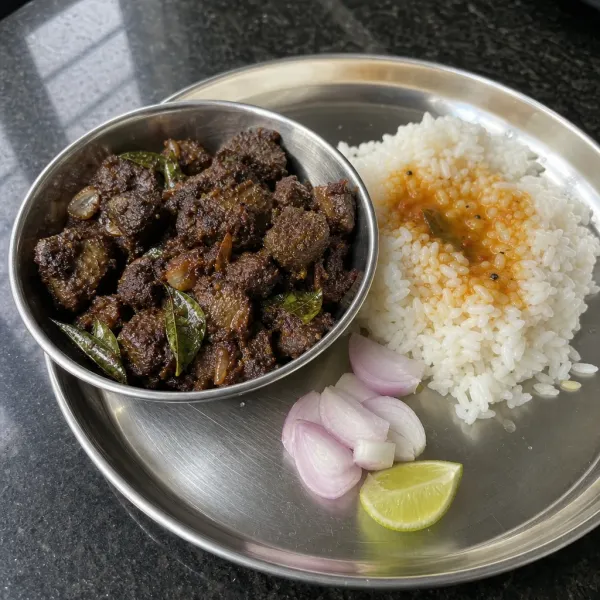
Eeral Varuval
Authentic Chettinad eeral varuval: mutton liver dry-fried with kalpasi, marathi mokku, shallots and gingelly oil. Traditional method, exact quantitie…
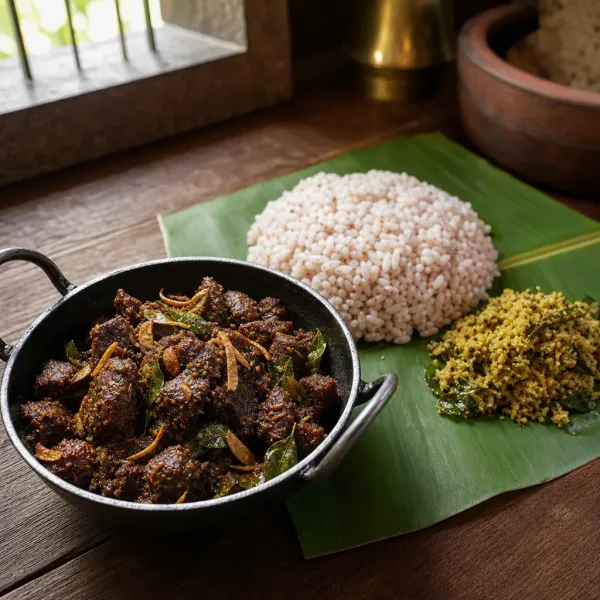
Beef Peralan (Kerala Nasrani Style)
Traditional Kerala Nasrani beef peralan: semi-dry, spiced with black pepper and coriander, finished with fried coconut slivers in coconut oil. Authen…
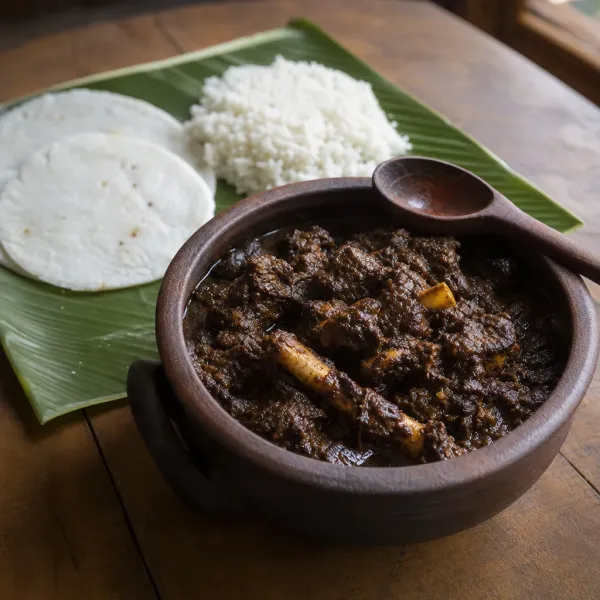
Coorg Pandi Curry
Authentic Kodava pandi curry with freshly roasted Coorg masala and kachampuli. Bone-in pork cooked low and slow the traditional Kodagu way.
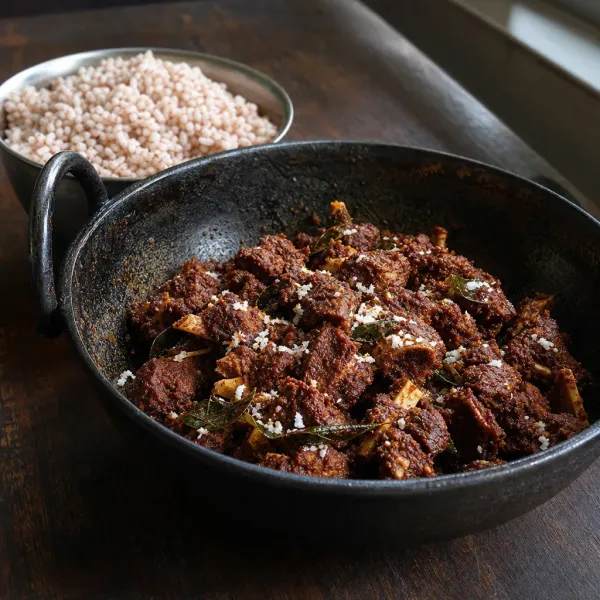
Mangalorean Mutton Sukka
Traditional Mangalorean mutton sukka from the Konkani Catholic kitchen: bone-in mutton slow-cooked with freshly roasted Byadgi chilli masala and grat…
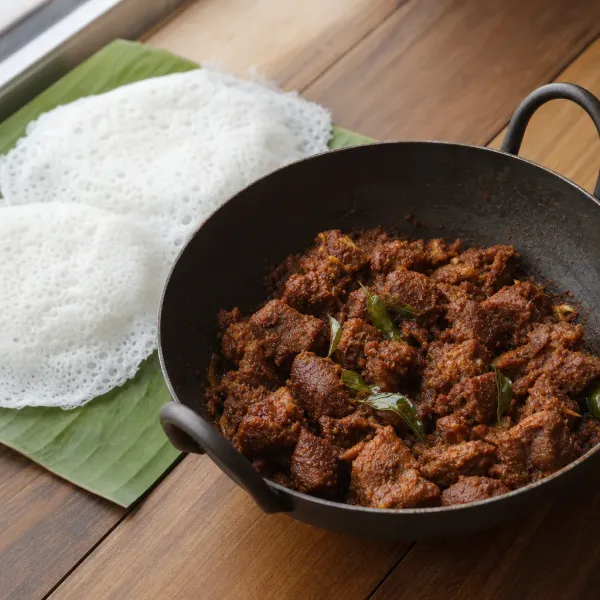
Mangalorean Mutton Ghee Roast
Traditional Konkani Catholic mutton ghee roast from Mangalore, made with Byadagi chillies, tamarind, and pure ghee. Step-by-step home recipe.
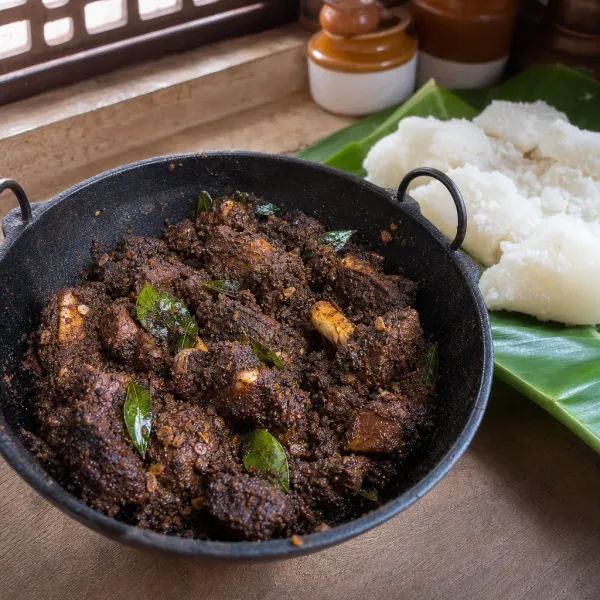
Kerala Beef Roast (Nadan Beef Roast)
Authentic Kerala Nasrani beef roast with thick dark masala, cooked the traditional way with shallots, coconut oil and curry leaves. Step-by-step hous…