

Royyala Iguru Recipe
Malayalam റൊയ്യാല ഇഗുരുTamil ரொய்யால இகுருKannada ರೊಯ್ಯಾಲ ಇಗುರುTelugu రొయ్యల ఇగురు
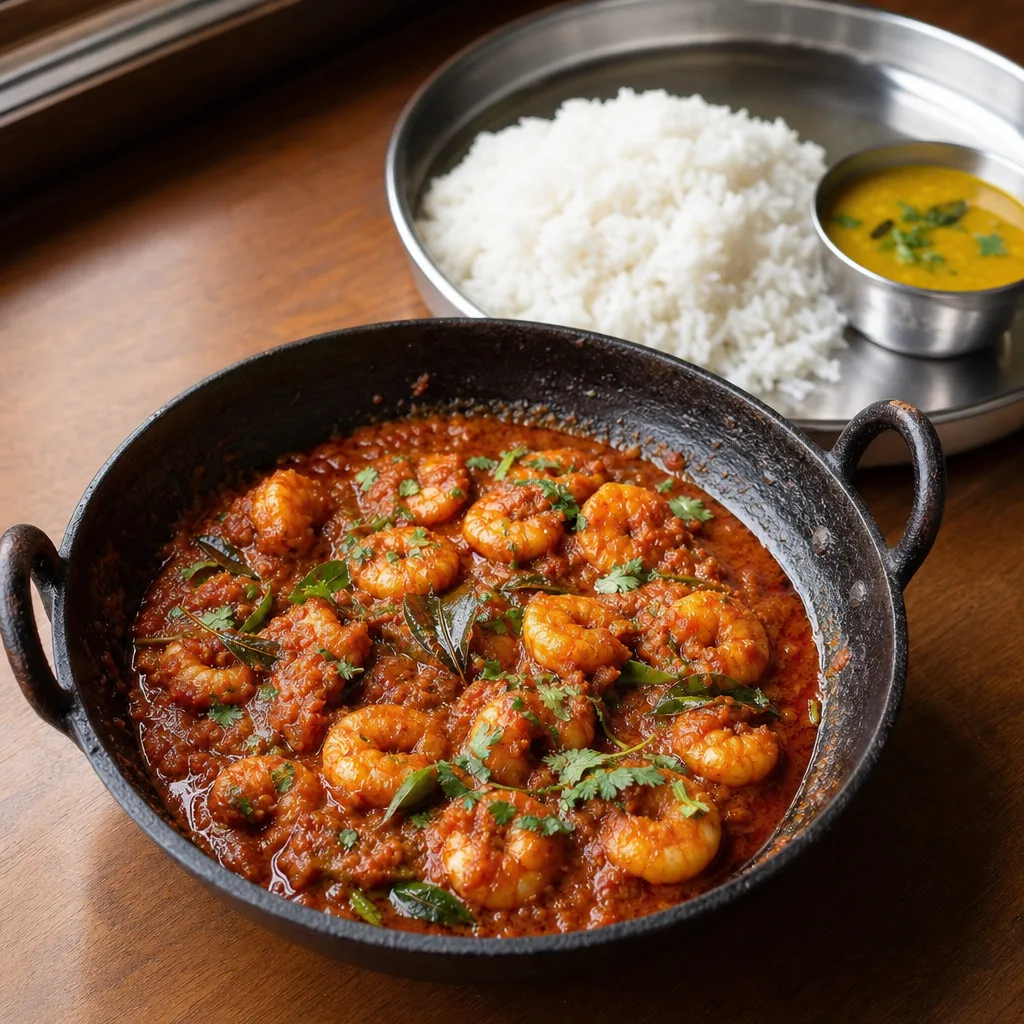
- Prep20 min
- Cook35 min
- Serves4
- DifficultyMedium
- DietNon-vegetarian
Royyala Iguru is a semi-dry prawn preparation from coastal Andhra, cooked in a base of shallots, tomato, ginger, garlic, and a generous measure of fresh green chillies alongside dried red ones. The word iguru in Telugu describes this style of cooking: a masala-heavy, oil-forward preparation where the liquid is cooked almost entirely away, leaving the prawns coated in a thick, deeply coloured paste rather than sitting in a gravy. The heat is real and unapologetic.
In coastal Andhra households this is everyday food, not a feast dish. It goes onto the plate alongside hot rice, a dal, and a vegetable poriyal. The prawns used are the smaller, sweeter variety caught close to shore rather than the large tiger prawns. Shallots are preferred over big onions because they melt into the masala more completely and give a slightly sweeter base that balances the chilli.
Households differ mainly in the chilli count and in how dry the final dish is. Some cooks pull it off the heat when a little sauce still clings; others cook it until the oil separates cleanly around the edges and the masala is almost paste-dry. Both are correct. The version here is the slightly saucier household style, where the masala coats the prawns without being completely dry.
Ingredients (serves 4)
For cleaning the prawns
For the masala base
For cooking
Method
Clean and marinate the prawns
Peel and devein the prawns, rinsing them once under cold water. Pat dry with a cloth – wet prawns release water into the pan and the masala will not fry properly. Rub in the turmeric and salt and set aside for 15 minutes while you prepare the masala.
Crush the ginger and garlic
Pound the garlic and ginger together in a stone mortar to a coarse, fibrous paste. Do not use a blender for this small quantity; the paste from a mortar fries more evenly and does not turn bitter. Set aside.
Heat the oil and bloom the whole spices
Pour the gingelly oil into a wide, heavy kadai and set it over medium heat. When the oil is hot but not smoking, add the mustard seeds. When they pop – about 30 seconds – add the cumin seeds, broken dried red chillies, and curry leaves. Stand back when the curry leaves go in; they spit. Let them crackle for 20 seconds.
Fry the shallots low and slow
Add the sliced shallots and the slit green chillies. Reduce the heat to medium-low. Fry, stirring regularly, for 12 to 15 minutes until the shallots are a deep golden brown and smell sweet. Do not rush this step; under-fried shallots leave a raw edge in the finished dish. If they begin to catch, add a splash of water and scrape the base.
Add the ginger-garlic paste
Add the crushed ginger-garlic paste to the shallots. Fry on medium heat, stirring constantly, for 3 to 4 minutes until the raw smell is completely gone and the paste has turned a light gold. The paste is ready when it no longer sticks to the spoon in a wet mass.
Add the tomatoes and cook down
Add the chopped tomatoes and a pinch of salt. Cook on medium heat, mashing the tomatoes as they soften, for 8 to 10 minutes until the tomatoes have completely broken down and the oil begins to separate around the edges of the masala. The mixture should look dense and jammy, not watery.
Add the ground spices
Reduce the heat to low. Add the coriander powder, red chilli powder, and remaining turmeric. Stir for 1 to 2 minutes, letting the powders fry in the oil. If the masala looks dry and the spices are in danger of catching, add 2 tablespoons of water and stir quickly. This brief frying removes the raw flour taste from the powders.
Add the prawns
Add the marinated prawns and turn the heat to medium-high. Stir well so every prawn is coated in the masala. Fry for 2 minutes, turning the prawns, until they begin to turn pink on the outside.
Cook to semi-dry
Add 60 ml of water, stir, cover, and cook on medium heat for 4 minutes. Remove the lid and cook uncovered for a further 3 to 4 minutes, stirring occasionally, until the water has evaporated and the masala clings thickly to the prawns. The oil will show at the edges of the pan when the dish is ready. Do not overcook; prawns tighten and turn rubbery very quickly.
Check seasoning and finish
Taste and adjust salt. Scatter the torn coriander leaves over the top, give one gentle stir, and remove from the heat. Rest for 2 minutes before serving; the masala settles and the flavour deepens slightly off the heat.
How to serve
Hot steamed rice (plain white rice or sona masoori), dal (pappu), and a dry vegetable preparation such as vankaya fry. A wedge of lime is sometimes placed alongside.
Served with: Hot steamed rice (plain white rice or sona masoori), dal (pappu), and a dry vegetable preparation such as vankaya fry. A wedge of lime is sometimes placed alongside.
Cook's tips
Prawn size matters
Use medium prawns (roughly 30 to 35 per 600 g after shelling). Very large prawns do not absorb the masala as well; very small ones overcook before the masala has time to coat them.
Gingelly oil versus other oils
Untoasted gingelly oil (cold-pressed sesame oil) is the traditional fat here and gives the dish its characteristic background flavour. Refined sunflower oil can be used but the result is noticeably flatter. Do not use toasted sesame oil – it is a different product entirely.
Guntur chilli powder
Guntur chilli powder is hotter and more deeply coloured than Kashmiri. If you are using Kashmiri chilli powder for colour and a milder heat, increase the quantity to 2½ tsp and add a pinch of cayenne. The colour of the finished dish should be a deep brick red.
Do not cover too long
Covering the pan is only for the first 4 minutes of cooking the prawns through. Leaving the lid on longer traps steam and the dish becomes wet rather than semi-dry.
Tomato note
Tomato is used in this recipe and is genuinely part of the coastal Andhra household version. If you have seen versions without tomato, those are older or more interior-Andhra preparations; both are traditional.
Regional variations
Telangana version is drier and uses more dried red chillies; some Krishna-district households add a small amount of fresh coconut paste to the masala; Rayalaseema versions occasionally use tamarind more assertively.
Glossary
- Iguru ఇగురు
- A Telugu term for a semi-dry, masala-coated preparation where the liquid is cooked away; distinct from a gravy curry (kura) and from a completely dry fry (vepudu).
- Royyalu రొయ్యలు
- Prawns or shrimp in Telugu.
- Nuvvula nune నువ్వుల నూనె
- Gingelly oil; untoasted cold-pressed sesame oil used as a cooking fat in Andhra kitchens.
- Kadai కడాయి
- A wide, deep, heavy-bottomed pan used for frying and semi-dry preparations; the shape helps moisture evaporate evenly.
- Pappu పప్పు
- Cooked lentil dal; the standard accompaniment to rice in an Andhra meal.
Two things decide this dish. First, the shallots must be fried to a genuine deep gold before anything else goes in – that caramelised base is what gives the masala its body and sweetness against the chilli heat. Second, the prawns must come off the heat the moment the masala clings and the oil shows at the pan's edge; another two minutes and they are overcooked and chewy, and no amount of masala will rescue them.
More Seafood recipes
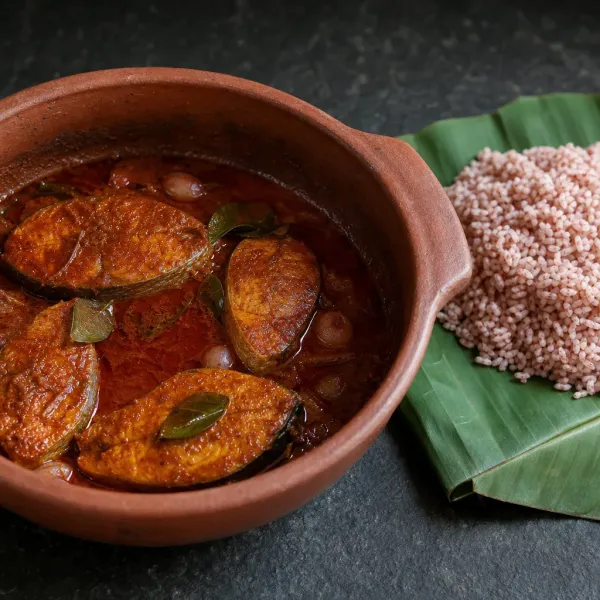
Neymeen Curry
Traditional Malabar Mappila neymeen curry with kudampuli, fresh coconut paste and coconut oil, cooked in a clay pot. Step-by-step Kerala recipe.
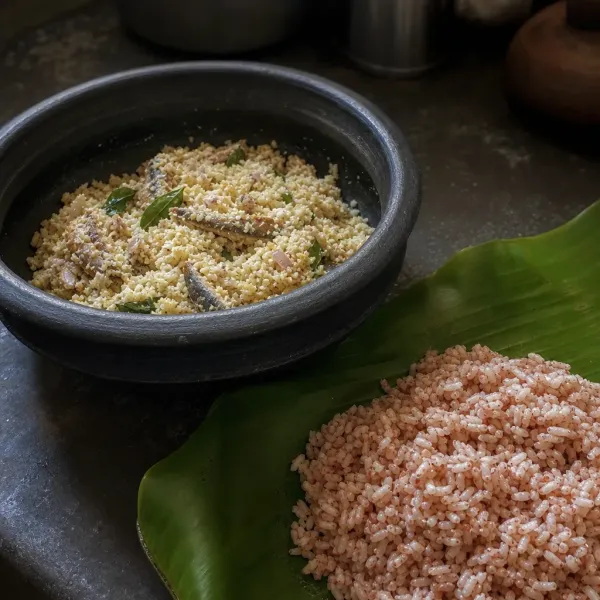
Meen Peera: Kerala Fish Steamed with Grated Coconut
Traditional Kerala meen peera: small fish steamed dry with fresh grated coconut, shallots, kudampuli and turmeric. No water added. Step-by-step home…
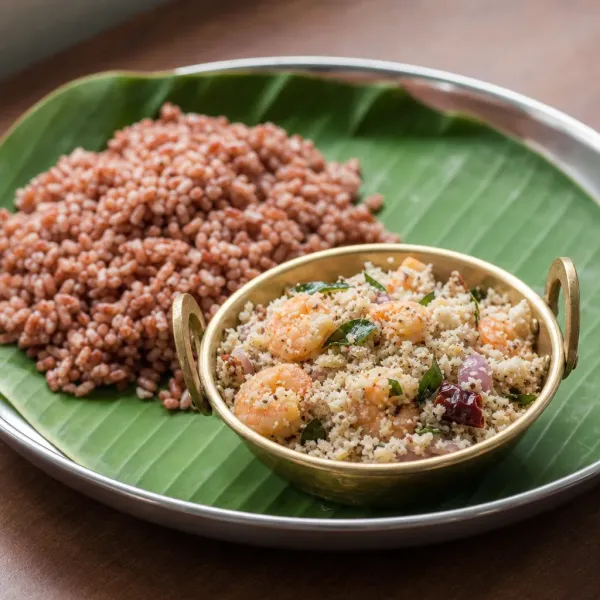
Chemmeen Thoran
Traditional Kerala chemmeen thoran: small prawns stir-fried with fresh grated coconut, shallots, curry leaves and coconut oil. Dry, fragrant and read…
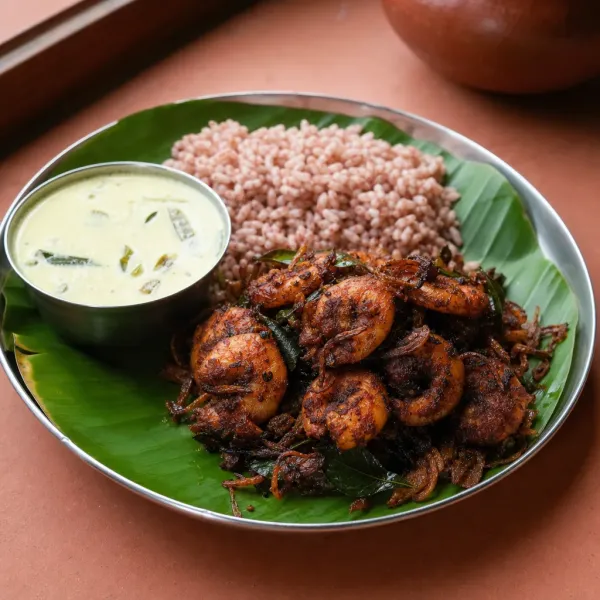
Chemmeen Varuthathu
Traditional Kerala prawn fry with kudampuli, red chilli, and coconut oil. Dry, crisp-edged, and deeply spiced – the Travancore household method.
Kakka Irachi Thoran
Traditional Kerala kakka irachi thoran: fresh clam meat stir-fried dry with grated coconut, shallots and curry leaves. Coastal household recipe with…
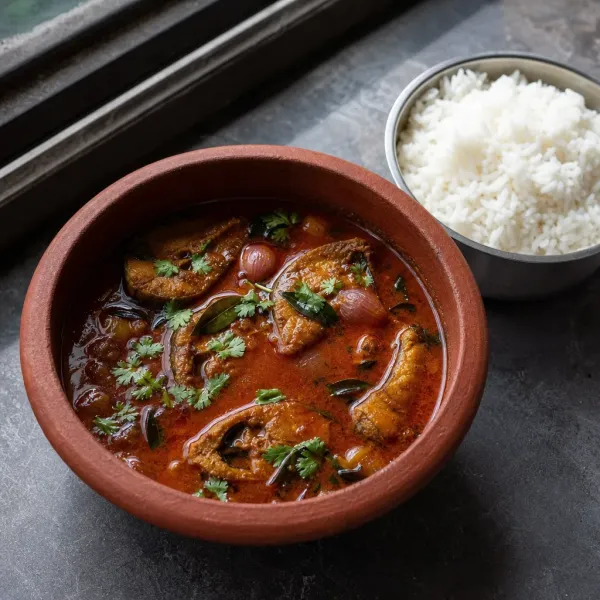
Chepala Pulusu
Traditional Andhra chepala pulusu made with whole shallots, tamarind, and firm fish simmered in gingelly oil. No tomato. Coastal Andhra household met…