

Chemmeen Varuthathu Recipe
Malayalam ചെമ്മീൻ വറുതത്ത്Tamil இறால் வறுத்ததுKannada ಸಿಗಡಿ ವರುತತ್ತುTelugu రొయ్యల వరుతత్తు
- Prep20 min
- Cook20 min
- Serves4
- DifficultyEasy
- DietNon-vegetarian
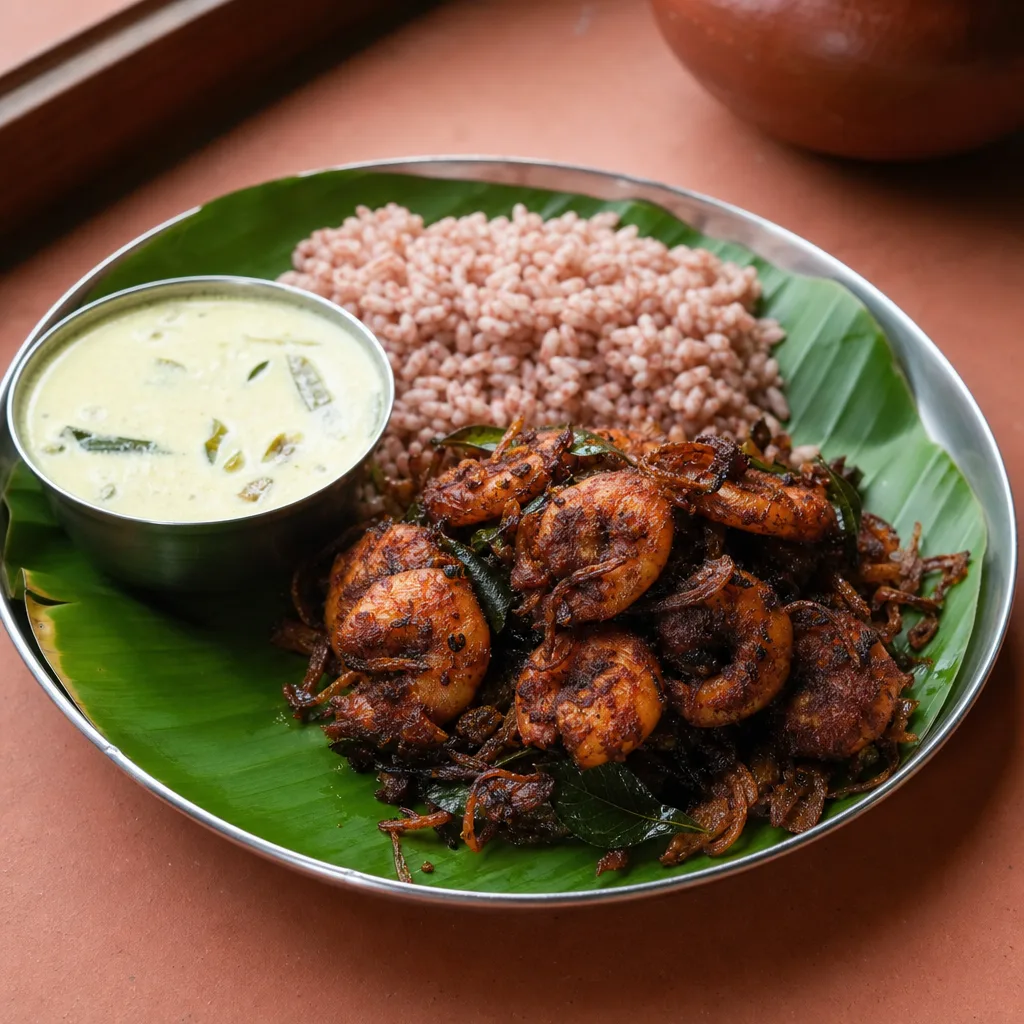
Chemmeen Varuthathu is a dry prawn fry found in almost every fish-eating household along the Kerala coast and backwaters. The marinade is built around red chilli powder, turmeric, black pepper, and kudampuli – the dark, dried rind of Garcinia cambogia that gives the dish its characteristic sour bite and deep reddish colour. Coconut oil is the only fat used; it gives the finished prawns a faint sweetness that no other oil replicates.
In Travancore homes this is eaten as a side dish with kanjhi or matta rice and a simple moru curry or sambar. It also appears alongside kanji at breakfast. The prawns are fried until the exterior is just crisp at the edges and the inside is still tender – overcooked prawns are the most common failure. Households differ mainly in the proportion of black pepper to red chilli: some cooks lean heavily on pepper and keep the chilli moderate, others reverse that balance.
The quantity of kudampuli matters. Too little and the marinade tastes flat; too much and the sour note overwhelms everything else. Most cooks use one small piece – roughly the size of a two-rupee coin – soaked briefly in warm water and squeezed into the marinade paste. The soaking water is discarded.
Ingredients (serves 4)
For the prawns
For the marinade
For frying
Method
Soak the kudampuli
Place the kudampuli piece in a small bowl with 2 tbsp of warm water. Leave it for 10 minutes. Squeeze the softened rind firmly to release the sour pulp into the water, then discard the soaking water and use only the squeezed pulp. If the piece is very dry and thick, scrape the inner surface lightly with a spoon.
Make the marinade
In a wide bowl, combine both chilli powders, turmeric, black pepper, ginger paste, garlic paste, the kudampuli pulp, 1 tsp coconut oil, and salt. Mix to a thick, even paste. Taste it – it should be sour, spicy, and well-salted, because the prawns will dilute the seasoning slightly.
Coat the prawns
Add the cleaned prawns to the marinade and turn them with your hands until every prawn is evenly coated. Cover and set aside for at least 15 minutes at room temperature. Do not marinate for more than 45 minutes or the acid in the kudampuli will begin to cook the surface and the texture will suffer.
Heat the pan
Set a heavy iron or thick-bottomed pan over medium heat. Pour in 3 tbsp coconut oil and let it heat until a curry leaf dropped in sizzles immediately. An iron tawa gives the best crust; a non-stick pan works but will not give the same edge.
Fry the shallots and curry leaves
Add the sliced shallots and curry leaves to the hot oil. Fry over medium heat, stirring, until the shallots are golden and beginning to crisp at the edges – about 3 minutes. Do not let them burn; burnt shallots will make the dish bitter. Push them to the side of the pan.
Add the prawns
Lay the marinated prawns in a single layer in the pan. Do not crowd them; if the pan is small, fry in two batches. Let them cook undisturbed for 2 minutes on medium-high heat so the marinade sets and begins to crust on the bottom.
Turn and finish
Flip each prawn carefully. The underside should be deep reddish-brown and just beginning to char at the very edges. Cook the second side for 1½ to 2 minutes. Medium prawns are done when they are just curled into a loose C shape; a tight O means they are overcooked and will be rubbery.
Toss and dry out
Turn the heat to low. Toss the prawns with the fried shallots and curry leaves and let everything sit in the pan for 1 more minute so any remaining moisture evaporates. The finished prawns should be dry on the outside with a slightly crisp, dark-red coating. Serve immediately.
How to serve
Matta rice (red parboiled rice) with moru curry or sambar; or alongside kanji (rice porridge) at breakfast. Often placed on a banana leaf as part of a meal.
Served with: Matta rice (red parboiled rice) with moru curry or sambar; or alongside kanji (rice porridge) at breakfast. Often placed on a banana leaf as part of a meal.
Cook's tips
Kudampuli is not optional
The sour, slightly resinous note of kudampuli is what makes this dish itself. Tamarind is sharper and wetter and will change both the colour and the flavour. If you genuinely cannot find kudampuli, use ½ tsp of very thick tamarind paste and accept that the dish will taste different.
Fresh prawns make the biggest difference
Frozen prawns release water in the pan and steam rather than fry. If you must use frozen, thaw completely, pat very dry with a cloth, and increase the heat slightly when they go in.
The marinade time window
Fifteen minutes is the minimum for the spices to penetrate. Beyond 45 minutes the kudampuli acid visibly changes the surface of the prawns to a pale, cooked-looking texture before they hit the pan, and they will be soft rather than crisp.
Iron pan versus non-stick
A well-seasoned iron tawa gives a better crust because it holds heat more evenly. Non-stick is acceptable but the prawns will not develop the same dark, slightly textured coating.
Batch frying
Crowding the pan drops the temperature and the prawns will stew in their own liquid. If you have more than 500 g of prawns, fry in two batches and wipe the pan between batches if the marinade residue has blackened.
Regional variations
Mappila households in Malabar use fennel seed and sometimes a pinch of garam masala in the marinade; Nasrani cooks in central Kerala occasionally add a small piece of kudampuli to the marinade paste for extra sourness.
Glossary
- Chemmeen ചെമ്മീൻ
- Prawn in Malayalam; the word covers both small and medium sea prawns.
- Varuthathu വറുതത്ത്
- Fried; from the Malayalam verb varuthukal, to fry in a pan with oil.
- Kudampuli കുടംപുളി
- Dried rind of Garcinia cambogia, also called Malabar tamarind; the souring agent specific to Kerala fish and prawn dishes.
- Cheriya ulli ചെറിയ ഉള്ളി
- Small red shallots; the standard allium in Kerala cooking, sweeter and more aromatic than large onions.
- Matta rice മട്ട അരി
- Red parboiled rice from Palakkad, the everyday rice of Kerala households; nutty, firm-grained.
Two things decide whether this dish works: the quality and quantity of kudampuli, and the discipline to stop cooking before the prawns curl tight. Get those right and the rest follows naturally.
More Seafood recipes
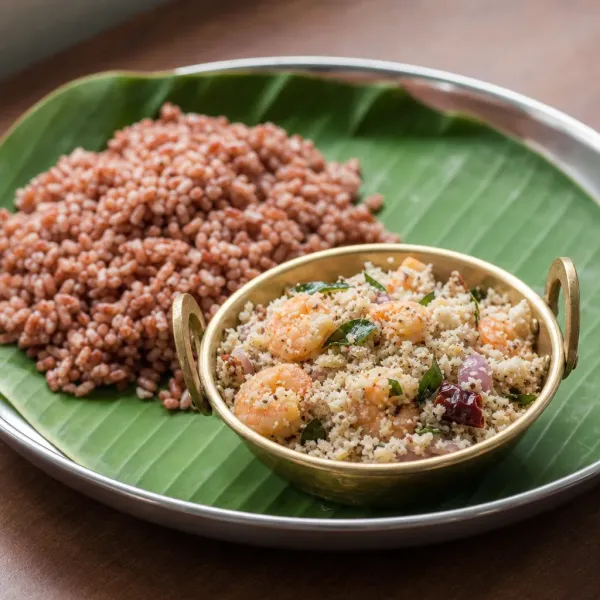
Chemmeen Thoran
Traditional Kerala chemmeen thoran: small prawns stir-fried with fresh grated coconut, shallots, curry leaves and coconut oil. Dry, fragrant and read…
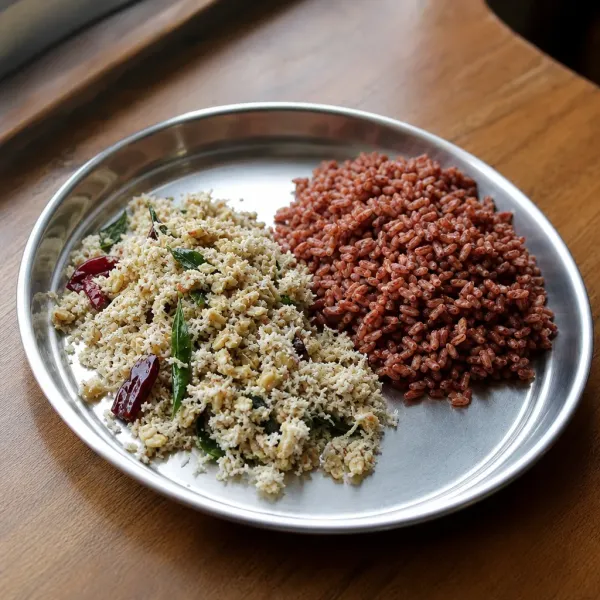
Kakka Irachi Thoran
Traditional Kerala kakka irachi thoran: fresh clam meat stir-fried dry with grated coconut, shallots and curry leaves. Coastal household recipe with…
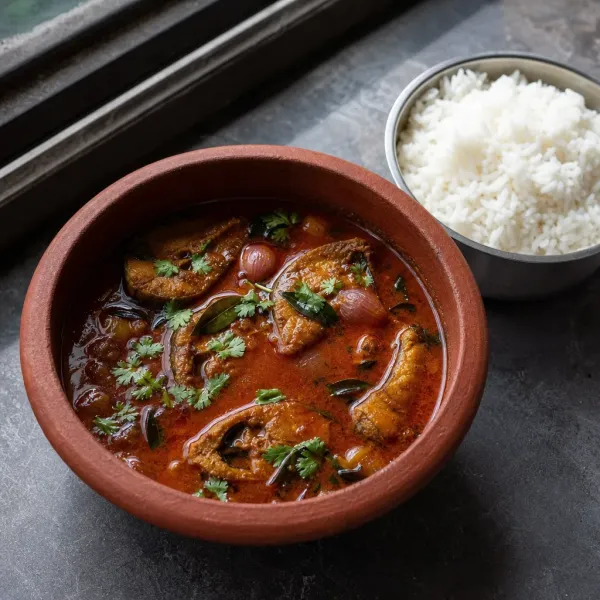
Chepala Pulusu
Traditional Andhra chepala pulusu made with whole shallots, tamarind, and firm fish simmered in gingelly oil. No tomato. Coastal Andhra household met…
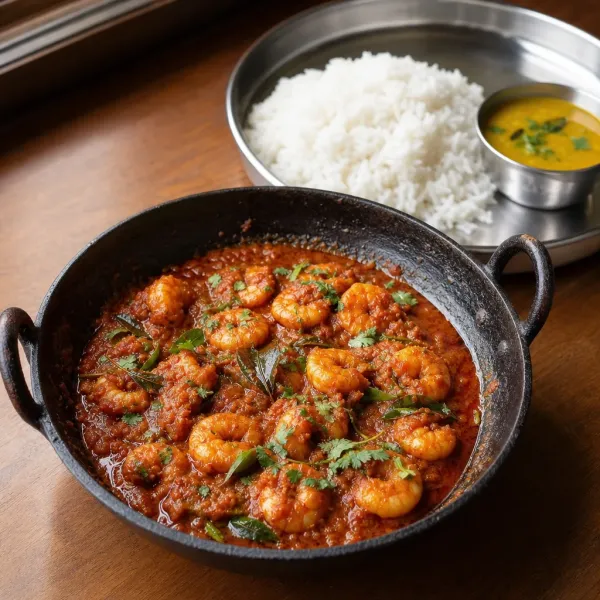
Royyala Iguru
Traditional coastal Andhra royyala iguru: prawns cooked semi-dry in a shallot, tomato and guntur chilli masala with gingelly oil. Authentic household…
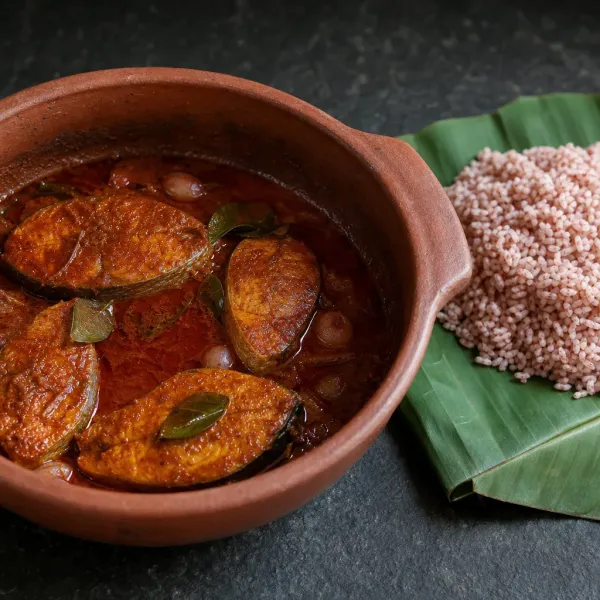
Neymeen Curry
Traditional Malabar Mappila neymeen curry with kudampuli, fresh coconut paste and coconut oil, cooked in a clay pot. Step-by-step Kerala recipe.
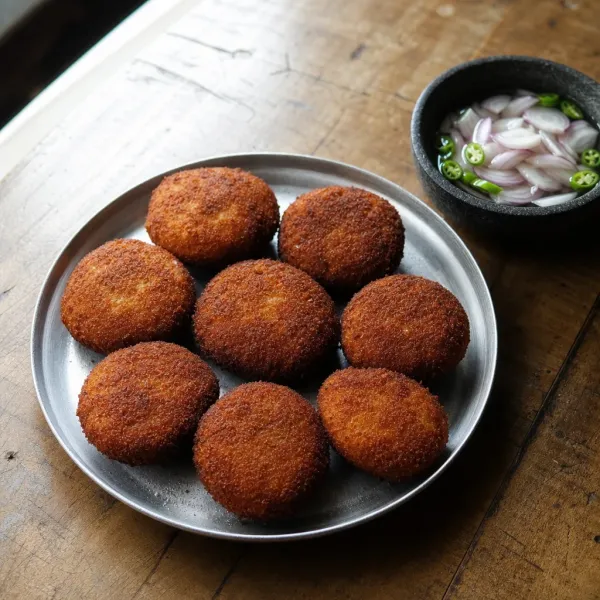
Kerala Nasrani Fish Cutlet
Traditional Kerala Nasrani fish cutlet with seer fish, shallots and coconut oil. Step-by-step method for a crisp, golden crust that holds.