

Kakka Irachi Thoran Recipe
Malayalam കക്ക ഇറച്ചി തോരൻTamil கக்கா இறைச்சி தோரன்Kannada ಕಕ್ಕ ಮಾಂಸ ತೊರನ್Telugu కక్క మాంసం తోరన్
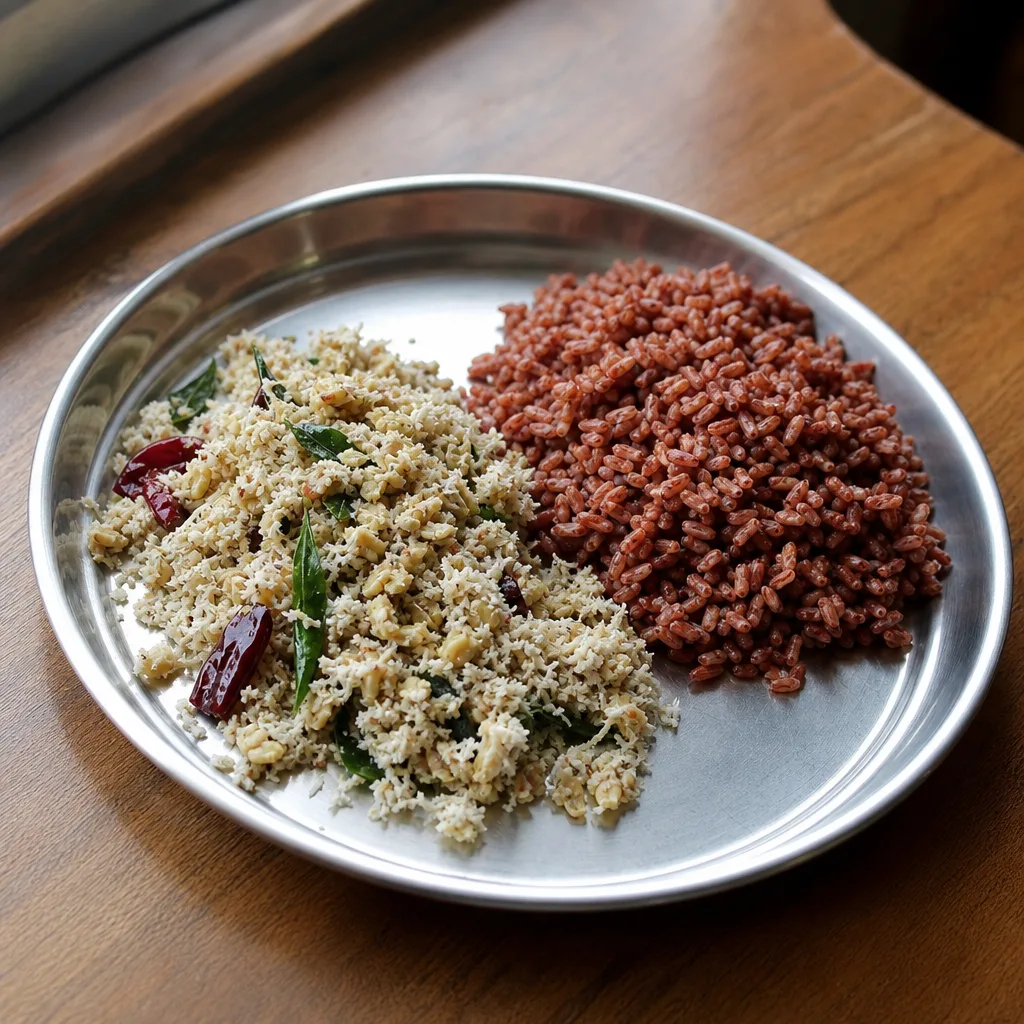
- Prep25 min
- Cook30 min
- Serves4
- DifficultyMedium
- DietNon-vegetarian
Kakka irachi thoran is the kind of dish that coastal Kerala households make on a weekday when the catch is good and time is short. The clams are cooked first in their own steam, then shelled and finished dry in a pan with fresh grated coconut, shallots, and curry leaves. The whole thing is on the table in under an hour.
It is eaten as a side dish alongside rice, usually with a fish curry or a simple rasam. The thoran itself is dry, not sauced, and the coconut should stay pale and soft, not browned. The flavour of the clam comes through clearly because nothing heavy is added to it.
Households vary in how much chilli they use and whether they add a tiny amount of turmeric to the cooking water. Some cooks add a small piece of ginger to the shallot base; others keep it out entirely. The one thing that does not change is the coconut: it must be freshly grated. Desiccated coconut will not give the same result.
Ingredients (serves 4)
For cooking the clams
For the thoran
Method
Scrub and rinse the clams
Scrub the clam shells under cold running water, rubbing off any mud or grit. Discard any clam that is cracked or that stays open when you tap it. Rinse two or three times until the water runs clear.
Steam the clams open
Put the clams in a wide, heavy pan with 3 tbsp water, ¼ tsp turmeric, and a pinch of salt. Cover tightly and cook on medium-high heat. After about 5 to 7 minutes the shells will open and the clam meat will be just cooked through. Shake the pan once halfway through. Do not overcook or the meat turns rubbery. Discard any clams that have not opened.
Shell the clams and strain the liquor
Let the clams cool enough to handle. Pull the meat out of each shell and collect it in a bowl. Strain the cooking liquor through a fine sieve and set it aside; you will use a little of it later if the pan gets too dry. Discard the shells.
Mix the coconut with the spice powders
In a small bowl, combine the freshly grated coconut with ¼ tsp turmeric, ½ tsp red chilli powder, and 1 tsp coriander powder. Mix with your fingers so the spices coat the coconut evenly. Set aside.
Temper the mustard and dry chillies
Heat 2 tbsp coconut oil in a wide iron or heavy pan over medium heat. Add the mustard seeds and wait for them to pop fully, about 30 seconds. Add the broken dry red chillies and let them darken slightly, 10 to 15 seconds. Do not let them turn black.
Cook the shallots and garlic
Add the sliced shallots, crushed garlic, and slit green chillies. Add a small pinch of salt to help the shallots soften. Cook on medium heat, stirring often, until the shallots are translucent and just beginning to colour at the edges, about 5 to 6 minutes. Add the curry leaves and stir for 30 seconds.
Add the spiced coconut
Add the coconut and spice mixture to the pan. Stir well so it coats the shallots. Cook on medium-low heat for 3 to 4 minutes, stirring continuously. The coconut should stay pale and soft; if it starts to brown, lower the heat immediately.
Add the clam meat
Add the shelled clam meat and fold it gently through the coconut mixture. The clams are already cooked, so you are only warming them through and letting them absorb the flavour, about 3 to 4 minutes on low heat. If the pan looks very dry, add 1 to 2 tbsp of the strained clam liquor.
Check salt and finish
Taste and adjust salt, keeping in mind that the clam liquor is already salty. Stir once more, then take the pan off the heat. The finished thoran should be dry, not wet, with every piece of clam meat coated in coconut. Serve immediately.
How to serve
Steamed matta rice; a fish curry such as meen mulakittathu or a simple rasam on the side.
Served with: Steamed matta rice; a fish curry such as meen mulakittathu or a simple rasam on the side.
Cook's tips
Cleaning the clams
If the clams are very muddy, soak them in cold salted water for 20 minutes before scrubbing. They will purge some of the sand. Rinse well after.
Do not overcook the clams in step 2
Clam meat that is overcooked at the steaming stage becomes tough and chewy by the time the thoran is done. Pull them off the heat the moment all the shells are open.
The coconut must be fresh
Desiccated coconut absorbs moisture differently and turns grainy. Frozen fresh-grated coconut, thawed fully, is an acceptable substitute if you cannot get a fresh coconut on the day.
Saving the clam liquor
The strained cooking liquor is well-flavoured. If you do not need it to moisten the thoran, stir it into a rasam or a simple lentil soup the same day.
Storage
Kakka irachi thoran is best eaten the day it is made. Clam meat does not reheat well more than once; it toughens. Refrigerate if needed and reheat gently in the pan with a splash of water, but do not expect the same texture.
Regional variations
Malabar coastal version uses fennel seeds and may add a small piece of kudampuli to the cooking water; Mappila households sometimes include a little grated coconut fried longer until it takes colour.
Glossary
- Kakka കക്ക
- Clam; the small brackish-water bivalve common along the Kerala coast.
- Thoran തോരൻ
- A dry Kerala stir-fry finished with fresh grated coconut; always dry, never sauced.
- Chuvannulli ചുവന്നുള്ളി
- Small red shallots used throughout Kerala cooking; sharper and more fragrant than large onions.
- Matta rice മട്ട അരി
- Kerala red parboiled rice, also called Rosematta or Palakkadan matta; the everyday rice of most Kerala households.
- Irachi ഇറച്ചി
- Meat; used here for the clam meat once it is removed from the shell.
Two things decide this dish. The first is not overcooking the clams at the steaming stage; they need only enough heat to open the shells, and any extra time makes the meat tough before the thoran is even assembled. The second is keeping the coconut pale throughout the stir-fry; the moment it browns, the flavour shifts and the clam is no longer the main thing you taste.
More Seafood recipes
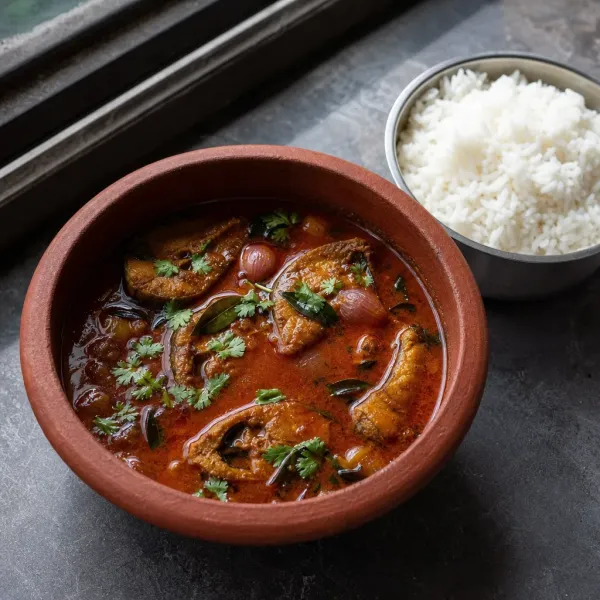
Chepala Pulusu
Traditional Andhra chepala pulusu made with whole shallots, tamarind, and firm fish simmered in gingelly oil. No tomato. Coastal Andhra household met…
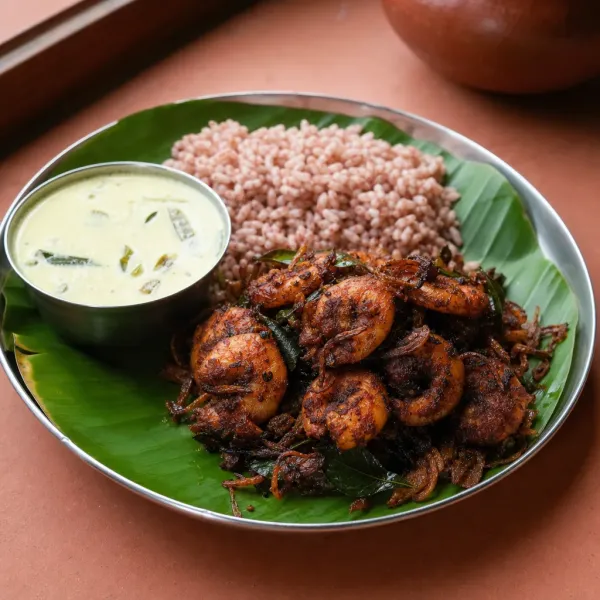
Chemmeen Varuthathu
Traditional Kerala prawn fry with kudampuli, red chilli, and coconut oil. Dry, crisp-edged, and deeply spiced – the Travancore household method.
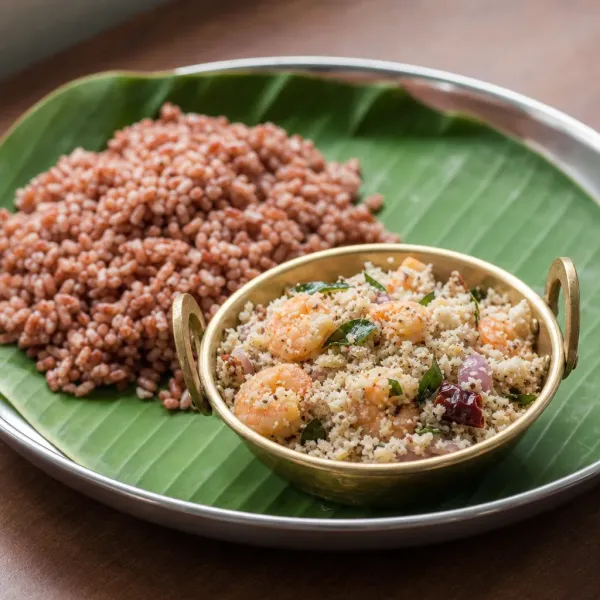
Chemmeen Thoran
Traditional Kerala chemmeen thoran: small prawns stir-fried with fresh grated coconut, shallots, curry leaves and coconut oil. Dry, fragrant and read…
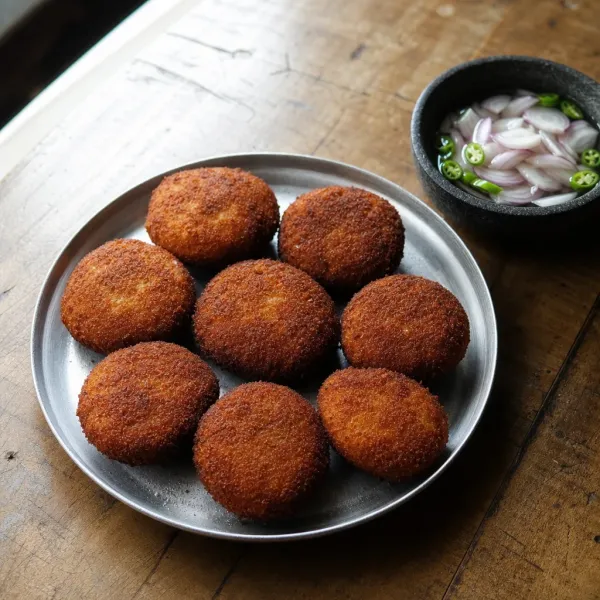
Kerala Nasrani Fish Cutlet
Traditional Kerala Nasrani fish cutlet with seer fish, shallots and coconut oil. Step-by-step method for a crisp, golden crust that holds.
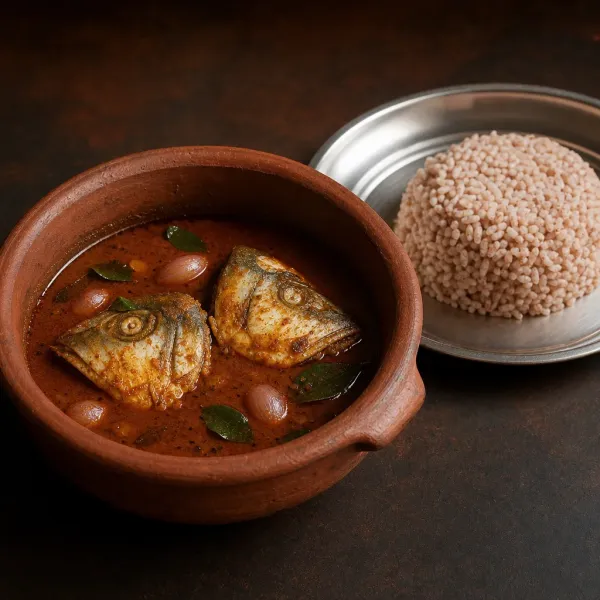
Meen Thalai Kuzhambu
Traditional Chettinad fish head curry with kalpasi, marathi mokku, gingelly oil and tamarind. Household recipe from the Chettiar kitchen of Tamil Nad…
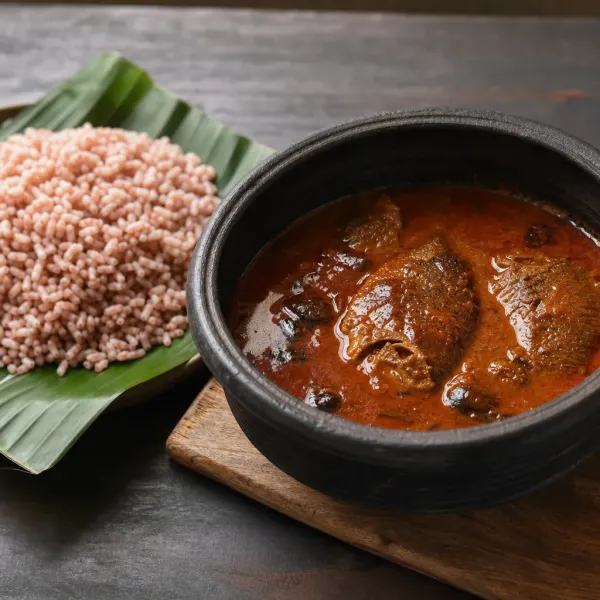
Kottayam Meen Vevichathu
Authentic Kottayam-style red fish curry with kudampuli, no coconut. Traditional Nasrani recipe cooked in a manchatti with Kashmiri chilli and coconut…