

Chepala Pulusu Recipe
Malayalam ചേപല పులుసుTamil சேபல புளுசுKannada ಚೇಪಲ ಪುಲುಸುTelugu చేపల పులుసు
- Prep20 min
- Cook40 min
- Serves4
- DifficultyMedium
- DietNon-vegetarian
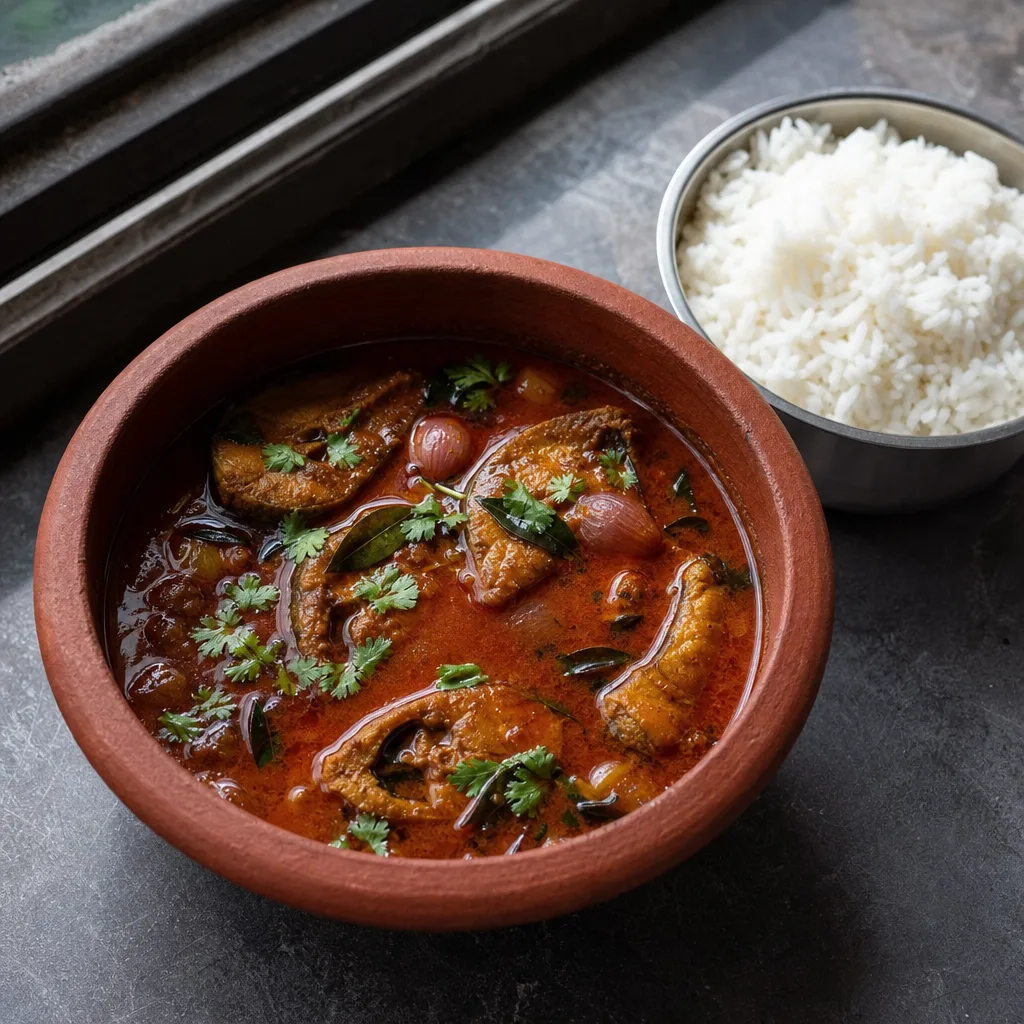
Chepala Pulusu is the everyday fish dish of Andhra households along the Krishna and Godavari deltas. It is a tamarind-soured stew, deeply coloured from dried red chillies and turmeric, with whole shallots that soften into the gravy and fish that finishes cooking in the pot. The word pulusu means sour, and the sourness here is the whole point: the tamarind is not a background note but the backbone of the dish.
In most homes along the coast, this is made with whatever firm-fleshed fish came in that morning. Rohu, catla, king mackerel (vanjaram), and mullet are all common. The fish is not fried before it goes in; it cooks directly in the simmering tamarind broth, which keeps the flesh soft and lets the stew absorb the flavour of the fish. If the fish is fried first, that is a different dish and a different result.
This is eaten at midday with a large quantity of plain rice. The gravy is thin enough to pool around the rice and sour enough to cut through it. Most households make it slightly more or slightly less sour depending on the tamarind that season, and every cook adjusts at the end. It keeps well and is considered better the second day, once the fish has rested in the gravy.
Ingredients (serves 4)
Fish
Tamarind base
Aromatics and spices
Fat
Finish
Method
Marinate the fish
Rub the fish pieces with ½ tsp turmeric and salt. Set aside for 15 minutes while you prepare the tamarind and aromatics. This brief marination firms the flesh slightly and keeps it from breaking apart in the stew.
Extract the tamarind
Soak the tamarind in 400 ml warm water for 20 minutes. Work it with your fingers until the pulp dissolves completely, then strain through a sieve, pressing the solids hard. You should have a thick, dark extract. Discard the fibre and seeds.
Temper the whole spices
Heat the gingelly oil in a wide, heavy-bottomed pot over medium heat. Add the mustard seeds and wait until they pop. Add the fenugreek seeds and let them colour to a pale gold, about 20 seconds. Do not let fenugreek go dark brown or it will make the gravy bitter.
Build the aromatic base
Add the dried red chillies and curry leaves to the pot; they will crackle in the oil. Immediately add the whole shallots, garlic, ginger, and green chillies. Fry over medium heat, stirring occasionally, until the shallots are translucent and beginning to colour at the edges, about 8 minutes. Do not rush this; undercooked shallots leave a raw taste in the finished gravy.
Add the ground spices
Lower the heat. Add the turmeric, red chilli powder, and coriander powder. Stir constantly for 1 minute, coating the shallots. The spices should smell fragrant and cooked, not raw. If they catch on the bottom, add a splash of water.
Pour in the tamarind
Pour in the strained tamarind extract and the additional 300 ml water. Stir well, scraping up anything stuck to the base. Add salt. Bring to a steady simmer over medium heat and cook uncovered for 12 to 15 minutes, until the raw tamarind smell cooks off and the gravy darkens slightly and thickens a little. The surface will look glossy.
Taste and balance
Taste the gravy before the fish goes in. It should be sour, lightly spiced, and well salted. This is your only real chance to adjust the balance; once the fish is in, you should not stir vigorously or the pieces will break.
Add the fish
Slide the fish pieces gently into the simmering gravy in a single layer if the pot allows. Spoon the gravy over the top pieces. Do not stir; instead, hold the pot handles and swirl gently once or twice. Keep the heat at a steady medium-low simmer.
Simmer the fish through
Cook uncovered for 10 to 12 minutes. The fish is ready when it is opaque all the way through and the flesh just begins to pull away from the bone at the thickest part. Spoon gravy over the top pieces once or twice during this time rather than turning them. Overcooked fish will fall apart and cloud the gravy.
Rest and finish
Take the pot off the heat. Scatter the torn coriander leaves over the top. Let the pulusu rest uncovered for 5 minutes before serving. The gravy will continue to thicken slightly as it cools and the fish will absorb more of the tamarind. Serve directly from the pot.
How to serve
Plain cooked rice (sona masuri or raw rice); a dry vegetable poriyal or vepudu on the side is common. Some households serve with pappadam.
Served with: Plain cooked rice (sona masuri or raw rice); a dry vegetable poriyal or vepudu on the side is common. Some households serve with pappadam.
Cook's tips
Choice of fish
Bone-in steaks of rohu or catla are traditional and give the best flavour. Boneless fillets cook faster and break more easily; reduce the simmering time to 6 to 7 minutes if using fillets.
Gingelly oil
The untoasted (cold-pressed) gingelly oil used in Andhra cooking is milder than the toasted sesame oil used in East Asian cooking. Do not substitute toasted sesame oil; the flavour is completely different.
Tamarind quantity
Tamarind varies in sourness by season and brand. Start with 60 g if your tamarind is very sour and taste the gravy before adding the fish. You can always add a small piece dissolved in water at the end, but you cannot remove sourness once it is in.
The next day
This pulusu genuinely improves after resting overnight. The fish firms up and the gravy deepens in flavour. Reheat gently over low heat without boiling, or the fish will overcook.
No tomato
Tomato is now common in many home versions and restaurant versions, but it is a later addition. It softens the sourness and changes the colour. This recipe follows the older style without it.
Regional variations
Telangana version with gongura (sorrel) added; Rayalaseema version with more dried red chilli and less tamarind; Nellore style with rohu or catla and a thinner gravy.
Glossary
- Pulusu పులుసు
- Telugu word for a tamarind-soured stew or gravy; literally means sour.
- Chepala చేపల
- Telugu word for fish (plural/genitive form of chepa, meaning fish).
- Gingelly oil నువ్వుల నూనె
- Cold-pressed sesame oil used in South Indian cooking, particularly in Andhra and Tamil Nadu; untoasted and milder than East Asian sesame oil.
- Guntur chilli గుంటూరు మిర్చి
- A variety of dried red chilli from Guntur district in Andhra Pradesh, known for high heat and deep red colour; the benchmark chilli in Andhra cooking.
- Shallots (sambar onions) చిన్న ఉల్లిపాయలు
- Small, pungent onions used whole or halved in South Indian cooking; sweeter and less watery than large onions.
Two things decide whether this pulusu works: the tamarind gravy must cook long enough before the fish goes in to lose its raw edge, and the fish must be added to a steady simmer and left largely undisturbed. Rush the tamarind and the stew tastes sharp and unfinished; stir the fish and it falls apart into the gravy. Get those two things right and the dish takes care of itself.
More Seafood recipes
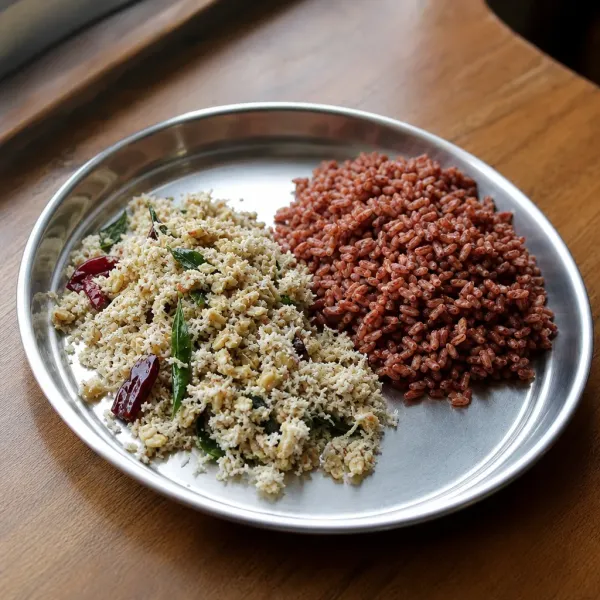
Kakka Irachi Thoran
Traditional Kerala kakka irachi thoran: fresh clam meat stir-fried dry with grated coconut, shallots and curry leaves. Coastal household recipe with…
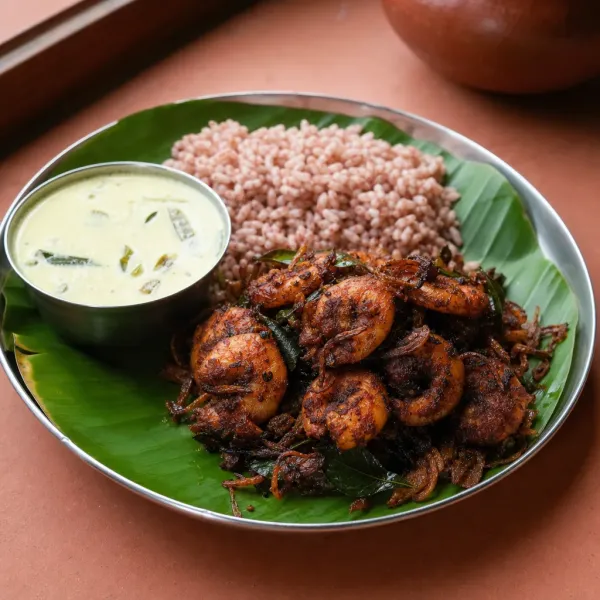
Chemmeen Varuthathu
Traditional Kerala prawn fry with kudampuli, red chilli, and coconut oil. Dry, crisp-edged, and deeply spiced – the Travancore household method.
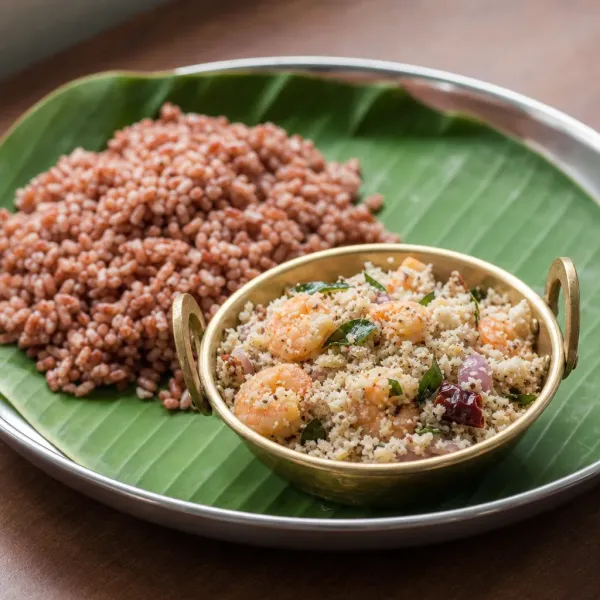
Chemmeen Thoran
Traditional Kerala chemmeen thoran: small prawns stir-fried with fresh grated coconut, shallots, curry leaves and coconut oil. Dry, fragrant and read…
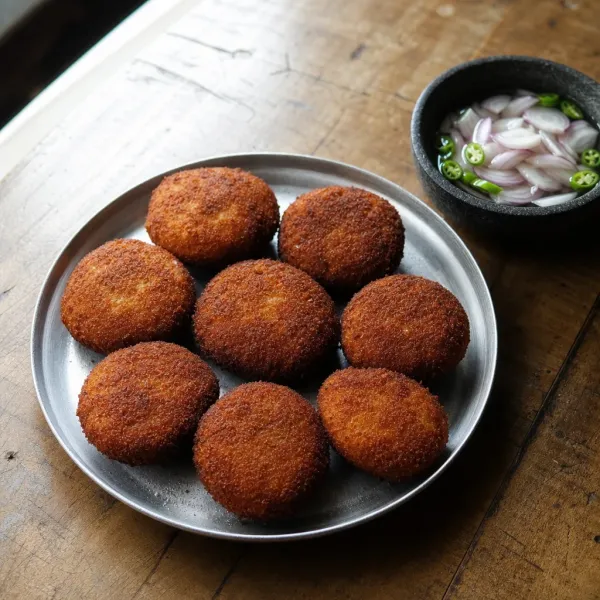
Kerala Nasrani Fish Cutlet
Traditional Kerala Nasrani fish cutlet with seer fish, shallots and coconut oil. Step-by-step method for a crisp, golden crust that holds.
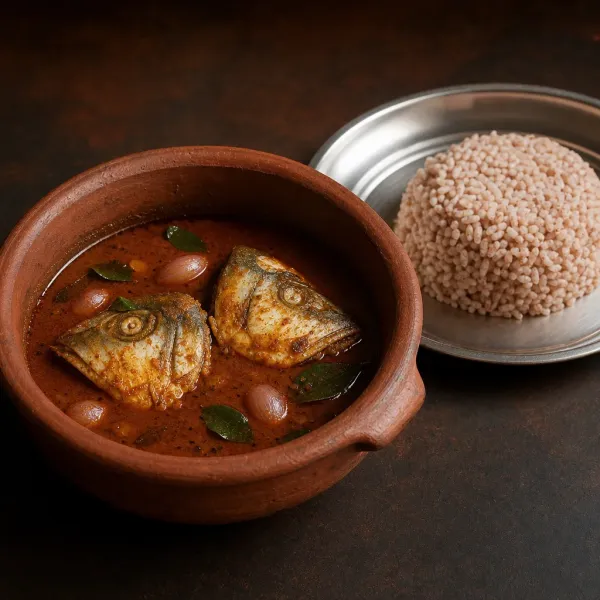
Meen Thalai Kuzhambu
Traditional Chettinad fish head curry with kalpasi, marathi mokku, gingelly oil and tamarind. Household recipe from the Chettiar kitchen of Tamil Nad…
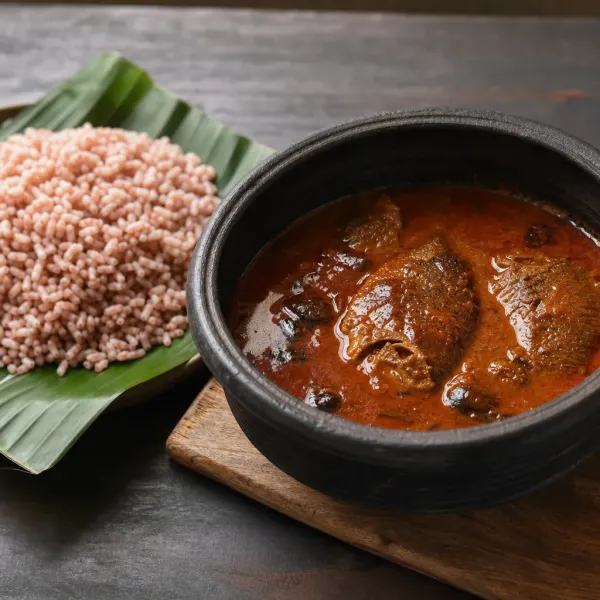
Kottayam Meen Vevichathu
Authentic Kottayam-style red fish curry with kudampuli, no coconut. Traditional Nasrani recipe cooked in a manchatti with Kashmiri chilli and coconut…