

Allam Pachadi Recipe
Malayalam അല്ലം പచ്ചടിTamil அல்லம் பச்சடிKannada ಅಲ್ಲಂ ಪಚ್ಚಡಿTelugu అల్లం పచ్చడి
- Prep10 min
- Cook15 min
- Serves6
- DifficultyEasy
- DietVegan
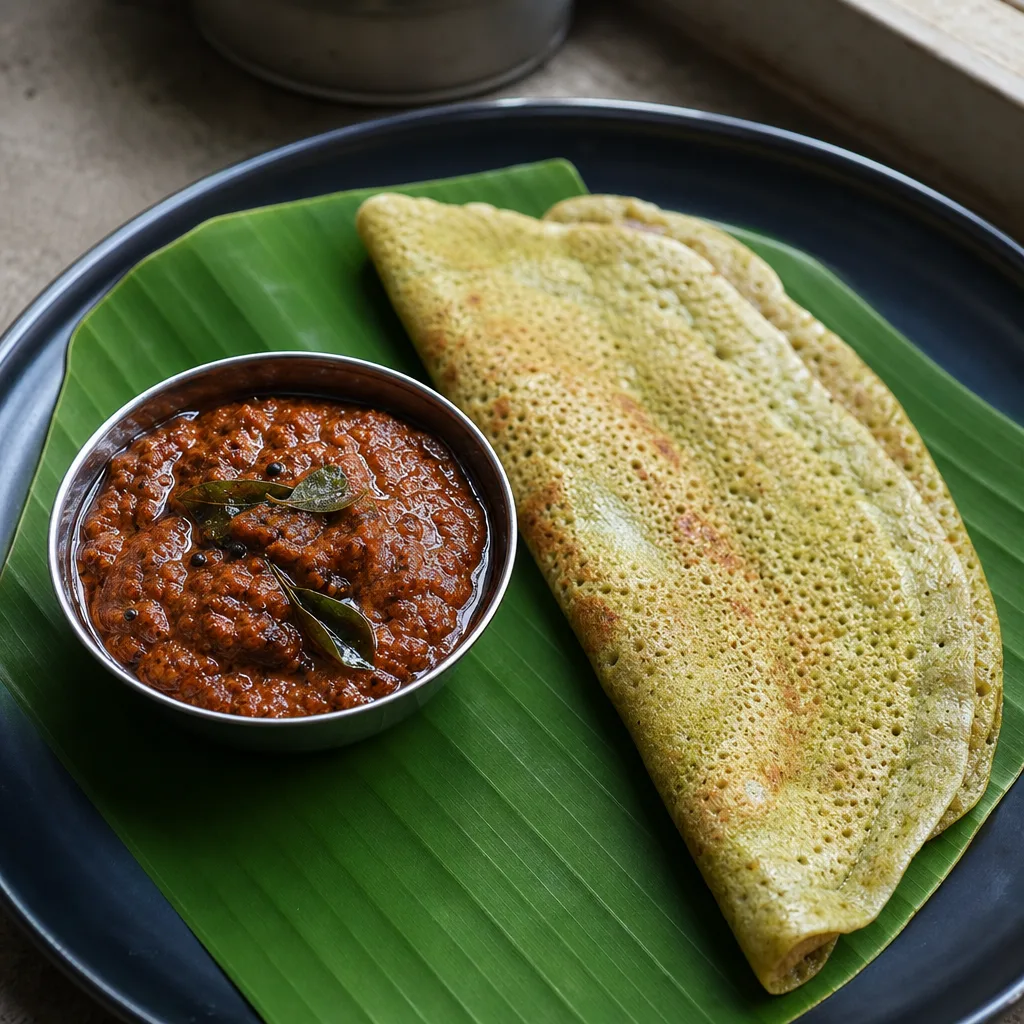
Allam pachadi is the chutney that anchors a proper Andhra breakfast. It sits in a small mound on the banana leaf or steel plate beside the idli or pesarattu, dark reddish-brown, intensely aromatic, with a heat that comes in waves: first the dried chillies, then the ginger, then the tamarind pulling it back. A little goes a long way.
The balance the dish is after is sweet, sour, hot and pungent all at once, with none of them winning outright. Jaggery softens the edge; tamarind gives body and sourness; the roasted dal gives a faint nuttiness that keeps it from being simply a condiment for the brave. In Rayalaseema homes the chilli count is not modest.
Households differ mainly in how much ginger they are willing to use. Some grandmothers grind it very fine so the heat is diffused throughout; others keep it slightly coarse so you get a sharper hit. The chutney keeps well at room temperature through a South Indian morning and will last two days in the refrigerator without losing much.
Ingredients (serves 6)
For the chutney
For the tadka
Method
Soak the tamarind
Break the tamarind into a small bowl and pour over 3 tablespoons of warm water. Let it sit for 10 minutes while you prepare everything else. At the end, squeeze it thoroughly with your fingers to dissolve the pulp into the water, then strain out any fibres. You want a thick, dark pulp, not a watery liquid.
Roast the dals and chillies
Set a small heavy pan over medium-low heat and add 1 tablespoon of the gingelly oil. Add the chana dal and urad dal together. Stir continuously; they burn fast. When the chana dal turns pale gold and smells nutty, about 2 minutes, add the dried red chillies. Stir for another 30 to 40 seconds until the chillies darken slightly and become fragrant. Tip everything onto a plate and let it cool completely before grinding.
Fry the ginger briefly
In the same pan, add the remaining 1 tablespoon of gingelly oil over medium heat. Add the chopped ginger and fry, stirring, for about 2 minutes. The ginger should lose its raw smell and take on a little colour at the edges. This step tames the sharpest raw bite while keeping the warmth. Remove and cool with the dal.
Grind the dry ingredients first
Put the cooled roasted dals and chillies into a stone grinder or the small jar of a mixer-grinder. Grind to a coarse powder before adding anything wet. If you add the tamarind first, the dals will not grind fine and the texture will be uneven.
Add ginger, tamarind and jaggery
Add the fried ginger, the strained tamarind pulp, the jaggery and the salt. Grind to a smooth, thick paste. Add water only a teaspoon at a time if the blades are struggling; the chutney should be thick, not pourable. Taste now: it should be hot, sour and just faintly sweet. Adjust salt.
Make the tadka
Heat 1 tablespoon of gingelly oil in a small tadka pan over medium-high heat until it shimmers. Add the mustard seeds and let them pop fully, about 20 seconds. Add the urad dal and stir until it turns pale gold. Add the torn dried red chilli and curry leaves, stand back as the leaves will spit, and fry for 10 seconds. Pour the entire tadka over the ground chutney and stir it in.
Rest and serve
Let the chutney sit for at least 5 minutes before serving so the tadka flavours settle in. The colour will be a deep reddish-brown. Taste once more after resting; the jaggery often needs a moment to integrate, and you may want a pinch more salt.
How to serve
Pesarattu (green moong dal dosa), idli, or plain dosa. In many Andhra households it also appears on the full meals plate (bhojanam) as one of the chutneys.
Served with: Pesarattu (green moong dal dosa), idli, or plain dosa. In many Andhra households it also appears on the full meals plate (bhojanam) as one of the chutneys.
Cook's tips
Chilli choice matters
Guntur chillies give fierce heat and a deep red colour. Byadagi chillies give colour with less heat. Many households use a mix: six Guntur and two Byadagi. Do not use Kashmiri chillies; they are too mild and the flavour profile is wrong.
Do not skip the gingelly oil
This is not a dish where refined sunflower oil works as a substitute. The roasted sesame flavour of gingelly oil is part of what the chutney tastes like. Cold-pressed gingelly oil (often labelled 'til oil' or 'nalla ennai') is the correct one.
Ginger freshness
Old, fibrous ginger will not grind smoothly and gives a woody flavour. Use ginger that snaps cleanly when you break it and has tight, unwrinkled skin.
Storage
The chutney keeps at room temperature for the morning. Refrigerate for up to two days in a clean, dry container. Bring back to room temperature before serving; the gingelly oil will solidify slightly when cold.
Adjusting the balance
If it is too sharp, add a little more jaggery and grind again briefly. If it tastes flat, it usually needs more salt rather than more tamarind. The sourness from tamarind tends to bloom as the chutney rests.
Regional variations
Telangana households make a sharper, less sweet version with no jaggery and sometimes add a small piece of dry coconut; coastal Andhra families use less tamarind and a lighter hand with chillies.
Glossary
- Allam అల్లం
- Ginger in Telugu.
- Pachadi పచ్చడి
- A class of chutneys or relishes in Telugu cuisine, ground rather than cooked through.
- Gingelly oil నువ్వుల నూనె
- Cold-pressed sesame oil used as the cooking fat in many Telugu and Tamil dishes; has a distinct roasted aroma.
- Tadka తాలింపు
- The tempering of whole spices and aromatics in hot oil, poured over a dish to finish it. Also called popu in Telugu.
- Chana dal సెనగపప్పు
- Split and husked Bengal gram, used here as a roasted base to give body and mild nuttiness to the chutney.
- Kudampuli കുടംപുളി
- Gamboge (Malabar tamarind), used in Kerala fish curries; distinct from the tamarind (చింతపండు, chintapandu) used in this Andhra recipe.
What decides this chutney is the ginger-to-tamarind ratio and the roasting of the dal. Under-roast the dal and the chutney tastes raw; over-roast it and bitterness creeps in. Use too little ginger and it becomes a generic red chutney; use too much without balancing with jaggery and tamarind and it overwhelms everything. Get those two things right and the rest follows.
More Chutneys, Podis & Pickles recipes
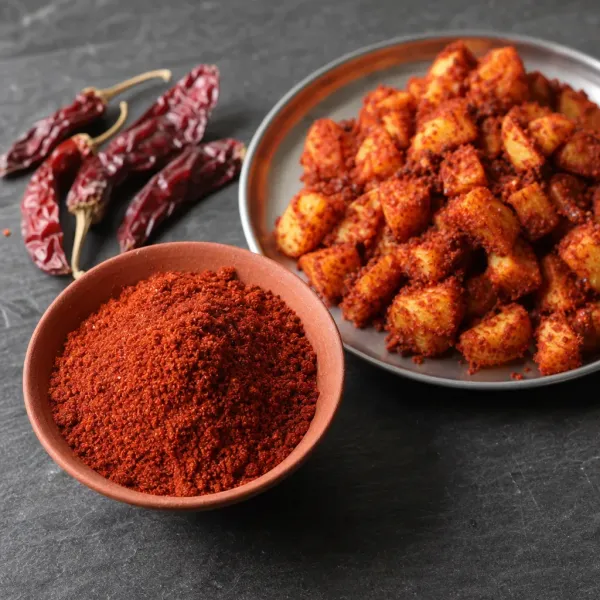
Vepudu Karam Podi
Traditional Rayalaseema vepudu karam podi: dry-roasted Guntur chillies, black pepper, cumin and garlic ground to a coarse powder for finishing Andhra…
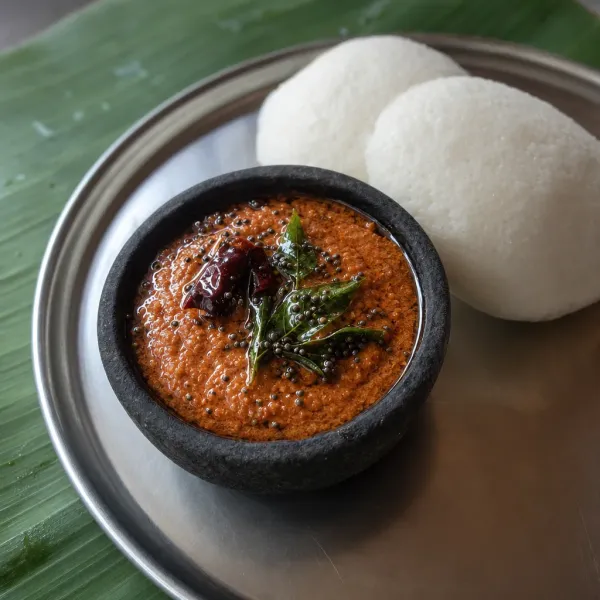
Poondu Chutney (Tamil Nadu Brahmin Style)
Traditional Tamil Brahmin poondu chutney with raw garlic, roasted chana dal, dried red chillies, and tamarind, tempered in gingelly oil. Served with…
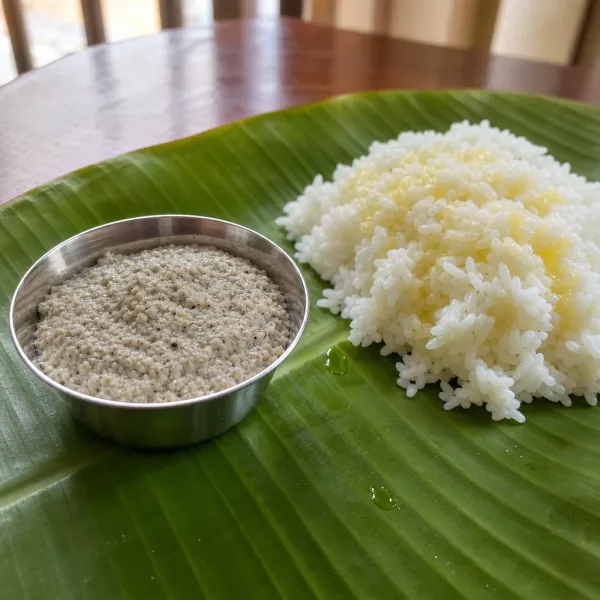
Ellu Thogayal (Sesame Chutney)
Traditional Iyer-style ellu thogayal: thick, coarsely ground sesame paste with urad dal, dried red chillies and tamarind. Served with rice or idli.
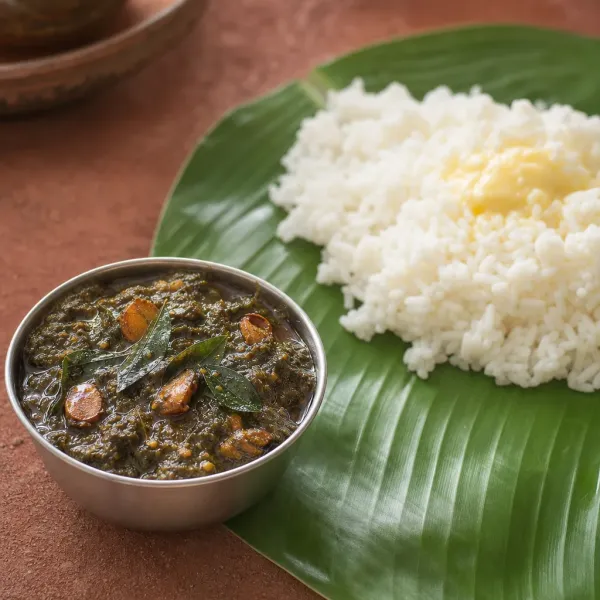
Gongura Pachadi (Andhra Gongura Pickle, Long-Keeping)
Traditional Rayalaseema gongura pickle with gingelly oil, Guntur chillies and garlic. Keeps for weeks. Step-by-step Andhra household method.
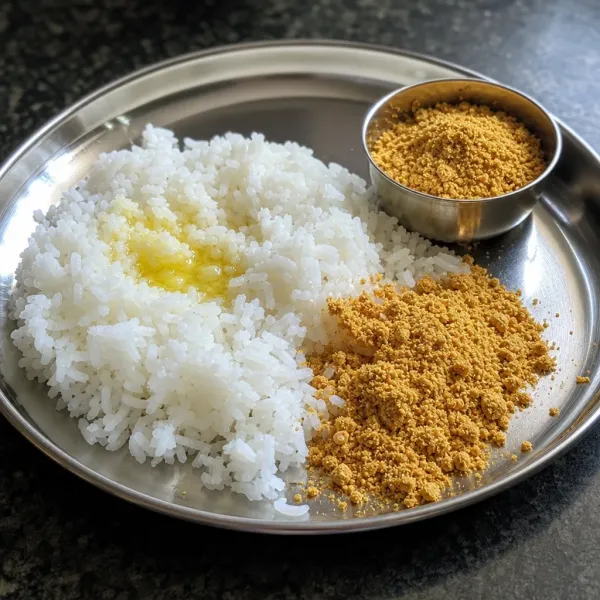
Paruppu Podi
Traditional Tamil Brahmin paruppu podi made with dry-roasted toor dal, black pepper, and asafoetida. Mixed with ghee and rice for a simple, satisfyin…
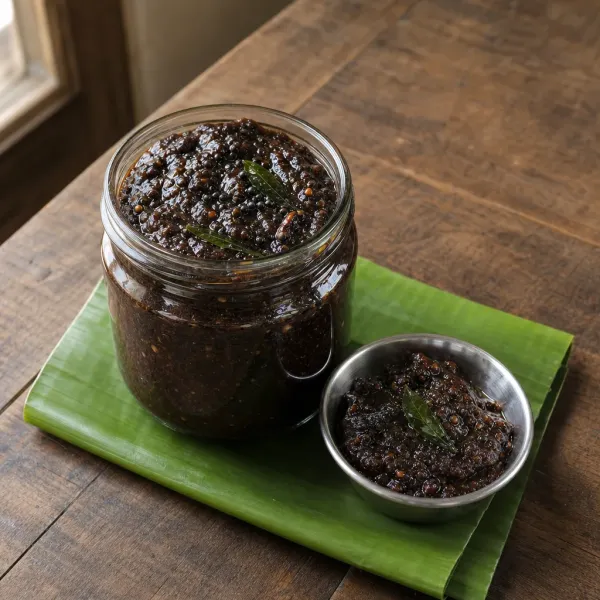
Pulikachal
Traditional Iyer-style pulikachal: tamarind cooked down with gingelly oil, fresh-ground spice powder, and a tempering of mustard and curry leaves. Ma…