

Ellu Thogayal (Sesame Chutney) Recipe
Malayalam എള്ള് തൊഗയൽTamil எள்ளு தொகையல்Kannada ಎಳ್ಳು ತೊಗರಿTelugu నువ్వుల తొగరి
- Prep5 min
- Cook10 min
- Serves4
- DifficultyEasy
- DietVegan
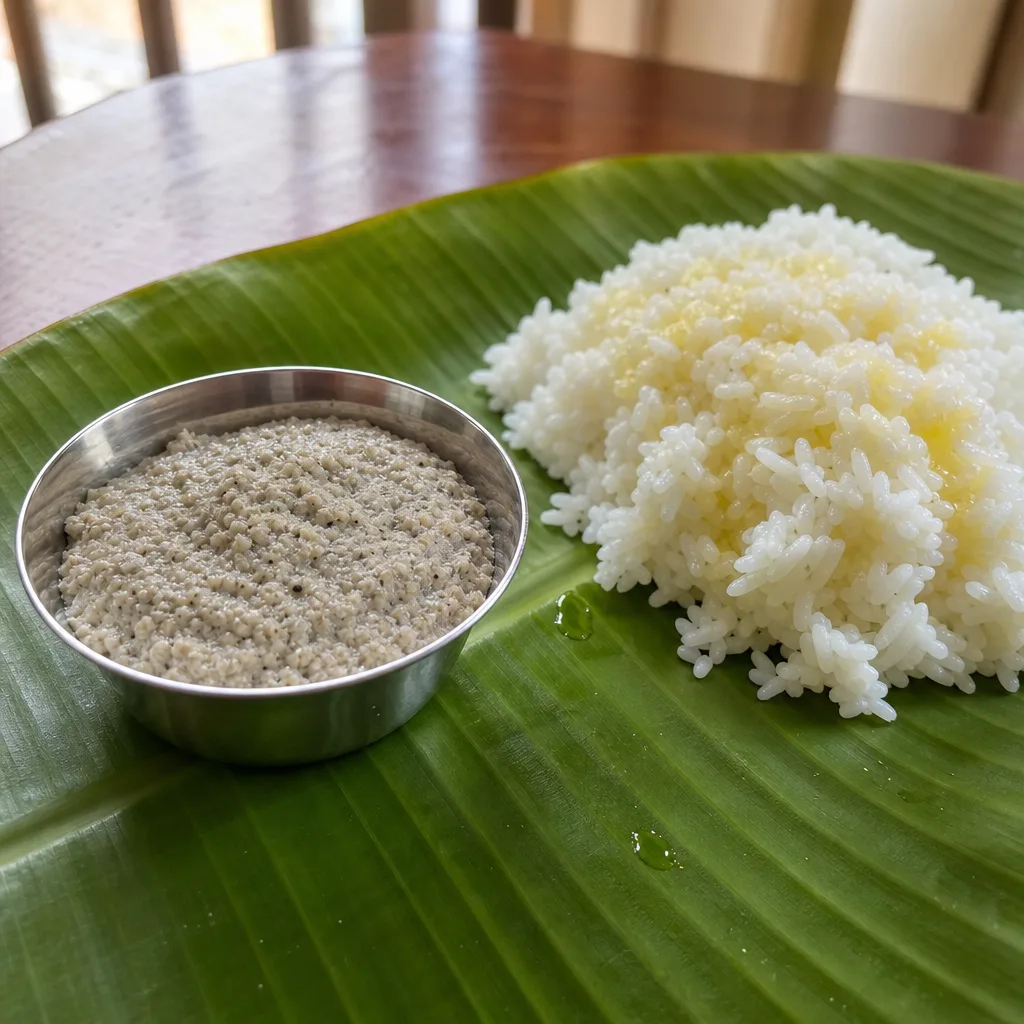
Ellu thogayal is a thick, coarse-ground sesame paste that belongs firmly in the Brahmin Tamil kitchen. It is made without onion or garlic, relying entirely on the nuttiness of dry-roasted sesame, the heat of dried red chillies, a small piece of tamarind, and the earthiness of urad dal for body. The result is dense and slightly grainy, closer to a firm paste than a pourable chutney.
In Iyer households this is a staple accompaniment to plain rice with a pour of sesame oil or ghee, eaten as part of a simple weekday lunch alongside rasam and a vegetable. It also appears alongside idli or dosa at breakfast, though rice is its true partner. Households differ mainly in the ratio of sesame to urad dal and in how much tamarind they use; some families make it almost entirely sesame with just enough dal to bind, while others use a more equal proportion.
The critical step is the roasting. Sesame seeds go from raw to perfectly toasted to bitter in a short window over medium heat. Watch them, not the clock. The seeds are ready when they begin to pop and turn the faintest golden; they continue to cook briefly off the heat, so pull the pan early.
Ingredients (serves 4)
For the thogayal
Method
Dry-roast the sesame seeds
Set a heavy kadai or iron pan over medium-low heat. Add the sesame seeds with no oil. Stir or shake the pan constantly. After 3 to 4 minutes the seeds will begin to pop and jump, and the kitchen will smell nutty. A few seeds will turn very pale gold. Remove the pan from the heat immediately at this point and tip the seeds onto a plate to stop the cooking. If they go brown they will taste bitter in the finished thogayal.
Roast the urad dal and chillies
Return the pan to medium-low heat and add the gingelly oil. Add the urad dal and the dried red chillies together. Stir continuously. The dal should turn pale golden and smell toasty, and the chillies will darken and blister slightly; this takes about 2 minutes. Do not let the dal go dark brown or it will make the thogayal taste acrid. Remove from heat and spread on the same plate as the sesame to cool.
Cool completely before grinding
Let everything sit until it is genuinely at room temperature, about 10 minutes. Grinding warm sesame releases too much oil and makes the paste greasy and loose rather than firm and grainy. This is the step most people skip when they are in a hurry, and it shows in the texture.
Grind to a coarse paste
Put the cooled sesame seeds, urad dal, red chillies, tamarind piece, and salt into a mixer-grinder jar. Pulse a few times dry to break everything down. Then add water one tablespoon at a time, grinding between additions. Stop when the mixture comes together as a thick, slightly grainy paste that holds its shape. A thogayal should not be smooth or pourable; it should be coarser than a chutney and stiffer than a dip. Two to three tablespoons of water is usually enough.
Taste and adjust
Taste the paste for salt and sourness. If the tamarind is not coming through, add a tiny pinch more and grind briefly. The heat from the chillies will be present but should not overwhelm the sesame. The thogayal is ready to serve immediately or can be stored.
How to serve
Hot plain rice with a drizzle of gingelly oil or ghee mixed in; also eaten alongside idli or plain dosa at breakfast. Papad and a simple rasam complete the rice meal.
Served with: Hot plain rice with a drizzle of gingelly oil or ghee mixed in; also eaten alongside idli or plain dosa at breakfast. Papad and a simple rasam complete the rice meal.
Cook's tips
Black sesame variation
Some households use black sesame seeds (karuppuellu) instead of white. The flavour is more intense and slightly more bitter. The method is identical but the finished thogayal will be a dark grey-brown. Both are traditional; this recipe uses white sesame because it is more common in everyday Iyer kitchens.
Storage
Keeps well in a clean, dry, airtight container in the refrigerator for 3 to 4 days. The paste firms up further when chilled; bring it to room temperature before serving. Do not add extra water to loosen it after storing.
The grinding jar matters
A small chutney jar in the mixer works better than a large jar for this quantity. In a large jar the paste just spins without catching. A traditional wet grinder or stone mortar gives the best texture but takes longer.
No garlic or onion
This is a no-onion, no-garlic recipe as it belongs to a Brahmin kitchen. Adding either would change the character of the dish entirely. The tamarind and chilli do all the work of balancing the richness of the sesame.
Regional variations
A similar sesame chutney is made in Andhra households with more dried red chillies and a sharper tamarind note; Kongunad kitchens sometimes add roasted peanuts alongside the sesame.
Glossary
- Thogayal தொகையல்
- A thick, coarsely ground chutney from Tamil Nadu, firmer than a regular chutney and meant to be mixed into rice or eaten as a side.
- Ellu எள்ளு
- Sesame seeds; in Tamil Nadu the word covers both white and black varieties.
- Gingelly oil நல்லெண்ணெய்
- Cold-pressed sesame oil used as the cooking fat in Tamil Nadu; different from the toasted sesame oil used in East Asian cooking.
- Urad dal உளுந்து
- Split and husked black gram; used here in small quantity to add body and a slight binding quality to the paste.
- Kudampuli കുടംപുളി
- Included in glossary for clarity: this recipe uses regular tamarind, not kudampuli, which is a Kerala-specific souring agent and does not belong here.
Two things decide whether this works: roasting the sesame seeds at the right moment, before they colour too deeply, and keeping the grind coarse and dry. Get both right and the thogayal has a clean, toasty depth that makes plain rice taste like a complete meal.
More Chutneys, Podis & Pickles recipes
Paruppu Podi
Traditional Tamil Brahmin paruppu podi made with dry-roasted toor dal, black pepper, and asafoetida. Mixed with ghee and rice for a simple, satisfyin…
Vepudu Karam Podi
Traditional Rayalaseema vepudu karam podi: dry-roasted Guntur chillies, black pepper, cumin and garlic ground to a coarse powder for finishing Andhra…
Curry Leaf Chutney (Karivepaku Pachadi)
Traditional Andhra Telugu karivepaku pachadi: curry leaves dry-roasted and ground with tamarind, urad dal, and red chillies into a thick, aromatic ch…
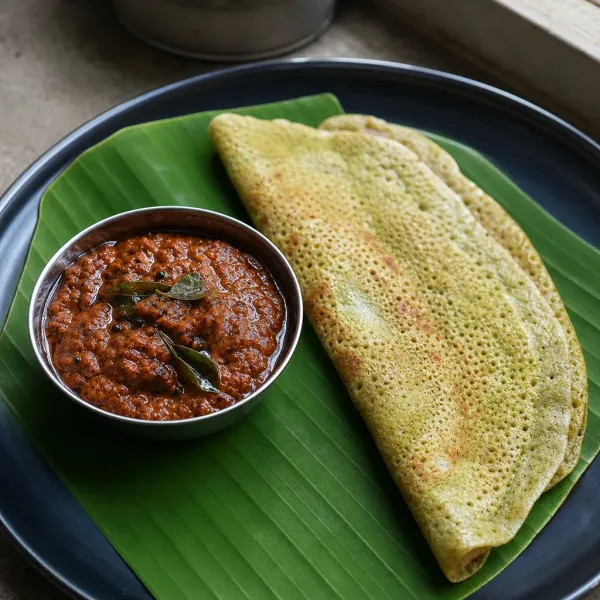
Allam Pachadi
Traditional Rayalaseema-style allam pachadi with fresh ginger, Guntur chillies, tamarind and jaggery. Served with pesarattu and idli.
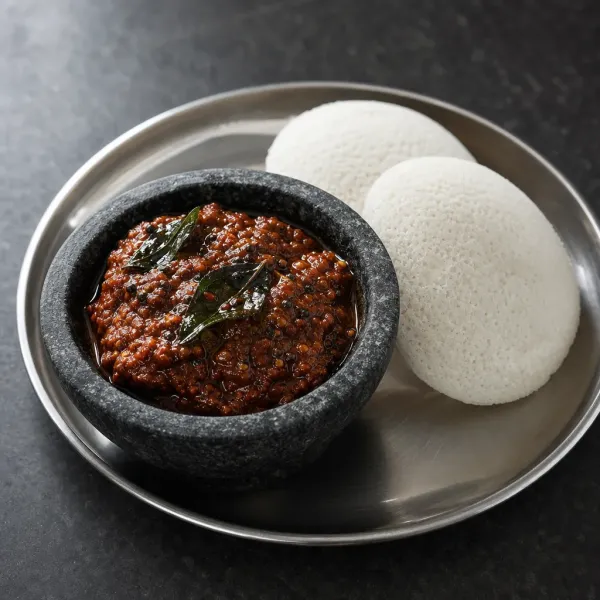
Vengaya Chutney
Traditional Tamil Iyer onion chutney made with slow-fried shallots, roasted chana dal, dried red chillies, and gingelly oil. Served with idli and dos…
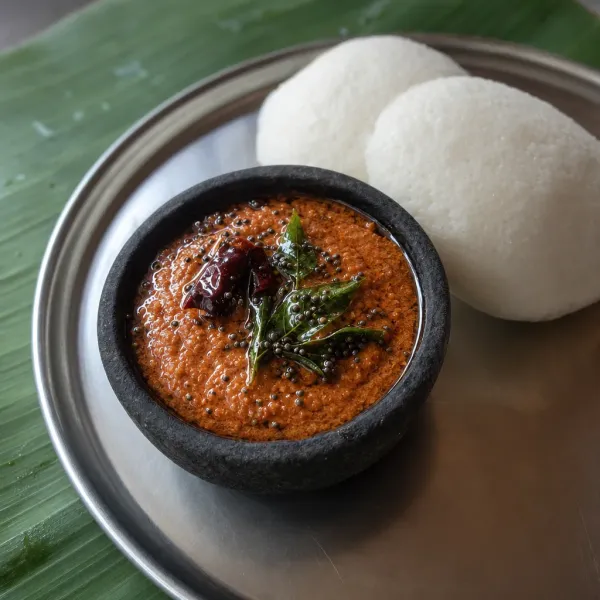
Poondu Chutney (Tamil Nadu Brahmin Style)
Traditional Tamil Brahmin poondu chutney with raw garlic, roasted chana dal, dried red chillies, and tamarind, tempered in gingelly oil. Served with…