

Vengaya Chutney Recipe
Malayalam സവോള ചട്ണിTamil வெங்காய சட்னிKannada ಈರುಳ್ಳಿ ಚಟ್ನಿTelugu ఉల్లిపాయ చట్నీ
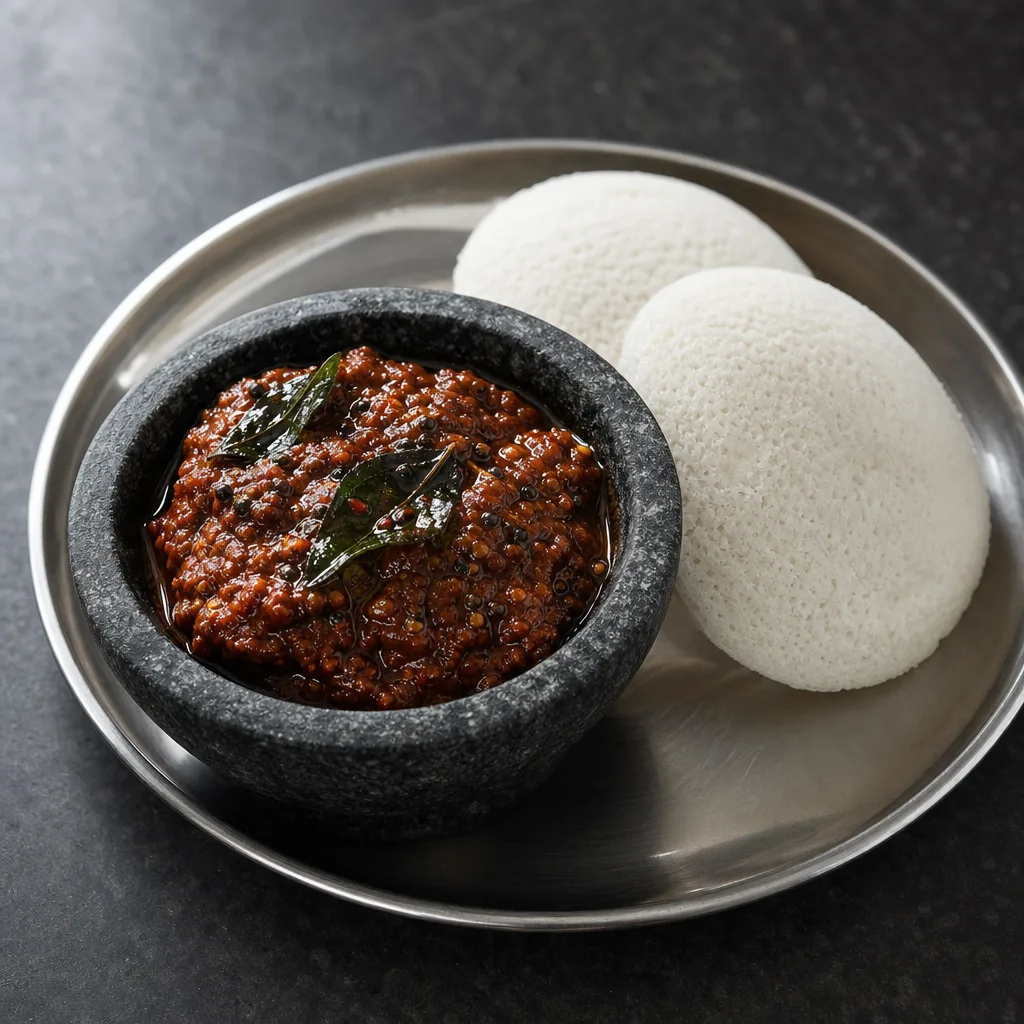
- Prep10 min
- Cook20 min
- Serves4
- DifficultyEasy
- DietVegan
In Iyer households across the Kaveri delta, this chutney is made almost every morning that idli or dosa appears on the table. It is a cooked chutney, not a raw one. The shallots are fried slowly in gingelly oil until they turn a deep reddish-brown, then ground with roasted chana dal and dried red chillies. That slow frying is what gives the chutney its colour and its slightly sweet, caramelised depth.
The fat is gingelly oil throughout — in the frying, in the tempering. Coconut oil does not belong here. Some households add a small piece of tamarind to balance the sweetness of the shallots; others leave it out entirely and rely on the chillies alone for contrast. Both are correct. What changes the character of the chutney most is how dark you take the shallots: a pale fry gives a mild, pinkish chutney; a proper dark fry gives something almost jammy and quite red.
The tempering goes on last, just before serving. Mustard seeds, curry leaves, and one dried red chilli crackled in gingelly oil. The chutney is served at room temperature alongside idli or dosa; it keeps well through the day but is best fresh.
Ingredients (serves 4)
For grinding
For tempering
Method
Dry-roast the chana dal
Set a small heavy pan over medium-low heat with no oil. Add the chana dal and stir constantly for 3 to 4 minutes until the dal turns an even golden-brown and smells nutty. Tip it onto a plate immediately — it will keep darkening in the pan if you leave it. Set aside to cool.
Fry the shallots and chillies
Pour the 2 tablespoons of gingelly oil into the same pan and raise the heat to medium. Add the peeled shallots and the dried red chillies together. Fry, stirring every minute or so, for 12 to 15 minutes. You want the shallots to go from white to translucent to a deep reddish-brown — not burnt, but genuinely dark. If you rush this step, the chutney will be pale and thin-tasting. The chillies will darken and blister; that is correct.
Cool before grinding
Take the pan off the heat and spread the shallots and chillies on the same plate as the dal. Let everything cool to room temperature. Grinding hot ingredients in a stone grinder or mixer jar turns the chutney gluey and can split the oil.
Grind to a coarse paste
Put the cooled chana dal into the mixer jar first and pulse it a few times to break it down. Add the fried shallots, fried red chillies, tamarind, and salt. Grind to a slightly coarse paste — not completely smooth. Add water a teaspoon at a time only if the blade is not catching; this chutney should be thick, not pourable. Taste and adjust salt.
Temper and finish
Heat the 1 tablespoon of gingelly oil in a small tempering ladle or tiny pan over medium-high heat. Add the mustard seeds and wait for them to pop fully — about 30 seconds. Add the broken dried red chilli and curry leaves, standing back as the leaves will spatter. The leaves should turn crisp in 10 seconds. Pour the entire tempering over the ground chutney immediately and stir it in.
Rest briefly and serve
Let the chutney sit for 5 minutes so the tempering flavours settle in. Transfer to a small steel or stone bowl. Serve at room temperature.
How to serve
Soft idli, crisp dosa, or uthappam. Also eaten with plain idiyappam in some households.
Served with: Soft idli, crisp dosa, or uthappam. Also eaten with plain idiyappam in some households.
Cook's tips
Shallots, not large onions
Large red or white onions give a sharper, more pungent result and do not caramelise in the same way. The small sambar onions (shallots) turn sweeter as they brown. If shallots are unavailable, use small pearl onions as a closer substitute than large onions.
Choosing your chilli
Byadagi chillies give the chutney a deep brick-red colour with moderate heat. Guntur chillies are hotter and give a brighter red. Many households use a mix: three Byadagi for colour and two Guntur for heat. Do not use Kashmiri chilli powder as a substitute — the texture and flavour are wrong.
How dark to go with the shallots
The single most common mistake is pulling the shallots off the heat too early. They should look almost overdone — deep mahogany at the edges. Pale-fried shallots produce a pink, sweet chutney that lacks body. If a few edges char slightly, that is fine and adds a pleasant bitterness.
Storage
The chutney keeps at room temperature for the day it is made. Refrigerated in a clean, dry jar, it keeps for two days. The gingelly oil will solidify when cold; bring it back to room temperature before serving and stir well.
Tamarind
The tamarind is a small addition and should not make the chutney sour — it just cuts the sweetness of the shallots slightly. If your shallots are very pungent and not sweet, leave the tamarind out.
Regional variations
Mappila-style onion chutney uses shallots and coconut; Chettinad version adds dried red chillies more aggressively and sometimes a small piece of cinnamon; Andhra onion chutney (ulli pachadi) uses tamarind and green chillies and is ground raw.
Glossary
- Nallennai நல்லெண்ணெய்
- Gingelly oil; cold-pressed sesame oil used in Tamil Nadu cooking for its distinct nutty flavour.
- Kadalai paruppu கடலை பருப்பு
- Split and husked chana dal; used here roasted as a thickening and flavouring agent in the chutney.
- Sambar onion சின்ன வெங்காயம்
- Small shallots; the standard allium in Tamil Nadu cooking, sweeter and more aromatic than large onions.
- Vengaya chutney வெங்காய சட்னி
- Onion chutney; vengayam means onion, chutney is the Tamil rendering of the condiment.
Two things decide this chutney: how patiently you brown the shallots, and the quality of the gingelly oil. Take the shallots to a genuine dark brown and use good cold-pressed gingelly oil for both frying and tempering — everything else follows from those two decisions.
More Chutneys, Podis & Pickles recipes
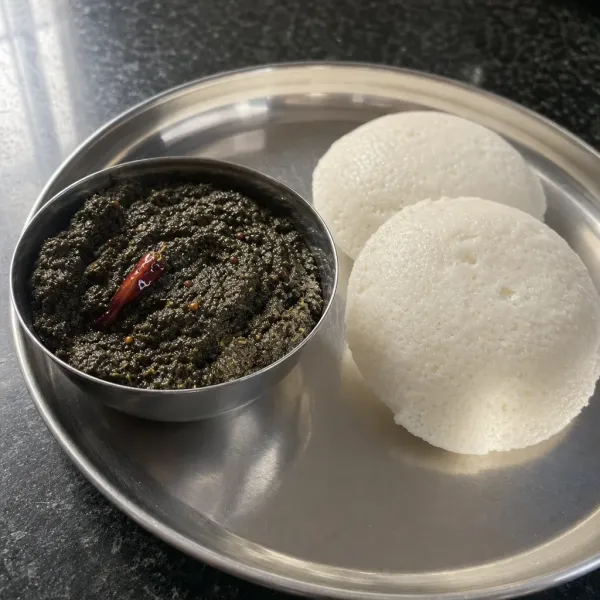
Curry Leaf Chutney (Karivepaku Pachadi)
Traditional Andhra Telugu karivepaku pachadi: curry leaves dry-roasted and ground with tamarind, urad dal, and red chillies into a thick, aromatic ch…
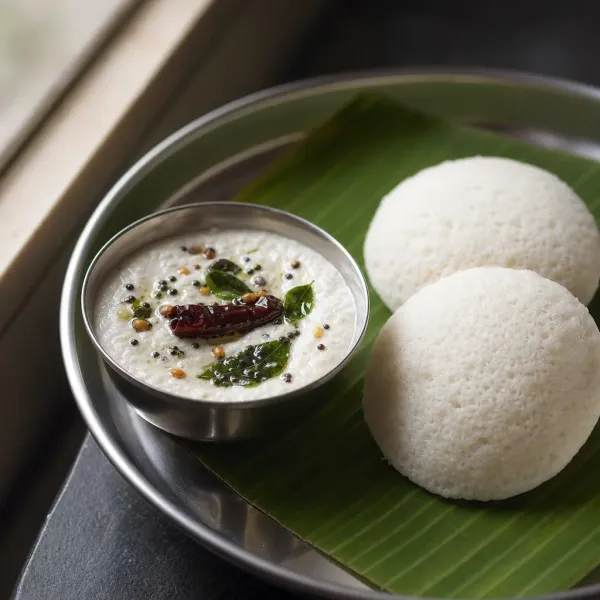
Coconut Chutney (Thengai Chutney)
Freshly ground coconut chutney from a Tamil Brahmin kitchen: coconut, pottukadalai, green chilli, and a gingelly oil tempering. Ready in 15 minutes.
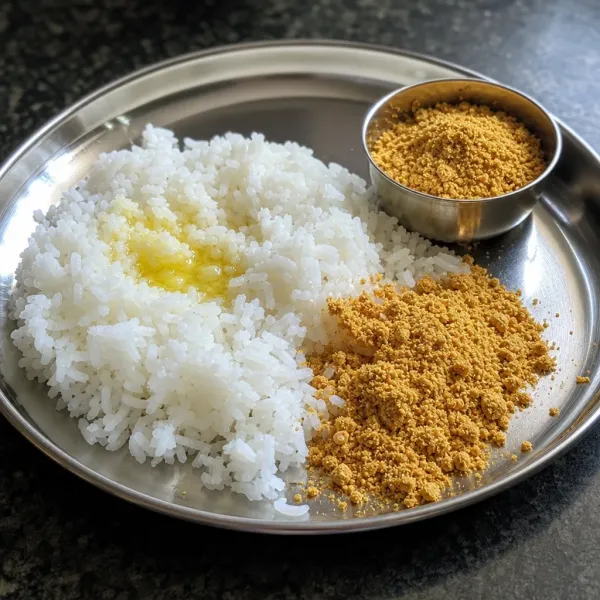
Paruppu Podi
Traditional Tamil Brahmin paruppu podi made with dry-roasted toor dal, black pepper, and asafoetida. Mixed with ghee and rice for a simple, satisfyin…
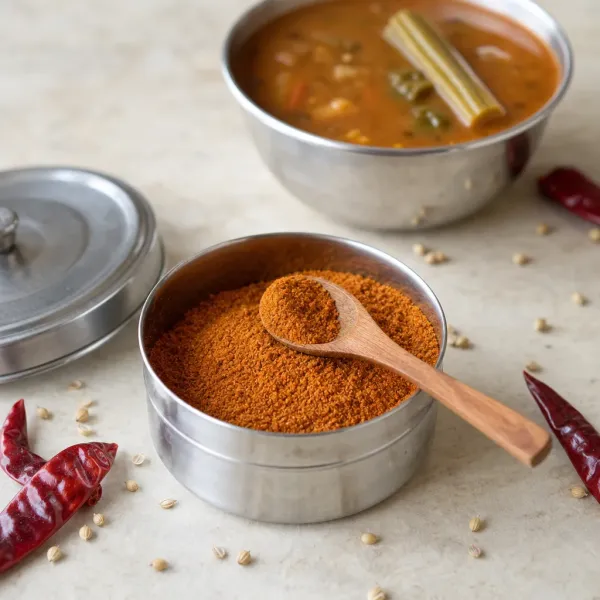
Homemade Sambar Podi
Traditional Tamil Brahmin sambar podi made by dry-roasting coriander, red chillies, chana dal and urad dal. No onion, no garlic. Step-by-step home me…
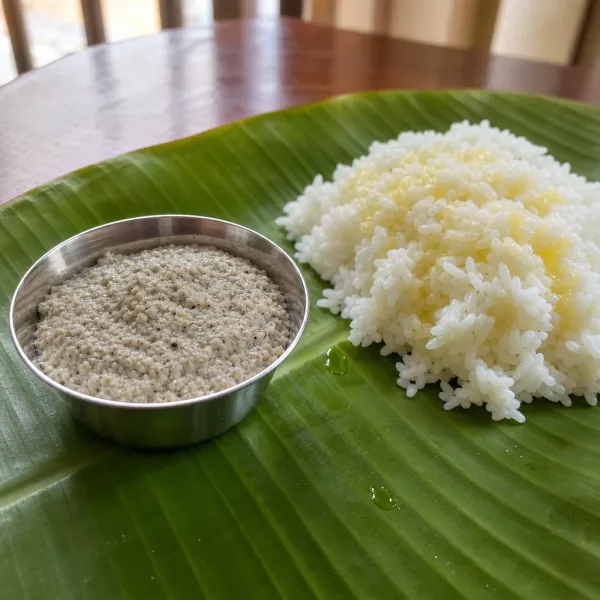
Ellu Thogayal (Sesame Chutney)
Traditional Iyer-style ellu thogayal: thick, coarsely ground sesame paste with urad dal, dried red chillies and tamarind. Served with rice or idli.
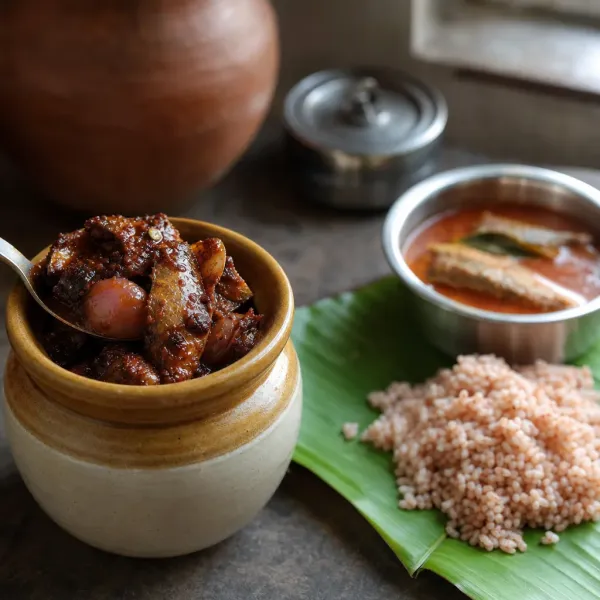
Meen Achar
Traditional Kerala Nasrani fish pickle with seer fish, kudampuli, and vinegar in coconut oil. A Travancore household recipe that keeps for weeks.