

Homemade Sambar Podi Recipe
Malayalam സാമ്പാർ പൊടിTamil சாம்பார் பொடிKannada ಸಾಂಬಾರ್ ಪುಡಿTelugu సాంబార్ పొడి
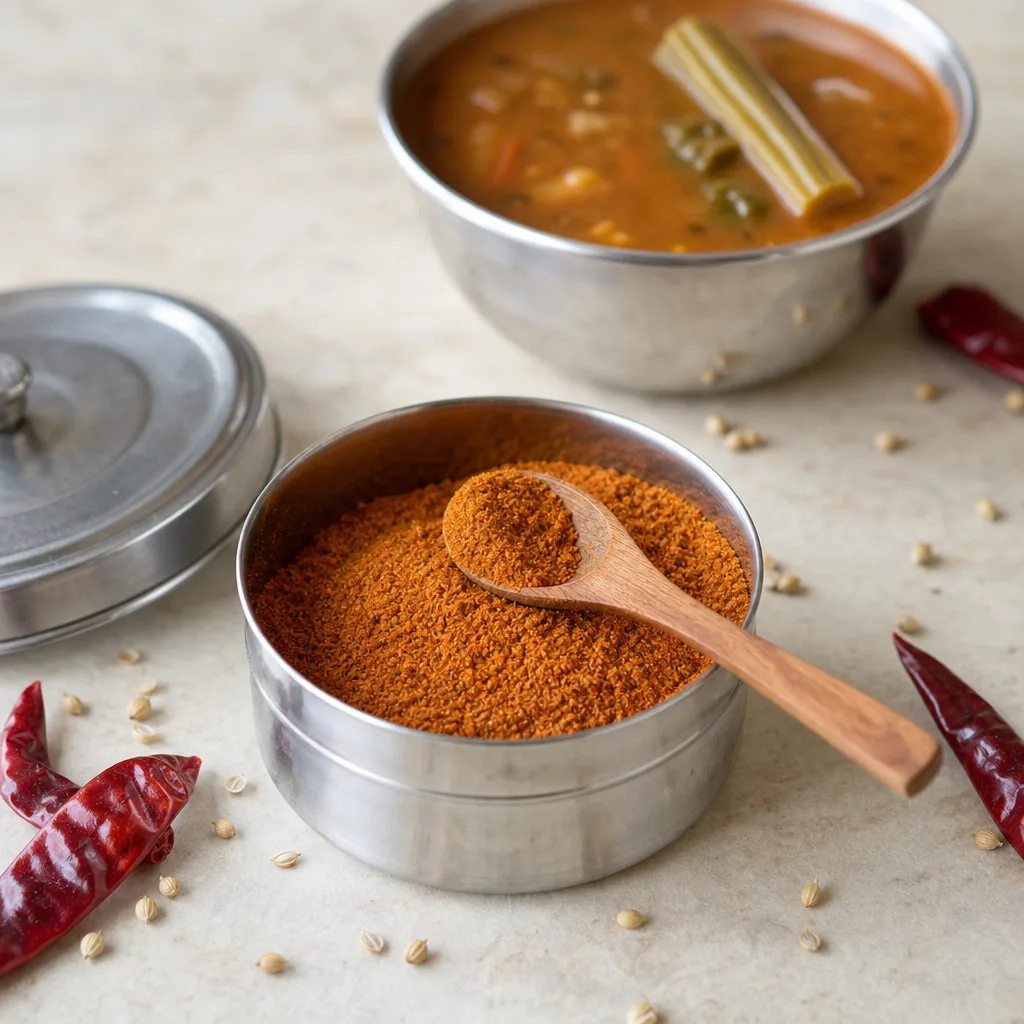
- Prep15 min
- Cook25 min
- ServesMakes roughly 250 g, enough for 30 to 35
- DifficultyEasy
- DietVegan
In a Tamil Brahmin household, sambar podi is made at home two or three times a year, in a large batch, and stored in a steel tin with a tight lid. The smell of it roasting on a dry iron pan fills the whole house. Every family has its own ratio, passed from mother to daughter not as a written recipe but as a handful of this and a handful of that, adjusted each time by smell and colour.
This version follows the Iyer tradition: no onion, no garlic, no tomato in the powder itself. The base is coriander seeds and dried red chillies, roasted separately because they need different heat and different time. Chana dal and urad dal go in for body and a faint nuttiness. Curry leaves are added by many Iyer households; some skip them. Black pepper appears in small quantities in certain families. The powder is ground to a fine, even texture — not coarse, not pasty.
The finished powder is a warm, brick-reddish brown. It smells of roasted coriander first, then chilli, then the faintest sweetness from the dals. One heaped teaspoon per serving of sambar is the usual measure, though every cook adjusts this to the vegetables in the pot that day.
Ingredients (serves Makes roughly 250 g, enough for 30 to 35)
Whole spices and dals to roast
Method
Heat the pan
Place a heavy iron tawa or thick-bottomed kadai over medium-low heat. Let it warm for two minutes before adding anything. The pan must be completely dry. Any moisture will make the spices steam instead of roast, and the powder will go stale faster.
Roast the coriander seeds
Add the coriander seeds to the dry pan. Stir constantly with a wooden spoon or shake the pan every few seconds. Roast for 5 to 6 minutes until the seeds deepen to a warm golden-brown and smell nutty and fragrant, not raw and grassy. They will crackle lightly and a few will begin to pop. Remove immediately to a wide plate to cool.
Roast the red chillies
In the same pan over medium-low heat, add the dried red chillies. Stir constantly for 2 to 3 minutes. They should puff slightly, turn a shade darker, and smell toasty. Do not let them blacken even at the tips — that bitterness cannot be undone. Remove to the same plate as the coriander.
Roast the chana dal
Add the chana dal to the pan. Stir over medium-low heat for 3 to 4 minutes until the dal turns a light golden colour and smells nutty. The dal takes longer than it looks like it should — be patient and keep stirring. Remove to the plate.
Roast the urad dal
Add the urad dal. It roasts faster than chana dal, in about 2 minutes. Watch for it to turn pale gold — it goes from white to golden to brown quickly. Remove the moment it is golden.
Roast the pepper and cumin
Add the black pepper and cumin seeds together. Stir for about 1 minute over medium-low heat until the cumin darkens a shade and smells aromatic. Remove to the plate.
Dry the curry leaves
Add the curry leaves to the pan. They will splutter for a few seconds. Press them gently with the back of the spoon and stir for 1 to 2 minutes until they are completely dry, brittle, and deep green verging on dark. Remove and spread on the plate. Do not let them brown or they will taste bitter.
Cool completely
Spread everything out on the plate and leave to cool for at least 20 minutes. Do not rush this step. If you grind warm spices, the heat and steam inside the grinder will make the powder clump and it will not keep well.
Grind to a fine powder
Transfer all the cooled roasted spices and dals to a dry mixer-grinder jar. Add the turmeric powder. Grind in two or three short bursts of 30 seconds each, opening the jar between bursts to check the texture and let any heat escape. The finished powder should be fine and even, not gritty. Run a pinch between your fingers — it should feel smooth.
Cool again and store
Spread the ground powder on a plate and leave it to cool completely to room temperature before storing. Transfer to a clean, dry steel tin or glass jar with a tight-fitting lid. Store away from light and steam. It keeps well for two to three months at room temperature in a dry kitchen, and up to six months in the refrigerator.
How to serve
Used to make sambar with toor dal and vegetables such as drumstick, shallots, brinjal, or white pumpkin. The sambar is eaten with idli, dosa, steamed rice, or pongal.
Served with: Used to make sambar with toor dal and vegetables such as drumstick, shallots, brinjal, or white pumpkin. The sambar is eaten with idli, dosa, steamed rice, or pongal.
Cook's tips
Choosing your chillies
Byadagi chillies give a deep red colour with moderate heat. Guntur chillies give more fire. Many Iyer households use a mix — roughly two-thirds Byadagi for colour, one-third Guntur for heat. Adjust the ratio to your family's tolerance.
The one step people rush
Grinding before the spices are fully cool is the most common mistake. The powder comes out damp, clumps in the jar, and develops a stale smell within weeks. Give it the full 20 minutes on the plate.
Curry leaves: include or skip
Some Iyer households always include curry leaves in the podi; others never do, preferring to add fresh leaves directly to the sambar. Both are traditional. If you omit them, the powder stores slightly longer.
Grinder versus stone
Older households used an ammikal (grinding stone) for this. A mixer-grinder works well. The key is not to run the motor continuously — short bursts prevent overheating, which cooks the powder slightly and changes the flavour.
Scaling up
This recipe doubles and triples cleanly. Many households make a large batch before a festival season. Keep the ratios and roast each ingredient separately regardless of quantity.
Regional variations
Chettinad sambar podi uses kalpasi (stone flower) and marathi mokku and is darker and more pungent; Udupi sambar podi from Karnataka is milder and uses more coriander; some Mudaliar and Vellalar households add a small quantity of black pepper and omit the curry leaves entirely.
Glossary
- Dhania தனியா
- Coriander seeds; the largest component of sambar podi by weight.
- Chana dal கடலை பருப்பு
- Split Bengal gram; roasted and ground into the podi for body and a mild nuttiness.
- Urad dal உளுந்து பருப்பு
- Split black gram, skinned; adds a faint savoury depth to the powder.
- Byadagi ಬ್ಯಾಡಗಿ
- A variety of dried red chilli from Karnataka, prized for its deep red colour and moderate heat.
- Ammikal அம்மிக்கல்
- The traditional flat grinding stone used in Tamil kitchens; still used in some households for spice powders.
- Tawa தவா
- A flat or slightly concave iron griddle; used here as a dry roasting pan.
Two things decide whether this podi is worth making: roasting each ingredient to exactly the right colour before it goes bitter, and cooling everything completely before grinding. Get those two right and the powder will smell like a proper Tamil kitchen every time you open the tin.
More Chutneys, Podis & Pickles recipes
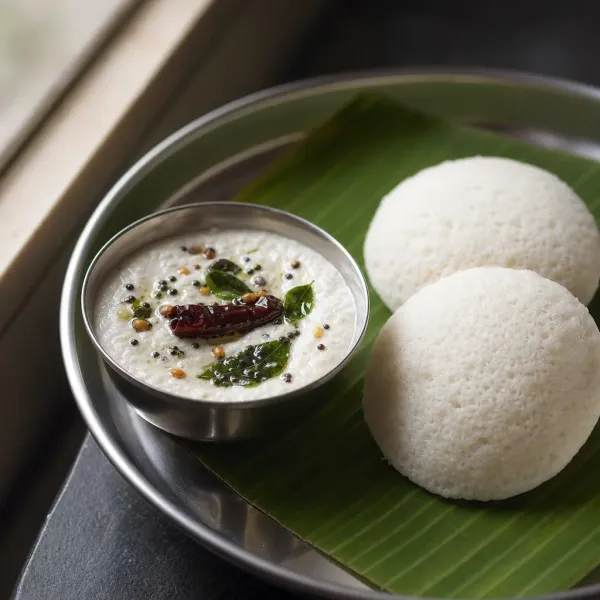
Coconut Chutney (Thengai Chutney)
Freshly ground coconut chutney from a Tamil Brahmin kitchen: coconut, pottukadalai, green chilli, and a gingelly oil tempering. Ready in 15 minutes.
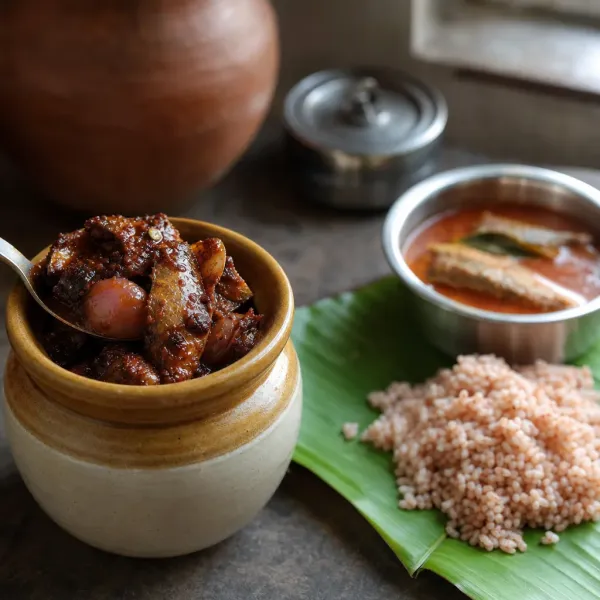
Meen Achar
Traditional Kerala Nasrani fish pickle with seer fish, kudampuli, and vinegar in coconut oil. A Travancore household recipe that keeps for weeks.
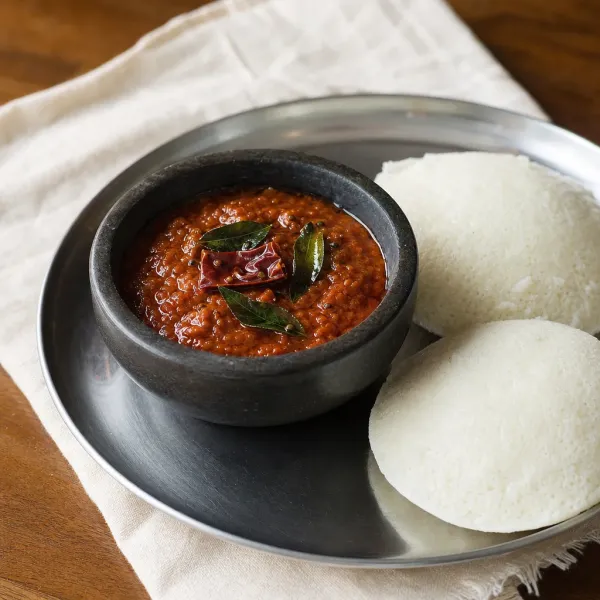
Thakkali Chutney
Authentic Tamil Iyer thakkali chutney made without onion or garlic in gingelly oil. Ready in 30 minutes, served with idli and dosa.
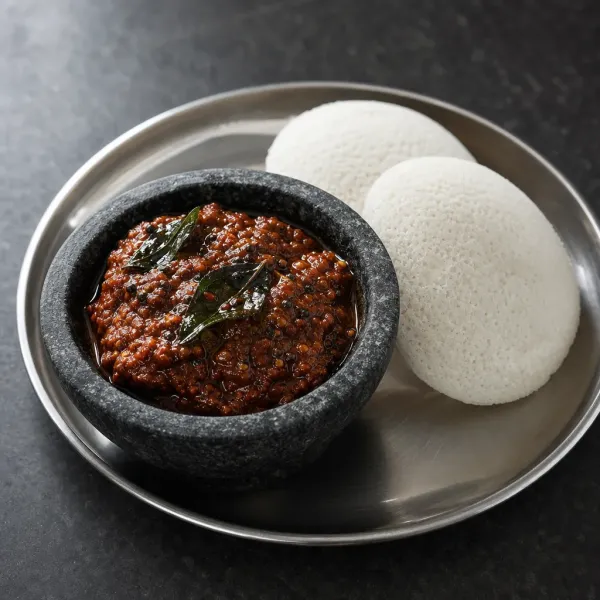
Vengaya Chutney
Traditional Tamil Iyer onion chutney made with slow-fried shallots, roasted chana dal, dried red chillies, and gingelly oil. Served with idli and dos…
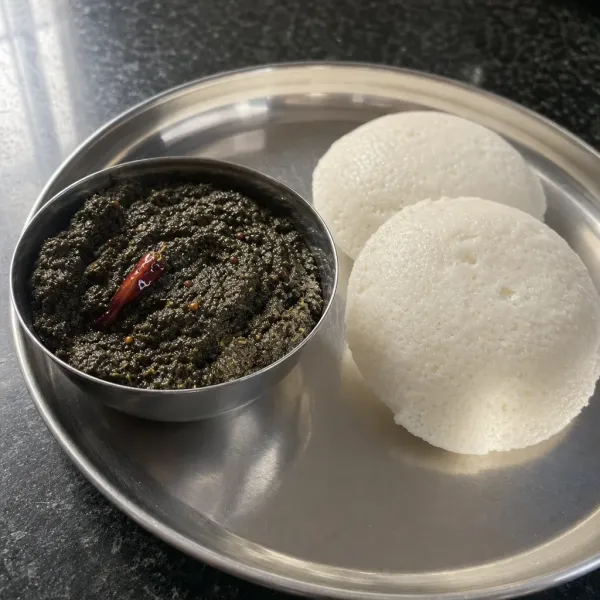
Curry Leaf Chutney (Karivepaku Pachadi)
Traditional Andhra Telugu karivepaku pachadi: curry leaves dry-roasted and ground with tamarind, urad dal, and red chillies into a thick, aromatic ch…
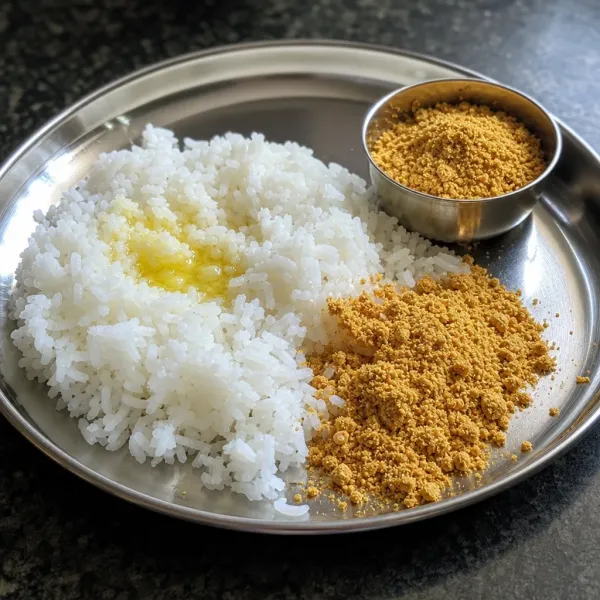
Paruppu Podi
Traditional Tamil Brahmin paruppu podi made with dry-roasted toor dal, black pepper, and asafoetida. Mixed with ghee and rice for a simple, satisfyin…