

Curry Leaf Chutney (Karivepaku Pachadi) Recipe
Malayalam കറിവേപ്പില ചട്ണിTamil கறிவேப்பிலை சட்னிKannada ಕರಿಬೇವಿನ ಚಟ್ನಿTelugu కరివేపాకు పచ్చడి
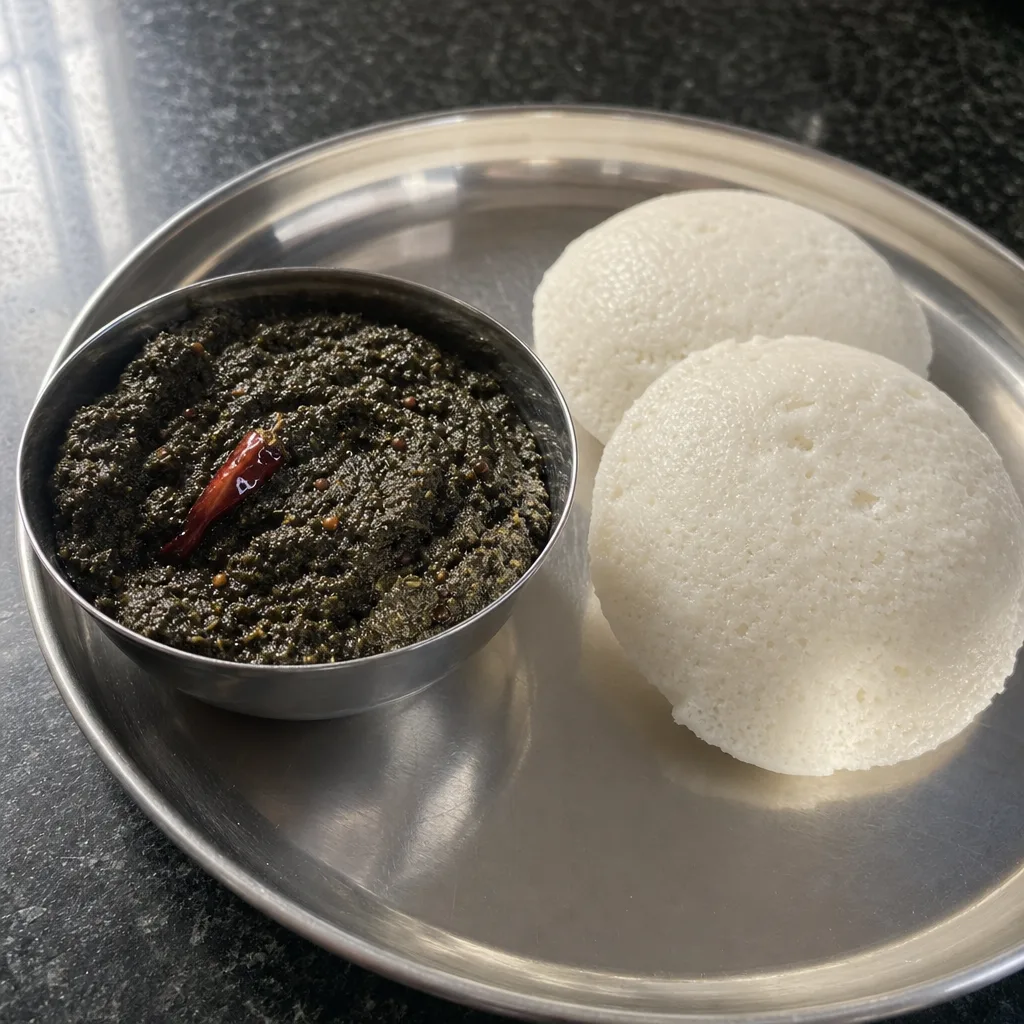
- Prep10 min
- Cook12 min
- Serves4
- DifficultyEasy
- DietVegan
Karivepaku pachadi is the kind of chutney that Telugu households make without measuring anything, yet it comes out the same every time because the technique is fixed: the curry leaves must be dry-roasted until they are completely crisp before anything else goes into the pan. That step is non-negotiable. Leaves that still have moisture will grind into a stringy, dull paste rather than a deep, aromatic one.
It is eaten at breakfast alongside idli, dosa, or pesarattu, spooned directly onto the plate. In many households it doubles as a rice chutney: a small mound of it mixed into hot rice with a drizzle of gingelly oil is a meal in itself. The paste keeps for two to three days at room temperature in a dry climate, longer in the refrigerator, which makes it useful to prepare in a larger batch.
The heat level varies by family. Some use only two dried red chillies and keep it mild; others use five or six and make it properly hot. The tamarind quantity also shifts: a little more gives a sharper, more sour chutney that cuts through a plain dosa, a little less gives something rounder that works better with rice. Both are correct.
Ingredients (serves 4)
For the chutney
For the tempering
Method
Dry the leaves thoroughly
After washing the curry leaves, spread them on a clean dry cloth and leave them for at least 15 minutes. They must be surface-dry before they go into the pan. Any water left on the leaves will cause them to splutter dangerously in the hot oil and will also prevent them from crisping properly.
Roast the dals and chillies
Set a small heavy pan over medium-low heat and add 1 tsp of the gingelly oil. Add the urad dal and chana dal and stir continuously. After about 90 seconds they will turn a pale gold; add the dried red chillies at this point. Stir for another 30 seconds until the chillies darken slightly and smell toasted. Tip everything onto a plate and let it cool completely.
Roast the garlic
In the same pan over low heat, add the remaining 1 tsp of oil and fry the garlic cloves, turning them, until they are golden on the outside and soft when pressed, about 2 minutes. Set aside with the dals.
Dry-roast the curry leaves
Wipe the pan clean and return it to medium heat with no oil at all. Add the curry leaves and spread them in a single layer. Stir or toss them constantly. They will hiss and pop at first; keep going. After 3 to 4 minutes they will go completely silent, shrink, and feel papery and brittle when you press one between your fingers. That is the moment to stop. Do not let them darken to brown or they will taste bitter. Tip them onto the plate with the dals and let everything cool.
Grind to a coarse paste
Put the cooled dals, chillies, garlic, roasted curry leaves, tamarind, and salt into a small mixer jar. Grind without adding any water first, so the dry ingredients break down. Then add water a tablespoon at a time, just enough to get the blades moving, and grind to a thick, slightly coarse paste. The texture should be like a firm sandwich spread, not a smooth liquid chutney. Taste for salt and tamarind and adjust.
Temper and finish
Heat 1 tbsp of gingelly oil in a small tempering pan over medium heat until it shimmers. Add the mustard seeds and wait for them to pop. Add the broken red chilli and the asafoetida, swirl once, and immediately pour the entire tempering over the ground chutney. Stir it in and serve.
How to serve
Hot idli, plain dosa, or pesarattu at breakfast. Also eaten mixed into plain hot rice with a little more gingelly oil.
Served with: Hot idli, plain dosa, or pesarattu at breakfast. Also eaten mixed into plain hot rice with a little more gingelly oil.
Cook's tips
Crisp leaves are everything
If the leaves are not fully dry-roasted to a papery crisp before grinding, the chutney will be stringy and the colour will be a dull khaki rather than deep green-black. The silence in the pan is your cue: when the leaves stop hissing and feel like dried herb flakes, they are ready.
Water in grinding
Add water with great restraint. Too much water makes the chutney thin and shortens its shelf life. Two to three tablespoons at most should be enough for a small batch.
Chilli choice
Guntur chillies give more heat and a redder tinge. Byadagi chillies give a deeper colour with moderate heat. Either is traditional in Andhra homes; use whichever you have. The quantity is what you adjust for heat.
Storage
Keeps well in a clean dry jar at room temperature for 2 days in humid weather, up to 5 days in the refrigerator. Always use a dry spoon.
Tamarind
The tamarind goes in raw and unsoaked. The grinding is enough to break it down. If your tamarind is very dry and fibrous, soak it in a teaspoon of warm water for 5 minutes and squeeze out any seeds before adding.
Regional variations
Tamil Iyer kariveppilai chutney (with coconut and green chilli, ground wet); Udupi Brahmin version with fresh coconut and tamarind; Kerala households make an informal version but it has no settled canonical form.
Glossary
- Karivepaku కరివేపాకు
- Telugu name for curry leaf (Murraya koenigii); kari means dark or curry, vepaku means neem-like leaf.
- Pachadi పచ్చడి
- Telugu term for a chutney or relish, ground fresh; distinct from a pickle (avakaya) or a cooked dal-based dish.
- Gingelly oil (nalla ennai) నల్ల నూనె
- Cold-pressed sesame oil, untoasted; the standard cooking fat for chutneys and kuzhambu across Telugu and Tamil kitchens.
- Inguva ఇంగువ
- Telugu name for asafoetida (hing); used in small amounts as a digestive and flavour note in tempering.
- Urad dal మినపప్పు
- Split and skinned black gram; used in small quantities in tempering and as a base for chutneys to add body and a faint nuttiness.
Two things decide this chutney: whether the curry leaves are roasted to a true crisp before grinding, and whether the water in grinding is kept to the absolute minimum. Get those right and the paste will be intensely aromatic, deep in colour, and thick enough to hold its shape on a plate.
More Chutneys, Podis & Pickles recipes
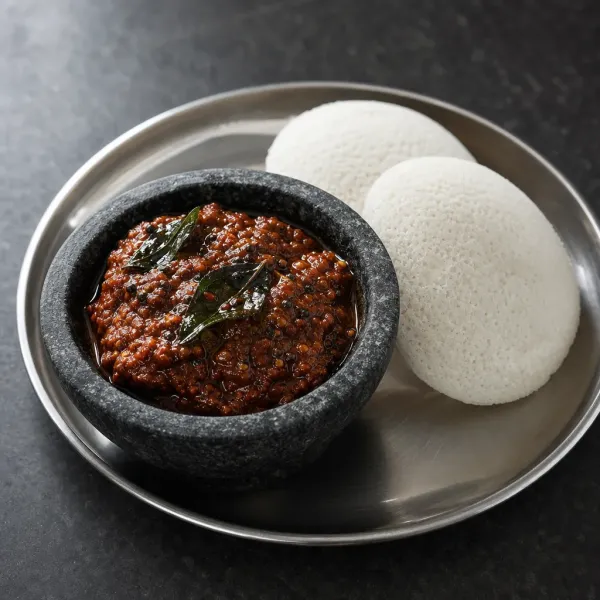
Vengaya Chutney
Traditional Tamil Iyer onion chutney made with slow-fried shallots, roasted chana dal, dried red chillies, and gingelly oil. Served with idli and dos…
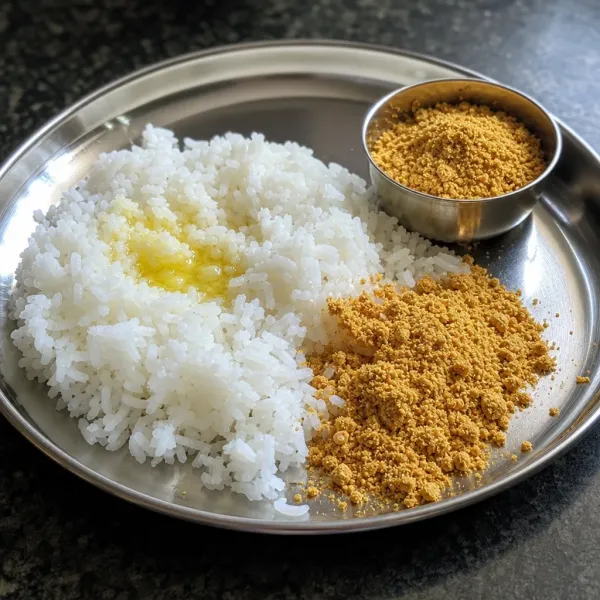
Paruppu Podi
Traditional Tamil Brahmin paruppu podi made with dry-roasted toor dal, black pepper, and asafoetida. Mixed with ghee and rice for a simple, satisfyin…
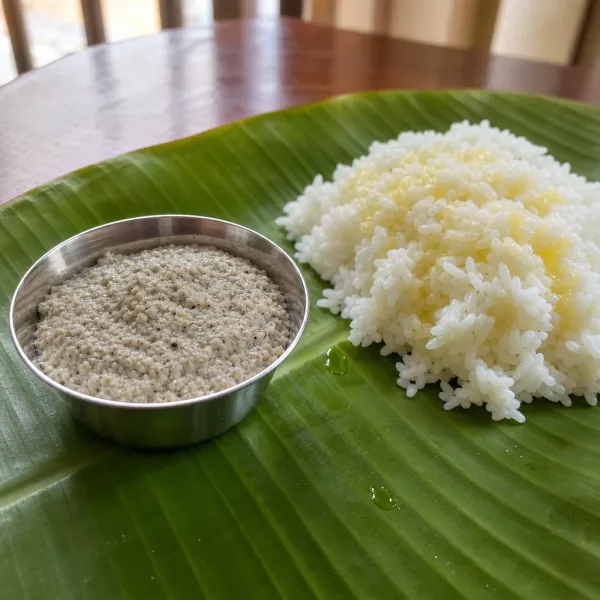
Ellu Thogayal (Sesame Chutney)
Traditional Iyer-style ellu thogayal: thick, coarsely ground sesame paste with urad dal, dried red chillies and tamarind. Served with rice or idli.
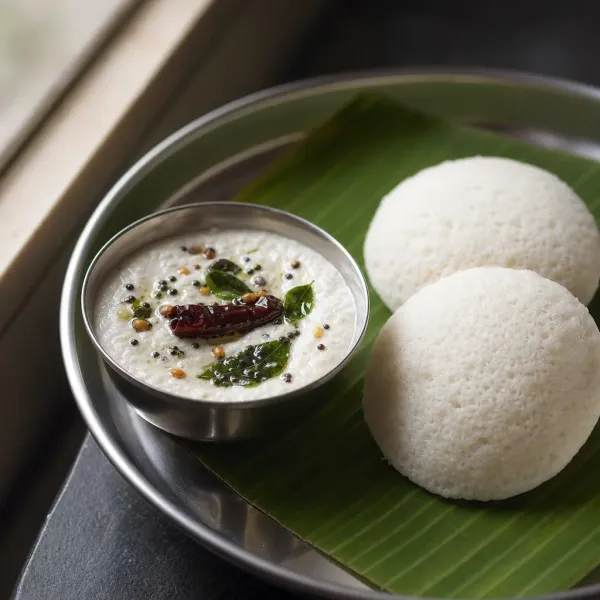
Coconut Chutney (Thengai Chutney)
Freshly ground coconut chutney from a Tamil Brahmin kitchen: coconut, pottukadalai, green chilli, and a gingelly oil tempering. Ready in 15 minutes.
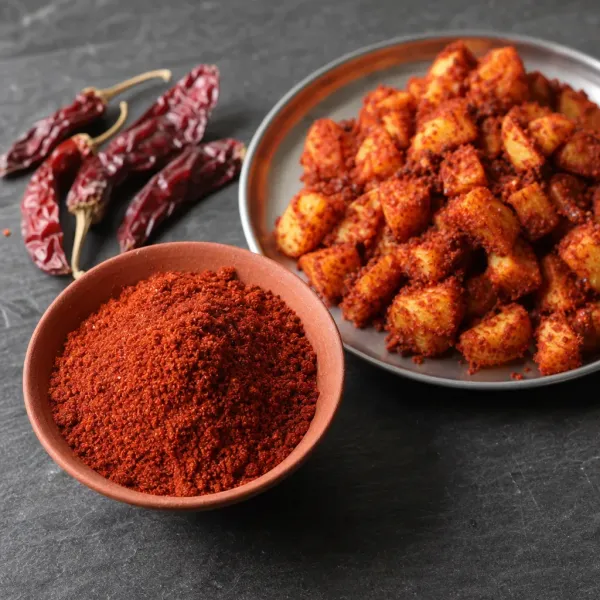
Vepudu Karam Podi
Traditional Rayalaseema vepudu karam podi: dry-roasted Guntur chillies, black pepper, cumin and garlic ground to a coarse powder for finishing Andhra…
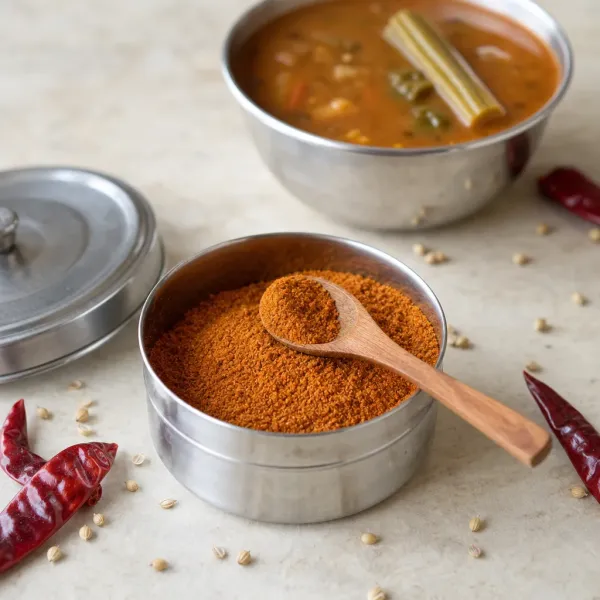
Homemade Sambar Podi
Traditional Tamil Brahmin sambar podi made by dry-roasting coriander, red chillies, chana dal and urad dal. No onion, no garlic. Step-by-step home me…