

Cherupayar Curry (Kerala Green Gram Curry) Recipe
Malayalam ചെറുപയർ കറിTamil பச்சைப் பயறு கறிKannada ಹಸಿರು ಹೆಸರುಕಾಳು ಕರಿTelugu పచ్చి పెసల కూర
- Prep15 min
- Cook40 min
- Serves4
- DifficultyEasy
- DietVegan
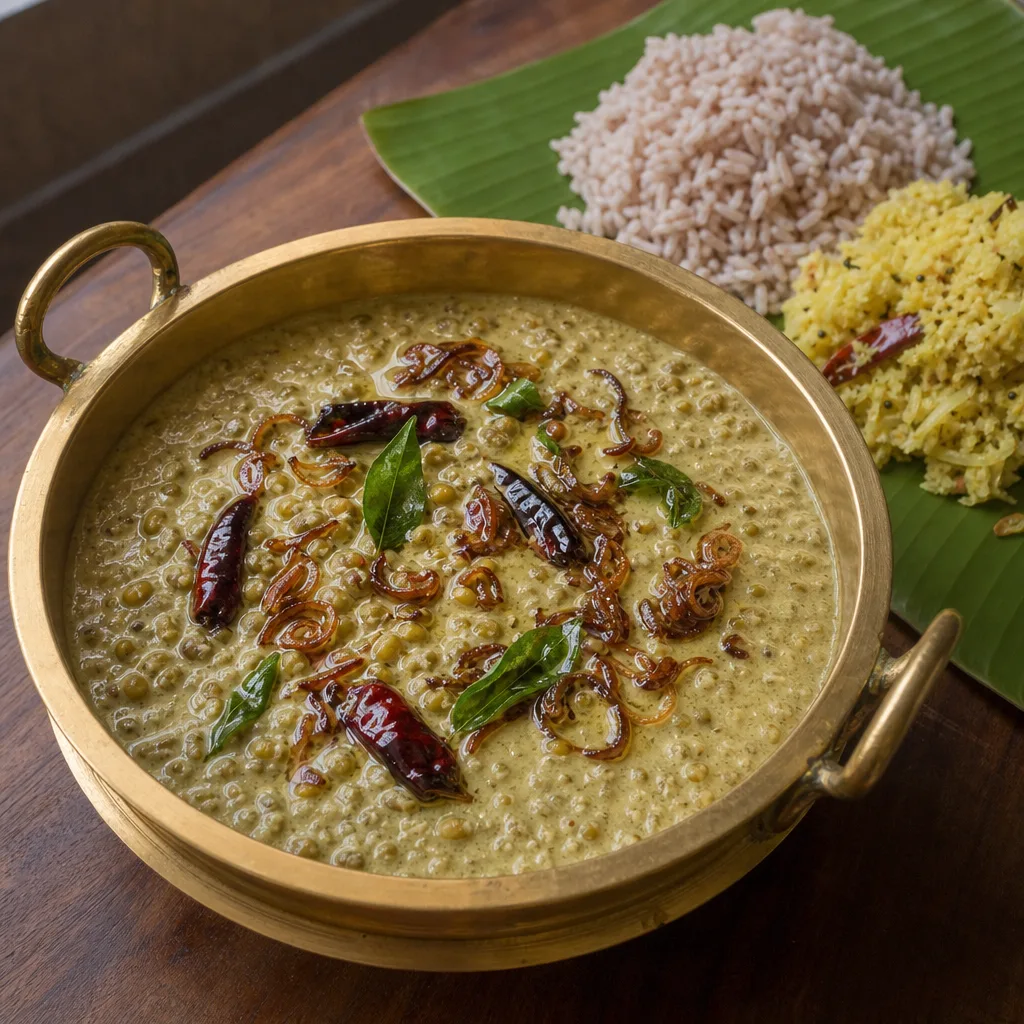
Cherupayar curry is one of the most everyday dishes in a Kerala home. It is made with whole green gram cooked until just tender, finished with freshly ground coconut and tempered with coconut oil. It is not a heavily spiced dish. The coconut does most of the work, and the curry should taste clean and slightly sweet from the gram itself.
In Travancore households this is a morning curry, eaten with matta rice kanji or with puttu and banana. It also appears at the main midday meal alongside plain rice, a thoran and papadam. The consistency sits between a thick dal and a light gravy — not soupy, not dry.
Households differ mainly on two points: whether the coconut is ground with a little cumin and shallot or kept plain, and whether a small pour of thick coconut milk goes in at the very end. Both are genuine. This recipe uses the ground coconut with cumin and shallot, which gives a fuller body, and skips the coconut milk finish, which keeps it lighter.
Ingredients (serves 4)
For the curry
For the ground coconut paste
For the tempering
Method
Cook the green gram
Put the rinsed green gram in a heavy pot with 700 ml water and the turmeric. Bring to a boil on medium-high heat, then lower to a steady simmer. Cook uncovered for 30 to 35 minutes, stirring occasionally, until the gram is fully tender and the skins have begun to split open. The grains should crush easily between your fingers. If the water runs low before they are soft, add a little more, 50 ml at a time. Do not add salt yet.
Grind the coconut paste
While the gram cooks, grind the fresh grated coconut, cumin seeds, chopped shallots and broken dried red chillies together with 3 tablespoons of water. Grind to a coarse-smooth paste — not perfectly smooth, but no large shreds of coconut remaining. A traditional stone grinder gives the best texture; a small mixer jar works fine. Set aside.
Add the coconut paste to the cooked gram
Once the gram is tender, add salt and stir well. Add the ground coconut paste directly to the pot and stir it through. Add another 50 to 100 ml of water if the curry looks too thick — it should flow slowly off a spoon, not sit in a mound. Bring back to a gentle simmer on low heat and cook for 5 minutes, stirring so the coconut does not catch on the bottom. Do not boil hard at this stage or the coconut paste will turn grainy.
Check the consistency and seasoning
Taste for salt. The curry will thicken slightly as it sits, so leave it just a little looser than you want at the table. Take it off the heat.
Make the tempering
Heat the coconut oil in a small tempering pan on medium heat until it shimmers. Add the mustard seeds and wait for them to pop fully — this takes about 30 seconds. Add the whole dried red chillies and let them darken for a few seconds, then add the sliced shallots. Fry the shallots, stirring, until they are golden brown at the edges, about 3 minutes. Add the curry leaves last and stand back — they will splutter. Let them crisp for 10 seconds.
Pour the tempering over the curry
Pour the entire contents of the tempering pan over the curry. Stir once, gently, so the tempering runs through without disappearing entirely. Serve immediately or cover and rest for five minutes, which lets the flavours settle.
How to serve
Matta rice kanji (rice porridge) for breakfast; plain cooked matta rice with a dry thoran and papadam for the midday meal; or puttu with sliced banana.
Served with: Matta rice kanji (rice porridge) for breakfast; plain cooked matta rice with a dry thoran and papadam for the midday meal; or puttu with sliced banana.
Cook's tips
Pressure cooker shortcut
Many households pressure-cook the gram for 3 whistles on medium heat instead of simmering in an open pot. This is genuinely common and perfectly acceptable. Release the pressure naturally before opening, and check that the gram is not overcooked to mush — it should hold its shape while being fully tender.
Do not add salt before the gram is soft
Salt added early toughens the skins and the gram will take much longer to cook through. Add it only after you are satisfied the grains are tender.
Fresh coconut cannot be swapped
Desiccated coconut gives a dry, slightly bitter paste and changes the character of the curry entirely. If fresh coconut is unavailable, frozen grated coconut thawed at room temperature is an acceptable substitute.
Storing leftovers
The curry thickens considerably in the fridge overnight. Reheat on low heat with a splash of water and stir gently. It keeps for two days. Do not freeze — the coconut paste separates on thawing.
Regional variations
A drier Malabar version uses less coconut and more shallots; some Nasrani households add a small piece of kudampuli instead of the coconut milk finish.
Glossary
- Cherupayar ചെറുപയർ
- Whole green gram (mung bean); the name literally means 'small bean' in Malayalam.
- Kudampuli കുടംപുളി
- Gamboge or Malabar tamarind (Garcinia cambogioides), the souring agent distinctive to Kerala fish and some meat curries.
- Cheriya ulli ചെറിയ ഉള്ളി
- Small shallots, the standard allium in Kerala cooking; sweeter and more pungent than large onions.
- Kariveppila കറിവേപ്പില
- Fresh curry leaves; used whole in tempering and essential to the final aroma.
- Kaduku കടുക്
- Black mustard seeds; added to hot oil at the start of tempering and allowed to pop before anything else goes in.
- Jeerakam ജീരകം
- Cumin seeds; ground here with the coconut to add a mild earthy note to the paste.
Two things decide this curry: the coconut paste must be ground fresh and added to gram that is already fully cooked, and the tempering must go in last, over heat, with the shallots genuinely browned. Rush either step and you lose both the body and the fragrance that make this dish worth eating every day.
More Vegetarian Gravies recipes
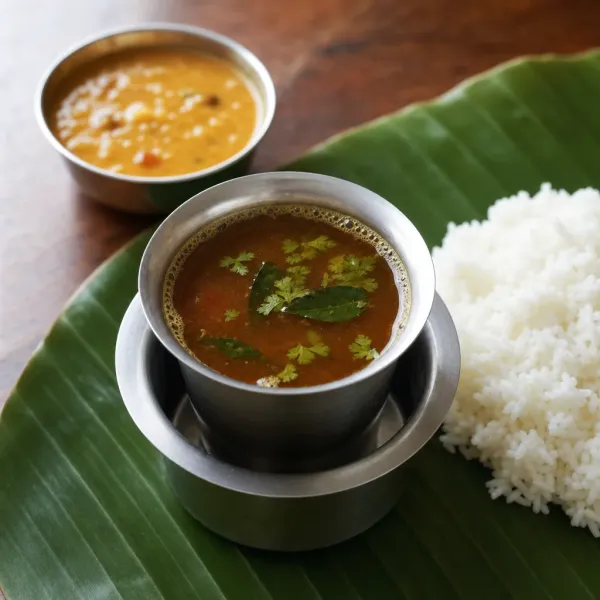
Iyer-Style Rasam with Homemade Rasam Powder
Traditional Tamil Brahmin rasam made with freshly ground rasam powder, tamarind, toor dal water and a ghee tadka. The authentic household method.
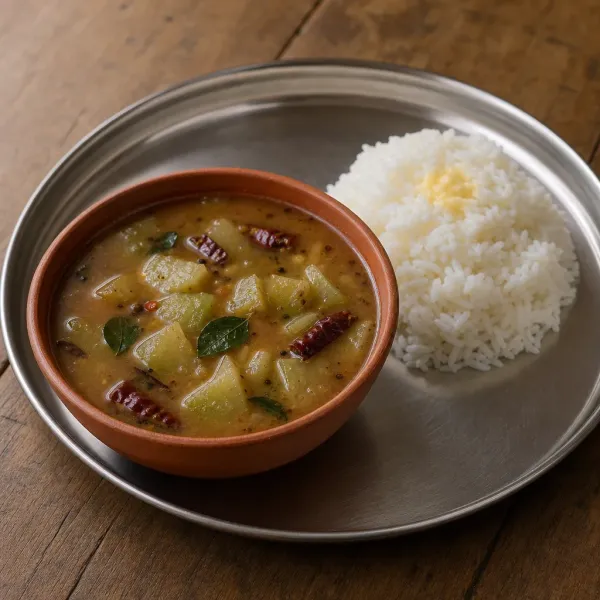
Sorakaya Pulusu
Traditional Coastal Andhra sorakaya pulusu: bottle gourd simmered in tamarind with gingelly oil tempering. Weekday rice dish, step-by-step recipe.
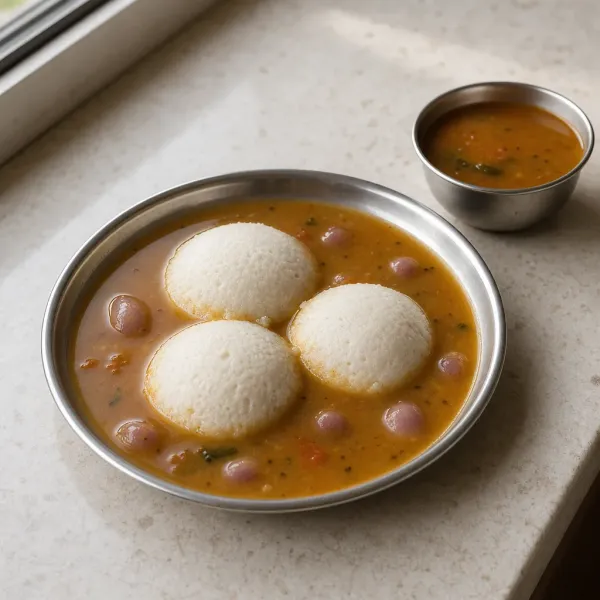
Tiffin Sambar
Thin, shallot-forward tiffin sambar from a Tamil Brahmin kitchen. Made fresh for idli and dosa, cooked with gingelly oil and tamarind. Traditional me…
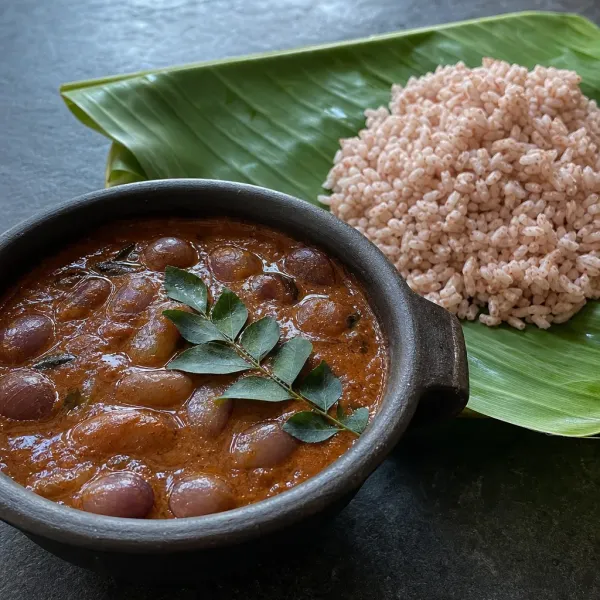
Theeyal
Traditional Kerala shallot theeyal with deep-roasted coconut, kudampuli, and fresh curry leaves. Step-by-step household method from Travancore kitche…
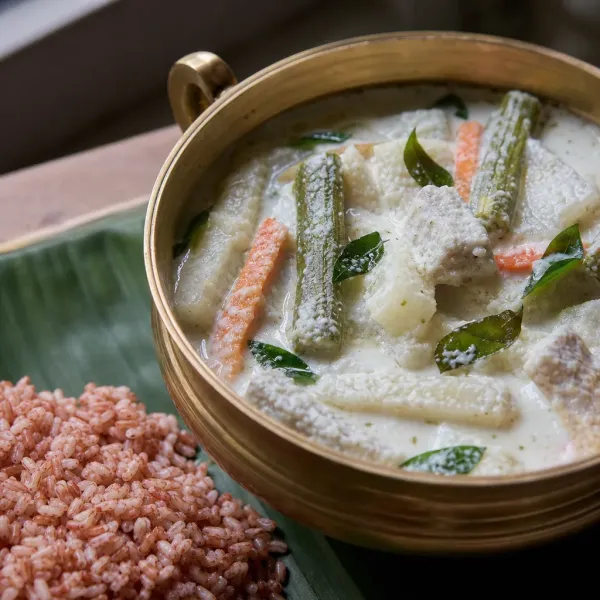
Avial
Classic Kerala avial with fresh coconut paste, sour yoghurt, and raw coconut oil. Traditional Travancore household method with exact quantities.
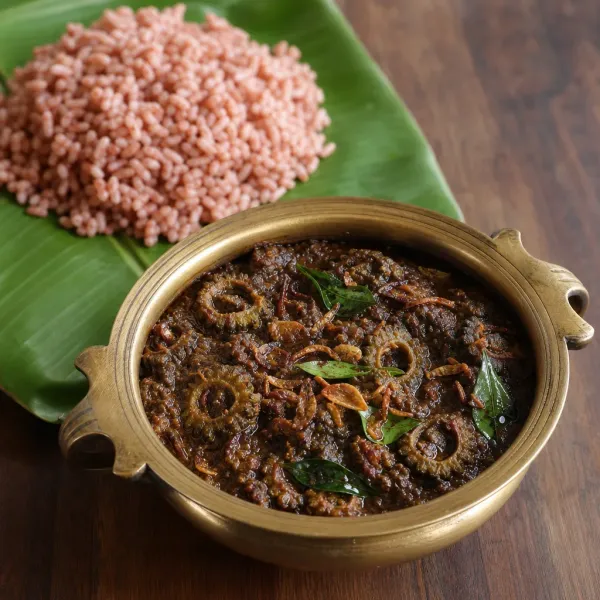
Pavakka Theeyal
Traditional Kerala pavakka theeyal with deeply roasted coconut and kudampuli. Dark, smoky and tangy, served with matta rice. Authentic Travancore met…