

Pavakka Theeyal Recipe
Malayalam പാവക്ക തീയൽTamil பாகற்காய் தீயல்Kannada ಪಾವಕ್ಕ ತೀಯಲ್Telugu పావక్క తీయల్
- Prep20 min
- Cook40 min
- Serves4
- DifficultyMedium
- DietVegan
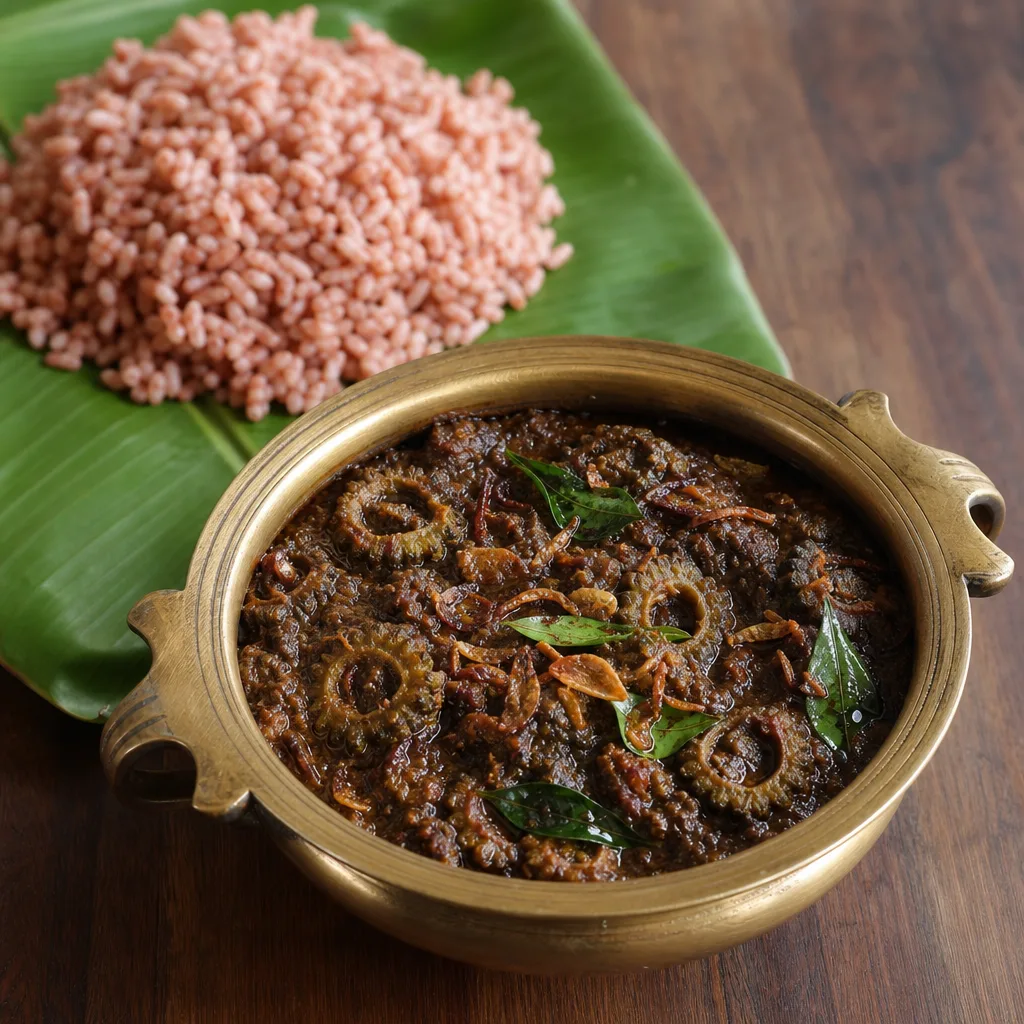
Theeyal is a dark, tangy kuzhambu built on coconut that has been dry-roasted until it is almost burnt. That deep browning is the whole point. The colour of the finished dish should be the colour of dark chocolate, and the flavour should be smoky, sour and faintly bitter all at once. Pavakka, bitter gourd, is one of the best vegetables for this preparation because its bitterness holds its own against the roasted coconut and kudampuli.
This is a dish of the Syrian Christian and Hindu households of central and southern Kerala equally. It appears on the sadya in some homes, though not universally. Most households make it as a side for rice on an ordinary day, and it keeps well, deepening in flavour overnight.
The one thing households differ on is how much kudampuli to use. Some prefer a sharper sourness; others hold back and let the bitterness of the pavakka come forward more. The quantity here is a middle point, and you can adjust after tasting.
Ingredients (serves 4)
For the pavakka
For the roasted coconut paste
For the tempering
Method
Salt and rest the bitter gourd
Toss the sliced pavakka with a generous pinch of salt and set aside for 15 minutes. This draws out some of the moisture and takes a little of the sharpness off the bitterness without erasing it. Do not squeeze the pieces dry; just let them sit.
Soak the kudampuli
Place the kudampuli pieces in 100 ml warm water and leave them while you get on with the rest. After 10 minutes the water will be pale amber and slightly viscous. Keep both the pieces and the soaking water; you will use both.
Dry-roast the coconut and spices
Set a heavy iron kadai or thick-bottomed pan over medium heat with no oil. Add the grated coconut, coriander seeds, dried red chillies and black pepper together. Stir constantly with a wooden spoon. The coconut will first turn pale gold, then a warm brown, then a deep reddish brown that looks almost burnt. This takes 12 to 15 minutes. Do not rush it over high heat or the outside chars before the inside cooks through. When the coconut is uniformly dark brown and smells nutty and smoky, add the sliced shallots and turmeric, stir for another 2 minutes, then take the pan off the heat. The shallots do not need to fully soften; they are going into the grinder.
Grind to a smooth paste
Let the roasted mixture cool for 5 minutes so it does not strain the grinder motor. Transfer to a wet grinder or mixer-grinder and grind with about 4 tablespoons of water, adding more a little at a time, until you have a smooth, dark paste. It should not be grainy. This paste is the backbone of the dish; take the time to grind it properly.
Cook the bitter gourd
In a wide pan, combine the salted pavakka slices, the kudampuli pieces and their soaking water, the turmeric, and 150 ml plain water. Bring to a boil, then lower the heat and cook covered for 8 to 10 minutes until the pavakka is just tender but not falling apart. The pieces should hold their shape.
Add the coconut paste
Add the ground coconut paste to the pan with the cooked pavakka. Stir well so the paste dissolves into the cooking liquid. Add salt now and taste for sourness; if you want more, press the kudampuli pieces against the side of the pan to release more juice, then discard them. Bring the whole thing to a gentle simmer over low heat.
Simmer to the right consistency
Cook uncovered on low heat, stirring occasionally, for 8 to 10 minutes. The gravy will thicken and darken further as it reduces. It should coat the back of a spoon; theeyal is not watery. If it thickens too fast before the flavours come together, add a splash of water and continue. The final colour should be a deep, dark brown.
Temper and finish
Heat coconut oil in a small tempering pan over medium-high heat. Add the mustard seeds and wait for them to splutter. Add the broken dried red chillies, then the sliced shallots, then the curry leaves. Fry until the shallots are golden brown at the edges, about 3 minutes. Pour the entire tempering over the theeyal, stir once, and take the pan off the heat. Serve hot.
How to serve
Hot matta rice. A dry thoran alongside is typical, often cabbage or raw banana. Pappadum and plain yoghurt are common at the table.
Served with: Hot matta rice. A dry thoran alongside is typical, often cabbage or raw banana. Pappadum and plain yoghurt are common at the table.
Cook's tips
The roasting is not optional
If the coconut is only lightly toasted, the dish will be pale and flat. It needs to be genuinely dark brown. Trust the process and keep the heat at medium so it colours evenly.
Kudampuli, not tamarind
Tamarind gives a different, brighter sourness. Kudampuli has a mellower, slightly fruity acidity that suits this dish. If you cannot find it, the dish is still edible with tamarind, but it is a different thing.
It improves overnight
Theeyal kept in a steel or ceramic container at room temperature for a few hours, or refrigerated and reheated the next day, tastes better than it does freshly made. The flavours settle and deepen.
Bitterness level
Salting and resting the pavakka reduces bitterness moderately. If your household prefers very mild bitterness, you can rinse the pieces after resting. If you like the full bitter note, skip the rinse.
Regional variations
Ulli theeyal (shallots only, no vegetable) and chembu theeyal (colocasia) follow the same roasted coconut base and are common across central and southern Kerala.
Glossary
- Pavakka പാവക്ക
- Bitter gourd (Momordica charantia), the warty green vegetable used here.
- Theeyal തീയൽ
- A Kerala kuzhambu style defined by deeply dry-roasted coconut, giving a dark colour and smoky flavour. The word relates to fire or burning.
- Kudampuli കുടംപുളി
- Malabar tamarind or Gamboge (Garcinia cambogia), the dried rind used as a souring agent in Kerala cooking, especially fish curries and theeyal.
- Cheriya ulli ചെറിയ ഉള്ളി
- Small red shallots, the standard allium in Kerala cooking; not the large onion.
- Matta rice മട്ട അരി
- Parboiled red rice from Palakkad, the everyday rice of Kerala households.
Two things decide this dish: how dark you take the coconut during roasting, and whether the kudampuli sourness is in balance with the bitterness of the pavakka. Get the coconut to a genuine deep brown and taste the gravy before you finish it. Everything else will follow.
More Vegetarian Gravies recipes
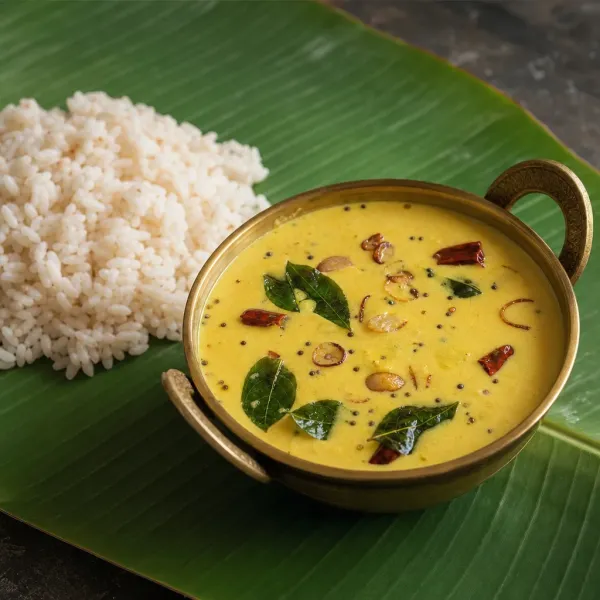
Mambazha Pulissery
Traditional Kerala Mambazha Pulissery made with whole ripe country mangoes, fresh coconut paste and sour yogurt. A classic sadya dish, step by step.
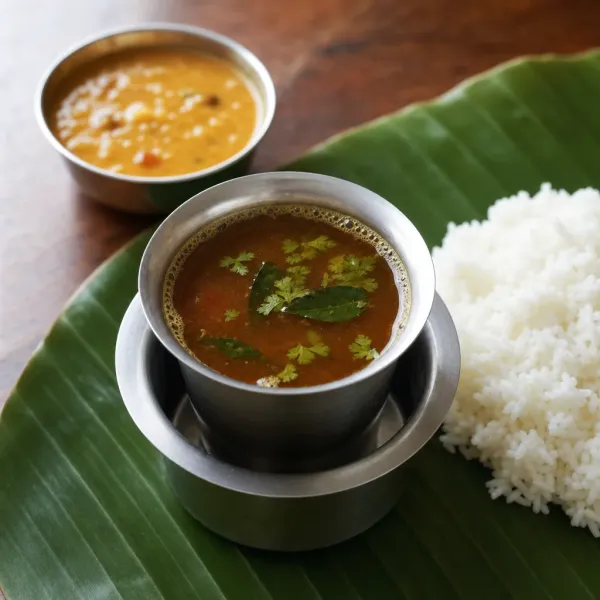
Iyer-Style Rasam with Homemade Rasam Powder
Traditional Tamil Brahmin rasam made with freshly ground rasam powder, tamarind, toor dal water and a ghee tadka. The authentic household method.
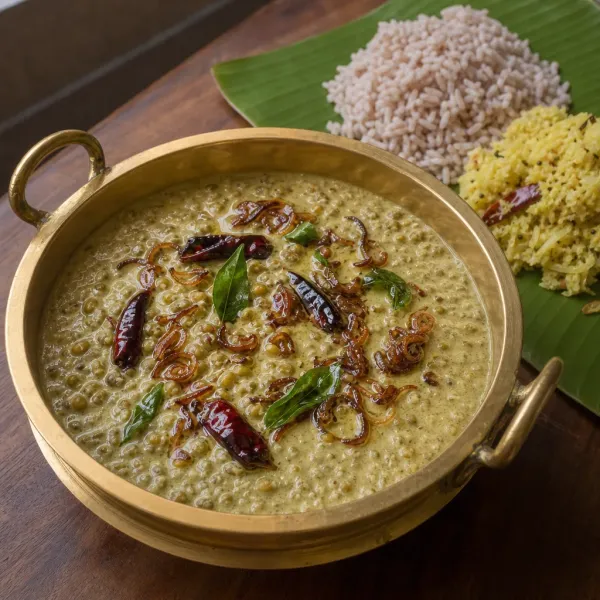
Cherupayar Curry (Kerala Green Gram Curry)
Traditional Kerala cherupayar curry with fresh ground coconut, shallots and coconut oil tempering. A simple everyday dish from Travancore households.
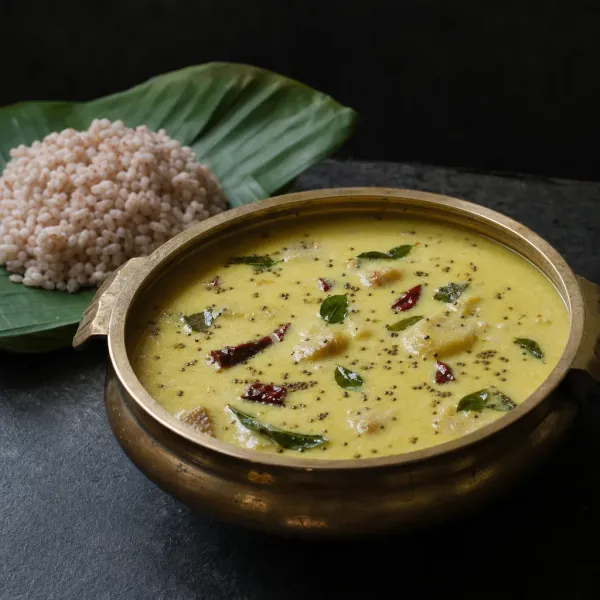
Pulissery (Kerala Yogurt and Coconut Curry)
Traditional Kerala pulissery with ripe banana or ash gourd, fresh coconut paste and soured yogurt. Step-by-step sadya recipe with coconut oil temperi…
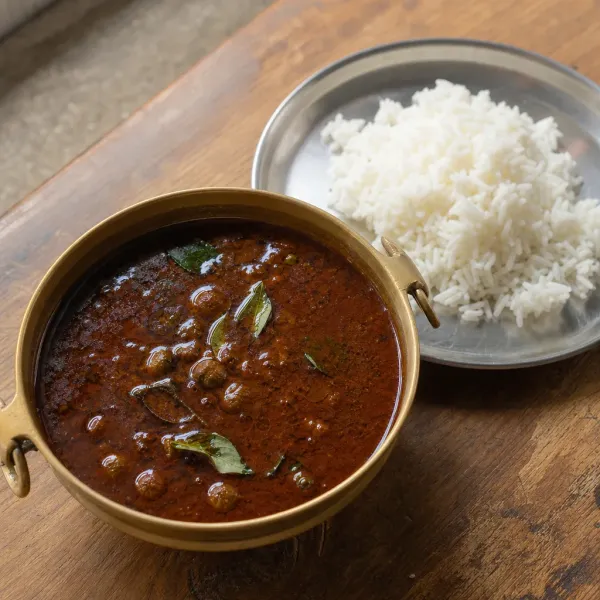
Kara Kuzhambu
Traditional Tamil Iyer kara kuzhambu with sundakkai, freshly ground spice-coconut masala, and gingelly oil. Thick, spiced tamarind gravy for rice.
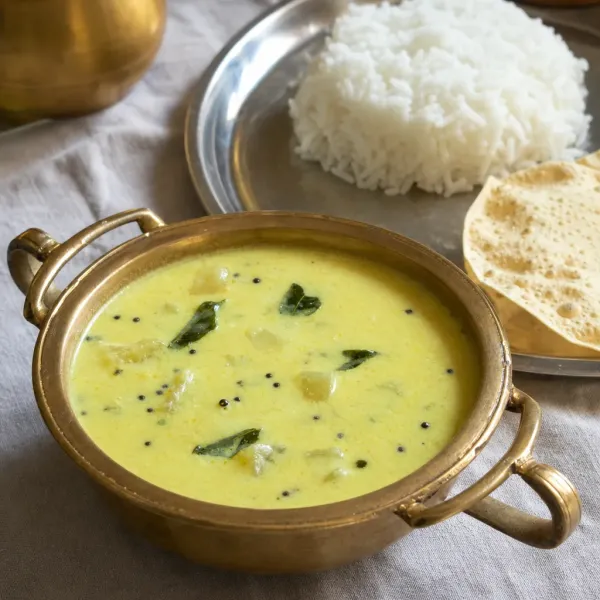
Mor Kuzhambu
Traditional Tamil Brahmin mor kuzhambu with ash gourd, fresh coconut-cumin paste and a ghee tempering. Step-by-step method with tips on keeping the c…