

Mambazha Pulissery Recipe
Malayalam മാമ്പഴ പുളിശ്ശേരിTamil மாம்பழ புளிச்சேரிKannada ಮಾವಿನಹಣ್ಣು ಪುಳಿಸ್ಸೇರಿTelugu మామిడిపండు పులిస్సేరి
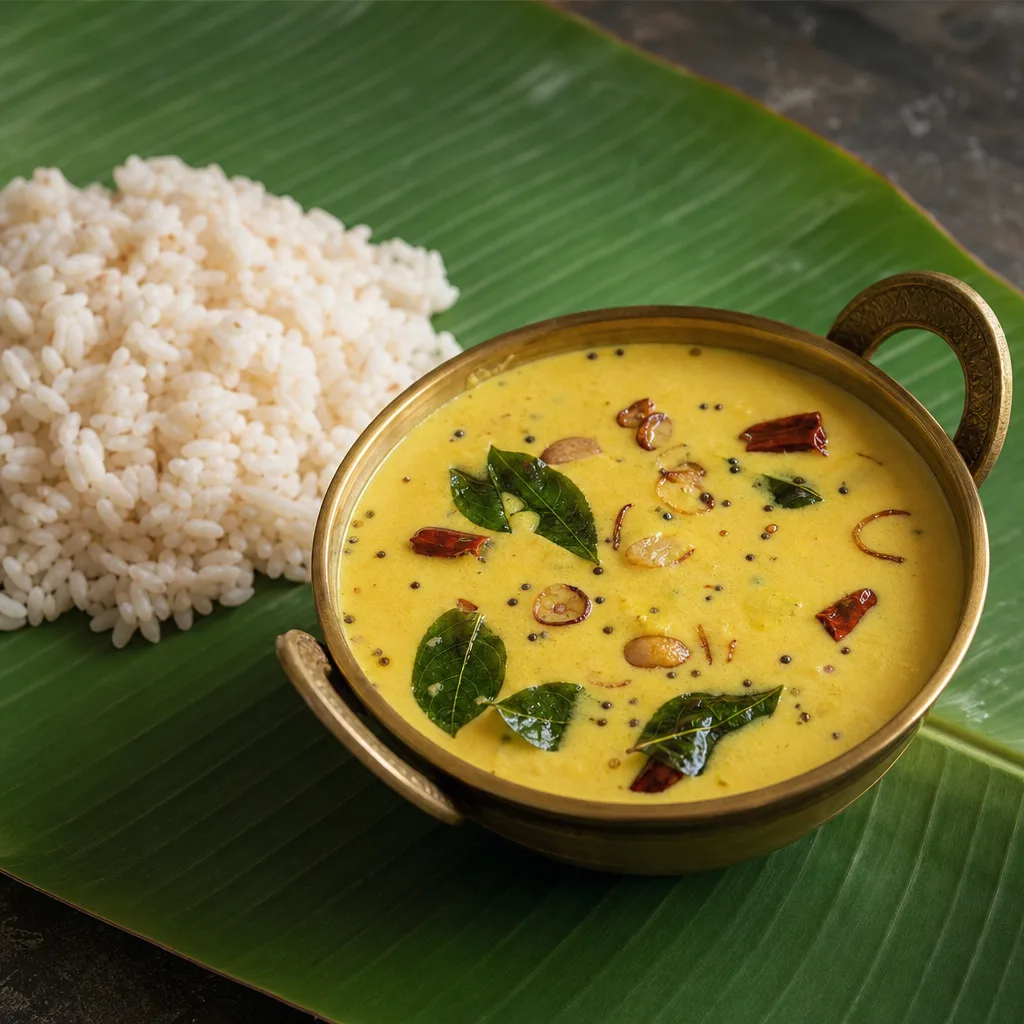
- Prep15 min
- Cook25 min
- Serves4
- DifficultyEasy
- DietVegetarian
Mambazha Pulissery is a Kerala sadya dish, eaten on festival days and Onam alike. It sits in the sweet-sour corner of the sadya banana leaf, a yogurt curry made with ripe mango, tempered coconut, and a light hand with chilli. The mango does most of the work: it gives sweetness, body, and enough acidity that you need very little else.
The dish belongs to the whole of Kerala, though Travancore households are perhaps most particular about it. The mango must be ripe to the point where the flesh is almost collapsing, not merely yellow. Mambazham, the small fibrous Neelam or Alphonso-type country mangoes, are traditional; the flesh is sweeter and more fragrant than the large commercial varieties. If you use a large mango, the flavour is thinner.
On the sadya leaf it is served in a small mound near the papad side. Some households cook the whole mango in its skin and squeeze the cooked flesh out; others peel and cook. Both are genuinely traditional. The yogurt goes in at the very end, off the heat, or the curry will split and turn grainy.
Ingredients (serves 4)
For the curry
For the ground coconut paste
For the yogurt
For the tempering
Method
Cook the mangoes
Place the whole unpeeled mangoes in a small heavy-bottomed vessel. Add 200 ml water, turmeric, and salt. Cover and cook on medium heat for 12 to 15 minutes, turning once, until the skin is wrinkled and the flesh is completely soft when pressed. The water will reduce to a few tablespoons of golden liquid; do not discard it.
Extract the mango flesh
Take the mangoes off the heat and let them cool just enough to handle. Hold each mango over the pot and squeeze the flesh out with your fingers, pressing from the skin side inward. Discard the skin and the seed. Mash the pulp roughly into the cooking liquid with a spoon; you want it almost smooth but with a little texture. Taste for salt.
Grind the coconut paste
In a wet grinder or a small mixer jar, combine the fresh grated coconut, cumin seeds, and one dried red chilli. Add 3 to 4 tablespoons of water and grind to a very smooth, fine paste. This takes 3 to 4 minutes in a mixer; longer in a stone grinder. The paste should feel silky between your fingers with no gritty coconut pieces remaining.
Simmer the coconut paste into the mango
Return the vessel with the mango pulp to low heat. Add the ground coconut paste and stir well to combine. Cook on low heat, stirring frequently, for 4 to 5 minutes until the raw smell of the coconut disappears and the curry thickens slightly. Do not let it boil hard; keep it at a gentle simmer.
Add the yogurt off the heat
Remove the vessel from the heat completely. Let it sit for one minute so it is no longer at a rolling temperature. Add the whisked sour yogurt in a steady stream, stirring as you pour. Stir well to incorporate fully. If you add the yogurt while the curry is still boiling, it will split into grainy white curds floating in yellow liquid and cannot be rescued.
Return briefly to heat
Place the vessel back on the lowest possible flame. Stir continuously and heat just until the curry is warmed through and begins to steam gently, 2 to 3 minutes. The moment you see the first sign of a bubble at the edge, take it off immediately. The consistency should be thick enough to coat a spoon. Taste and adjust salt.
Make the tempering
In a small tempering ladle or pan, heat the coconut oil over medium heat. Add the mustard seeds and wait for them to splutter fully. Add the broken dried red chillies and let them darken for a few seconds. Add the sliced shallots and curry leaves together; fry until the shallots turn golden at the edges, about 2 minutes. The oil will be fragrant and reddish.
Pour the tempering and rest
Pour the entire tempering, hot oil and all, into the curry. Stir once and cover the vessel immediately. Let it rest covered for 5 minutes before serving so the tempering flavours settle into the curry. Serve warm, not hot.
How to serve
Plain white rice (matta rice or raw rice) as part of a sadya spread; also eaten alongside papadam and pickle on an everyday meal.
Served with: Plain white rice (matta rice or raw rice) as part of a sadya spread; also eaten alongside papadam and pickle on an everyday meal.
Cook's tips
Choosing the mango
The smaller country varieties, Neelam or the local mambazham, give the right balance of sweet and tart. Large Alphonso mangoes make it too sweet and the texture becomes too smooth. Avoid mangoes that are still firm at the seed; they will not give enough flavour to the cooking liquid.
Yogurt sourness
The yogurt must be genuinely sour, ideally set the previous evening and left out for a few hours in Kerala's heat. Fresh sweet curd makes the dish taste flat and slightly milky rather than tangy. If your curd is very mild, a tiny squeeze of lime after the yogurt goes in is a household adjustment, though purists would not add it.
Preventing the split
Taking the vessel off the heat before adding yogurt is non-negotiable. The second step of returning it to the lowest flame with constant stirring is equally important. If you walk away at that point, the curry will split. Keep a watchful eye and remove it the moment steam rises.
Storage
Mambazha Pulissery does not keep well. The yogurt continues to sour and the flavour sharpens overnight. It is best eaten on the day it is made. If you must store it, refrigerate and do not reheat on high heat; warm gently on the lowest flame, stirring, and stop before it boils.
Regional variations
Some Malabar households add a small piece of kudampuli alongside the mango for extra sourness; Palakkad households occasionally use slightly less ripe mangoes and increase the yogurt.
Glossary
- Mambazham മാമ്പഴം
- Ripe mango; 'mam' is mango, 'pazham' means ripe fruit in Malayalam.
- Pulissery പുളിശ്ശേരി
- A Kerala yogurt-based curry, mildly sour; distinct from the Tamil mor kuzhambu in that it uses coconut paste and is sweeter.
- Jeerakam ജീരകം
- Cumin seeds; used ground into the coconut paste to balance the sweetness of the mango.
- Kaduku കടുക്
- Mustard seeds; the first spice into hot oil in most Kerala temperings.
- Cheriya ulli ചെറിയ ഉള്ളി
- Small red shallots, the standard allium in Kerala cooking; sweeter and more pungent than large onions.
- Thayir തൈര്
- Set yogurt or curd; in this context it must be well-soured, not fresh sweet curd.
Two things decide this dish: the ripeness of the mango and the discipline to take the pot off the heat before the yogurt goes in. Get both right and the curry almost makes itself.
More Vegetarian Gravies recipes
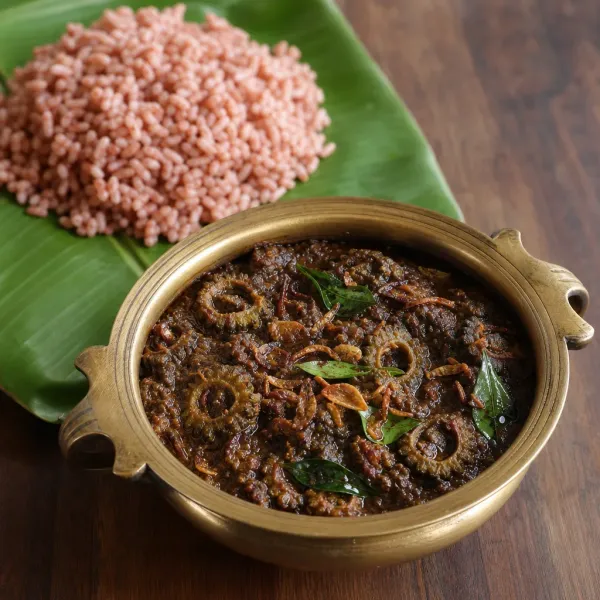
Pavakka Theeyal
Traditional Kerala pavakka theeyal with deeply roasted coconut and kudampuli. Dark, smoky and tangy, served with matta rice. Authentic Travancore met…
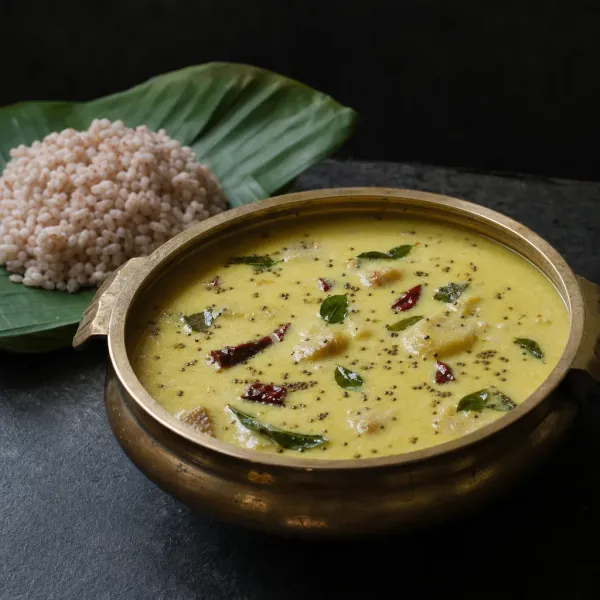
Pulissery (Kerala Yogurt and Coconut Curry)
Traditional Kerala pulissery with ripe banana or ash gourd, fresh coconut paste and soured yogurt. Step-by-step sadya recipe with coconut oil temperi…
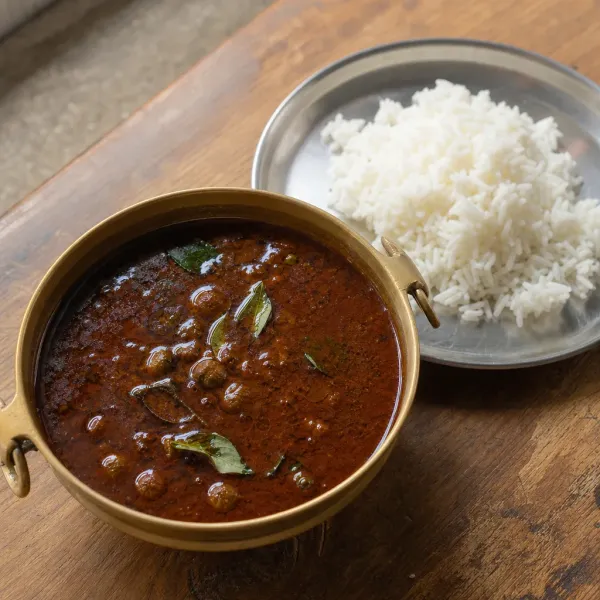
Kara Kuzhambu
Traditional Tamil Iyer kara kuzhambu with sundakkai, freshly ground spice-coconut masala, and gingelly oil. Thick, spiced tamarind gravy for rice.
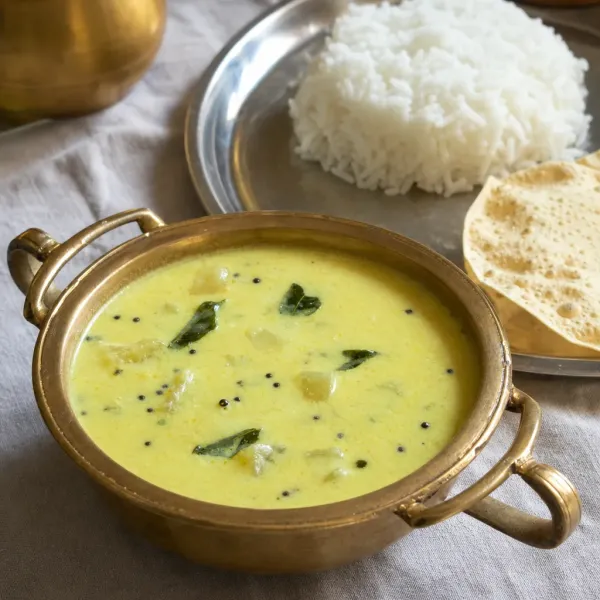
Mor Kuzhambu
Traditional Tamil Brahmin mor kuzhambu with ash gourd, fresh coconut-cumin paste and a ghee tempering. Step-by-step method with tips on keeping the c…
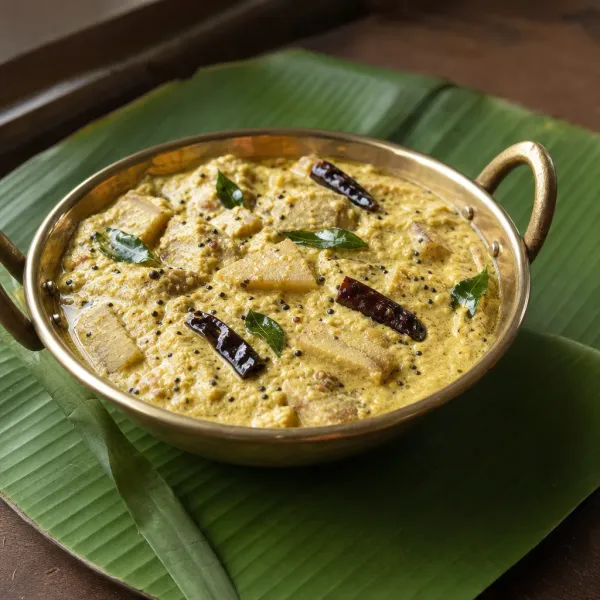
Kalan
Traditional Kerala kalan with raw banana and elephant yam in thick sour curd. A sadya essential from Travancore kitchens, spiced with black pepper an…
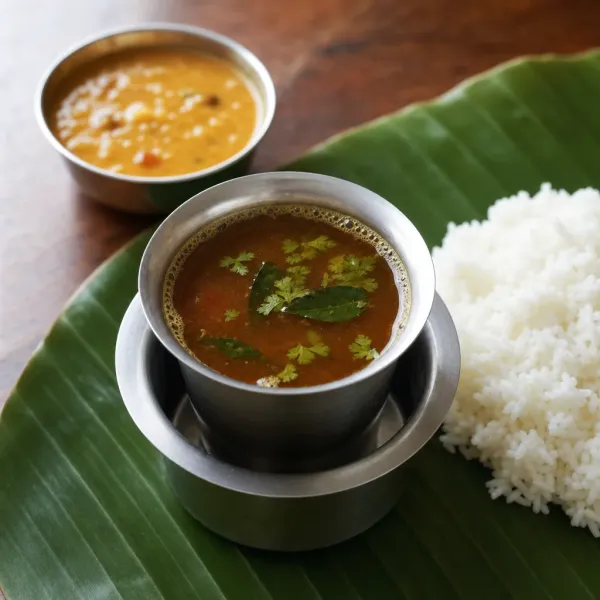
Iyer-Style Rasam with Homemade Rasam Powder
Traditional Tamil Brahmin rasam made with freshly ground rasam powder, tamarind, toor dal water and a ghee tadka. The authentic household method.