

Carrot Beans Palya Recipe
Malayalam കാരറ്റ് ബീൻസ് പള്ള്യTamil கேரட் பீன்ஸ் பள்ளிKannada ಕ್ಯಾರೆಟ್ ಬೀನ್ಸ್ ಪಲ್ಯTelugu క్యారెట్ బీన్స్ పల్య
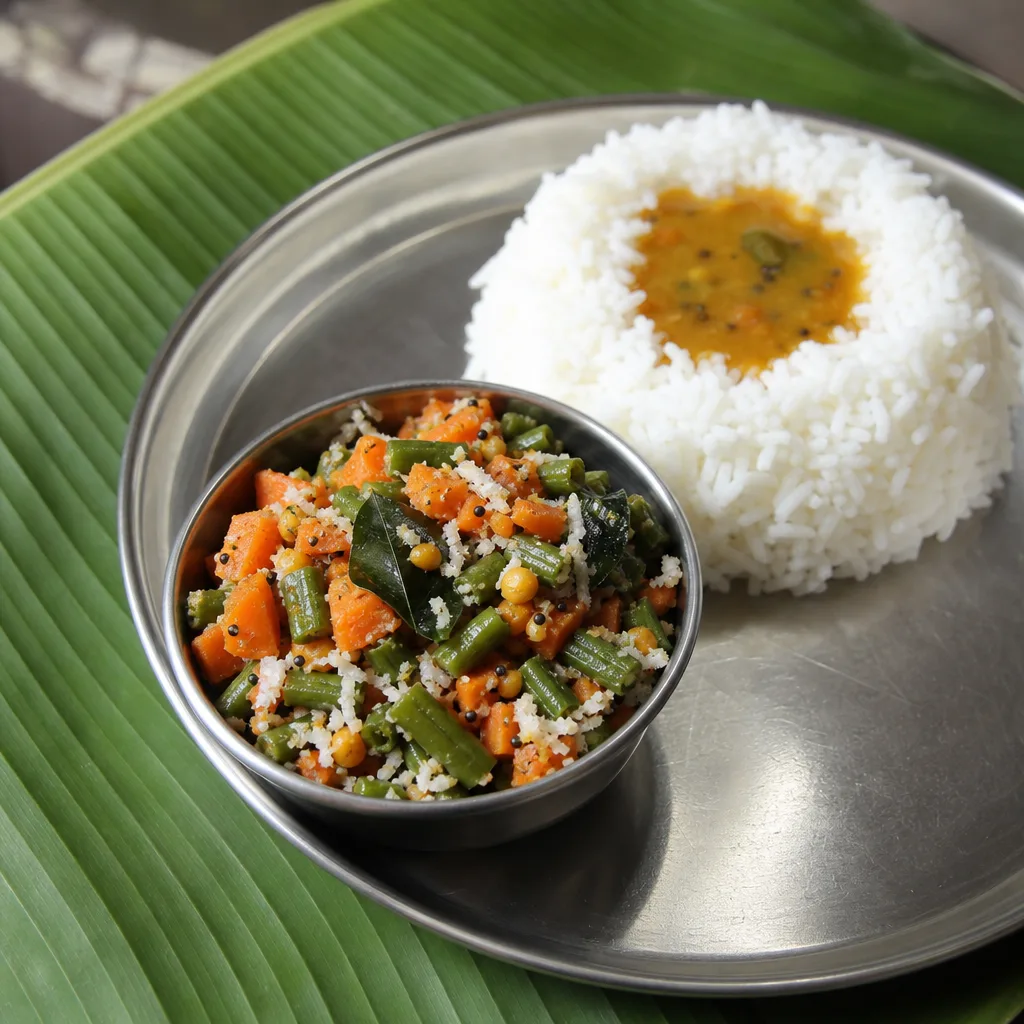
- Prep15 min
- Cook15 min
- Serves4
- DifficultyEasy
- DietVegan
Palya is the Kannada word for a dry vegetable stir-fry, and carrot-beans palya is one of the most common items on a Karnataka thali, especially in Brahmin and mainstream Hindu households across the state. It turns up at everyday meals alongside rice and sambar, or rolled into a chapati for a school lunch. The cooking is fast and the result is meant to be dry, not saucy.
The distinguishing touch in most Karnataka kitchens is a small amount of freshly grated coconut stirred in right at the end and a seasoning base of mustard seeds, dried red chilli, chana dal and urad dal fried in coconut oil or, in many city households, refined oil. Some cooks add a pinch of jaggery to balance the earthiness of the beans. That small addition is common enough to be considered part of the standard recipe rather than a variant.
Households differ mainly on two points: how finely the vegetables are cut, and whether they use a lid to steam the vegetables through or fry them entirely uncovered. Covered cooking gives a softer result; uncovered gives more bite. Both are correct. What no one does is add water beyond the trace moisture that clings to the washed vegetables.
Ingredients (serves 4)
For the palya
For the seasoning
Method
Prep the vegetables
Wash the carrots and beans well. Cut the carrots into dice or batons no larger than 5 mm so they cook at the same rate as the beans. Cut the beans into similar 5 mm pieces. Keep them in separate piles; they go into the pan together but it helps to have them ready.
Heat the oil and pop the mustard seeds
Set a wide, heavy pan or kadai over medium heat. Add the oil. When it is hot, add the mustard seeds. Keep the pan covered loosely with a lid or a splatter screen, as mustard seeds jump. Wait for the popping to subside completely, about 30 seconds. If you add the dals while the seeds are still popping, the dals will burn before the mustard settles.
Fry the dals and dried chillies
Add the chana dal and urad dal. Stir constantly over medium heat. After about 45 seconds the chana dal will turn a pale gold. Add the broken dried red chillies and stir for another 15 seconds until the chillies deepen in colour. Watch the dals carefully; they go from golden to burnt quickly.
Add curry leaves and asafoetida
Add the curry leaves. They will splutter in the oil, so stand back for a moment. Stir once, then add the pinch of asafoetida and stir it through the oil for 10 seconds.
Add the vegetables and salt
Tip in the carrots and beans. Add the salt. Toss everything together so each piece is coated with the seasoned oil. The pan will look quite dry, which is correct.
Cook, covered, until just tender
Cover the pan with a tight lid and cook on medium-low heat for 6 to 8 minutes. Lift the lid and check: the beans should be bright green and just cooked through, the carrots tender but not collapsing. If they need more time, cover for another 2 minutes. Do not add water; the moisture already on the vegetables from washing is enough. If you see the bottom browning before the vegetables are done, lower the heat.
Add jaggery
If using jaggery, add the half teaspoon now and toss through. Let it melt into the vegetables over 30 seconds. It will not make the palya sweet; it just rounds out the raw edge of the beans.
Finish with fresh coconut
Turn the heat off. Add the grated coconut and toss well. Taste for salt. The palya should be completely dry, every piece separate. If there is any moisture pooling in the pan, put it back on medium heat uncovered for a minute and toss until it disappears.
How to serve
Steamed rice with sambar and a dollop of ghee; or as a side on a Karnataka thali with rasam, rice, and poppadum. Also eaten rolled inside a chapati.
Served with: Steamed rice with sambar and a dollop of ghee; or as a side on a Karnataka thali with rasam, rice, and poppadum. Also eaten rolled inside a chapati.
Cook's tips
Cutting size matters
If the pieces are uneven, smaller ones turn mushy before larger ones are cooked. Keep everything close to 5 mm and they finish at the same time.
On the coconut
Stir it in off the heat. If you add it while the pan is still hot on the flame, the coconut fries and turns grainy rather than staying soft and moist against the vegetables.
Jaggery is optional but worth trying
French beans have a slight bitterness that jaggery softens without sweetening the dish. Start with a quarter teaspoon if you are unsure.
Storage
Palya keeps well at room temperature for a few hours and in the fridge for up to a day. Reheat in a dry pan for 2 minutes; do not microwave or it softens and loses the texture.
Oil choice
Coconut oil is traditional in many Karnataka Brahmin households. Refined sunflower oil is equally common in the same region today. Gingelly oil is not used here; that belongs to Tamil Nadu preparations.
Regional variations
Tamil Nadu households make a similar stir-fry called carrot beans poriyal, finishing with fresh grated coconut and curry leaves in coconut oil; the Palya uses less coconut and often a pinch of jaggery.
Glossary
- Palya ಪಲ್ಯ
- Kannada word for a dry vegetable stir-fry, equivalent to poriyal in Tamil.
- Chana dal ಕಡಲೆ ಬೇಳೆ
- Split hulled Bengal gram; used in small quantities in seasonings to add a nutty crunch.
- Urad dal ಉದ್ದಿನ ಬೇಳೆ
- Split hulled black gram; used alongside chana dal in the tempering.
- Hing ಇಂಗು
- Asafoetida; used in a very small pinch in the oil to add a savoury base note.
- Kadai ಕಡಾಯಿ
- A wide, rounded iron or steel cooking vessel, used for stir-frying and frying.
Two things decide this palya: keeping the vegetables dry throughout so nothing stews, and adding the coconut off the heat so it stays soft rather than frying into grains. Get those two right and the rest follows.
More Dry Vegetable Sides recipes
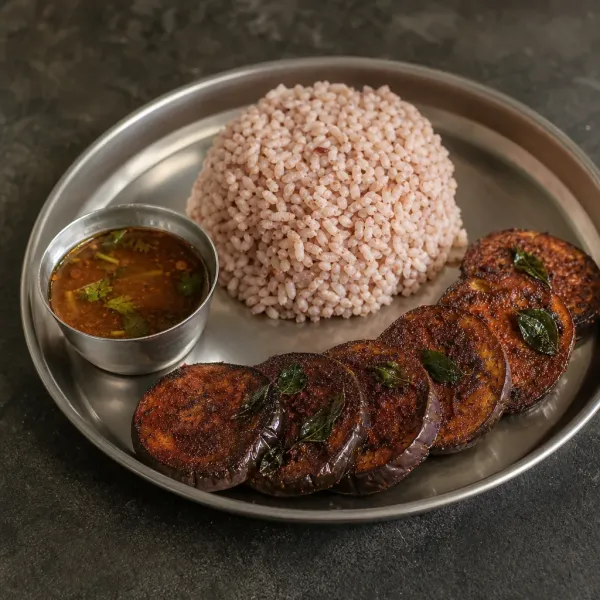
Kathirikai Varuval
Authentic Tamil kathirikai varuval: brinjal rounds shallow-fried in gingelly oil with a tamarind-spice coating. Traditional Kongunad household recipe.
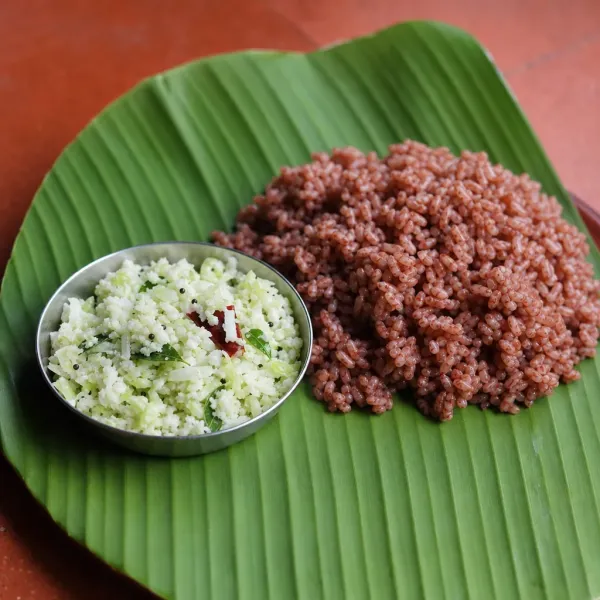
Cabbage Thoran
Classic Kerala cabbage thoran with fresh grated coconut, shallots, cumin, and a mustard-curry leaf tempering in coconut oil. Ready in under 30 minute…
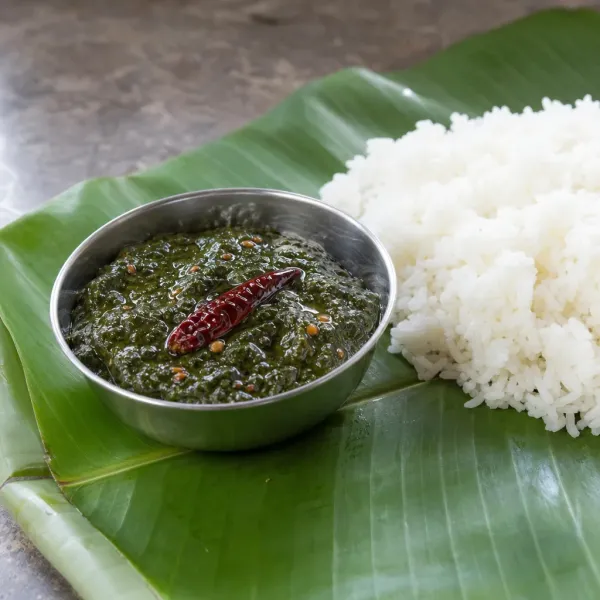
Keerai Masiyal
Traditional Tamil Brahmin keerai masiyal made with arai keerai, garlic, pepper and a gingelly oil tempering. Served hot on plain rice.
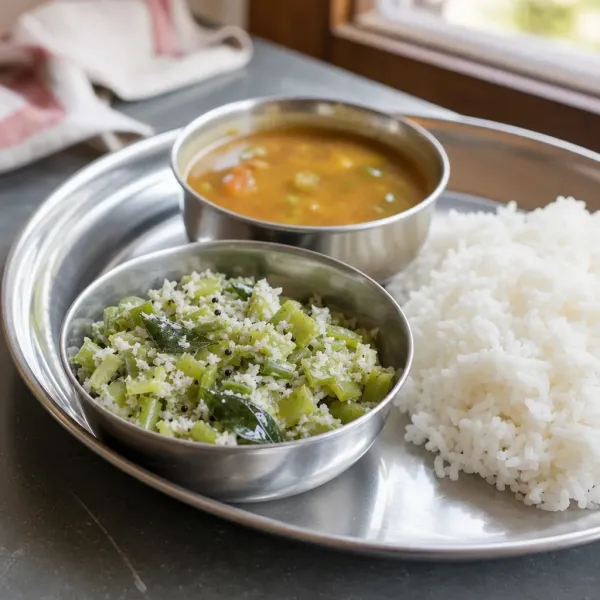
Avarakkai Poriyal (Broad Beans Stir-Fry)
Traditional Tamil Iyer-style avarakkai poriyal: broad beans stir-fried in gingelly oil with mustard, urad dal, curry leaves, and fresh coconut. Dry…
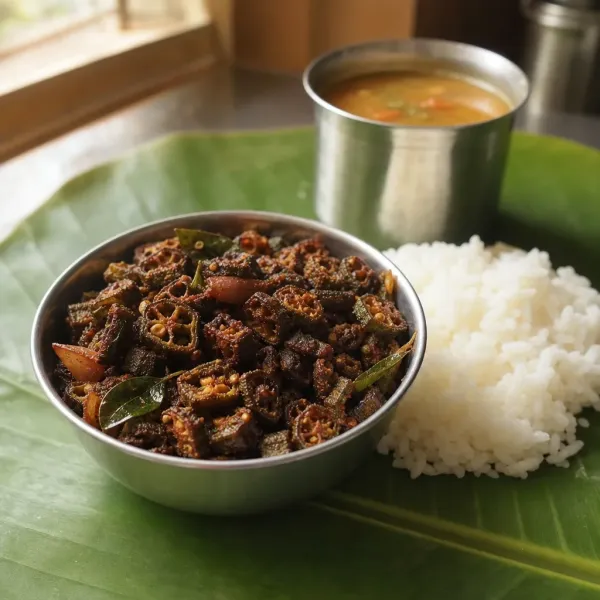
Vendakkai Fry
Traditional Tamil Brahmin vendakkai fry in gingelly oil with shallots, curry leaves and dry masala. Crisp, dry and slimy-free every time.
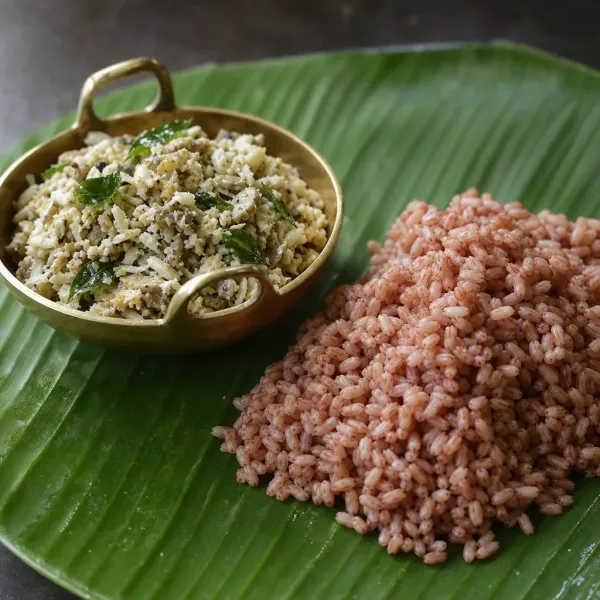
Mushroom Thoran
Traditional Kerala mushroom thoran with fresh grated coconut, cumin, and curry leaves. A dry, fragrant side dish for matta rice and sadya.