

Mushroom Thoran Recipe
Malayalam കൂൺ തോരൻTamil காளான் தோரன்Kannada ಅಣಬೆ ತೋರನ್Telugu పుట్టగొడుగుల తోరన్
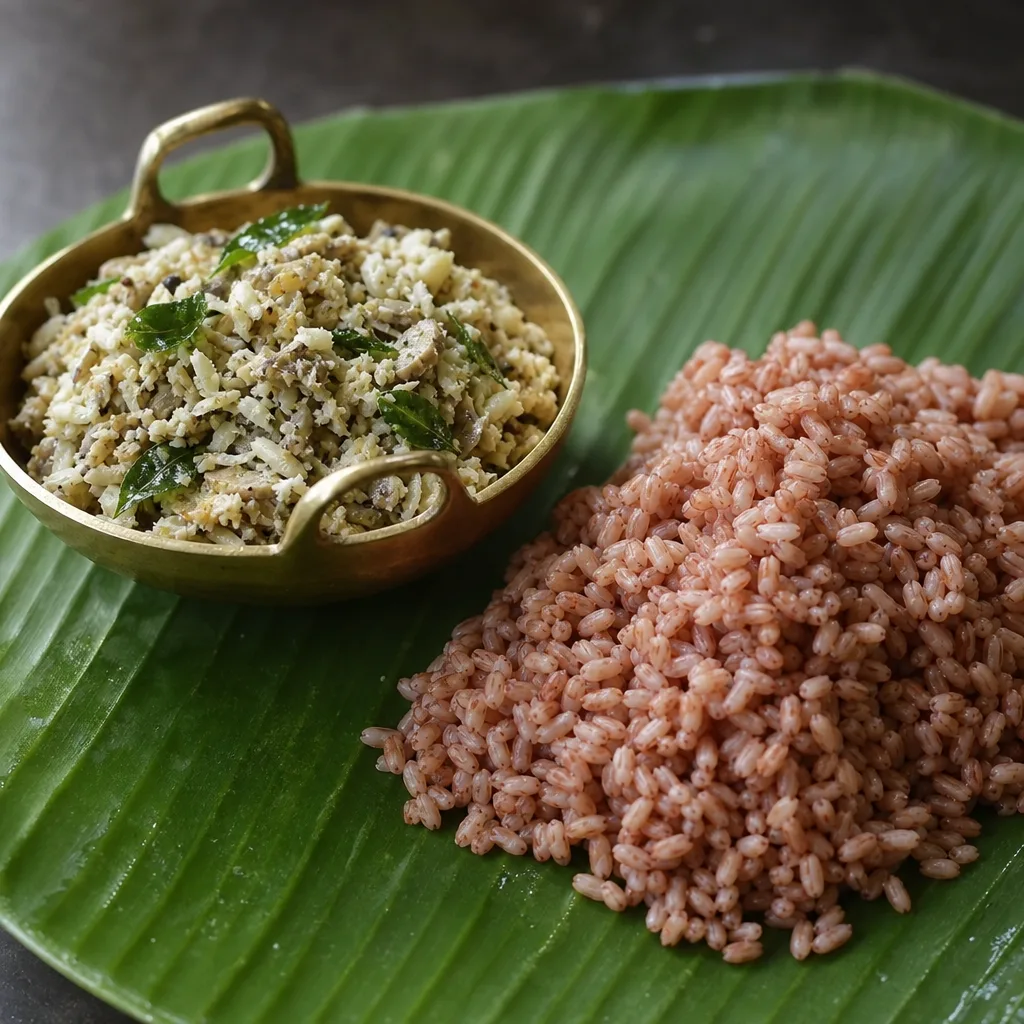
- Prep15 min
- Cook12 min
- Serves4
- DifficultyEasy
- DietVegan
Thoran is the dry coconut stir-fry that appears on almost every Kerala sadya plate and on most weekday lunch tables. The technique is the same whether you are cooking beans, cabbage, raw banana or mushrooms: the vegetable is cooked with very little water, the coconut mixture is added toward the end, and the whole thing is tossed together over high heat until just dry. Nothing is allowed to go soggy.
Mushroom thoran is made with whatever cultivated mushrooms are available at the market — oyster mushrooms are the most common choice in Kerala homes because they cook quickly, hold their texture, and do not release as much water as button mushrooms. The mushrooms are torn rather than chopped, which gives a better texture in the finished dish. The coconut is always ground or crushed fresh with turmeric, cumin, and green chilli; this paste is what distinguishes a thoran from a simple stir-fry.
It is eaten as part of a rice meal, not as a standalone dish. On a sadya leaf it sits alongside sambar, rasam, and the other side dishes. On an ordinary day it goes with matta rice and a simple dal or rasam. Households differ mainly in the number of green chillies — some keep it mild, others make it sharply hot — and in whether they add a small shallot or two to the coconut paste.
Ingredients (serves 4)
For the thoran
Method
Prepare the mushrooms
Wipe the mushrooms with a damp cloth — do not wash them under running water or they will absorb moisture and steam rather than fry. Tear them along the grain into pieces roughly 3 to 4 cm wide. Set aside uncovered so any surface moisture dries a little.
Make the coconut paste
Combine the grated coconut, green chillies, cumin seeds, and turmeric in a small stone mortar or in a mixer jar. Pound or pulse just three or four times — you want a coarse, crumbly mix, not a smooth paste. The coconut should still have texture. Over-grinding makes the thoran greasy.
Heat the oil and season
Heat the coconut oil in a wide, heavy pan or a cheena chatti over medium-high heat. When the oil is hot, add the dried red chillies and let them darken for about 20 seconds. Add the curry leaves — stand back, they will splutter — then add the sliced shallots. Fry the shallots until they are translucent and just beginning to colour at the edges, about 2 minutes.
Add the mushrooms
Add the torn mushrooms to the pan and increase the heat to high. Toss to coat in the oil. Add salt now. The mushrooms will release some liquid; keep the heat high and do not cover the pan. Stir frequently and let the liquid evaporate — this takes about 4 to 5 minutes. If you cover the pan here, the mushrooms will stew and become rubbery.
Add the coconut mixture
Once the mushrooms look dry and are just beginning to catch colour at the edges, reduce the heat to medium. Add the coconut mixture and toss everything together well. Spread it out in the pan and let it sit undisturbed for 30 seconds so the coconut heats through, then toss again. The coconut should not brown — it should look pale and just warmed.
Finish and check
Cook for another 1 to 2 minutes, tossing two or three times, until the coconut is fragrant and the whole thoran looks dry and well combined. Taste for salt. Remove from heat immediately. The finished thoran should be dry enough that no liquid pools when you press a spoonful against the side of a bowl.
How to serve
Matta rice (Kerala red rice) with sambar or a simple dal and rasam; also served as part of a Kerala sadya on a banana leaf.
Served with: Matta rice (Kerala red rice) with sambar or a simple dal and rasam; also served as part of a Kerala sadya on a banana leaf.
Cook's tips
Oyster vs button mushrooms
Button mushrooms release significantly more water than oyster mushrooms. If using them, slice thinly and give the pan an extra 2 to 3 minutes on high heat before adding the coconut, or the thoran will be wet.
Do not grind the coconut smooth
A smooth coconut paste turns the thoran into something closer to a kurma coating. The coarse, crumbly texture is what makes a thoran a thoran — each grain of coconut stays distinct.
Fresh coconut is not optional here
Desiccated coconut does not work for thoran. It stays hard and floury and does not carry the cumin and turmeric in the same way. If fresh coconut is not available, frozen grated coconut thawed at room temperature is an acceptable substitute.
Pan width matters
Use the widest pan you have. Crowded mushrooms steam instead of frying and you cannot get rid of the moisture. A 28 to 30 cm pan works well for 400 g.
Regional variations
Mappila households sometimes add a small piece of green chilli and omit the coconut entirely, making a drier stir-fry closer to an ularthiyathu; some Nasrani cooks add a pinch of black pepper along with the coconut.
Glossary
- Thoran തോരൻ
- A Kerala dry stir-fry of vegetables with freshly grated coconut, turmeric, and cumin, finished with a coconut oil tempering.
- Kunjulli കുഞ്ഞുള്ളി
- Small South Indian shallots, also called pearl onions or sambar onions; sharper and more aromatic than large onions.
- Jeerakam ജീരകം
- Cumin seeds; used whole in the coconut paste for thoran.
- Cheena chatti ചീനച്ചട്ടി
- A wide, shallow Kerala cooking vessel, traditionally of clay, now often of iron or non-stick; the shape encourages even evaporation.
- Matta rice മട്ട അരി
- Kerala red parboiled rice, also called Rosematta; the standard everyday rice of Travancore households.
Two things decide whether this thoran works: keeping the heat high enough when the mushrooms go in so their liquid evaporates rather than pools, and stopping the grinding early so the coconut stays coarse. Get those two right and the dish takes care of itself.
More Dry Vegetable Sides recipes
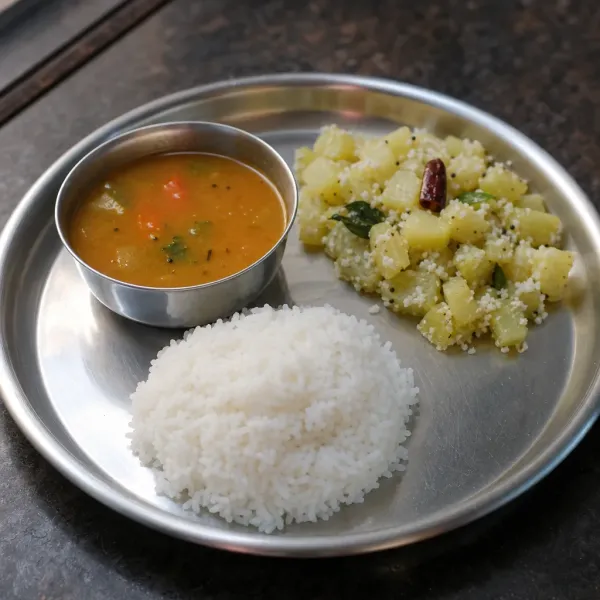
Chow Chow Poriyal (Chayote Stir-Fry)
Traditional Tamil Brahmin chow chow poriyal with gingelly oil, mustard seeds, urad dal, and fresh grated coconut. Dry, simple, and ready in 30 minute…
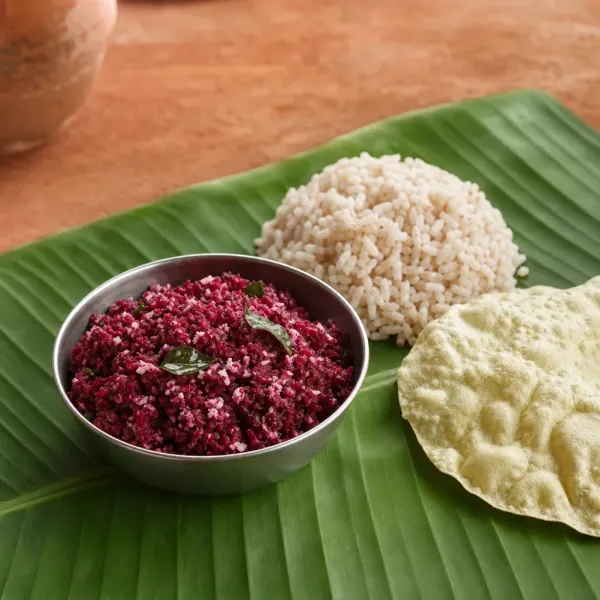
Beetroot Thoran
Traditional Kerala beetroot thoran with fresh grated coconut, shallots and curry leaves. Dry, vivid and ready in 30 minutes. A daily rice-meal staple.
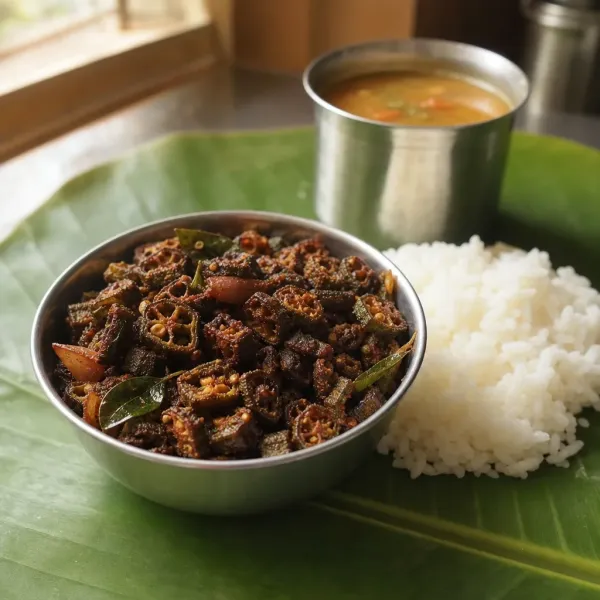
Vendakkai Fry
Traditional Tamil Brahmin vendakkai fry in gingelly oil with shallots, curry leaves and dry masala. Crisp, dry and slimy-free every time.
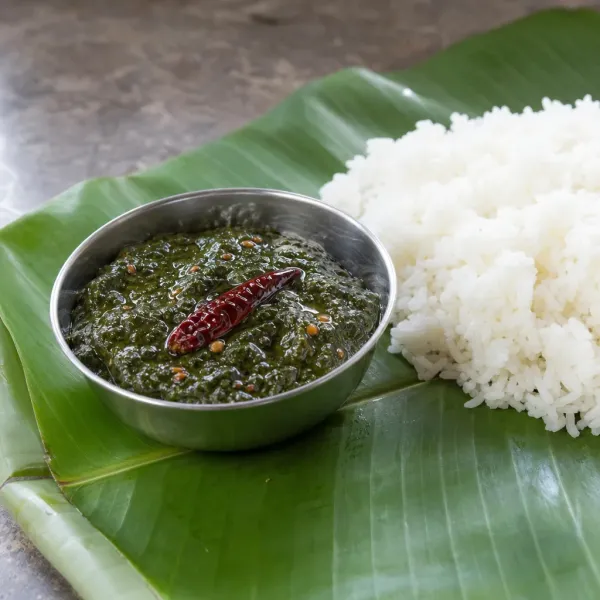
Keerai Masiyal
Traditional Tamil Brahmin keerai masiyal made with arai keerai, garlic, pepper and a gingelly oil tempering. Served hot on plain rice.
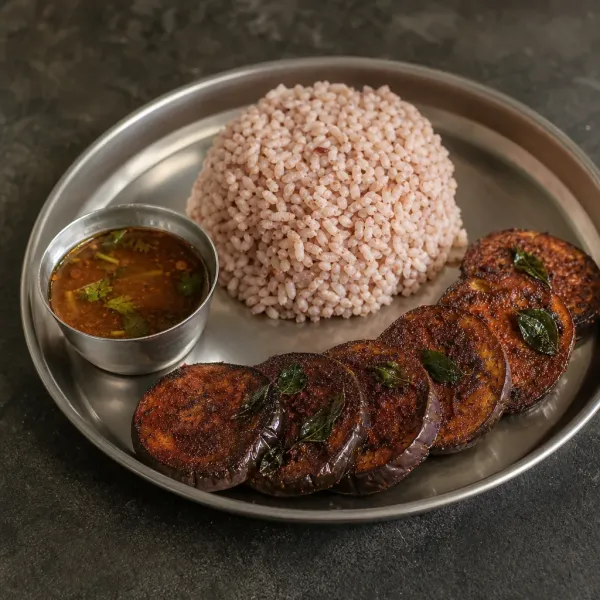
Kathirikai Varuval
Authentic Tamil kathirikai varuval: brinjal rounds shallow-fried in gingelly oil with a tamarind-spice coating. Traditional Kongunad household recipe.
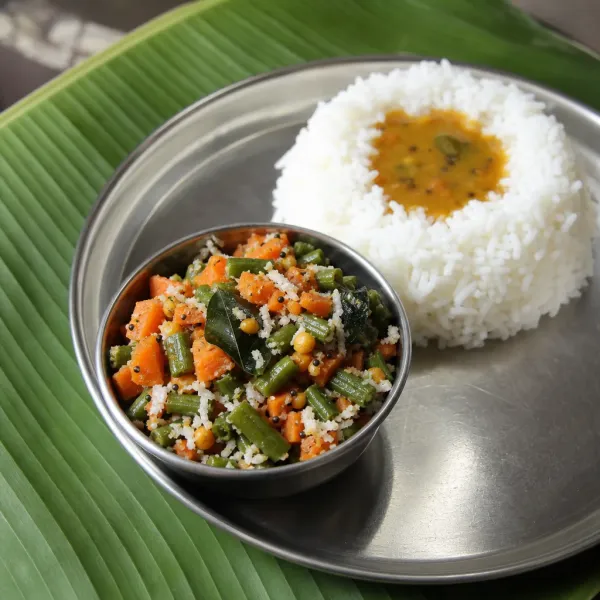
Carrot Beans Palya
Traditional Karnataka carrot beans palya with mustard seeds, curry leaves, chana dal, and fresh grated coconut. Dry stir-fry ready in 30 minutes.