

Mysore Pak Recipe
Malayalam മൈസൂർ പാക്ക്Tamil மைசூர் பாக்Kannada ಮೈಸೂರು ಪಾಕ್Telugu మైసూర్ పాక్
- Prep15 min
- Cook35 min
- Serves20 pieces
- DifficultyHard
- DietVegetarian
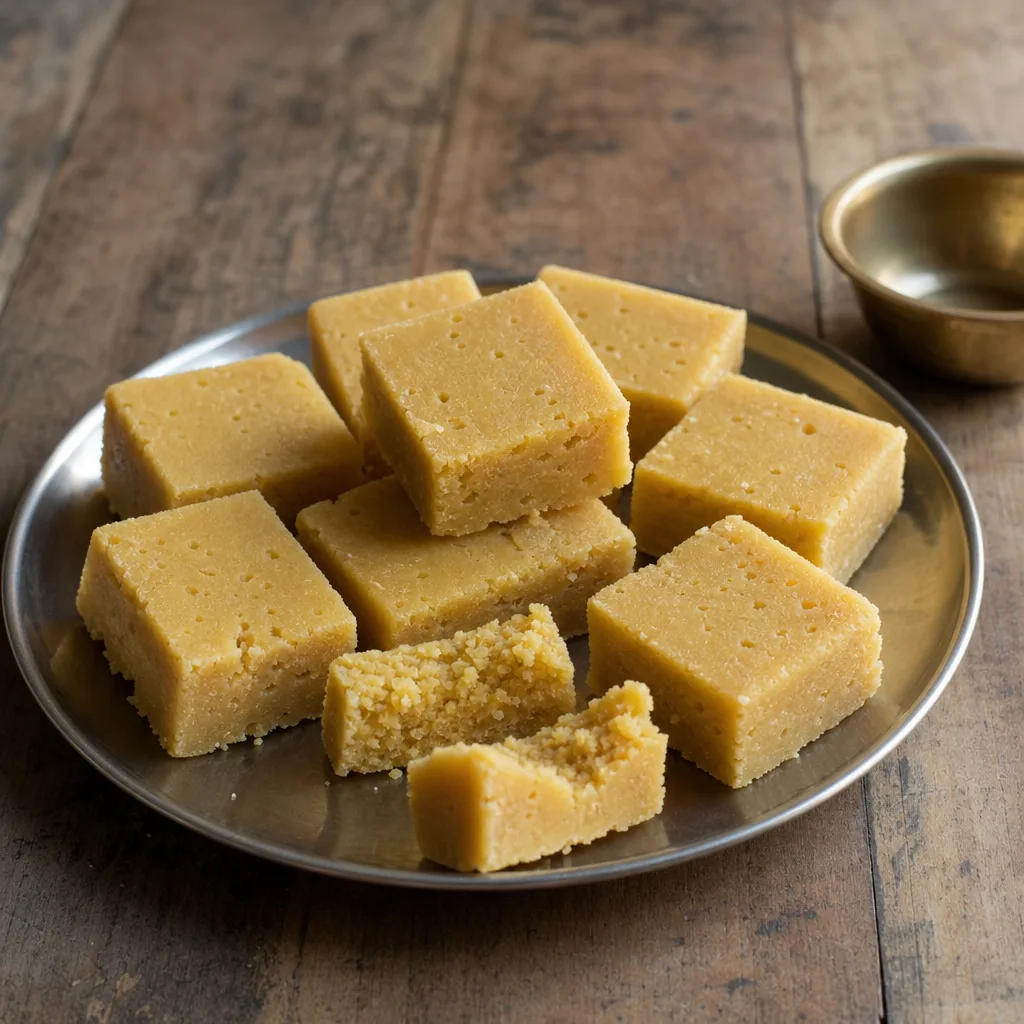
This sweet was born in the Mysuru royal kitchen, and the city still makes it better than anywhere else. The defining quality is the texture: porous and crumbly, almost like a very rich shortbread that dissolves the moment it touches the tongue. That porosity comes from ghee being added in stages while the besan is still cooking, so the fat aerates the mass rather than simply coating it.
In Mysuru households it is made for festivals, weddings, and the boxes sent home with guests. The ratio of ghee to besan is what separates a good batch from a greasy one or a tight one. Traditional recipes use roughly equal weights of ghee and besan, with sugar at twice the weight of besan. Reducing the ghee gives you something safer to cook but noticeably less good to eat.
The critical moment is when the mixture pulls away from the sides of the pan and the ghee begins to separate out visibly around the edges. Miss that moment by thirty seconds in either direction and the texture changes entirely. Every experienced cook in this kitchen will tell you to stay at the stove and not look away.
Ingredients (serves 20 pieces)
For the sweet
Method
Prepare the tray
Grease a wide, flat tray or a steel plate generously with ghee. Set it aside near the stove. You will need to pour the cooked mixture in quickly, so everything must be ready before you start the sugar syrup.
Dry-roast the besan
Put the sifted besan in a heavy kadai over low heat. Stir continuously with a flat spatula for 8 to 10 minutes until the raw smell leaves and the flour smells faintly nutty. Do not let it colour. Tip it out onto a plate and keep it close to the stove.
Make the sugar syrup
Wipe the kadai, add the sugar and water, and bring to a boil over medium heat, stirring until the sugar dissolves. Once it boils, stop stirring. Cook until the syrup reaches one-string consistency: lift a little between your thumb and forefinger and pull gently; a single thread should form and hold without breaking. This takes about 6 to 8 minutes from the boil.
Add the besan to the syrup
Reduce the heat to medium-low. Add the roasted besan to the syrup all at once, stirring quickly and continuously to prevent lumps. The mixture will thicken almost immediately. Keep stirring; there must be no lumps in the base.
Begin adding ghee in stages
Add the warm ghee in four or five additions, a few tablespoons at a time, stirring vigorously after each addition until the ghee is absorbed before you add the next. The mixture will hiss and bubble as each addition goes in. Keep the heat at medium-low throughout. This stage takes 12 to 15 minutes in total.
Watch for the ready signs
As you add the last of the ghee, the mixture will begin to look glossy and then start to turn slightly porous and aerated in appearance. It will pull away from the sides of the kadai cleanly. Ghee will begin to separate and pool around the edges of the mass. This is the moment. Do not cook further.
Pour immediately
Pour and scrape the mixture onto the greased tray at once. Do not spread it with a spatula; tilt the tray gently so it settles into a layer roughly 2 to 2.5 cm thick. If you press and spread it, you knock out the porosity you have spent 15 minutes building.
Cut while warm
Leave it for 3 to 4 minutes until it is just firm enough to hold a cut but still warm. Mark it into rectangles or squares with a sharp knife, pressing straight down rather than dragging. If you wait until it is fully cool, it will crack unevenly.
Cool and separate
Leave the pieces undisturbed until completely cool, about 20 minutes. Then lift them apart gently. They will be pale golden, porous, and crumbly at the edges. Any excess ghee pooled on the tray can be poured back over the pieces or used for cooking.
How to serve
Eaten on its own as a sweet or mithai. Traditionally offered as prasad at temples and packed into boxes for festivals. Not paired with any savoury dish.
Served with: Eaten on its own as a sweet or mithai. Traditionally offered as prasad at temples and packed into boxes for festivals. Not paired with any savoury dish.
Cook's tips
The ghee must stay warm
Cold or solidified ghee added to the cooking mass will drop the temperature, slow the reaction, and make it very hard to judge when the mixture is ready. Keep a small pan of ghee warm on a neighbouring burner throughout.
One-string is not negotiable
If the syrup is under-cooked (no string forms), the finished sweet will be sticky and will not set. If it is over-cooked (two-string or beyond), the mixture seizes too fast when the besan goes in and you cannot incorporate the ghee properly.
The moment to stop
If you pull the pan too early, the pieces will be soft, sticky, and oily at the centre. If you cook past the moment of separation, the mixture turns grainy and dry. The visual cue is ghee visibly weeping around the edges of the mass as it pulls from the sides. That is your signal.
Batch size matters
This recipe is calibrated for a medium household batch. Scaling up beyond 400 g of besan in a single pan makes it very difficult to stir evenly and judge the endpoint. Make two batches rather than one large one.
Storage
Store in an airtight tin at room temperature. It keeps well for 10 to 12 days in cool weather. Do not refrigerate; the ghee solidifies and the texture becomes dense and unpleasant.
Regional variations
A firmer, denser version is widely made in Tamil Nadu sweet shops and home kitchens; some households add cardamom, which the classic Mysuru version does not.
Glossary
- Kadalai maavu கடலை மாவு
- Chickpea flour, also called besan; the Tamil and Kannada household term for the fine flour ground from chana dal.
- Kadai ಕಡಾಯಿ
- A deep, wide, thick-bottomed pan used for frying and sweet-making; essential here because the mixture needs room to bubble up.
- One-string consistency ஒரு கம்பி பதம்
- The stage of sugar syrup at which a thin, single thread forms and holds when a little syrup is pulled between thumb and forefinger; the correct stage for this sweet.
- Paka ಪಾಕ
- Syrup or cooked sugar preparation; in Kannada sweet-making it refers both to the sugar syrup stage and to the finished sweet.
Two things decide whether this works: hitting one-string consistency exactly on the syrup, and pulling the pan off the fire the instant the ghee separates around the edges of the cooked mass. Everything else, the sifting, the warm ghee, the continuous stirring, is in service of those two moments.
More Sweets & Payasam recipes
Rava Ladoo
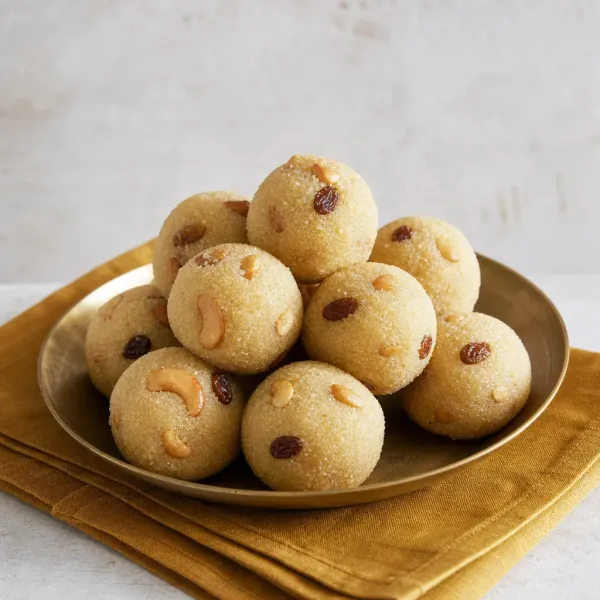
Classic Karnataka rava ladoo with fresh coconut, ghee, cashews and raisins. Traditional household method, roasted on the stovetop, shaped by hand.
Elaneer Payasam
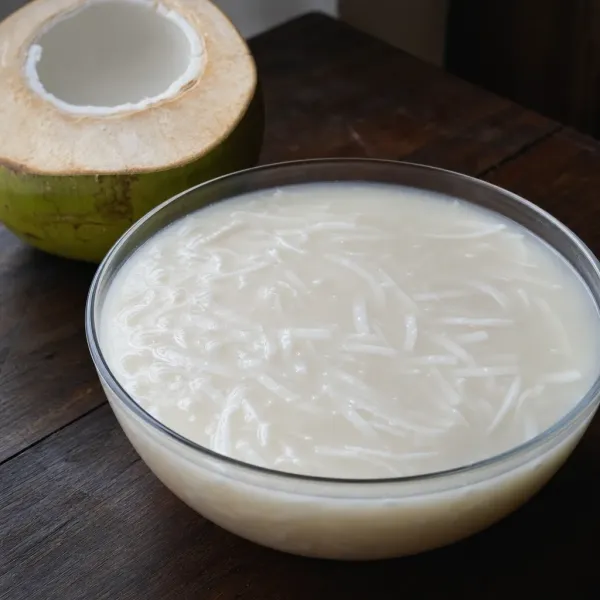
Traditional Kerala elaneer payasam made with fresh tender coconut water, soft malai and reduced full-fat milk. Chilled, light and simply flavoured.
Semiya Payasam
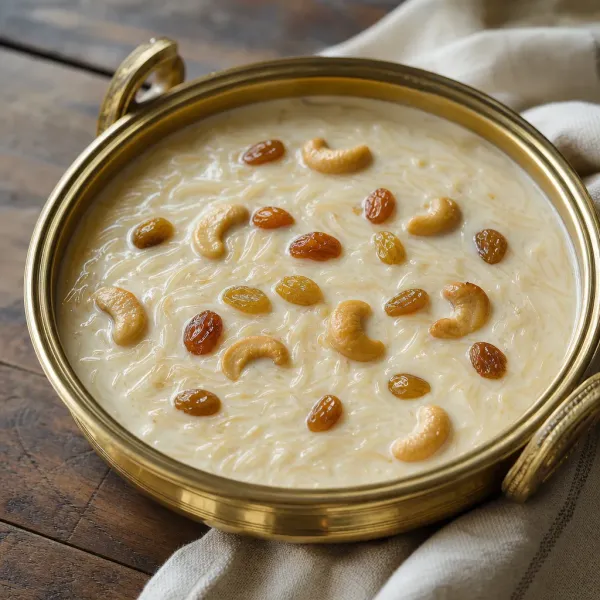
Traditional Kerala semiya payasam made with reduced whole milk, roasted vermicelli, sugar, cardamom and ghee-fried cashews. Ready in 30 minutes.
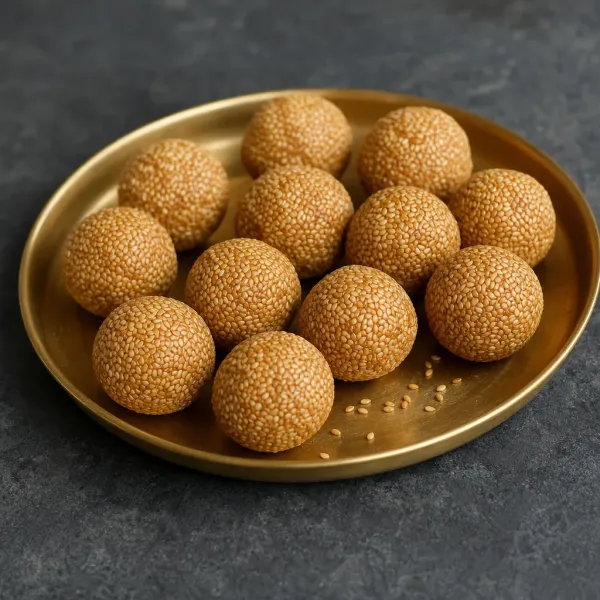
Ellu Urundai
Traditional Tamil Nadu recipe for ellu urundai: roasted sesame seeds bound with dark jaggery syrup, rolled into firm, fragrant balls for Karthigai De…
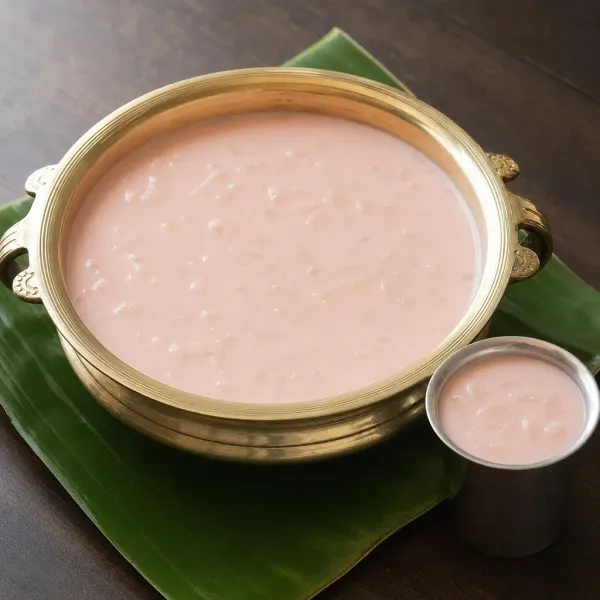
Palada Payasam
Traditional Kerala palada payasam made with full-fat milk, rice ada and sugar. Slow-cooked to a blush pink for the Onam sadya. Step-by-step method.
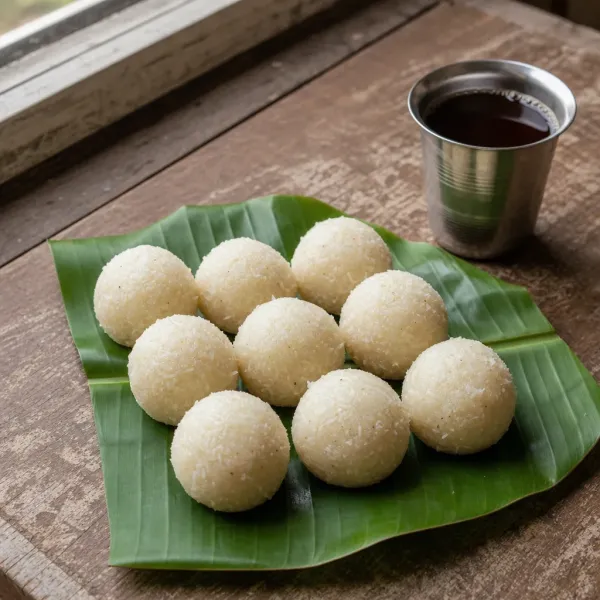
Avalose Unda
Traditional Kerala avalose unda recipe: roasted rice flour, fresh coconut and dark jaggery pressed into soft, crumbly balls. A classic Travancore sna…