

Palada Payasam Recipe
Malayalam പാലട പായസംTamil பாலட பாயசம்Kannada ಪಾಲಡ ಪಾಯಸTelugu పాలడ పాయసం
- Prep20 min
- Cook1 hr 30 min
- Serves6
- DifficultyMedium
- DietVegetarian
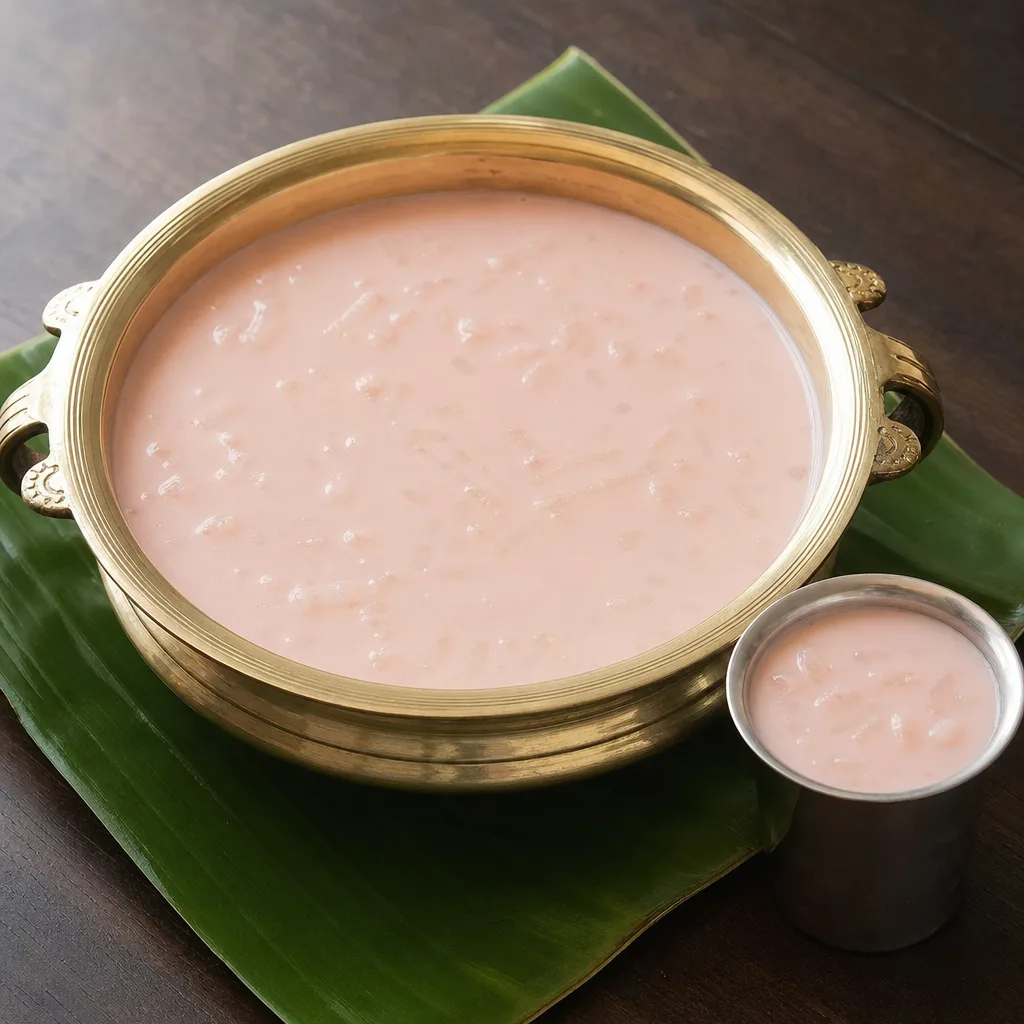
Palada payasam is the payasam of the Onam sadya. Every household in Kerala makes it, and the version that has held its place longest is from the Travancore belt, where the dish is built on nothing but fresh full-fat cow's milk, sugar, and rice ada. There is no cardamom, no cashews, no raisins in the base recipe. The flavour comes entirely from the slow reduction of milk until it turns faintly pink and tastes of itself.
The ada here is the thin, translucent kind made from rice flour and steamed on banana leaf. Shops sell it dried, and that is what most households use today. If you have access to freshly made ada, the texture is softer and the payasam is noticeably better. The dried kind works well if it is soaked properly and cooked long enough to lose its starchy raw edge.
Households differ mainly on sweetness and on how far they reduce the milk. Some families like it thin enough to drink; others reduce it until it is almost the consistency of condensed milk and the colour is a deep blush pink. The pink comes from the milk proteins reacting slowly with heat over a long time. You cannot rush it. If you turn up the flame to go faster, the milk catches on the bottom and the payasam tastes scorched.
Ingredients (serves 6)
For the payasam
Method
Soak the ada
Put the dried ada in a wide bowl and pour enough hot water over it to submerge it completely. Leave it for 20 minutes. The pieces will soften and turn from opaque white to slightly translucent. Drain and rinse once under cold water.
Boil and reduce the milk
Pour the milk into a wide, heavy-bottomed vessel, preferably an uruli or a thick-bottomed stainless steel pot. Bring it to a boil over medium heat, stirring frequently so it does not catch. Once it boils, lower the flame to medium-low and let it reduce, stirring every few minutes. You are looking for the milk to reduce to roughly half its original volume, which will take about 45 to 55 minutes. The surface will begin to look slightly creamy and the colour will start to shift toward ivory.
Cook the ada in the milk
Add the soaked, drained ada to the reduced milk. Stir well to separate any pieces that are stuck together. Keep the flame at medium-low and cook, stirring regularly, for 20 to 25 minutes. The ada is ready when it is completely soft with no hard or chalky centre when you press a piece between your fingers. If the ada is still firm at 20 minutes, give it another 5 and check again.
Add the sugar
Add the sugar and stir until it dissolves completely. The payasam will loosen slightly when the sugar goes in. Continue cooking on medium-low for another 10 to 15 minutes, stirring often. The mixture will thicken again and the colour will deepen to a pale blush pink. This pink is the sign that the milk has cooked long enough and the payasam is ready.
Finish with ghee
Take the pot off the flame. Stir in the teaspoon of ghee. This is a small addition but it gives the payasam a faint gloss and rounds the flavour. Serve hot or warm.
How to serve
Served as part of the Onam sadya on a banana leaf, alongside other payasams such as parippu payasam or semiya payasam. Also served on its own in a small steel bowl or a traditional brass cup at the end of a meal.
Served with: Served as part of the Onam sadya on a banana leaf, alongside other payasams such as parippu payasam or semiya payasam. Also served on its own in a small steel bowl or a traditional brass cup at the end of a meal.
Cook's tips
The vessel matters
A wide, heavy-bottomed vessel gives the milk more surface area to evaporate and reduces the risk of scorching. A narrow pot with thin walls will scorch on the bottom before the milk reduces properly. An uruli is ideal; a wide stainless steel karahi is the common household substitute.
Fresh ada versus dried
If you can find freshly made ada from a local shop or make it at home, use it directly without soaking. Add it to the reduced milk and cook for 10 to 12 minutes only. Dried ada needs the soak and the longer cooking time.
Do not add sugar too early
Sugar added before the ada is fully cooked can firm the ada back up and leave a slightly grainy texture. Always wait until the ada is completely soft before adding sugar.
The pink colour cannot be faked
The blush pink comes only from long slow cooking of the milk. If your payasam is still white after the sugar is added and cooked for 10 minutes, the milk has not reduced enough. Keep the flame low and give it more time.
Storing leftovers
Palada payasam thickens considerably as it cools. Reheat gently with a splash of warm milk to bring it back to the right consistency. It keeps well in the refrigerator for two days.
Regional variations
Wheat ada payasam (godhambu ada payasam) uses the same milk base but with thicker wheat-flour ada; some households in central Kerala add a small amount of condensed milk toward the end to deepen the sweetness, though this is a modern household shortcut.
Glossary
- Ada അട
- Flat ribbons or sheets made from rice flour paste, steamed on banana leaf and dried; used in payasam and also eaten as a snack with coconut and jaggery.
- Payasam പായസം
- The Kerala word for a sweet milk-based dessert, equivalent to kheer in north India but distinct in technique and ingredients.
- Uruli ഉരുളി
- A wide, shallow, heavy brass or bronze cooking vessel traditional to Kerala kitchens, ideal for slow reduction of milk.
- Pachari പച്ചരി
- Raw white rice, as distinct from matta (red rice) or parboiled rice; used for making rice flour for ada.
- Sadya സദ്യ
- A traditional Kerala feast served on a banana leaf, most associated with Onam; palada payasam is one of its essential sweets.
Two things decide this payasam: the quality of the milk and the patience of the cook. Full-fat fresh milk reduced slowly over low heat is what gives the payasam its blush colour and its depth of flavour. The ada must be cooked until it is completely soft before the sugar goes in. Rush either of those steps and the payasam will be thin, white, and flat.
More Sweets & Payasam recipes
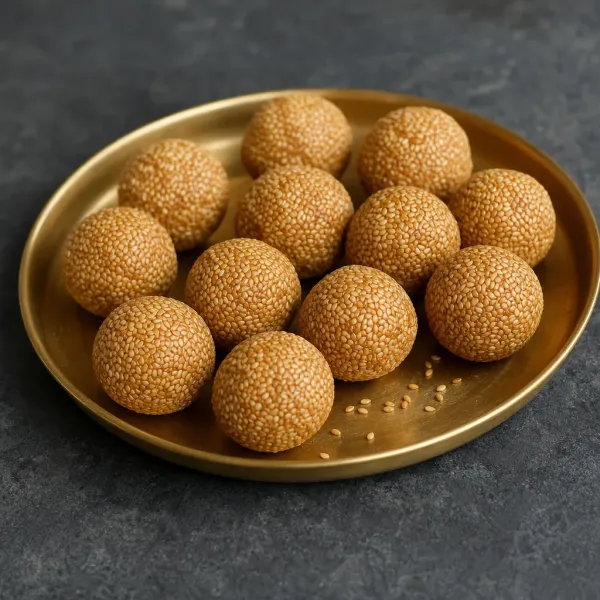
Ellu Urundai
Traditional Tamil Nadu recipe for ellu urundai: roasted sesame seeds bound with dark jaggery syrup, rolled into firm, fragrant balls for Karthigai De…
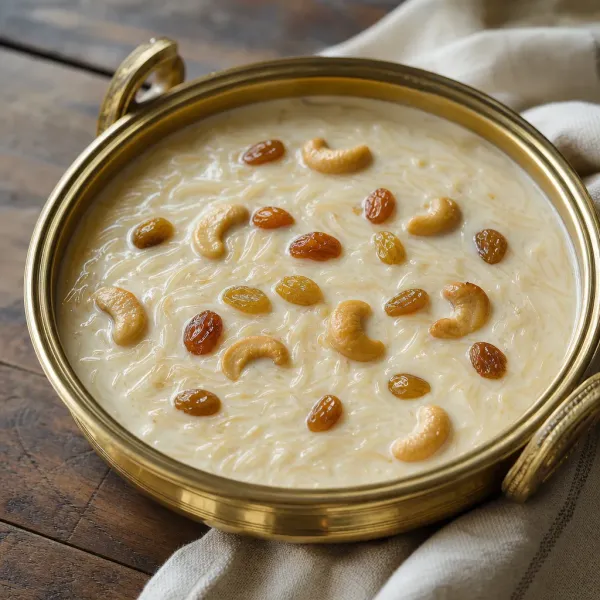
Semiya Payasam
Traditional Kerala semiya payasam made with reduced whole milk, roasted vermicelli, sugar, cardamom and ghee-fried cashews. Ready in 30 minutes.
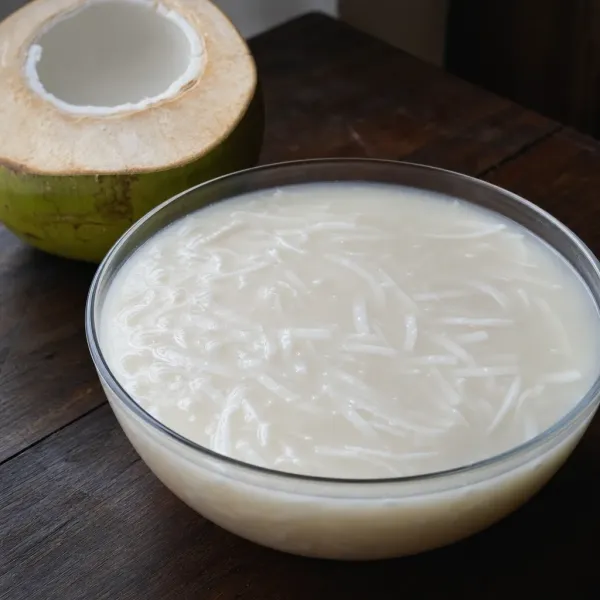
Elaneer Payasam
Traditional Kerala elaneer payasam made with fresh tender coconut water, soft malai and reduced full-fat milk. Chilled, light and simply flavoured.
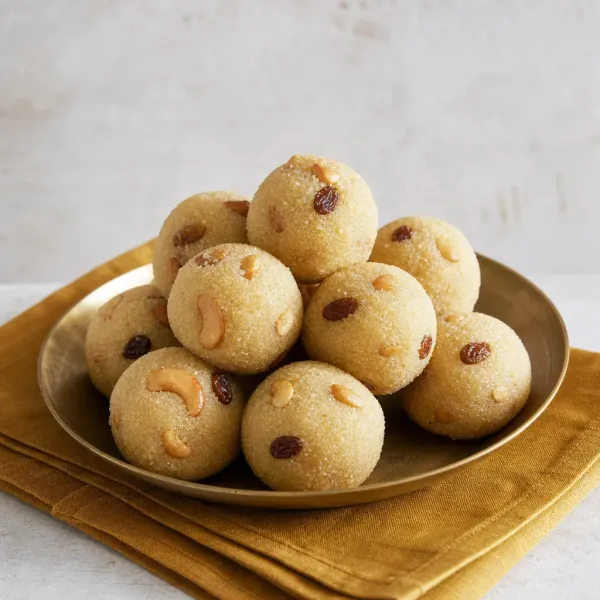
Rava Ladoo
Classic Karnataka rava ladoo with fresh coconut, ghee, cashews and raisins. Traditional household method, roasted on the stovetop, shaped by hand.
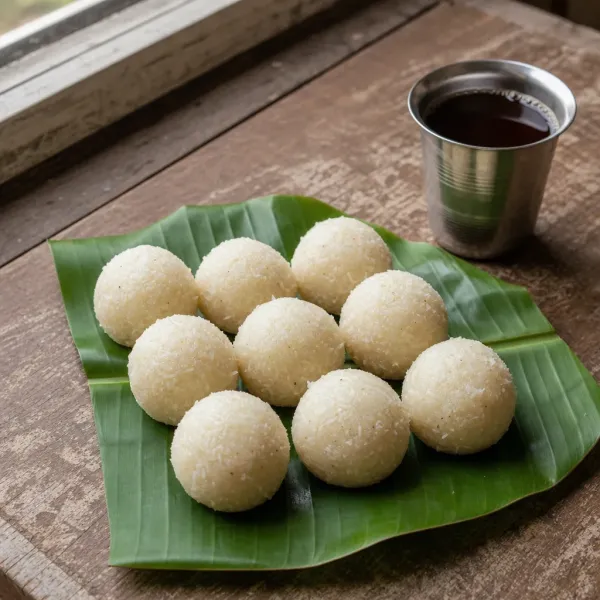
Avalose Unda
Traditional Kerala avalose unda recipe: roasted rice flour, fresh coconut and dark jaggery pressed into soft, crumbly balls. A classic Travancore sna…
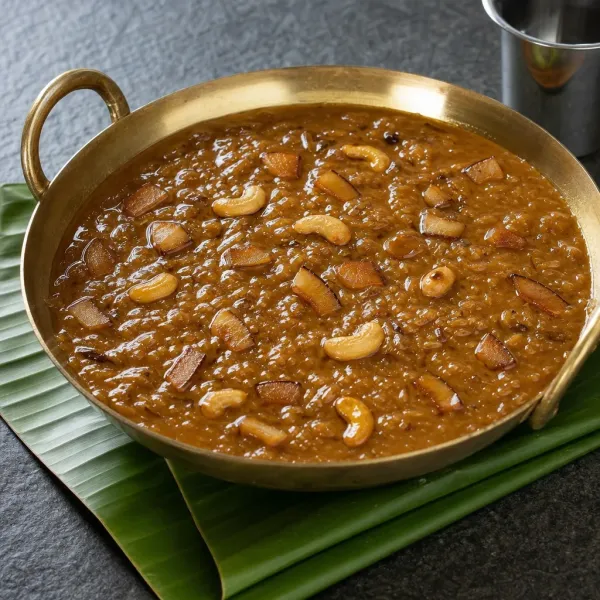
Chakka Pradhaman
Traditional Kerala chakka pradhaman made with chakka varatti, fresh coconut milk and jaggery. A sadya payasam recipe with step-by-step method and coo…