

Kathirikai Varuval Recipe
Malayalam കത്തിരിക്കാ വരുവൽTamil கத்திரிக்காய் வறுவல்Kannada ಬದನೆಕಾಯಿ ವರುವಲ್Telugu వంకాయ వరువల్
- Prep15 min
- Cook25 min
- Serves4
- DifficultyEasy
- DietVegan
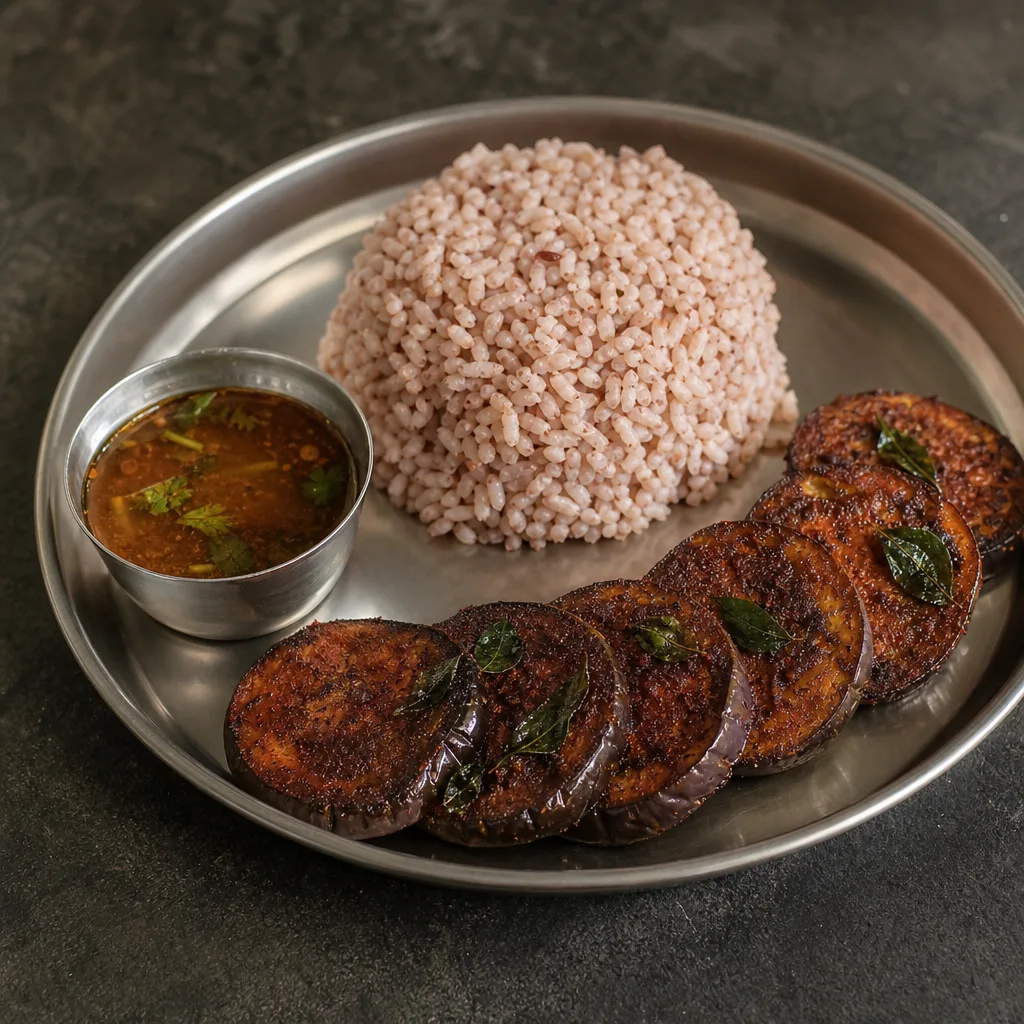
Kathirikai varuval is a dry pan-fry, meaning the brinjal slices come out tender inside and lightly crisped at the edges from shallow-frying in gingelly oil. It belongs to the everyday Tamil kitchen in a way few dishes do. It appears at rice meals alongside rasam or a plain kootu, and it is substantial enough to anchor a simple weekday lunch on its own.
In Kongunad households the spice coating is built from what is already on the shelf: red chilli powder, coriander powder, a little turmeric, and kala namak or regular salt. The acidity often comes from a squeeze of tamarind water rather than amchur or tomato, giving the finished dish a subtle sourness that prevents the brinjal from tasting flat. The whole thing cooks in well under half an hour.
Household cooks differ mostly on thickness: some slice thinly so the edges char and go almost papery, others cut thicker rounds so the centre stays creamy. Both are correct. The only point of agreement is the oil: gingelly oil is not optional here. It gives the varuval its characteristic flavour, and neutral oil produces something noticeably blander.
Ingredients (serves 4)
For the brinjal
For the spice coating
Method
Prepare the tamarind
Soak the tamarind in 3 tbsp of warm water for 10 minutes. Work it with your fingers to extract the pulp into the water, then press through a sieve and discard the fibres and seeds. You want a loose, sour liquid, not a thick paste. Set aside.
Pound the shallots
Peel the shallots and give them four or five firm blows in a stone mortar. You want them broken open and slightly bruised so they release their juices into the spice mix. Do not pound to a paste.
Mix the spice coating
In a wide bowl, combine the red chilli powder, coriander powder, turmeric, salt, the tamarind water, and the pounded shallots. Stir together into a loose, rust-coloured paste. Taste it: it should be noticeably sour, pungent, and salty. Adjust salt now, before the brinjal goes in.
Coat the brinjal
Add the brinjal rounds to the bowl and turn them gently with your hands until every slice is evenly coated. Let them sit for 5 minutes. The slices will begin to soften very slightly at the surface, which helps the spices adhere during frying. Do not leave them longer or they will start to weep liquid and the coating will thin out.
Heat the pan and oil
Set a wide, heavy iron or thick-bottomed pan over medium heat. Add 3 tbsp of the gingelly oil and let it heat until it shimmers and a curry leaf dropped in sizzles immediately. Do not let the oil smoke.
Add curry leaves
Drop in the curry leaves and stand back; they will spatter. Let them fry for about 15 seconds until they go crisp and the sputtering subsides.
Fry the brinjal, first side
Lay the coated brinjal rounds in a single layer. Do not crowd the pan; fry in two batches if needed. Leave them undisturbed on medium heat for 4 to 5 minutes. Lift one slice with a spatula to check the underside: it should be deep reddish-brown and slightly firm at the edge. If it looks pale and soft, give it another minute.
Flip and fry the second side
Flip each slice carefully; the coating is delicate and will stick if rushed. Add the remaining 1 tbsp of oil around the edges of the pan. Fry the second side for 3 to 4 minutes. The brinjal is ready when both sides are well coloured and a skewer or fork passes through the centre without resistance. The inside should be completely tender, not at all raw or spongy.
Drain and serve
Transfer to a plate lined with a sheet of plain paper to absorb the surface oil. Serve hot or at room temperature. The varuval holds reasonably well at room temperature for an hour; it does not reheat well as the slices turn soft.
How to serve
Steamed matta rice or plain boiled white rice with rasam and a simple kootu or plain curd. At everyday meals it is placed directly on the rice plate alongside a soupy kuzhambu.
Served with: Steamed matta rice or plain boiled white rice with rasam and a simple kootu or plain curd. At everyday meals it is placed directly on the rice plate alongside a soupy kuzhambu.
Cook's tips
Choosing the brinjal
Use firm, medium purple brinjals with smooth skin and no soft spots. Press the skin gently; it should spring back. Overripe brinjals are seedy and turn bitter when fried. Very large brinjals release too much water and the coating slides off.
Gingelly oil is not optional
Neutral oil produces a noticeably blander varuval. Cold-pressed South Indian gingelly oil has a mild, slightly nutty flavour quite unlike the strong toasted sesame oil used in East Asian cooking. If you use the wrong sesame oil the flavour will be overpowering.
Batch frying
Crowding the pan causes the brinjal to steam rather than fry, and the coating turns pasty. Use a pan wide enough for a single layer, or fry in two batches. Between batches, let the oil return to the correct heat before adding the next round.
Why the coating slides off
Two common reasons: the brinjal sat in the marinade too long and released water, thinning the paste; or the pan was not hot enough when the slices went in. The first contact with hot oil sets the spice coating. If the oil is insufficiently hot, the coating soaks into the oil before it can crust.
Tamarind substitution
A few households use a small amount of plain yogurt instead of tamarind for acidity, particularly if fresh tamarind is not available. This gives a slightly softer crust and a milder sour note. It is a genuine household variation, not a shortcut.
Regional variations
Chettinad kathirikai varuval uses a richer spice paste with kalpasi and marathi mokku; Brahmin households omit shallots and use asafoetida more heavily; some Tirunelveli kitchens add a pinch of jaggery to balance the sourness.
Glossary
- Kathirikai கத்திரிக்காய்
- Brinjal or aubergine in Tamil.
- Varuval வறுவல்
- Dry fry or pan-fry in Tamil; the technique produces a dish with little to no gravy.
- Gingelly oil நல்லெண்ணெய்
- Cold-pressed sesame oil used widely in Tamil Nadu for cooking, distinct from toasted sesame oil.
- Sambar onion சாம்பார் வெங்காயம்
- Small South Indian shallot, sharper and more pungent than regular onion, used in much of Tamil cooking.
- Kuzhambu குழம்பு
- A category of tamarind-based or coconut-based gravies in Tamil cuisine, served with rice.
- Kootu கூட்டு
- A semi-dry Tamil dish combining a vegetable with cooked lentils and a ground coconut paste.
Two things decide this dish. The first is the oil temperature when the brinjal hits the pan: too low and the coating absorbs oil and turns greasy; correct and it sets within seconds into a dry, spiced crust. The second is the brinjal itself: a firm, ripe specimen with tight skin will hold its shape and take the spice coating cleanly; an overripe one will collapse and taste bitter no matter what you do.
More Dry Vegetable Sides recipes
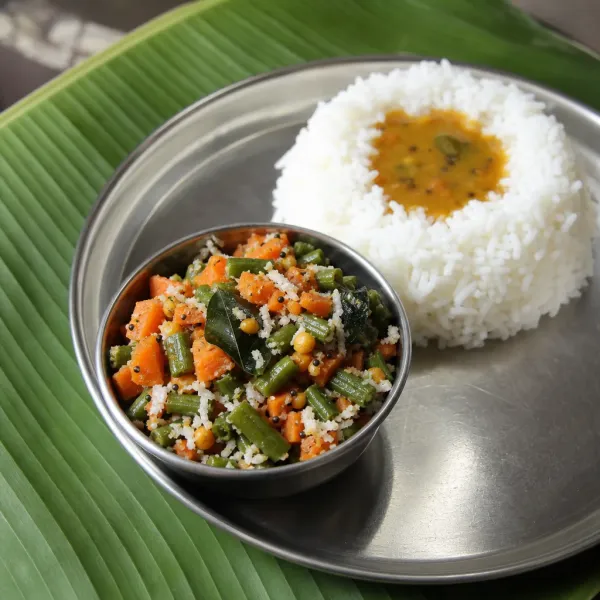
Carrot Beans Palya
Traditional Karnataka carrot beans palya with mustard seeds, curry leaves, chana dal, and fresh grated coconut. Dry stir-fry ready in 30 minutes.
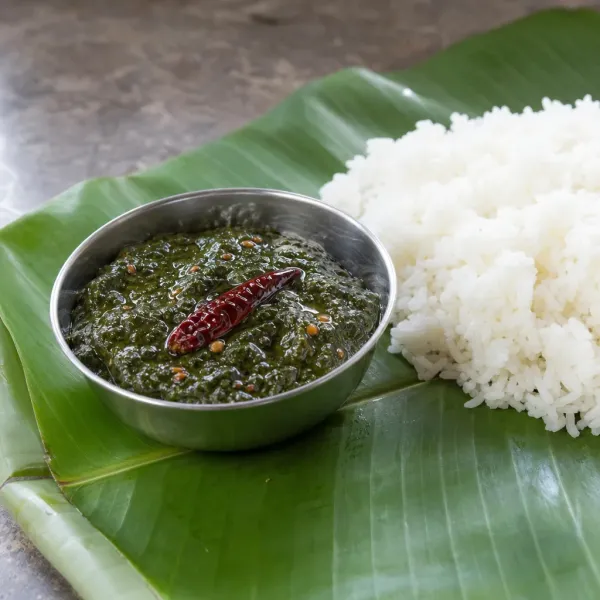
Keerai Masiyal
Traditional Tamil Brahmin keerai masiyal made with arai keerai, garlic, pepper and a gingelly oil tempering. Served hot on plain rice.
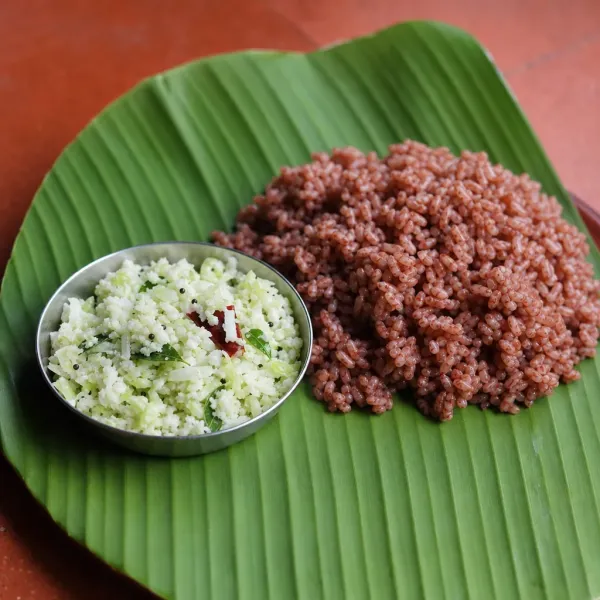
Cabbage Thoran
Classic Kerala cabbage thoran with fresh grated coconut, shallots, cumin, and a mustard-curry leaf tempering in coconut oil. Ready in under 30 minute…
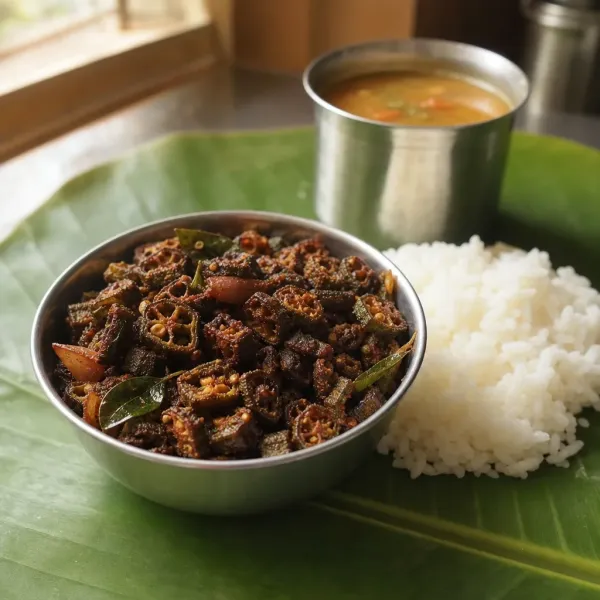
Vendakkai Fry
Traditional Tamil Brahmin vendakkai fry in gingelly oil with shallots, curry leaves and dry masala. Crisp, dry and slimy-free every time.
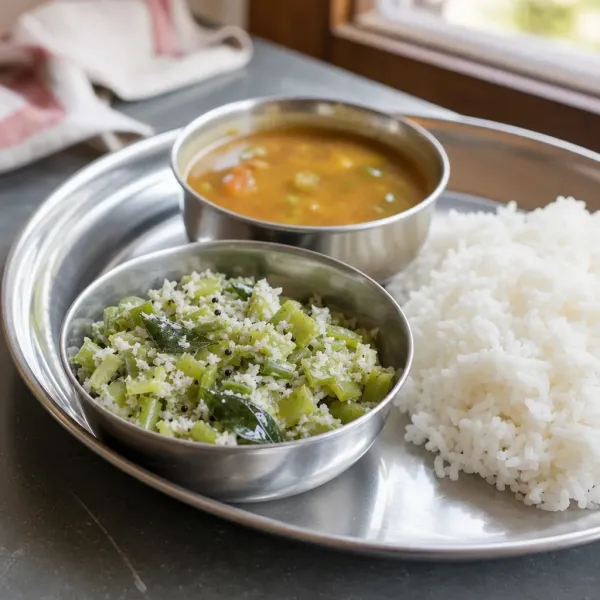
Avarakkai Poriyal (Broad Beans Stir-Fry)
Traditional Tamil Iyer-style avarakkai poriyal: broad beans stir-fried in gingelly oil with mustard, urad dal, curry leaves, and fresh coconut. Dry…
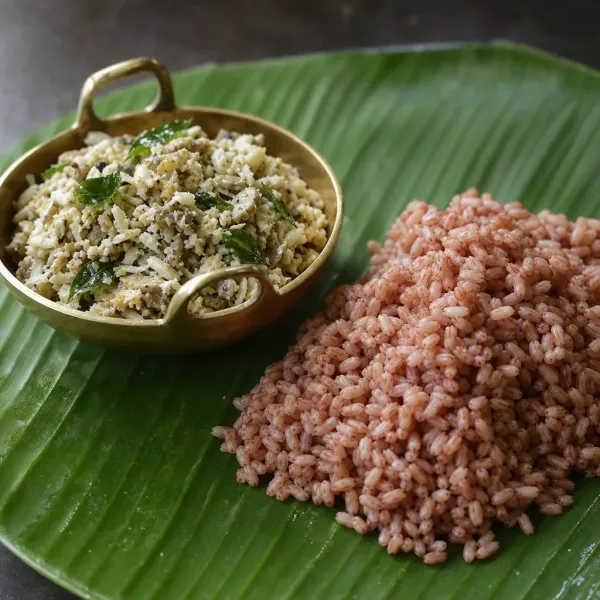
Mushroom Thoran
Traditional Kerala mushroom thoran with fresh grated coconut, cumin, and curry leaves. A dry, fragrant side dish for matta rice and sadya.