

Neer Mor Recipe
Malayalam നീർ മോർTamil நீர் மோர்Kannada ನೀರ್ ಮೋರ್Telugu నీర్ మోర్
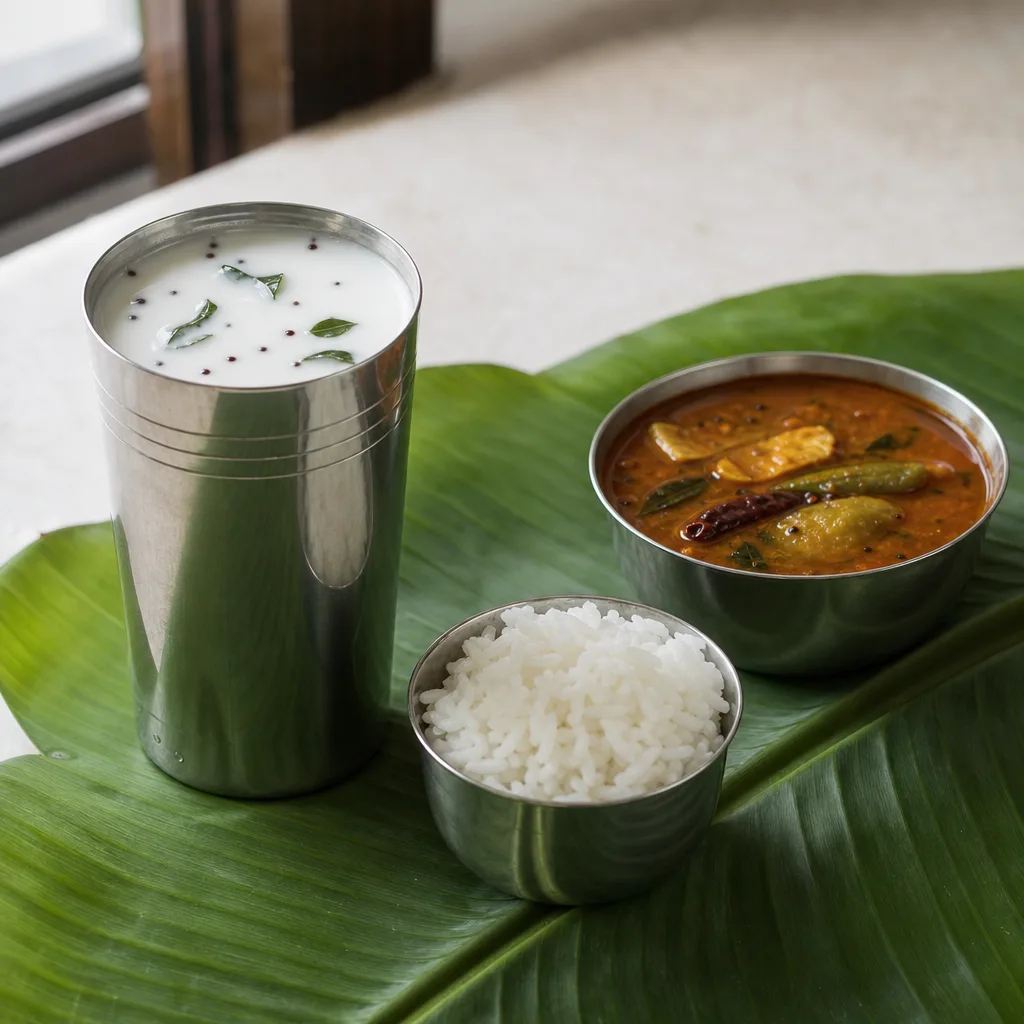
- Prep10 min
- Cook5 min
- Serves4
- DifficultyEasy
- DietVegetarian
Neer mor is the drink Tamil Nadu households make when the afternoon heat is serious. The name means simply 'watery buttermilk', and that is exactly what it is: well-diluted curd, salted, then tempered with mustard, dried red chilli, curry leaf and asafoetida, and finished with green chilli, ginger and coriander leaf pounded to a rough paste. It is thin enough to drink straight from a tumbler.
In Tamil Brahmin kitchens it is a fixture of the summer lunch, served alongside rice and kuzhambu as a cooling finish, or drunk on its own between meals. The curd must be sour but not sharp; if the curd is very fresh the drink lacks depth, and if it is too old it tastes unpleasant once diluted. Most households judge this by smell and adjust the ratio of curd to water accordingly.
The tempering is done in a small iron or steel ladle over a high flame so the mustard pops quickly and the curry leaves crisp in seconds. Pour it into the curd mixture while it is still sputtering. That immediate hit of hot fat into cold curd is part of what makes the drink taste right.
Ingredients (serves 4)
For the buttermilk base
To pound
For the tempering
Method
Check the curd
Taste the curd before you begin. It should be sour and clean-smelling. If it is very fresh and mild, the finished drink will taste flat. If it smells sharp or unpleasant, do not use it. Day-old curd kept at room temperature overnight in warm weather is usually at the right stage.
Pound the aromatics
Put the green chilli, ginger and coriander into a small stone mortar. Pound to a rough, fibrous paste. You are not looking for a smooth purée; some texture is fine. This releases the juices into the drink rather than leaving whole pieces floating in it.
Whisk the curd smooth
Pour the curd into a deep vessel or large jug. Whisk it briskly with a hand whisk or a mathu (wooden churner) until no lumps remain and it looks uniformly smooth. This takes about a minute. Lumpy curd will not dilute evenly.
Dilute and season
Add the cold water gradually while whisking so the curd stays smooth. Add salt and mix well. Taste; the mixture should be pleasantly saline. Stir in the pounded paste. Set aside while you make the tempering.
Heat the tempering vessel
Set a small iron or steel ladle or a very small pan over high heat. Add the oil and let it heat for about 30 seconds until it shimmers. The vessel must be hot enough that the mustard seeds pop within seconds of going in; if they sit in warm oil they turn bitter.
Pop the mustard
Add the mustard seeds. They should begin to pop almost immediately. Keep the heat high and hold a lid or flat plate loosely over the ladle to stop seeds scattering. Once the popping slows to just a few pops, move to the next step without delay.
Add chilli and curry leaves
Drop in the broken dried red chilli and curry leaves together. They will splutter loudly in the hot fat. Let them fry for no more than 10 seconds; the curry leaves should turn just slightly crisp at the edges. Add the asafoetida, stir once, and immediately take the ladle off the heat.
Pour tempering into the curd
Tip the entire contents of the ladle into the diluted curd mixture while it is still sputtering. Stir to distribute the tempering through the drink. The sound and the small bloom of fragrance when hot fat hits cold curd tells you the timing was right.
Taste and adjust
Taste for salt and sourness. If the drink is too sharp, add a little more cold water. Serve immediately while the tempering is still fragrant, or refrigerate and serve within two hours. Do not leave it at room temperature for long in warm weather.
How to serve
Served alongside rice, sambar and kuzhambu as part of a Tamil lunch, or drunk on its own as a midday cooling drink. Sometimes offered with a small piece of papad on the side.
Served with: Served alongside rice, sambar and kuzhambu as part of a Tamil lunch, or drunk on its own as a midday cooling drink. Sometimes offered with a small piece of papad on the side.
Cook's tips
Which oil to use
Gingelly oil (nallennai) gives a slightly nutty, roasted note that many Tamil households prefer. Coconut oil is also used and gives a cleaner flavour. Do not use refined vegetable oil; it adds nothing and the tempering will smell flat.
The curd-to-water ratio
1:2 (curd to water) is a common starting point, but households vary from 1:1.5 for a richer drink to 1:3 for a very thin, refreshing one on very hot days. Adjust to what your family prefers.
Solid asafoetida versus powder
The solid block type (dissolved in a tiny drop of water before adding) has a cleaner, more resinous fragrance than the yellow powder sold in small tins, which contains flour. Either works, but use the powder sparingly as it is more pungent by volume.
Do not blend the aromatics with a mixer
A mixer will turn the coriander and chilli into a fine green slurry that colours the drink and changes the texture. The mortar gives you a coarser paste that flavours without tinting.
Storage
Refrigerate any leftover neer mor and use within 24 hours. The tempering loses its fragrance quickly; it is best made fresh each time.
Regional variations
Majjiga in Andhra and Telangana households uses similar spicing but may include raw mango or more green chilli; Kerala's sambharam is closely related and uses a higher proportion of ginger with minimal coriander leaf.
Glossary
- Neer mor நீர் மோர்
- Literally 'watery buttermilk' in Tamil; diluted, spiced, tempered curd drink.
- Perungayam பெருங்காயம்
- Asafoetida in Tamil; the dried resinous gum used in very small quantities for its pungent, digestive quality.
- Mathu மத்து
- Traditional wooden churning stick used in Tamil and Kerala kitchens to churn curd or mix batters.
- Nallennai நல்லெண்ணெய்
- Gingelly oil (sesame oil) in Tamil; the traditional cooking fat for Tamil Nadu temperings, pickles and kuzhambu.
- Kuzhambu குழம்பு
- A category of Tamil Nadu gravies or sauces, distinct from sambar, often tamarind-based.
Two things decide whether neer mor tastes right: the sourness of the curd and the heat of the tempering vessel. Get the curd at the correct stage of sourness and make sure the oil is genuinely hot before the mustard goes in, and the rest follows easily.
More Beverages recipes
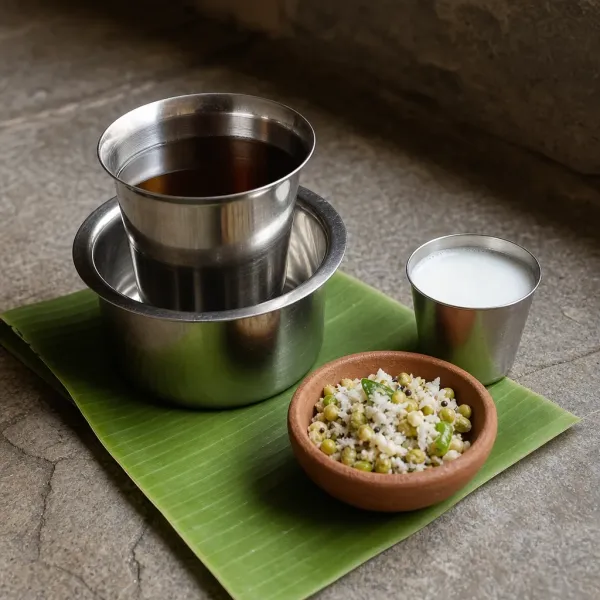
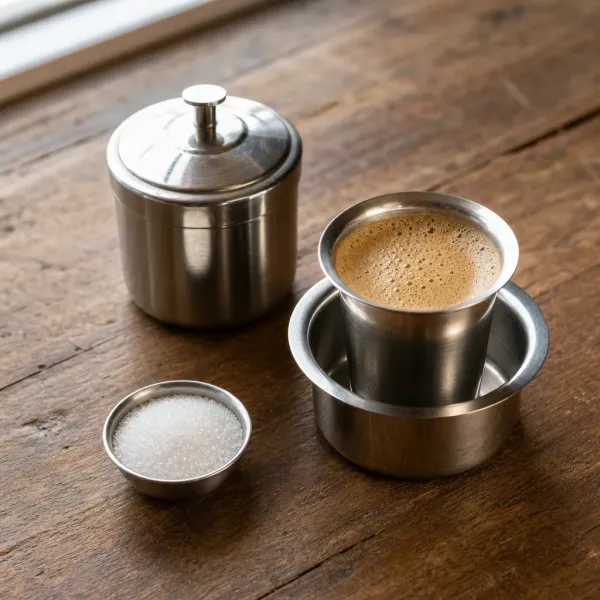
Filter Coffee: Decoction and the Metal Filter
Authentic Tamil Brahmin filter coffee made with a coffee-chicory blend, a stainless steel filter, and the traditional dabara-tumbler pouring method.
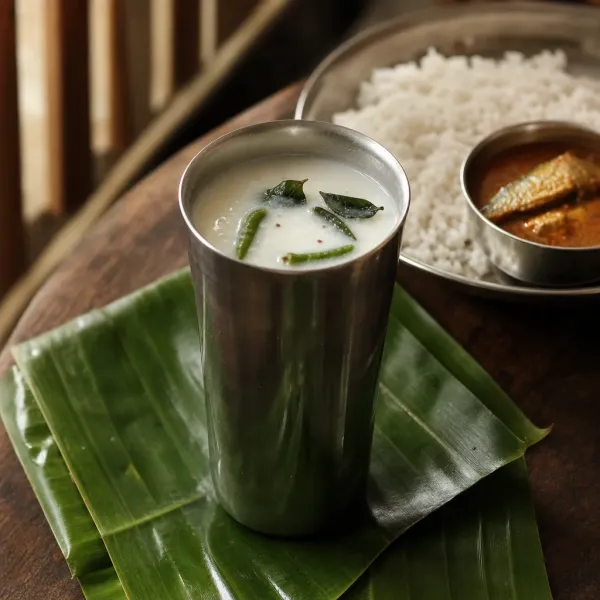
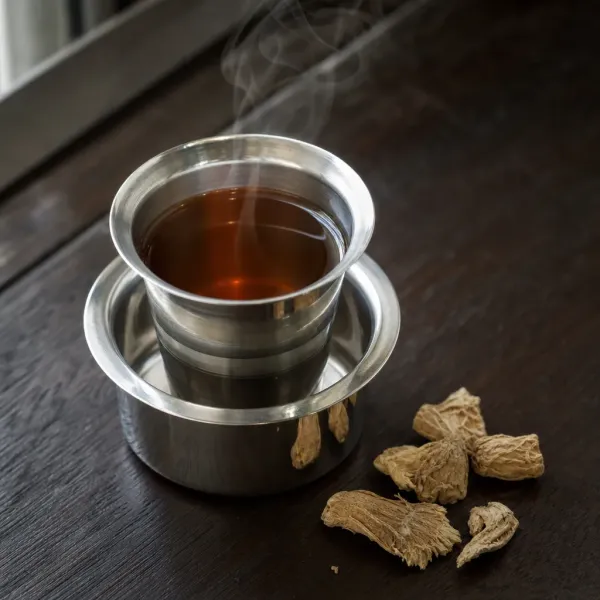
Sukku Malli Coffee
Traditional Kongunad sukku malli coffee made with dry ginger, coriander seeds and jaggery. A warming medicinal drink, ready in 15 minutes.
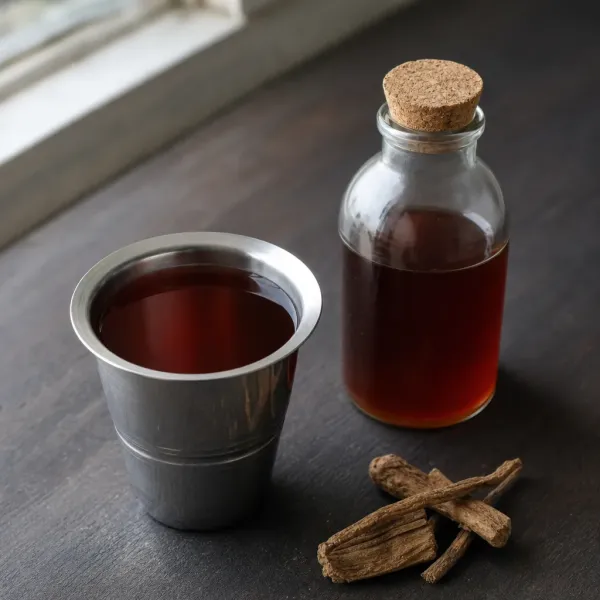
Nannari Sharbat: Sarsaparilla Root Syrup Drink
Traditional Tamil Nadu nannari sharbat made from dried sarsaparilla root and rock sugar. A cooling summer syrup, stored and diluted to drink. Step-by…

Rose Milk (Roja Paal)
Classic Tamil Nadu rose milk made with a from-scratch rose syrup, full-fat chilled cow's milk, and optional sabja seeds. Simple, cold, and properly p…