Rose Milk (Roja Paal) Recipe
Malayalam റോസ് മിൽക്ക്Tamil ரோஜா பால்Kannada ರೋಸ್ ಮಿಲ್ಕ್Telugu రోజ్ మిల్క్
- Prep15 min
- Cook10 min
- Serves4
- DifficultyEasy
- DietVegetarian
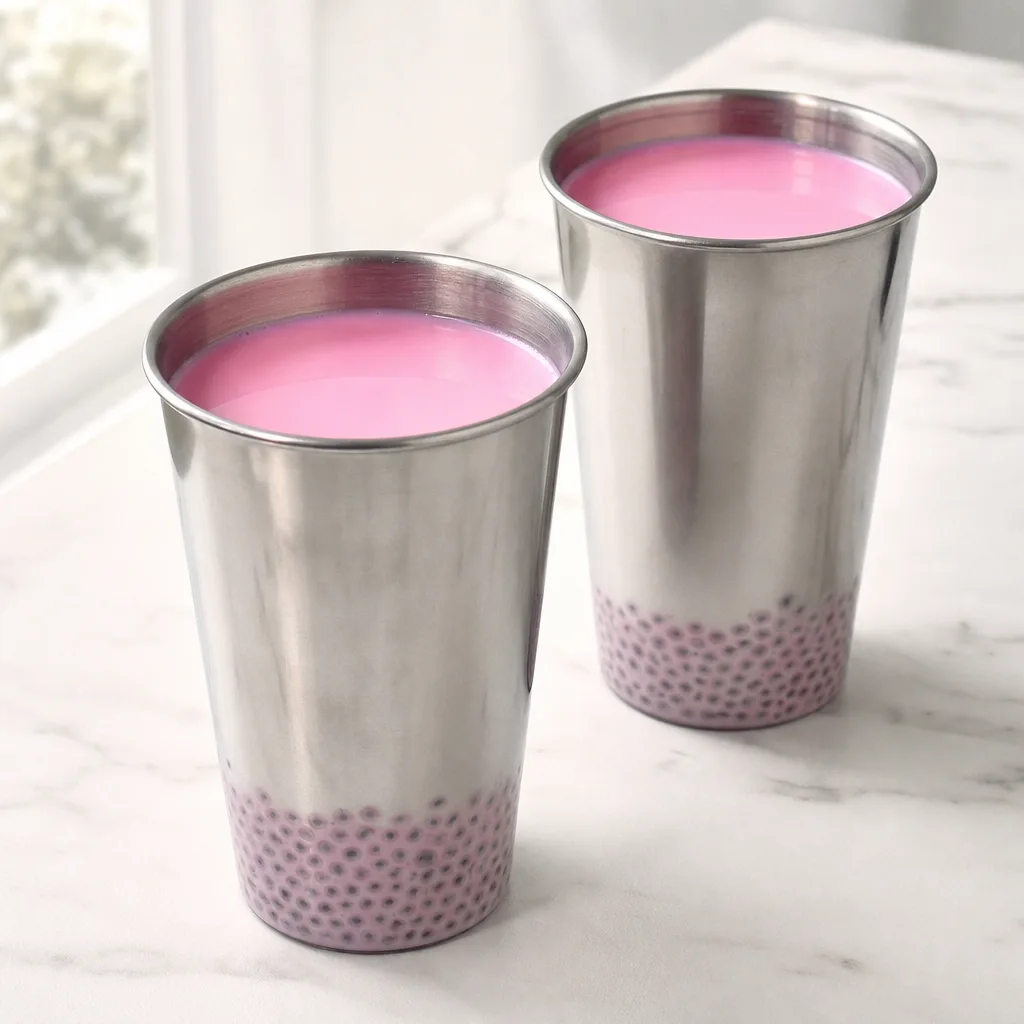
Roja paal is one of those drinks that belongs to a particular kind of Tamil afternoon: the school-return hour, the summer midday, the wedding reception table lined with steel tumblers. It is pink, cold, faintly floral, and sweet in a way that feels deliberate rather than accidental. The colour is as much a part of it as the flavour — children pick it out from across the room.
The from-scratch syrup is a simple reduction of sugar, water, rose water, and a drop of red food colour. Some households add a few drops of rose essence as well, which deepens the floral note. The syrup keeps well and a bottle of it in the fridge means rose milk is ten minutes away on any hot day. Full-fat cow's milk, chilled, is what the drink is built on — thin or toned milk makes it watery and the flavour does not carry.
Households differ mainly on sweetness and on whether they add sabja seeds (sweet basil seeds, also called tukmaria). The seeds swell in water, turn translucent with a dark centre, and add a gentle texture that many families consider non-negotiable. Others skip them entirely. Both are genuine.
Ingredients (serves 4)
For the rose syrup
For the drink
Method
Make the sugar syrup
Put the sugar and water in a small, heavy saucepan over medium heat. Stir until the sugar dissolves completely, then stop stirring. Let it come to a gentle boil and cook for 4 to 5 minutes until it thickens just slightly — it should coat the back of a spoon lightly but not set like toffee. You are not making a hard syrup; you want it pourable when cold.
Add the rose flavour and colour
Take the pan off the heat. Add the rose water and the rose essence if using. Stir once. Add the red food colour — start with less than you think you need, stir, and look at the colour in the pan. The syrup should be a deep, almost alarming pink; it will look much paler once diluted in milk. If the colour looks pale pink in the pan, it will be barely visible in the glass.
Cool the syrup completely
Pour the syrup into a clean glass jar or bottle. Leave it uncovered until it reaches room temperature, then close and refrigerate. Do not add it to the milk while it is warm or the milk may split. The syrup will keep in the fridge for up to three weeks.
Soak the sabja seeds
If you are using sabja seeds, put them in a small bowl with 100 ml of cold water and leave them for 20 minutes. They will swell to three or four times their dry size, turning into small translucent globes with a dark dot at the centre. Drain off any excess water before adding them to the glasses. Do not use warm water or they become slimy rather than pleasantly gel-like.
Assemble the glasses
Take four tall steel tumblers or glasses. Put 3 to 4 tablespoons of the cooled rose syrup into each glass — adjust to your household's sweetness preference, but do not go below 2 tablespoons or the flavour will be thin. Add the swollen sabja seeds if using, dividing them evenly.
Add the milk and serve
Pour the chilled milk over the syrup, about 240 to 250 ml per glass. Stir well from the bottom — the syrup sinks and needs to be brought up. The drink should be an even, clear pink throughout. Serve immediately while the milk is cold.
How to serve
Served on its own as a drink. At weddings and functions it may appear alongside murukku or mixture, but it is complete by itself.
Served with: Served on its own as a drink. At weddings and functions it may appear alongside murukku or mixture, but it is complete by itself.
Cook's tips
The food colour question
Some families skip the food colour and rely on the rose water alone. The drink will be white with a faint blush. It tastes the same but looks nothing like what most people expect from roja paal. If you are making it for children or for a function, the pink matters to people.
Commercial syrup shortcut
Many households today use Rooh Afza or a branded rose syrup directly. This is genuinely common and produces a good drink. The from-scratch syrup gives you control over sweetness and colour intensity, which is why it is written as the main method here.
Milk temperature
The milk must be cold when it meets the syrup. If it is at room temperature, the drink is flat and the sweetness feels heavy. Chill the milk overnight, not just for an hour.
Sabja seeds vs chia seeds
Sabja seeds and chia seeds are not the same. Sabja (Ocimum basilicum seeds) swell within 15 to 20 minutes in cold water and have a softer, more delicate texture. Chia seeds take longer, have a different bite, and do not belong in this drink.
Scaling the syrup
Double or triple the syrup batch if you are making it for a function. It keeps well and making it in small batches repeatedly is unnecessary work.
Regional variations
Kerala households make a near-identical drink; Karnataka and Andhra versions exist but are less associated with a distinct local identity. The chilled version served over crushed ice at Tamil Nadu tea stalls is a slight variation in texture and dilution.
Glossary
- Roja paal ரோஜா பால்
- Tamil: roja means rose, paal means milk. Literally rose milk.
- Sabja சப்ஜா
- Sweet basil seeds (Ocimum basilicum), soaked until swollen and gel-coated; used in cold drinks across South India.
- Pachari പച്ചരി
- Malayalam term for raw white rice; included in glossary as it appears in the system template example only, not in this recipe.
Two things decide whether this works: the syrup must be fully cold before it meets the milk, and the colour in the syrup must be deeper than looks right — it will always dilute further in the glass. Get those two right and everything else follows.
More Beverages recipes
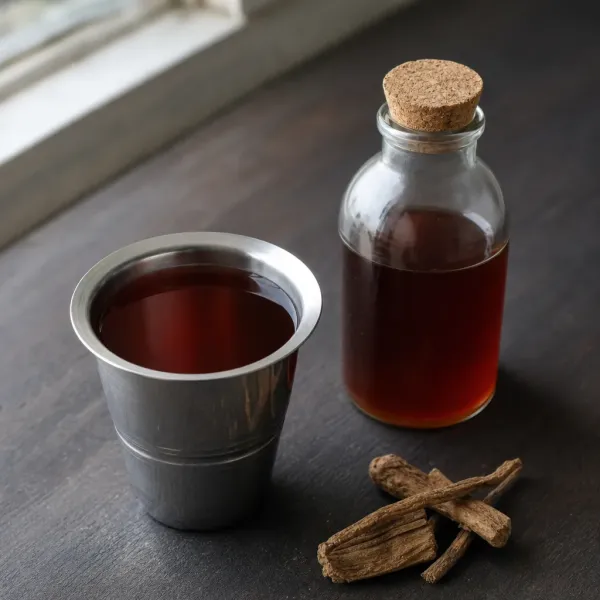
Nannari Sharbat: Sarsaparilla Root Syrup Drink
Traditional Tamil Nadu nannari sharbat made from dried sarsaparilla root and rock sugar. A cooling summer syrup, stored and diluted to drink. Step-by…
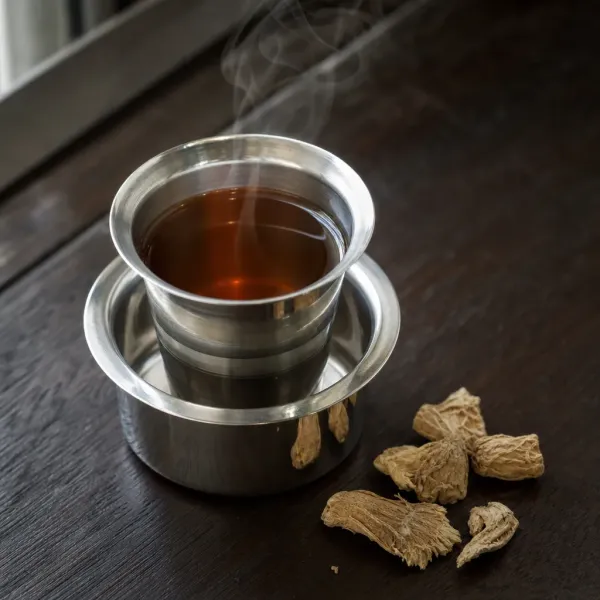
Sukku Malli Coffee
Traditional Kongunad sukku malli coffee made with dry ginger, coriander seeds and jaggery. A warming medicinal drink, ready in 15 minutes.
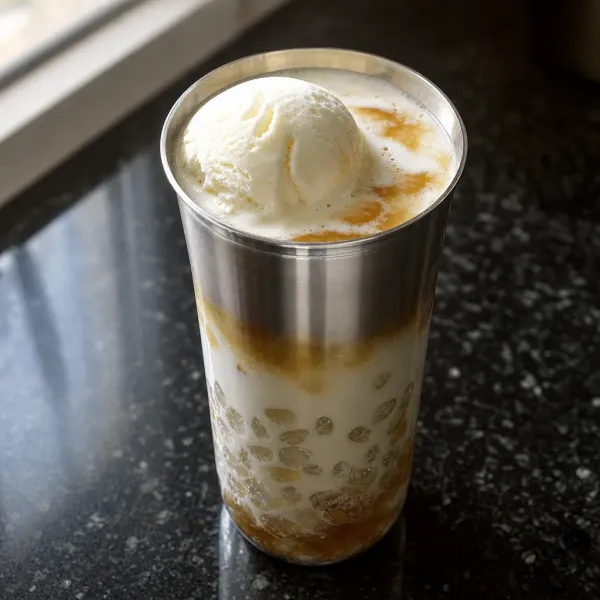
Madurai Jigarthanda
Traditional Madurai Jigarthanda with slow-reduced milk, soaked badam pisin, nannari syrup and milk ice cream. Authentic Tamil Nadu summer drink recip…