

Urulakizhangu Roast Recipe
Malayalam ഉരുളക്കിഴങ്ങ് റോസ്റ്റ്Tamil உருளைக்கிழங்கு ரோஸ்ட்Kannada ಆಲೂಗಡ್ಡೆ ರೋಸ್ಟ್Telugu బంగాళాదుంప రోస్ట్
- Prep15 min
- Cook35 min
- Serves4
- DifficultyEasy
- DietVegan
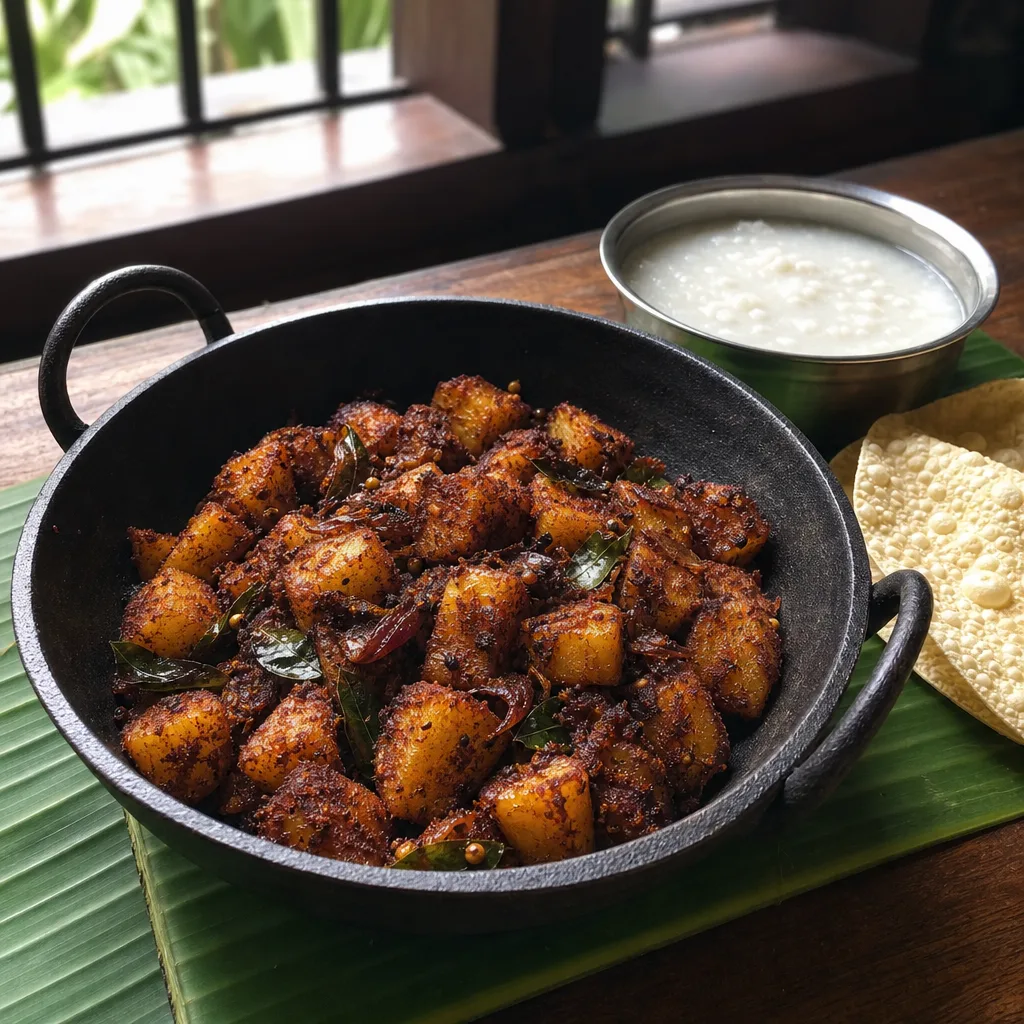
This is the potato roast that sits on a Nasrani lunch plate next to rice and fish curry, or wraps itself inside an appam on a Sunday morning. It is not a curry and it is not a dry poriyal either — it falls somewhere between the two, the potatoes coated in a dark, sticky masala that clings to every piece without a drop of added water.
The technique is unhurried. Shallots and curry leaves go into coconut oil and are cooked down properly, until they are soft and beginning to colour. The spice powders go in after that, so they bloom in the oil rather than steam in moisture. The par-boiled potatoes are added last and the whole thing is left alone on a low flame, turned occasionally, until the masala coats and the edges of the potato catch a little colour.
Households differ on the chilli split: some use only Kashmiri chilli powder for colour and keep the heat mild, others add a measure of ordinary red chilli powder alongside. A few cooks in older Kottayam households add a small piece of kudampuli soaked in water and squeezed in at the end for a faint sourness, though this is not universal. Garam masala does not belong here.
Ingredients (serves 4)
For the roast
Method
Par-boil the potatoes
Put the potato chunks in a pot, cover with cold water, add a generous pinch of salt and bring to a boil. Cook for 8 to 10 minutes — you want them just cooked through but still holding their shape firmly. A knife should go in without resistance but the pieces should not be crumbling at the edges. Drain immediately and leave them in the colander to steam-dry for 5 minutes. Wet potatoes will not roast; they will stew.
Heat the oil and fry the shallots
Pour the coconut oil into a wide, heavy pan — a cheenachatti or a thick-bottomed kadai works well — and set it over medium heat. When the oil is hot, add the sliced shallots and the slit green chillies. Cook, stirring now and then, for 10 to 12 minutes until the shallots are fully soft, translucent, and beginning to turn light gold at the edges. Do not rush this step; under-cooked shallots will leave a raw sweetness that sits wrong against the spices.
Add the curry leaves
Drop in the curry leaves. They will splutter in the oil — stand back for a moment. Stir for 30 seconds until the leaves are glossy and fragrant.
Bloom the spice powders
Reduce the heat to low. Add the Kashmiri chilli powder, red chilli powder, coriander powder, turmeric and black pepper all at once. Stir constantly for 45 to 60 seconds, scraping the base of the pan. The powders will darken slightly and smell toasty rather than raw. If the pan looks dry and the spices are beginning to stick, add a teaspoon of oil. Do not add water — you want the spices to fry, not steam.
Add the potatoes and coat them
Tip the drained potatoes into the pan and turn them gently so every piece is coated in the masala. Use a flat spatula and fold rather than stir aggressively, or the chunks will break. Check the salt now and adjust.
Roast on a low flame
Spread the potatoes in a single layer as best you can. Cover the pan and cook on low heat for 5 minutes — this lets the potatoes absorb the spices. Then remove the lid, increase heat to medium-low, and cook uncovered for another 8 to 10 minutes, turning every couple of minutes. You are looking for a few pieces to develop a slightly darker, caramelised crust while the masala coats the rest in a dry, clinging layer. The roast is done when there is no moisture pooling at the base of the pan and the colour has deepened to a reddish-brown.
Rest and serve
Take the pan off the heat and leave it uncovered for 2 minutes before serving. This brief rest lets the crust firm up slightly so it does not fall away when you spoon it out.
How to serve
Kanji (rice gruel) and pappadam for a simple meal; Kerala red rice and fish curry for a full lunch; or alongside appam and egg curry for Sunday breakfast.
Served with: Kanji (rice gruel) and pappadam for a simple meal; Kerala red rice and fish curry for a full lunch; or alongside appam and egg curry for Sunday breakfast.
Cook's tips
Which potato to use
A waxy potato holds its shape through the roasting. Floury varieties like russets will disintegrate when you turn them in the pan. In Kerala, the local yellow-fleshed potato is standard. If you are using larger potatoes, cut them slightly smaller so the masala-to-potato ratio stays right.
The Kashmiri chilli is doing two jobs
It gives the roast its deep brick-red colour without overwhelming heat. If you substitute it entirely with ordinary chilli powder, the dish will be pale and very hot. Use the Kashmiri for colour and add the smaller quantity of regular chilli only if you want more heat.
Kudampuli variation
Some older Kottayam households soak a 1 cm piece of kudampuli in 2 tbsp water for 10 minutes, then squeeze the soaked piece over the potatoes just before covering in step 6. It adds a faint, clean sourness. This is a genuine household variation, not a standard step.
Reheating
This roast reheats well in a dry pan over low heat for 3 to 4 minutes. It does not reheat well in a microwave — the potatoes turn soft and the crust is lost entirely.
Do not add water
The most common mistake is adding water when the spices stick in step 4. A little extra oil is the correct fix. Water turns the roast into a curry.
Regional variations
Mappila households in Malabar make a similar dry potato fry with fennel and a heavier hand of chilli; Tamil Nadu Iyer kitchens have urulaikilangu poriyal, which is drier still and uses gingelly oil with mustard and curry leaves but no shallots fried down.
Glossary
- Urulakizhangu ഉരുളക്കിഴങ്ങ്
- Malayalam word for potato; literally 'round tuber'.
- Chuvannulli ചുവന്നുള്ളി
- Small red shallots used throughout Kerala cooking; sharper and more aromatic than large onions.
- Cheenachatti ചീനച്ചട്ടി
- A wide, round-bottomed wok used in Kerala kitchens, traditionally of iron or clay; the name reflects its Chinese-trade origins.
- Kudampuli കുടംപുളി
- Dried Malabar tamarind (Garcinia cambogia), used as a souring agent in Kerala fish curries and occasionally in vegetable dishes; different in flavour from tamarind.
- Kanji കഞ്ഞി
- Rice gruel or congee, a staple Kerala meal, especially at breakfast and dinner.
Two things decide whether this roast works: the shallots must be cooked down fully before the spices go in, and the potatoes must be dry when they hit the pan. Get those two right and the masala will coat rather than clump, and the potatoes will hold their shape through the roasting.
More Dry Vegetable Sides recipes
Beans Poriyal
A traditional Tamil Brahmin beans poriyal with gingelly oil tadka and fresh coconut. Dry, lightly spiced, and ready in under 30 minutes.
Chena Mezhukkupuratti (Elephant Foot Yam Stir-Fry)
Traditional Kerala recipe for chena mezhukkupuratti: elephant foot yam stir-fried in coconut oil with shallots, dried red chillies, and curry leaves.
Koorka Mezhukkupuratti (Chinese Potato Stir-Fry)
Traditional Kerala koorka mezhukkupuratti: Chinese potato stir-fried with shallots, green chilli and curry leaves in coconut oil. Step-by-step househ…
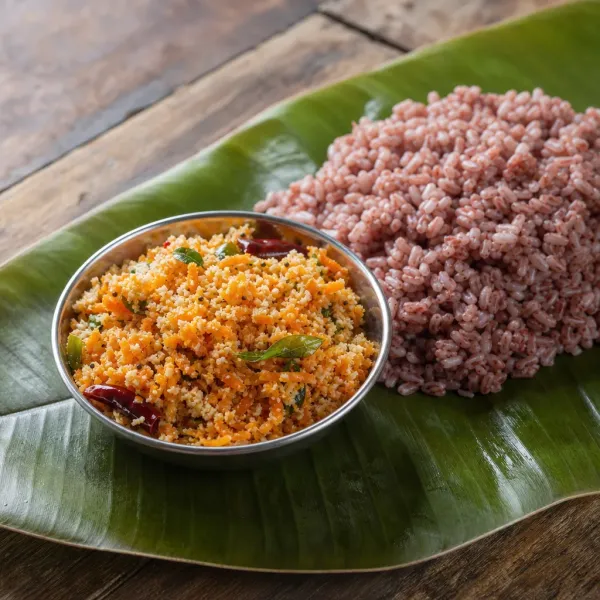
Carrot Thoran
A classic Kerala carrot thoran made with fresh grated coconut, shallots, curry leaves and coconut oil. Dry, fragrant and ready in under 30 minutes.
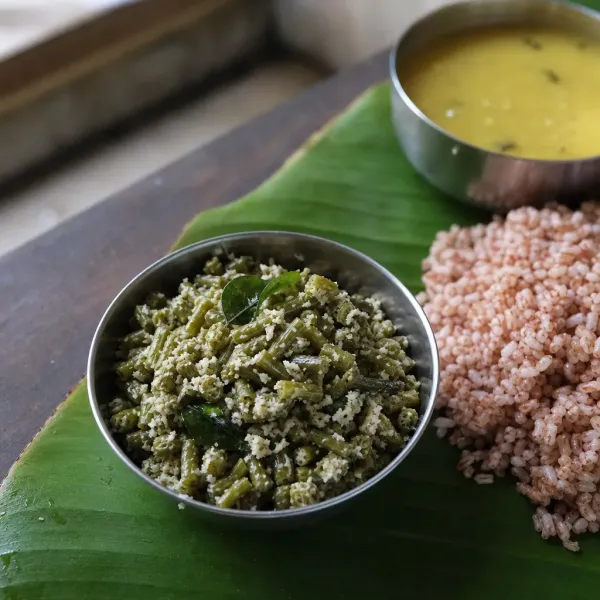
Payar Thoran (Long Beans with Coconut)
Traditional Kerala payar thoran made with long beans, fresh grated coconut and a mustard-curry leaf tempering. Dry, simple, everyday.
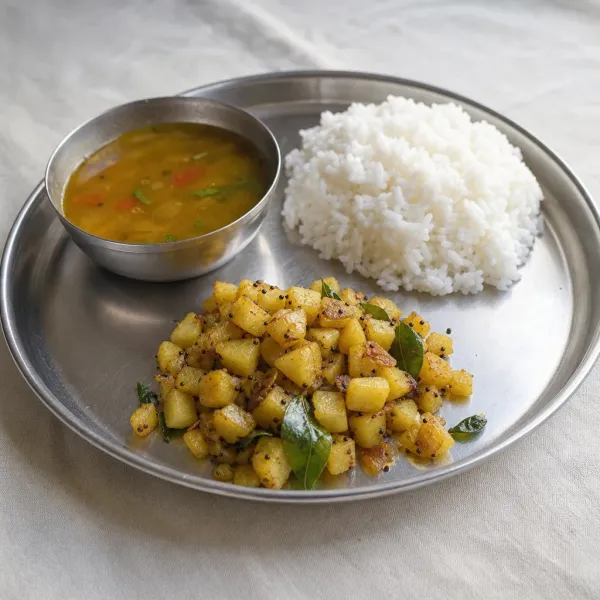
Alugadde Palya
Traditional Karnataka alugadde palya: a dry potato stir-fry with mustard, curry leaves and shallots. Everyday Kannada home cooking, ready in 40 minut…